In 1640, Frederick Wilhelm, known to posterity as the „Great ElectorelectorElector” took power in Brandenburg, Prussia. He not only managed to enlarge his kingdom, which included Pomerania, Magdeburg, or Halberstadt, but above all, he freed the Principality of Prussia from dependence on Polish fiefdom. He also began the process of Absolutism. The culmination of the advancement of Prussia in the international arena came with the crowning of the Prince Elector as King of Prussia in 1701. The true owner of this power in Prussia turned out the be Frederick II, who in German historiography was called the Great. Almost immediately after his accession to the throne, he began fighting wars that would continue for much of his reign. Teritorial gains and, above all, an improved machine of state meant that Prussia was elevated to the group of five European powers.
Task 1
Wysłuchaj nagrania abstraktu i zastanów się, czego jeszcze chciałbyś się dowiedzieć w związku z tematem lekcji.
Wysłuchaj nagrania abstraktu i zastanów się, czego jeszcze chciałbyś się dowiedzieć w związku z tematem lekcji.
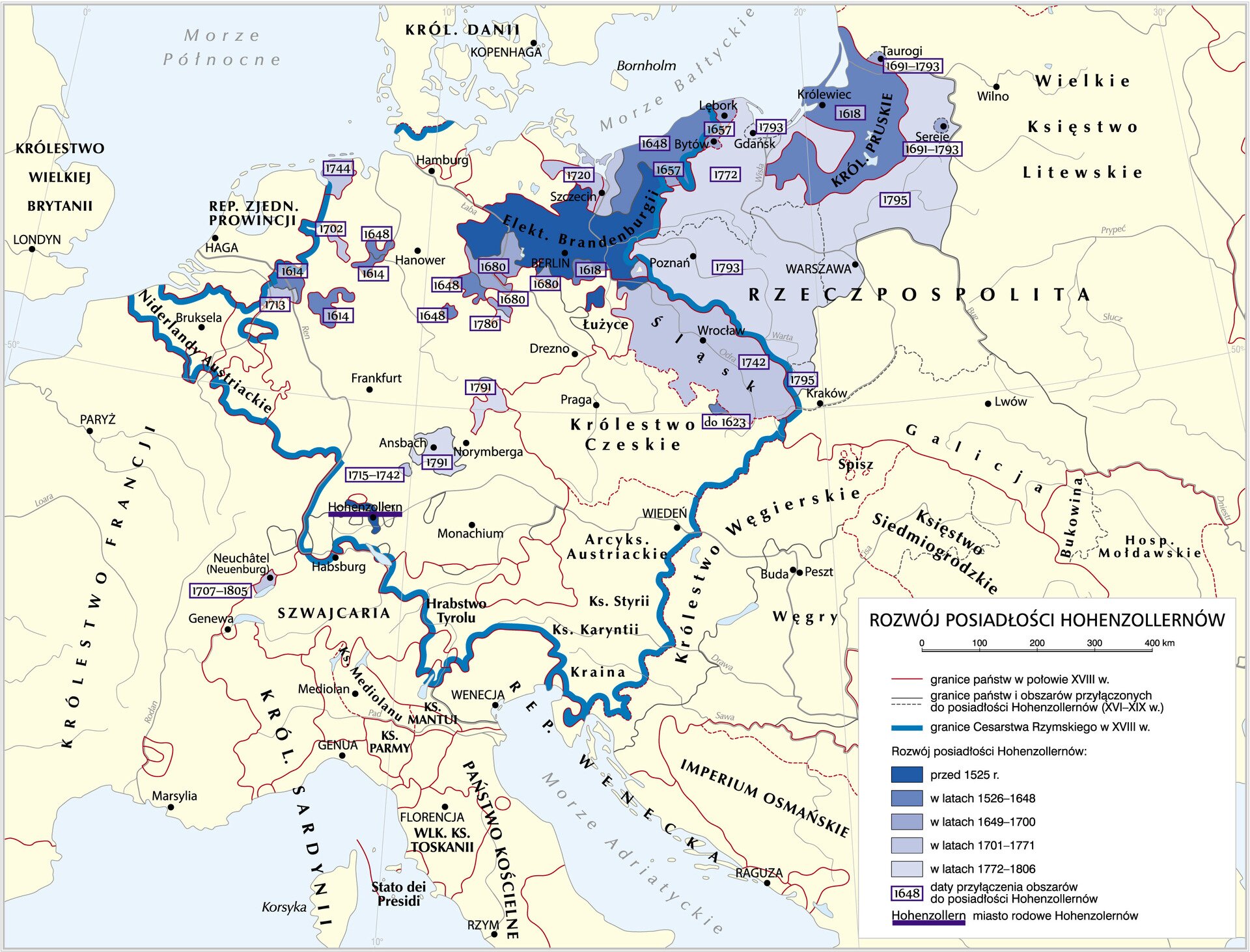
Using the map, indicate the stages in the territorial development of Brandenburg firstly, then Prussia, from 1600‑1795.
R3AH4kJaTELEC
Grafika mapy przedstawiającej rozwój posiadłości Hohenzollernów.
Development of the Hohenzollern estates
Source: Krystian Chariza i zespół.
Task 2
Listen to the recording on the generational conflict in the Prussian court.
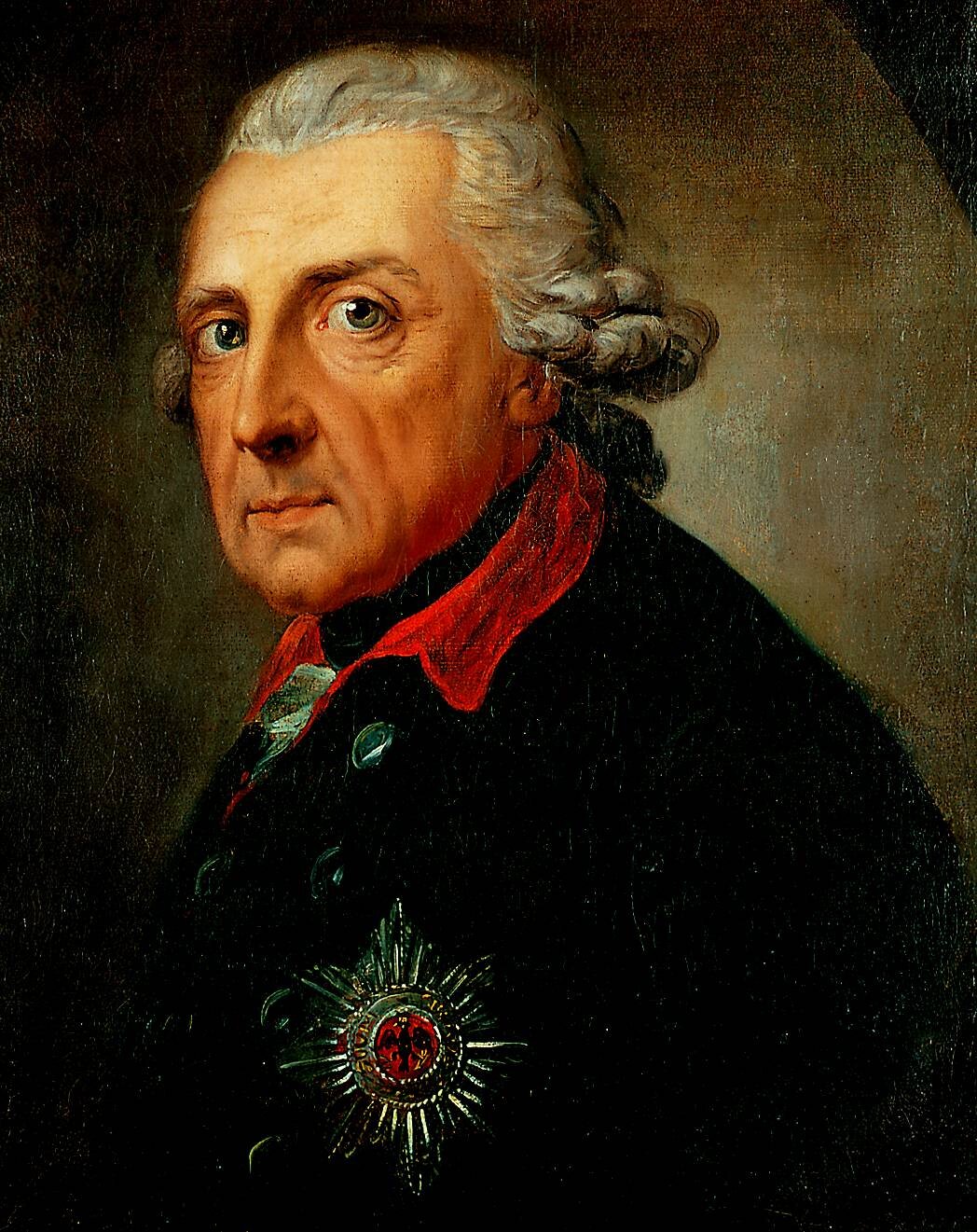
Obraz przedstawiający portret Fryderyka Wielkiego.
Frederick the Great
Source: domena publiczna.
In this painting done by the nineteenth‑century painter Adolph von Menzel, known as „Frederick the Great's Flute Concert in Sansoucci”, the master is immortalised in the centre of the picture playing music amongst his courtiers, whilst on the harpsichordharpsichordharpsichord his favorite is playing, Johann Joachim Quantz. He was a German flotist and composer, as well as a specialist instrument maker. The artist has captured this moment in the life of the famous Prussian ruler, for whom art and music were amongst his greatest passions.
In his youth Frederick, later to be known as the Great, seemed the complete opposite of his father, although it was upon his request that he always was dressed in uniform. Frederick Wilhelm, known as the Sergeant for a good reason, cared more for „men's entertainments” over an all‑round humanist education. He decided to give his son an education in barracks. To his disappointment, the son did not live up to his father's hopes. He had to endure hunting and military drillsdrillsdrills, and when he played the flute he favoured classical music over marches.
Frederick rebelled, and wanted to cut himself off from his overbearing father and in 1730 he took the decision – along with a companion - to flee the court. His escape did not succeed, and an enraged king decided to treat them as deserters and put them in a fortress in Kostrzyn on the Oder. The Prince was even threatened with the death penalty: finally Frederick, at his father's wish, studied finance and administration whilst there. Frederick's companion Hans Hermann von Katte was executed (his father forcing Frederick to watch). After a year, a broken Frederick submitted to the will of his father and returned to his military service. This time, however, he was closely supervised by his father and his courtiers were exiled. Only after he married did relations between father and son improve.
RGQI8lFWbNlS91
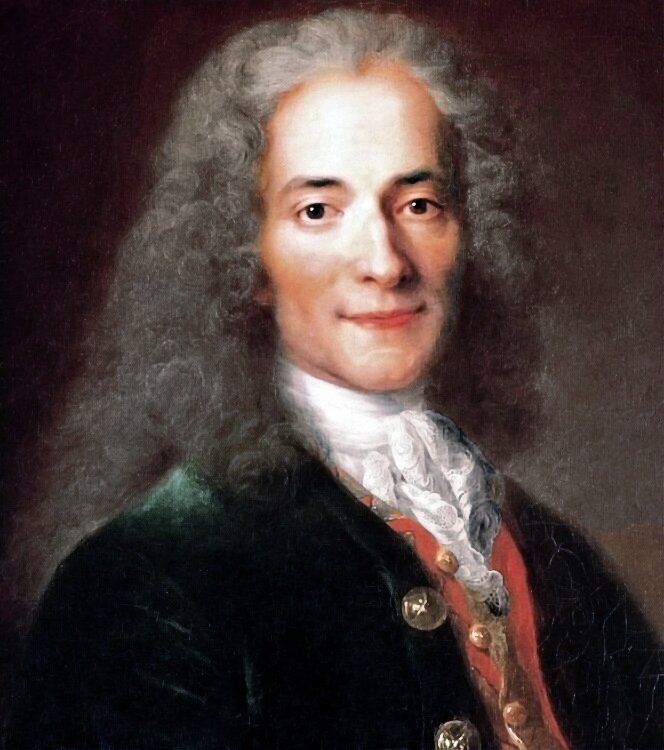
Portret francuskiego pisarza, François-Marie Arouet, znanego pod pseudonimem artystycznym Wolter.
A portrait of the French writer François-Marie Arouet, known by his pseudonym Wolter
Source: domena publiczna.
Despite his father's attempts to lessen his son's fascination with French culture, Frederick (who spoke French his entire life) remained a lover of philosophy, poetry and country life. As monarch, in his Potsdam palace of Sansoucci, the private residence of the ruler, he gathered about him writers, scholars and musicians. He was also a musician and philosopher himself. He wrote faultless poetry and great historical prose. He wrote the first history of Prussia. He was in correspondence with Europe's most vocal writer – Wolter. Against a background of enlightened rulers of eighteenth‑century Europe, he stood as an exceptional figure and attracted the attention of the whole continent.
Organise the achievements of the rulers of Prussia Frederick III (later known as Frederick I) Możliwe odpowiedzi: 1. Expansion of the fiscal system, 2. Introduction of compulsory education, 3. the release of the Principality of Prussia from dependence upon Polish fiefdom, 4. The royal army expands from 40 000 to 180 000 soldiers, 5. Extensive acquisition of territory (Silesia, north-western provinces of the Polish-Lithuanian Commonwealth), 6. Coronation of the King in Prussia, 7. Cantonal recruitment Frederick Wilhelm I Możliwe odpowiedzi: 1. Expansion of the fiscal system, 2. Introduction of compulsory education, 3. the release of the Principality of Prussia from dependence upon Polish fiefdom, 4. The royal army expands from 40 000 to 180 000 soldiers, 5. Extensive acquisition of territory (Silesia, north-western provinces of the Polish-Lithuanian Commonwealth), 6. Coronation of the King in Prussia, 7. Cantonal recruitment Frederick II The Great Możliwe odpowiedzi: 1. Expansion of the fiscal system, 2. Introduction of compulsory education, 3. the release of the Principality of Prussia from dependence upon Polish fiefdom, 4. The royal army expands from 40 000 to 180 000 soldiers, 5. Extensive acquisition of territory (Silesia, north-western provinces of the Polish-Lithuanian Commonwealth), 6. Coronation of the King in Prussia, 7. Cantonal recruitment Frederick Wilhelm I the Great Elector Możliwe odpowiedzi: 1. Expansion of the fiscal system, 2. Introduction of compulsory education, 3. the release of the Principality of Prussia from dependence upon Polish fiefdom, 4. The royal army expands from 40 000 to 180 000 soldiers, 5. Extensive acquisition of territory (Silesia, north-western provinces of the Polish-Lithuanian Commonwealth), 6. Coronation of the King in Prussia, 7. Cantonal recruitment
Organise the achievements of the rulers of Prussia Frederick III (later known as Frederick I) Możliwe odpowiedzi: 1. Expansion of the fiscal system, 2. Introduction of compulsory education, 3. the release of the Principality of Prussia from dependence upon Polish fiefdom, 4. The royal army expands from 40 000 to 180 000 soldiers, 5. Extensive acquisition of territory (Silesia, north-western provinces of the Polish-Lithuanian Commonwealth), 6. Coronation of the King in Prussia, 7. Cantonal recruitment Frederick Wilhelm I Możliwe odpowiedzi: 1. Expansion of the fiscal system, 2. Introduction of compulsory education, 3. the release of the Principality of Prussia from dependence upon Polish fiefdom, 4. The royal army expands from 40 000 to 180 000 soldiers, 5. Extensive acquisition of territory (Silesia, north-western provinces of the Polish-Lithuanian Commonwealth), 6. Coronation of the King in Prussia, 7. Cantonal recruitment Frederick II The Great Możliwe odpowiedzi: 1. Expansion of the fiscal system, 2. Introduction of compulsory education, 3. the release of the Principality of Prussia from dependence upon Polish fiefdom, 4. The royal army expands from 40 000 to 180 000 soldiers, 5. Extensive acquisition of territory (Silesia, north-western provinces of the Polish-Lithuanian Commonwealth), 6. Coronation of the King in Prussia, 7. Cantonal recruitment Frederick Wilhelm I the Great Elector Możliwe odpowiedzi: 1. Expansion of the fiscal system, 2. Introduction of compulsory education, 3. the release of the Principality of Prussia from dependence upon Polish fiefdom, 4. The royal army expands from 40 000 to 180 000 soldiers, 5. Extensive acquisition of territory (Silesia, north-western provinces of the Polish-Lithuanian Commonwealth), 6. Coronation of the King in Prussia, 7. Cantonal recruitment
Organise the achievements of the rulers of Prussia
Extensive acquisition of territory (Silesia, north-western provinces of the Polish-Lithuanian Commonwealth), The royal army expands from 40 000 to 180 000 soldiers, Cantonal recruitment, Introduction of compulsory education, Expansion of the fiscal system, the release of the Principality of Prussia from dependence upon Polish fiefdom, Coronation of the King in Prussia