Algae
algae include autotrophic representatives of bacteria, protists and plants (green algae and red algae).
describe the habitat of algae and their characteristics;
identify algae based on structure;
present the importance of algae in nature and for humans.
What organisms belong to algae?
AlgaeAlgae are a group of unrelated organisms whose common feature is the inhabitation of waters. Algae belong to three kingdoms. Cyanobacteria belongs to bacteria, diatoms and brown algae – to protists, green algae and red algae – to the plant kingdom.
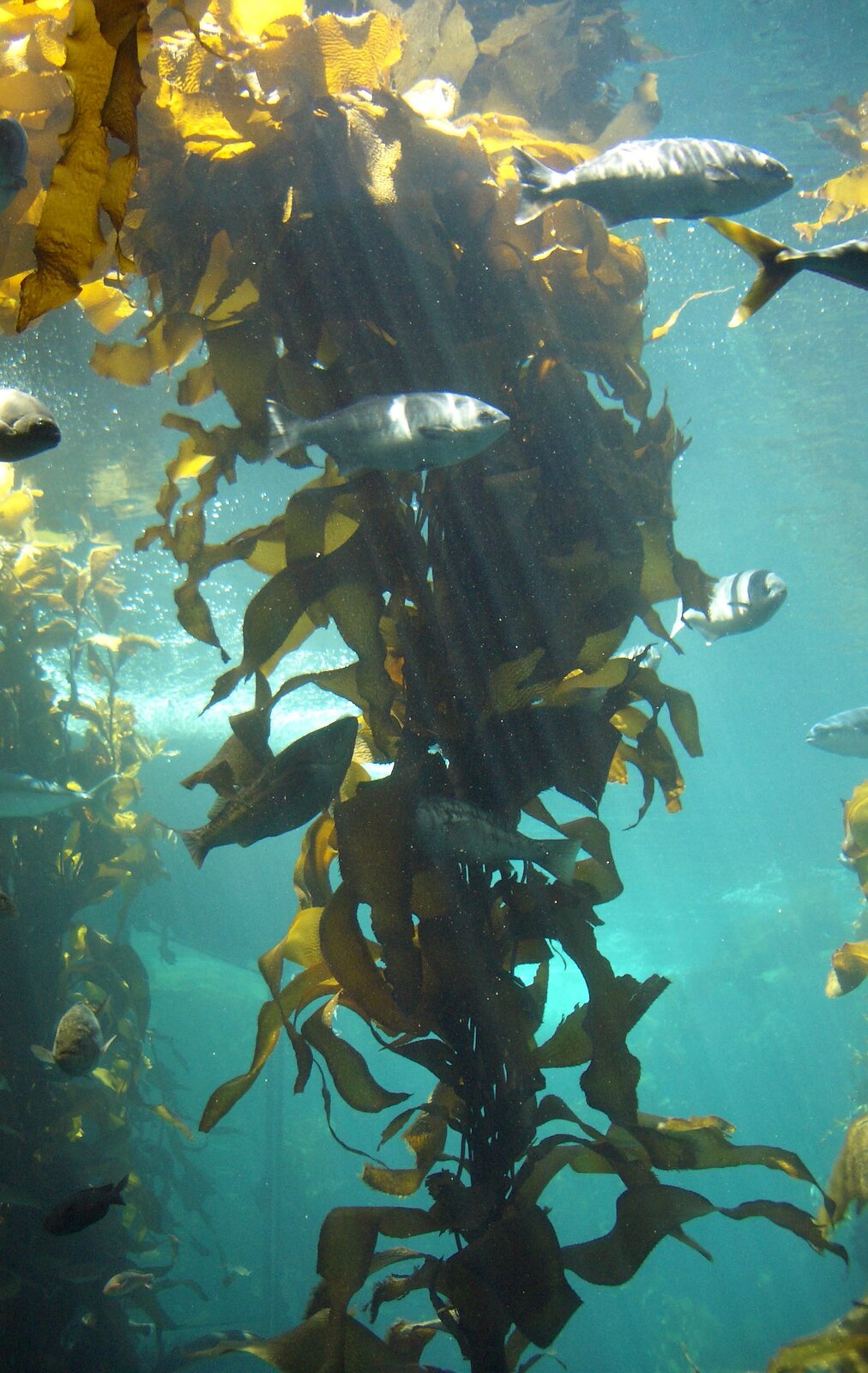
Multicellular algae do not have specialized tissues or organs. Their body is called a thallusthallus. It can reach even several dozen meters in length. Algae usually float in the water or live attached to the bottom in places where the light reaches in the amount which is sufficient for the algae present there.
Algae are autotrophic. In their cells there are chloroplasts containing chlorophyll and other dyes that facilitate the conduct of photosynthesis, as well as give them a characteristic color. The names of algae groups come from the dominant color of the cells: the green algae are green, the red algae are red, and the brown algae are yellow and brown. Products of photosynthesis run by algae are stored in cells as spare substances. The cell wall is made of cellulose.
Brown algae
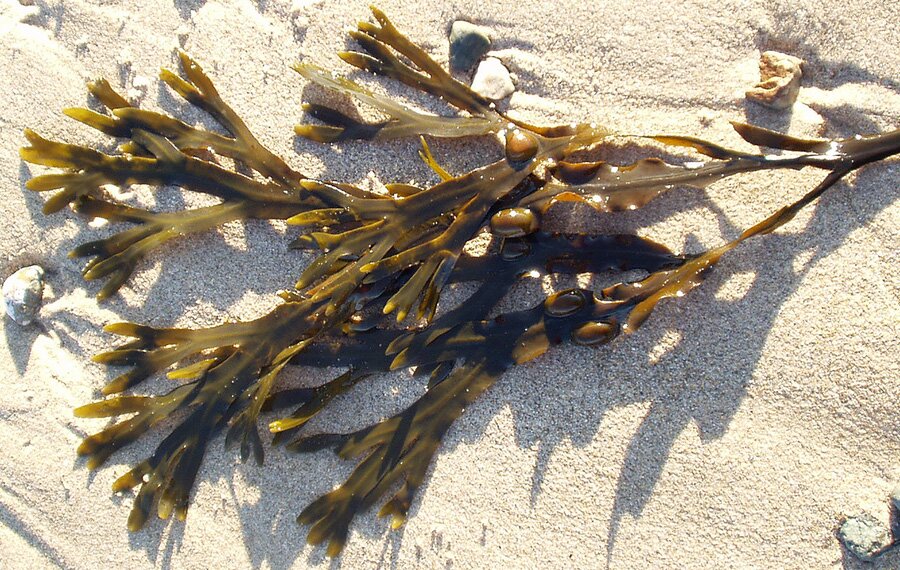
Brown algae inhabit cool sea waters of the northern hemisphere. They have multi‑cellular thallus bodies, usually in the shape of elastic bands. In addition to chlorophyll, their cells also contain brown dyes.
The representative of this group is Fucus vesiculosus, which occurs, among others, in the Baltic Sea. A strong leathery pleated thallus resembles a terrestrial plant. It attaches to the ground with a disc‑shaped holdfast. Leaves‑like elements grow from stem‑like parts. They contain air‑filled bubbles that carry algae in the water. This facilitates the harvest of light, and in the event of breaking off – the movement of parts of the thallus and the settling in subsequent places.
Green algae
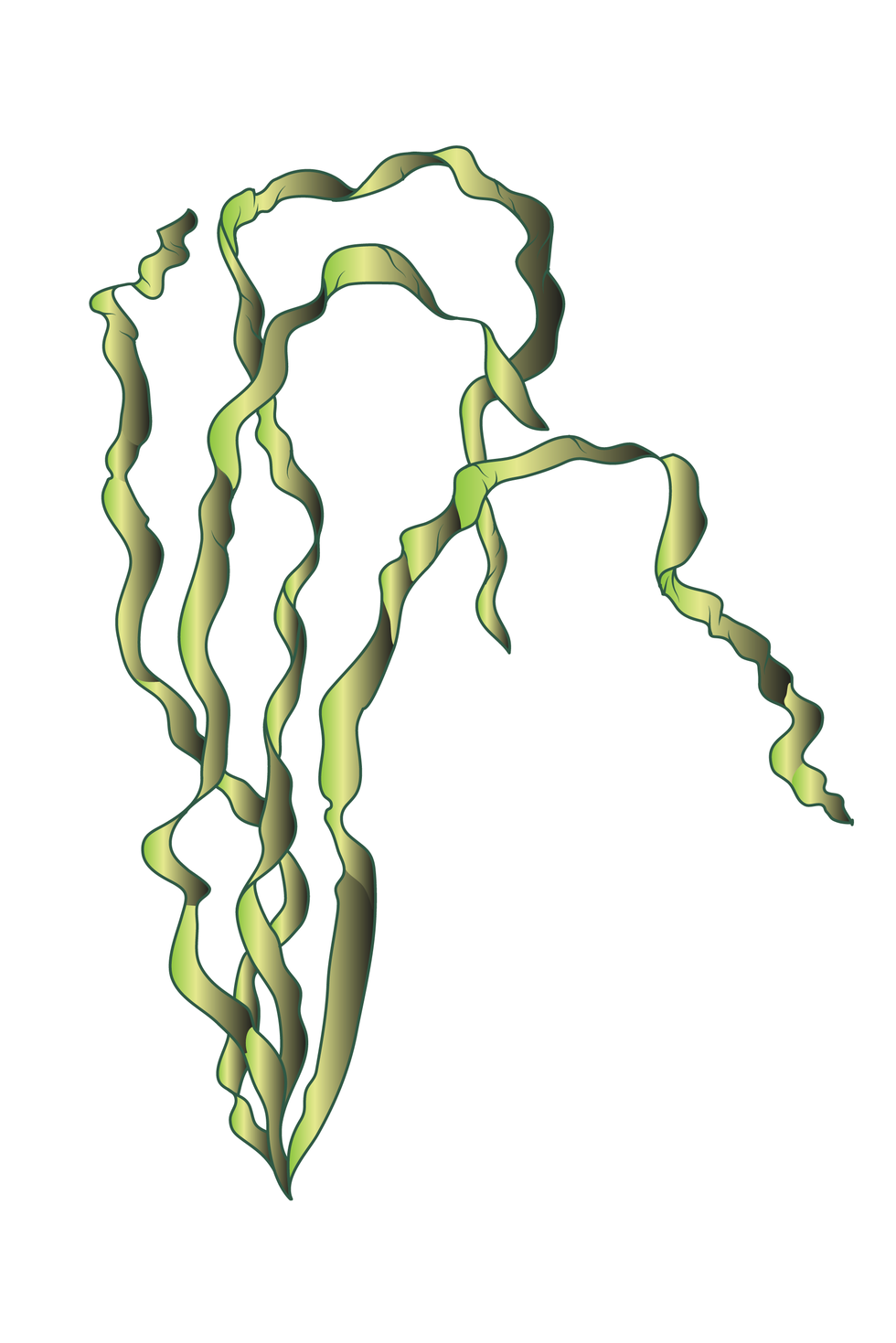
Already in early spring, roadside ditches get covered with a green, dense, floating coat. These are clusters of filamentous algae – green algae. Most of them live in freshwater, but many species inhabit the sea. Only a few can be found on land. Aquatic green algae float on the surface as plankton or live attached to the bottom of the reservoir. Land species occur in humid places.
Green algae take different shapes. They may be in the form of long threads or spheres. The thallus of multicellular green algae is long and tapered or flat and branched, resembling organs of terrestrial plants.
Green algae reproduce sexually and asexually. Single‑celled algae, Pleurococcus and chlorella reproduce by cell division. The thallus of multicellular algae, such as sea lettuce, is torn apart by movements of water or animals into fragments that give rise to new plants. Most green algae produce spores. During reproduction, algae produce gametes and release into water, where they are combined. After fertilization, a zygote is created, from which a new organism develops.
Observation of the structure of Pleurococcus cells.
microscope,
microscope instruments,
water in a beaker,
green wilding scraped from the bark of trees or stones.
Make a microscopic preparation from green wilding.
Find the Pleurococcus cells and observe them first at 100x magnification, then at 400x.
Describe the shape of the cells, distinguish the chloroplast and determine its shape.
Make a schematic drawing of a Pleurococcus cell and describe it.
Details of the Pleurococcus cell structure can be seen at a high magnification of the microscope.
Observation of the structure of Spirogyra cells.
microscope,
microscope instruments,
magnifying glass,
filaments of Spirogyra.
Take a few filaments of Spirogyra from the breeding and place them on the basic glass.
Look at them through a magnifying glass.
Make a microscopic preparation from the filaments of Spirogyra.
View the individual filaments at a low magnification, and view the structure of the cell at a high magnification.
Pay attention to the shape of the cells and their arrangement and appearance of the chloroplast.
Make drawings of a filament and a single Spirogyra cell in the notebook and describe them.
The filaments of Spirogyra are made of many identical cells. In each cell there is one long, spirally twisted chloroplast.
During the microscopic observation using a light microscope, in the cells of observed algae the cell membrane, mitochondria, and the Golgi apparatus are usually not seen. Explain whether this means that those elements of the structure are not found in algae cells.
Red algae
Red algae live mainly in the seas. Attached to underwater boulders in quiet places, safe from violent waves, they create a wonderful underwater landscape. Their delicate, lace‑like thalli wave and surrender to water movements. Red algae as autotrophic organisms contain chlorophyll, which is masked by red or blue dyes supporting the photosynthesis process. It gives them a characteristic red or purple color. Most species of red algae live at considerable depths, so additional dyes allow them to absorb the part of the light that has not been stopped by the water layer.
Adaption of algae to life in water
Green algae, red algae and brown algae inhabit seas in a specific order forced by the amount of light reaching the given depth. For light, water is a type of filter that stops part of it depending on the depth. The deeper, the less light reaches the plants. Green algae which grow shallowly use (like terrestrial plants) blue and red light. Algae living deeper support photosynthesis with additional dyes. Brown algae equipped with a yellow‑brown dye capture light of green and blue color. The green and blue light reaching the deepest is used by red algae. The depth to which the light penetrates depends on the transparency of the water, which is why algae grow in different depths in different reservoirs.
Look at the illustration that shows the distribution of algae in the sea depending on the transmission of light. At what depth do brown algae, and at what red algae grow?
Explain why there are no photosynthetic organisms in the depths of the oceans.
Cladophora ball, a common aquarium plant, creates dark green spheres. When they are not attached to the ground, they float under the surface of water on a sunny day and fall to the bottom of the aquarium at night. Why is this happening and how does this relate to life activities of this green algae? Explain.
The importance of algae
Algae are the largest oxygen producer on Earth. They are small, freely floating on the surface of water and they produce plant plankton (phytoplankton), the basic food of fish and other aquatic animals. Algae seated at the bottom of the reservoirs form vast, underwater meadows that are a refuge, a place of feeding and breeding of animals. Some species of red algae participate in building coral reefs. Dead algae falling down to the bottom are decomposed, and the mineral compounds contained in them fertilize water, enabling the development of subsequent generations of autotrophic organisms.
Man uses algae in various areas of life. In medicine, they are components of drugs recommended in diseases of the digestive system. Those that contain a lot of iodine are used in the treatment of thyroid diseases. In cosmetics industry, algae are used to make creams and face masks that moisturize the skin and improve its elasticity. Certain species of algae are used to obtain agar‑agar, a gelling substance used for the production of sweets, medicines, and as a base for the media on which bacteria are grown. In Japan and China, some species of algae are treated as a component of meals, and others used for fertilizing the soil.
It happens, however, that algae become cumbersome. Plankton green algae, growing excessively on the surface of water reservoirs, can create water efflorescence limiting the access of light to plants living in their deeper layers. This prevents the efficient course of photosynthesis in the water reservoir, causes a significant reduction in the amount of oxygen and contributes, among others, to mortality of fish.
List two features that allow distinguishing terrestrial plants from algae and make the life on land easier for them.
Mark true sentences.
- Algae have dyes that can capture light.
- Green algae are autotrophic, and brown and red are heterotrophic.
- Algae thanks to green dye such as a chlorophyll, and additional red, brown and yellow dyes can lead to photosynthesis.
- Algae for photosynthesis extract oxygen and carbon dioxide from the environment.
- Thanks to photosynthesis, algae produce food substances and oxygen.
Summary
Multi‑cell algae do not produce tissues and do not have roots, stems and leaves.
The bodies of brown, green and red algae take different shapes: from filamentous to ribbony, looking like leaves of terrestrial plants.
Single‑cell, colonial and multi‑cell organisms are found among green algae.
Red algae are mainly sea algae living at great depths.
Different colours of algae are caused by the presence of additional dyes that support the process of photosynthesis, which takes place in water at various depths.
Algae are the largest oxygen producer on the Earth.
Keywords
algae, green algae, brown algae, red algae
Glossary
glony – grupa organizmów związana ze środowiskiem wodnym, skupiająca samożywne organizmy jednokomórkowe i wielokomórkowe, niewytwarzające organów; zalicza się do nich na przykład euglenę i brunatnice należące do protistów oraz zielenice i krasnorosty należące do roślin.
plecha – wielokomórkowe ciało glonu lub grzyba, w którym nie występują tkanki ani organy