Ancient Roman achievements
what the Roman ForumForum was, furthermore you will understand the specificity of this place and its importance for the development of civic culture in Europe;
what the Roman sources of European legislation are;
who oratorsorators were, furthermore you will understand their importance in the culture of ancient RomeRome.
RomansRomans were great builders and engineers. They invented concreteconcrete, which they used to build arches and domes. Building skills helped them construct enormous and magnificent structures in RomeRome and other Empire cities. One of those buildings was the Roman PantheonPantheon, a templetemple founded in honour of all the gods and covered with the world’s largest dome. RomansRomans got their running from aqueductsaqueducts (over‑ground water supply systems) which collected water from mountain streams. RomansRomans spent their free time in thermae (public baths). Visiting an amphitheatreamphitheatre was another popular pastime. RomansRomans watched gladiatorgladiator fights at such amphitheatresamphitheatres as the ColosseumColosseum, also known as the Flavian AmphitheatreAmphitheatre in RomeRome. RomansRomans also visited circuses, e.g. Circus Maximus in RomeRome, to watch chariots races. RomansRomans also codifiedcodified the law. Roman principles of law are still used today.
Read the information below. What was the role of law in the life of the RomansRomans?
RomeRome, the capital of Roman Empire, was the largest city in the world in the 1st century AD. The visitors were thrilled by its size and magnificent buildings. Like in any other Roman city, the centre of political, religious and social life was the forumforum, i.e. the central square. Around a million people lived in RomeRome. The wealthy had their own houses with gardens. The poor rented apartments in several‑storey tenement houses. The ground floors of the buildings were occupied by shops and services.
The law played an important role in the Roman state. The RomansRomans had to follow its rules. In the 5th century BC, they wrote down laws on Twelve Tables which they placed in the Roman ForumForum. The idea was to allow every passer‑by to get familiarized with its principles. This code of law is called the Law of Twelve Tables.

Roman lawRoman law had been developing over the centuries. Numerous new laws and regulations were introduced. It was not until the 6th century A.D. that they were assembled, or codifiedcodified, on the order of Emperor Justinian the Great.
Many of the principles currently in force in our law are based on the Roman lawRoman law. One of the examples is the principle that both parties to the dispute must be heard.
Familiarize yourself with the figure of Cicero. What was this Roman famous for?
Nagranie dostępne na portalu epodreczniki.pl
Nagranie słuchowiska
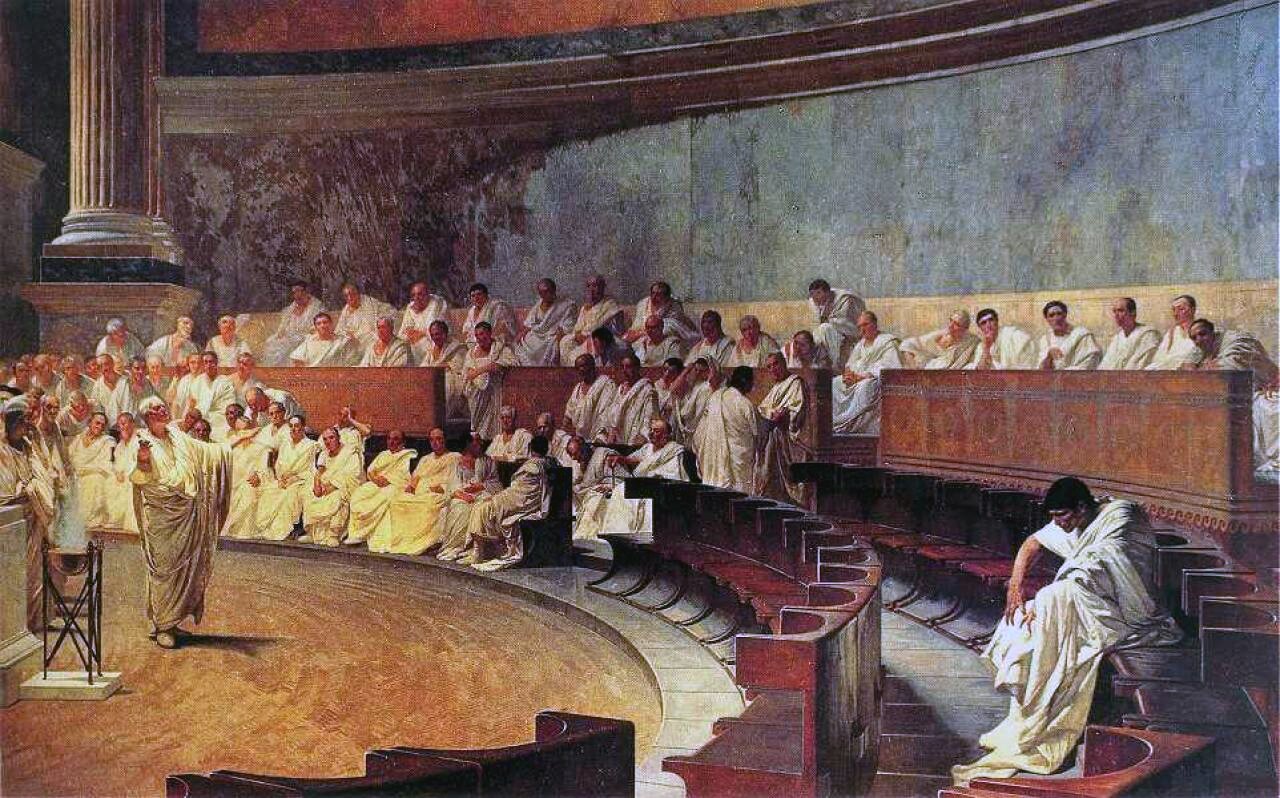
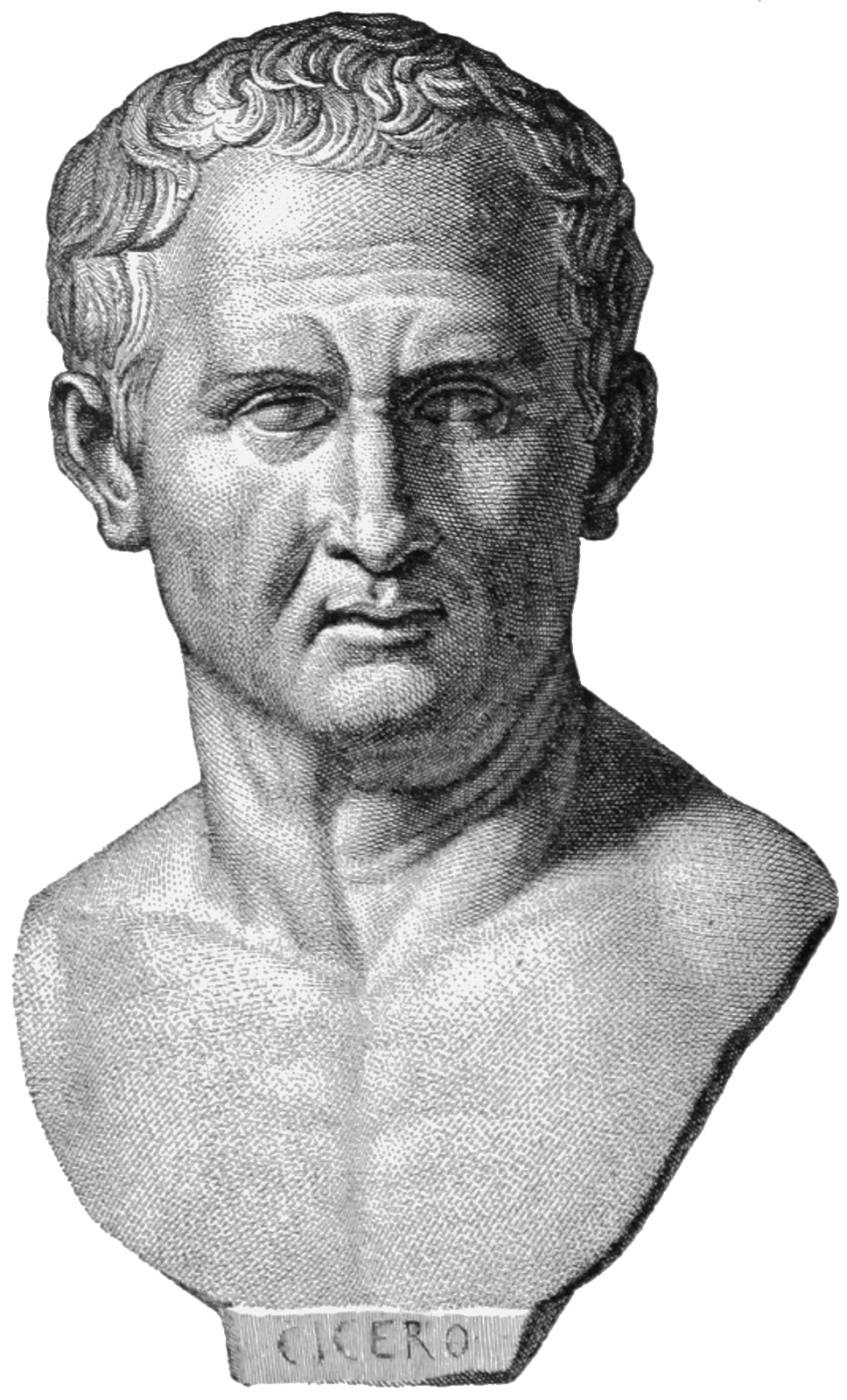
Marcus Tullius Cicero was a Roman politician, statesman and philosopher living in the first century BC. He started his career as a court attorney. Later, he focused on his political activities; however, he became famous to his descendants for another reason. He was considered to be the greatest speaker in Roman history. He was a master in his use of words and rhetorical style. His speeches were characterized by excellent structure and clarity of message. The RomansRomans had many occasions to hear Cicero speak from the rostrum set up at the Roman ForumForum. He also gained fame as a theoretician of pronunciation. In the field of rhetoricrhetoric, his most popular work was “About the speaker”, in which he presented the image of an ideal speaker, combining the art of expression with deep philosophical culture. His definitions, explanations and examples formed the basis for textbooks for rhetoricrhetoric for several centuries to come.
As one of the researchers of antiquity wrote, Cicero's speech was a model example of fulfilling all the conditions set by rhetoricrhetoric. His inborn intelligence, elaborate education, logic of reasoning but also an unusual imagination let him choose the right arguments. The ease of finding the right words, eloquence, and excellent mastery of different styles of pronunciation gave him the opportunity to present content in a beautiful form; finally, sincere engagement, extraordinary memory, beauty, a pleasant voice, and the tendency to live gestures – these were factors that allowed him to charm and move listeners.
The ancient RomansRomans considered the Roman ForumForum to be the most important place of RomeRome, but also of the whole world at that time. Therefore, near the public rostrum and the Triumphal Arch of Septimius Severus, they erected a small brick monument symbolising the „navel of the world”, as ancient people used to call it.
Solve the crossword.
- The central square in the Roman city.
- The building material used by the Romans.
- A Roman temple dedicated to all gods, covered with the largest dome in the world.
- The type of structure the colosseum is...
- Latin word, meaning ignorance, also ignorance of the law.
- The famous Roman speaker.
- Latin word, meaning contracts or mutual arrangements.
| 1 | ||||||||||||||
| 2 | ||||||||||||||
| 3 | ||||||||||||||
| 4 | ||||||||||||||
| 5 | ||||||||||||||
| 6 | ||||||||||||||
| 7 |
Language practice. Match pairs: English and Polish.
prawo rzymskie, retoryka, amfiteatry, świątynie, akwedukt, forum, kodyfikacja, beton (budulec)
| amphitheaters | |
| aqueduct | |
| concrete | |
| forum | |
| temples | |
| rhetoric | |
| Roman law | |
| codification |
Keywords
Rome, Romans, forum, rhetoric, law, codification
Glossary
akwedukt – kanał wodociągowy, doprowadzający wodę z odległych źródeł na ogół do miast przy wykorzystaniu grawitacji.
amfiteatr – przeznaczona dla publicznych pokazów odkryta przetrzeń o kolistym kształcie, najczęściej otoczona wznoszącymi się schodkowo rzędami siedzeń dla widzów.
kodyfikacja – zebranie zasad w jednolitą całość i zapisanie ich.
Koloseum – amfiteatr w Rzymie.
beton – powszechny materiał budowlany.
forum – plac w wielu miastach starożytnego Rzymu, na którym odbywały się zebrania ludowe, targi, sądy; miejsce publicznych wystąpień.
gladiator – zazwyczaj niewolnik toczący walkę na arenie.
prawo rzymskie
orator – mówca
Panteon – rzymska świątynia poświęcona wielu bóstwom.
retoryka – sztuka przemawiania.
Rzymianie
Rzym
świątynia