Annelids
flatworms and nematodes are free‑living and parasitic animals with a worm‑shaped body;
earthworms live in the ground and feed on organic matter contained in the soil;
to distinguish annelids from other worm‑shaped animals;
to indicate and describe the earthworm’s adaptation to underground life, and the leech's to parasitism;
to explain the role of annelids in nature.
The habitat of annelids
Annelids live mainly in fresh and salt water but terrestrial species are also known. Most of them lead an active lifestyle – they dig underground corridors, crawl on the bottom of water reservoirs or dig them, float under the surface of water. Some species are sedentary. The rear end of the body is attached to stones located on the bottom. They can also settle on the armour of other organisms. Their bodies are often hidden in special tubes that are also called houses. These tubes are made of mucus secreted by the annelid's body and materials available in the animal's surroundings, such as sludge and sand grains. Species that lead an active lifestyle have two‑sided symmetry, and those leading a sedentary lifestyle usually have radial symmetry.
Annelids have vermiform bodies divided into segments also known as rings. They do not have a hard skeleton. It is replaced by fluid that fills empty spaces inside the body with no organs. Under the epithelium covering the body there is a thick layer of muscles that allows changing the shape of the body and moving around.
Explain why some annelids produce houses.
Eating methods of annelids
Earthworms, which lead an underground lifestyle, feed on dead organic matterfeed on dead organic matter found in the soil. They eat huge amounts of soil, and acids contained therein are neutralized with special limestone glands escaping into the oesophagus. They digest organic substances found in the substrate, and excrete mineral components from the body in a form easy to assimilate for plants.
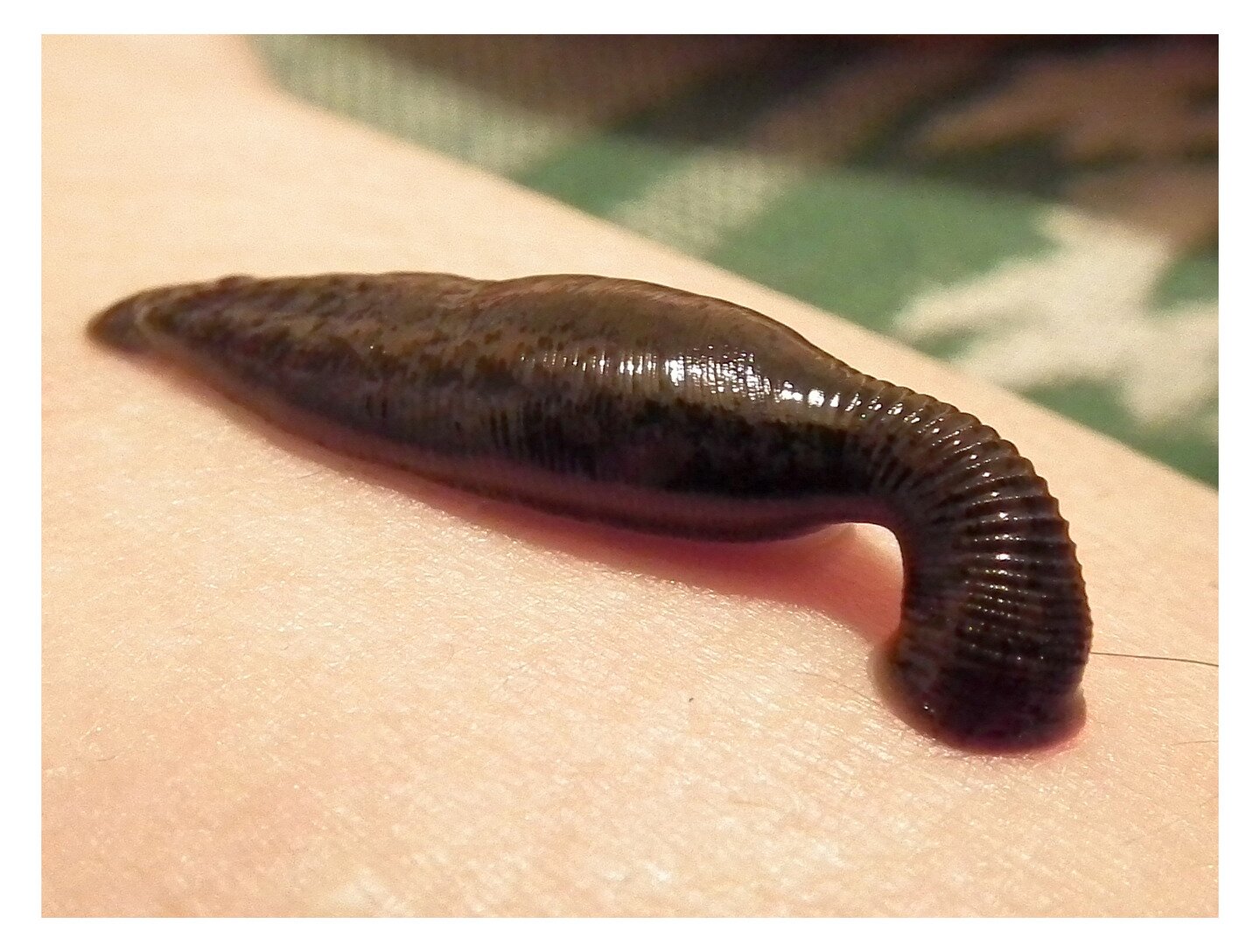
Leeches are mostly external parasitesexternal parasites. They feed on the blood of their hosts. They have suction cups on the front and back of their bodies. They use them to attach to the host and cut its skin with teeth in the mouth hole placed inside one of the suction cups. Leeches put in an anaesthetic substance into the victim's body thanks to which the victim does not notice the presence of the parasite, and hirudinhirudin, a substance that prevents blood from clotting. Leeches suck a large amount of blood at one time, and then they store it in the cropcrop, a part of the digestive tract. Digestion can last up to 2 years. Some leeches and some marine annelids are predators. They hunt their prey, mainly small crustaceans and mollusks, chasing them in water.
Comparison of the external structure and the way of movement of the earthworm and the leech. OR Describe the earthworm’s adaptation to underground life.
earthworm,
selected species of bred leech,
magnifying glass.
sheet of paper,
glass plate.
Observe the structure of the earthworm and the leech, point out the differences and similarities in their structure.
Make a schematic drawing of both specimens and describe it.
Observe the way the earthworm and the leech move around the surface of the sheet of paper and the glass plate.
Explain why the leech can move on the glass surface and the earthworm cannot.
Annelids move by shortening and lengthening subsequent body segments. This movement is possible thanks to bristles in the case of the earthworm, and a suction cup in the case of the leech.
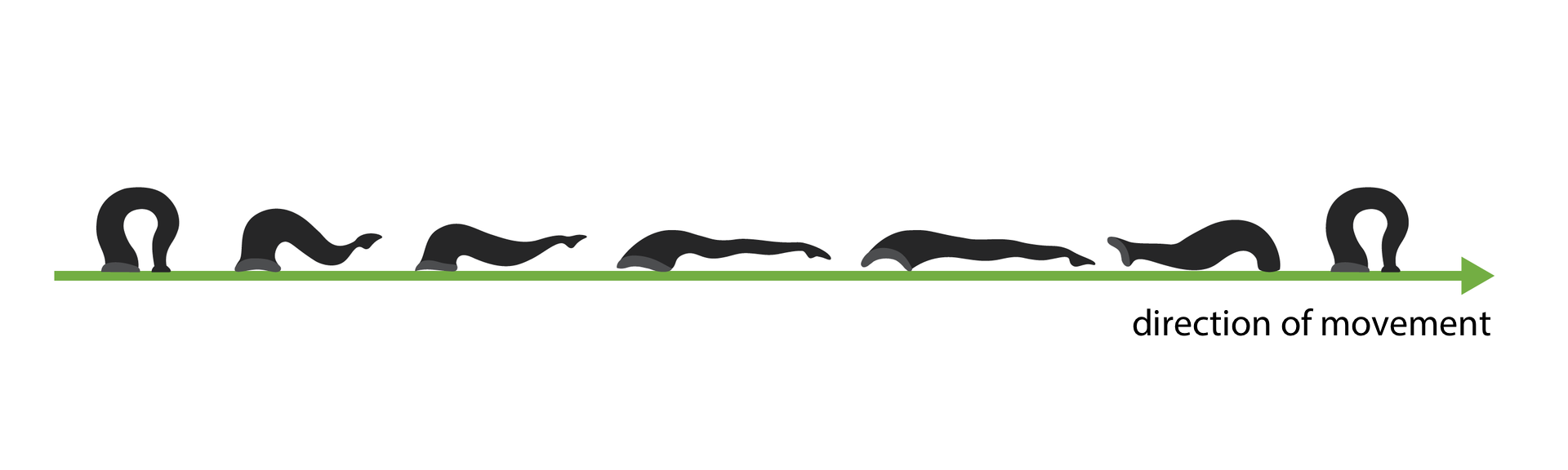
Explain why the colouring of the leech is dark: black, brown, dark grey, dark green.
Reproduction of annelids
Earthworms and leeches are both hermaphrodites. They are characterized by simple development, i.e. without the larva stage. There occurs cross fertilizationcross fertilization, during which two annelids stick together with the abdominal sides of the body and exchange sperm. They release large amounts of mucus used to connect them and to which gametes go. It transforms into a cocoon in which fertilized eggs will develop. The number of eggs therein is from 1 up to 300. Cocoons are deposited in the soil, on plants, stones or on the abdominal side of the parent organism.
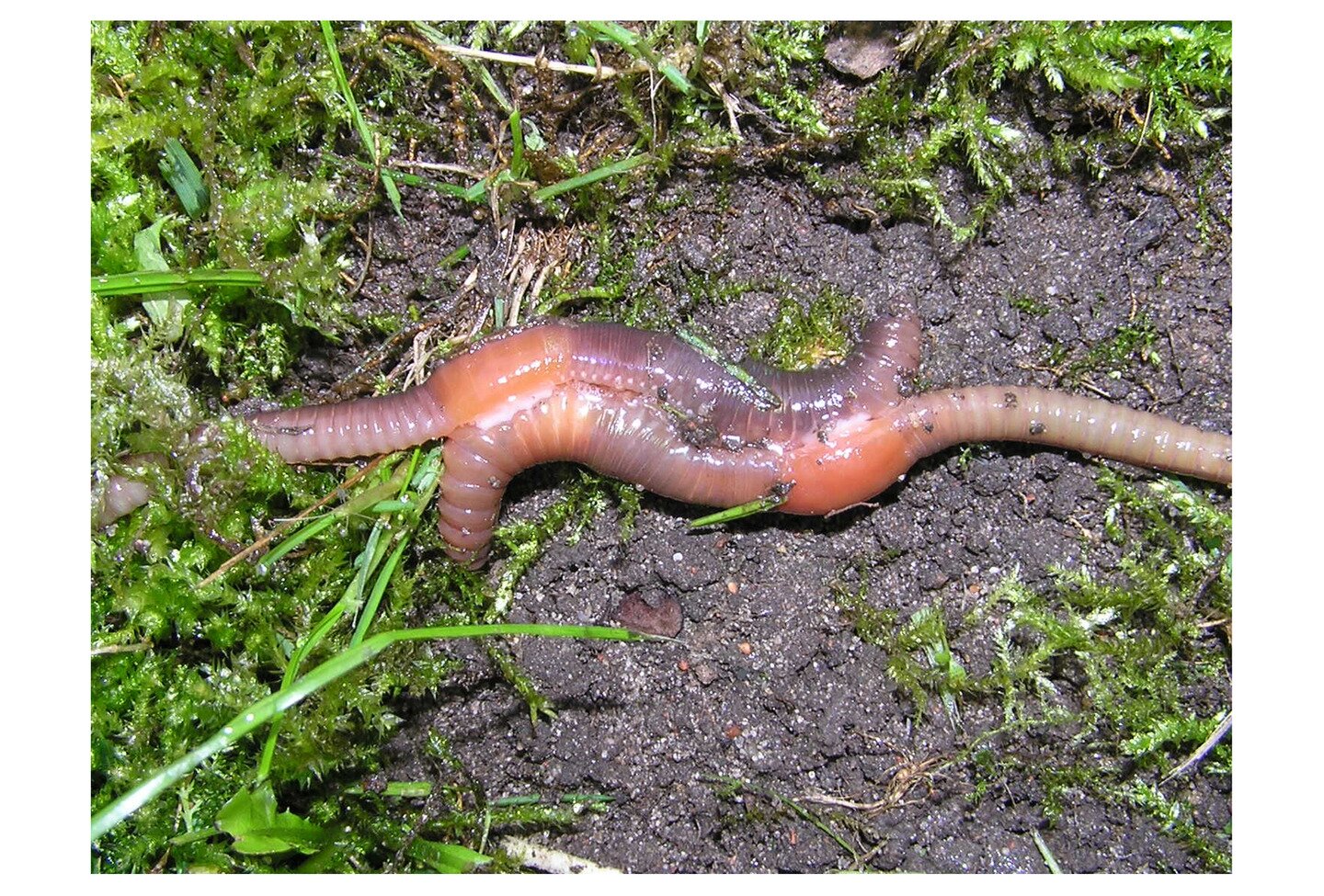
Think about what young earthworms eat right after hatching from eggs.
The importance of annelids
Annelids, mainly earthworms, participate in soil formation and fertilization, and improve its structure. Their underground corridors scarify it, thanks to which other soil organisms and plant roots have better access to oxygen, and the loose substrate absorbs and retains large amounts of water. Earthworms eat leaves and manure particles, accelerating the decomposition of organic matter. Their impact on soil quality is so great that they are deliberately bred and then used to decompose waste from slaughterhouses or fruit and vegetable, paper, sawdust, sewage sludge processing plants. They transform it into a very valuable fertilizer that is called biohumus.
Marine annelids, which live at the bottom and feed on dead organic matter, contribute to purification of water.
Annelids are a valuable source of food for many groups of animals, such as cancers, insects, fish, amphibians, birds and mammals. They are often used as a fishing bait or food for aquarium fish. Some predatory leeches and marine annelids balance the numbers of other organisms, mainly small crustaceans and molluscs. Leeches parasitizing fish cause considerable damage in their breeding. The ability of leeches to suck blood is used in the treatment of many diseases, such as: hypertension, ischemic heart disease, varicose veins and limb oedema. Applied to wounds after surgery, skin transplants and burns, they accelerate healing.
What kind of living conditions does the earthworm need?
When preparing a bait for fish, fishermen obtain dew‑worms. Search for information to which group of animals they belong.
In home gardens, cut grass, weeds and organic waste are collected in composters. Think about how gardeners can accelerate the conversion of plant biomass into compost.
Read or hear the description of the breeding and answer the questions.
Students from a primary school started earthworm breeding. In a medium‑sized aquarium they laid layers of soil and sand, let five earthworms in the aquarium and sprinkled the soil, preventing it from drying out. On the surface of the soil they laid peelings from potatoes and cucumbers. They covered the aquarium with a cardboard box with holes.
Why did the students put the peelings on the surface of the soil and why did they cover the aquarium with a box with holes?
Summary
Annelids are animals with worm‑shaped bodies composed of segments (annuli).
Annelids are: saprophages (earthworms), parasites (most leeches) or predators.
Annelids that live underground do not have legs or eyes.
Annelids contribute to soil fertilization and purification of water reservoirs.
Match the pairs: English words with Polish definition.
clitellum, crop, mudeaters, hirudin, cross fertilization
| substancja przeciwdziałająca krzepnięciu krwi, znajdująca się w ślinie pijawek. | |
| mało ruchliwe zwierzęta wodne, odżywiają się szczątkami organicznymi, które pobierają wraz z mułem. | |
| pogrubiały, obrączkowaty odcinek ciała niektórych pierścienic powstały z pierścieni odcinka tułowiowego, w którego nabłonku występują liczne, silnie rozwinięte komórki wydzielające śluz; uczestniczy w procesie rozmnażania płciowego. | |
| rozszerzenie lub uchyłek przełyku, który służy do gromadzenia pokarmu; występuje u pijawek, niektórych owadów i większości ptaków. | |
| wymiana gamet między osobnikami tego samego gatunku będących obojnakami; występuje u płazińców, pierścienic i ślimaków. |
Keywords
annelids, earthworm, leech
Glossary
hirudyna – substancja przeciwdziałająca krzepnięciu krwi, znajdująca się w ślinie pijawek.
mułożercy – mało ruchliwe zwierzęta wodne, odżywiają się szczątkami organicznymi, które pobierają wraz z mułem.
pasożyty zewnętrzne – organizmy cudzożywne żyjące na powierzchni innego organizmu (żywiciela) i żywiące się jego płynami ustrojowymi lub elementami pokrycia jego ciała, np. piórami; są wyposażone w różnorodne narządy czepne umożliwiające przytwierdzenie się do ciała żywiciela, a czasem także wytwarzają substancje znieczulające i przeciwdziałające krzepnięciu krwi; wiele pasożytów zewnętrznych, np. kleszcze, muchy, komary, przenosi drobnoustroje powodujące liczne choroby.
saprofagi – cudzożywne organizmy zwierzęce, które odżywiają się martwą materią organiczną; występują w glebie i ściółce leśnej oraz w wodach i mułach na dnie zbiorników wodnych; należą do nich zwierzęta bezkręgowe, takie jak pierścienice i nicienie.
siodełko – pogrubiały, obrączkowaty odcinek ciała niektórych pierścienic powstały z pierścieni odcinka tułowiowego, w którego nabłonku występują liczne, silnie rozwinięte komórki wydzielające śluz; uczestniczy w procesie rozmnażania płciowego.
szczecinki – włosowate, chitynowe struktury występujące u zwierząt bezkręgowych; u pierścienic mają postać cienkich twardych wyrostków, które umożliwiają odpychanie się od podłoża podczas ruchu; szczecinki występujące na odnóżach lub odwłoku stawonogów służą do odbierania bodźców zmysłowych.
wole – rozszerzenie lub uchyłek przełyku, który służy do gromadzenia pokarmu; występuje u pijawek, niektórych owadów i większości ptaków.
zapłodnienie krzyżowe – wymiana gamet między osobnikami tego samego gatunku będących obojnakami; występuje u płazińców, pierścienic i ślimaków.