you will recognise the features of the positivist period
you will recognise selected features of the modernismmodernismmodernism era
you will discuss the features of: ImpressionismimpressionismImpressionism, expressionismexpressionismexpressionism and aestheticismaestheticismaestheticism
The turn of the 19th and 20th century abounded in new but also revisited old trends and art movements. These trends permeated and encompassed ideologies, literature and art. During this period, the synthesis of art, meaning the unification of various fields, resulting from the desire to create a „total” work, was particularly prevailing. Music and painting became inspiration for poetry and the imagination, freed from all limitations, created bold, suggestive visions to reach the deepest layers of human sensitivity.
RrELtR13D6TyU1
What concepts do you associate with the positivist era?
What concepts do you associate with the positivist era?
Create a mind map related to the positivist era. In order to do that, drag the appropriate features of the era to the sheet. Other features characterize a subsequent period in the history of culture.
R1ORjdwGIeDae
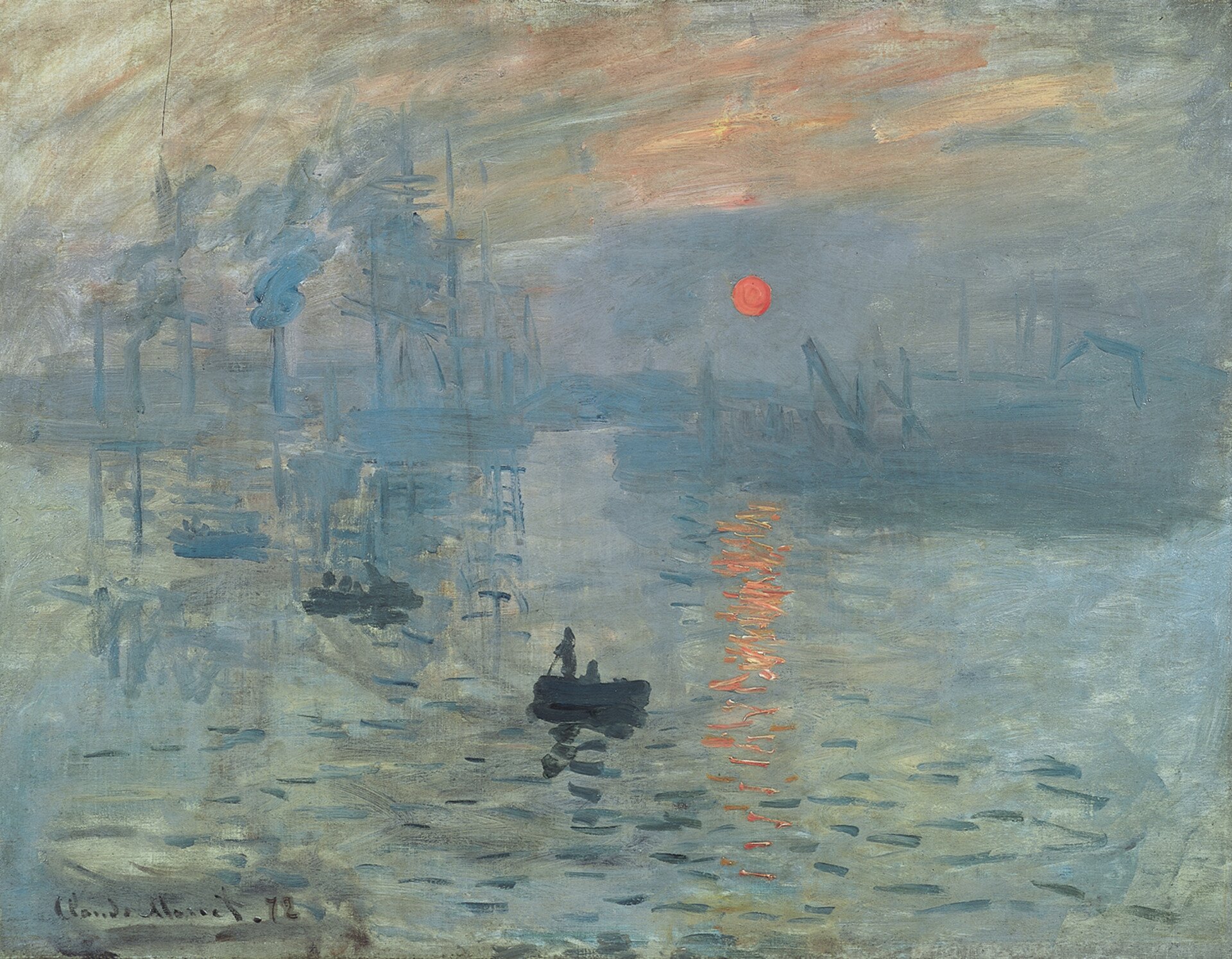
Obraz Moneta. Przedstawia łódkę na wodzie, w której widoczne są dwie postacie, jedna siedząca druga stojąca i trzymająca kij. Obraz ukazuje dwie inne małe łódki, horyzont jest rozmyty, schowany za mgłą, nad nią widoczne jest czerwone słońce. Na linii horyzontu wielkie łodzie i statki parowe.
Impression, Sunrise
Source: Claude Monet, Impression, Sunrise, Musée Marmottan Monet, Paris, licencja: CC 0.
Impressionism was a movement of painting established in France in the 1870s, whose main objective was to break away from the realism and to present volatile, difficult to capture, often very subjective, sensations (hence the name: impression derived from a French word).
It appeared in various fields of art, especially in music (Claude Debussy, Karol Szymanowski).
R1boLk4ACkifr
Exercise 1
Test your text comprehension. Fill in the missing gaps. (uzupełnij) 1. poets, 2. lyrical poetry, 3. Impressionism, 4. impression, 5. playwrites, 6. pressure, 7. Writers, 8. painters, 9. scheme, 10. Symbolism, 11. mood, 12. epic also has its literary counterpart, which appears in (uzupełnij) 1. poets, 2. lyrical poetry, 3. Impressionism, 4. impression, 5. playwrites, 6. pressure, 7. Writers, 8. painters, 9. scheme, 10. Symbolism, 11. mood, 12. epic, as well as in prose and dramatic works. The writers’ intentions were analogue to those executed by (uzupełnij) 1. poets, 2. lyrical poetry, 3. Impressionism, 4. impression, 5. playwrites, 6. pressure, 7. Writers, 8. painters, 9. scheme, 10. Symbolism, 11. mood, 12. epic – they aimed at creating 1. poets, 2. lyrical poetry, 3. Impressionism, 4. impression, 5. playwrites, 6. pressure, 7. Writers, 8. painters, 9. scheme, 10. Symbolism, 11. mood, 12. epic, vision and subjective experiences. It was the (uzupełnij) 1. poets, 2. lyrical poetry, 3. Impressionism, 4. impression, 5. playwrites, 6. pressure, 7. Writers, 8. painters, 9. scheme, 10. Symbolism, 11. mood, 12. epic of the reader that mattered the most, and not the content of a literary work. In poetry, impressionism was developed mainly in the works of French (uzupełnij) 1. poets, 2. lyrical poetry, 3. Impressionism, 4. impression, 5. playwrites, 6. pressure, 7. Writers, 8. painters, 9. scheme, 10. Symbolism, 11. mood, 12. epic of the second half of the 19th century, such as Paul Verlaine or Stéphane Mallarmé. In Polish literature, works of such writers as Stanisław Wyspiański, Lucjan Rydel or Wacław Berent deserve particular attention in that context.
Test your text comprehension. Fill in the missing gaps. (uzupełnij) 1. poets, 2. lyrical poetry, 3. Impressionism, 4. impression, 5. playwrites, 6. pressure, 7. Writers, 8. painters, 9. scheme, 10. Symbolism, 11. mood, 12. epic also has its literary counterpart, which appears in (uzupełnij) 1. poets, 2. lyrical poetry, 3. Impressionism, 4. impression, 5. playwrites, 6. pressure, 7. Writers, 8. painters, 9. scheme, 10. Symbolism, 11. mood, 12. epic, as well as in prose and dramatic works. The writers’ intentions were analogue to those executed by (uzupełnij) 1. poets, 2. lyrical poetry, 3. Impressionism, 4. impression, 5. playwrites, 6. pressure, 7. Writers, 8. painters, 9. scheme, 10. Symbolism, 11. mood, 12. epic – they aimed at creating 1. poets, 2. lyrical poetry, 3. Impressionism, 4. impression, 5. playwrites, 6. pressure, 7. Writers, 8. painters, 9. scheme, 10. Symbolism, 11. mood, 12. epic, vision and subjective experiences. It was the (uzupełnij) 1. poets, 2. lyrical poetry, 3. Impressionism, 4. impression, 5. playwrites, 6. pressure, 7. Writers, 8. painters, 9. scheme, 10. Symbolism, 11. mood, 12. epic of the reader that mattered the most, and not the content of a literary work. In poetry, impressionism was developed mainly in the works of French (uzupełnij) 1. poets, 2. lyrical poetry, 3. Impressionism, 4. impression, 5. playwrites, 6. pressure, 7. Writers, 8. painters, 9. scheme, 10. Symbolism, 11. mood, 12. epic of the second half of the 19th century, such as Paul Verlaine or Stéphane Mallarmé. In Polish literature, works of such writers as Stanisław Wyspiański, Lucjan Rydel or Wacław Berent deserve particular attention in that context.
Test your text comprehension. Fill in the missing gaps.
............................ also has its literary counterpart, which appears in ............................, as well as in prose and dramatic works. The writers’ intentions were analogue to those executed by ............................ – they aimed at creating ............................, vision and subjective experiences. It was the ............................ of the reader that mattered the most, and not the content of a literary work. In poetry, impressionism was developed mainly in the works of French ............................ of the second half of the 19th century, such as Paul Verlaine or Stéphane Mallarmé. In Polish literature, works of such writers as Stanisław Wyspiański, Lucjan Rydel or Wacław Berent deserve particular attention in that context.
Impressionism was especially revealed in painting. The play of light and colours blurring the contours are characteristic features of the Impressionist's works. The greatest Impressionists are, among others: Claude Monet, Edgar Degas, and Auguste Renoir. Poland's Impressionists include: Władysław Podkowiński and Józef Pankiewicz.
Exercise 2
Wyjaśnij kluczowe pojęcia związane z tematem abstraktu.
Wyjaśnij kluczowe pojęcia związane z tematem abstraktu.
On the internet you will find a film entitled „How to recognize Monet: The Basin at Argenteuil”. Please watch it. Then, working in pairs, put questions to one another for which the answers can be found in the film.
RplM52h8Vm9Gy
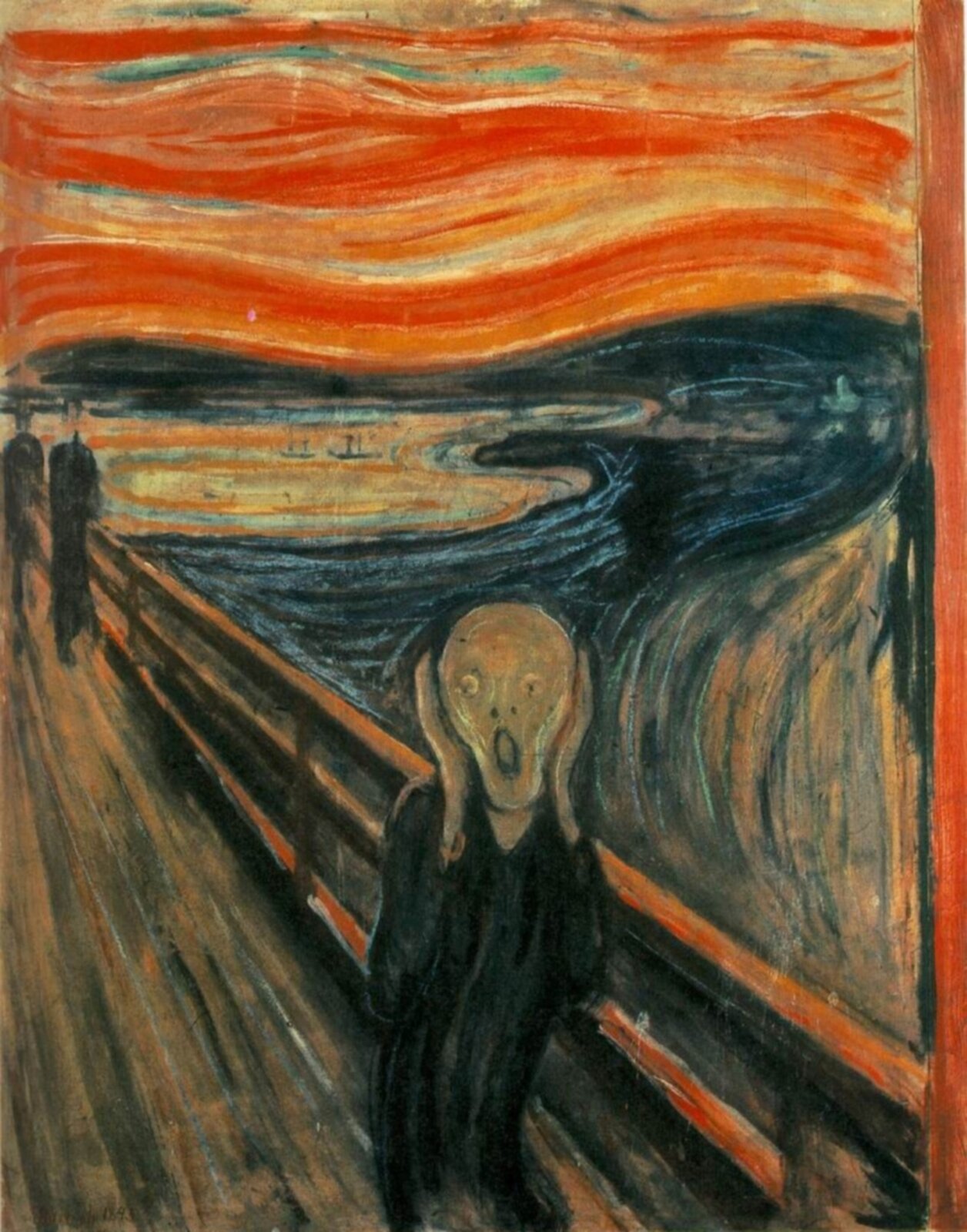
Obraz "Krzyk" Edvarda Muncha, przedstawia scenę na moście, o zachodzie słońca, o czym świadczy pomarańczowo-czerwone niebo. Na pierwszym planie mężczyzna o nieco zdeformowanej twarzy ma otwarte usta, jakby gotowe do krzyku. Człowiek ten jest przerażony. Postać jest nieproporcjonalna: łysa głowa jest zbyt duża w stosunku do wiotkiego, esowato wygiętego ciała. Na drugim planie na moście dwie odwrócone tyłem postaci, z których jedna ma na głowie kapelusz. W tle fiord z okolic Oslo, o czym opowiadał sam artysta. Edward Munch tak mówił o okolicznościach pojawienia się pomysłu na obraz: "(…) Szedłem ścieżką z dwojgiem przyjaciół – słońce miało się ku zachodowi – nagle niebo wypełniła krwista czerwień – zatrzymałem się, czując wyczerpanie i oparłem się na barierce – nad czarno-błękitnym fiordem było widać krew oraz języki ognia; – moi przyjaciele szli dalej, a ja stałem tam i trząsłem się z wrażenia – poczułem nieskończony krzyk przepływający przez naturę (...)."
The Scream
Source: Edvard Munch, The Scream, Munch Museum, Oslo, licencja: CC 0.
Expressionism as a conscious and precise trend appeared in Polish literature only at the end of the First World War. Despite that, its elements can be found in the works of a number authors of the turn of the 20th century. To name a few: Tadeusz Miciński, Wacław Berent, Stanisław Przybyszewski and Jan Kasprowicz. Like its artistic counterpart, literary expressionism was intended to reflect subjective human experiences and was characterized by great dynamism and fierceness.
The flagship example of a work created in the expressionist spirit is Scream by Edward Munch, who, in a masterful way, using shapes and colours, captures the eponymous emotion.
Exercise 3
Name the emotions expressed by a figure in Edward Munch’s painting. Compare your ideas with those of your classmates. Discuss the topic.
R7iB6ggtSbqsp
Wykonaj ćwiczenie zgodnie z poleceniem.
Wykonaj ćwiczenie zgodnie z poleceniem.
Exercise 4
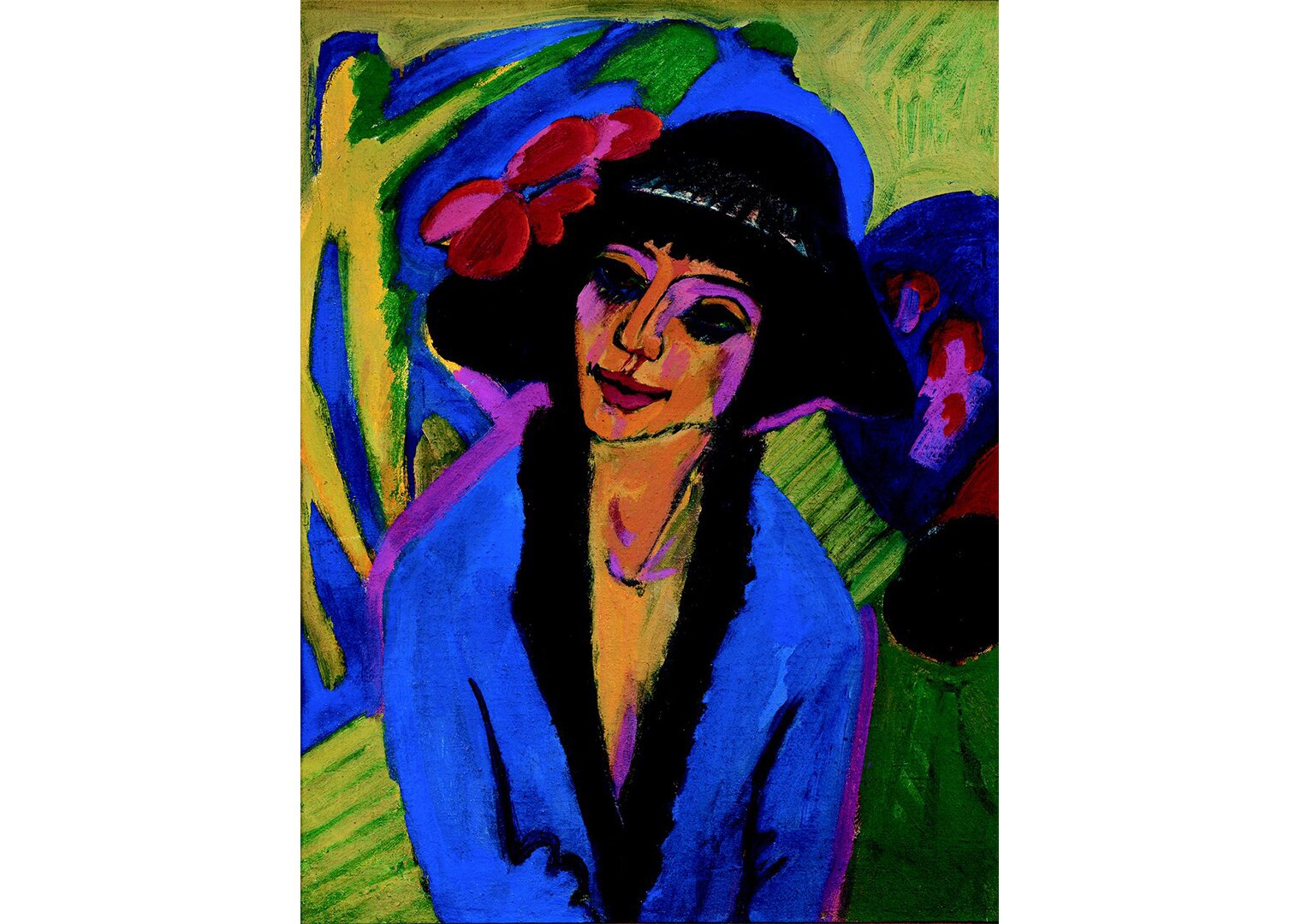
Expressionists believed that art should provoke a bourgeois sense of taste and reality, also through the grotesque shaping of the world. Think about what an expressionist painting should represent and tell the others about it.
Expressionists believed that art should provoke a bourgeois sense of taste and reality, also through the grotesque shaping of the world. Think about what an expressionist painting should represent and tell the others about it.
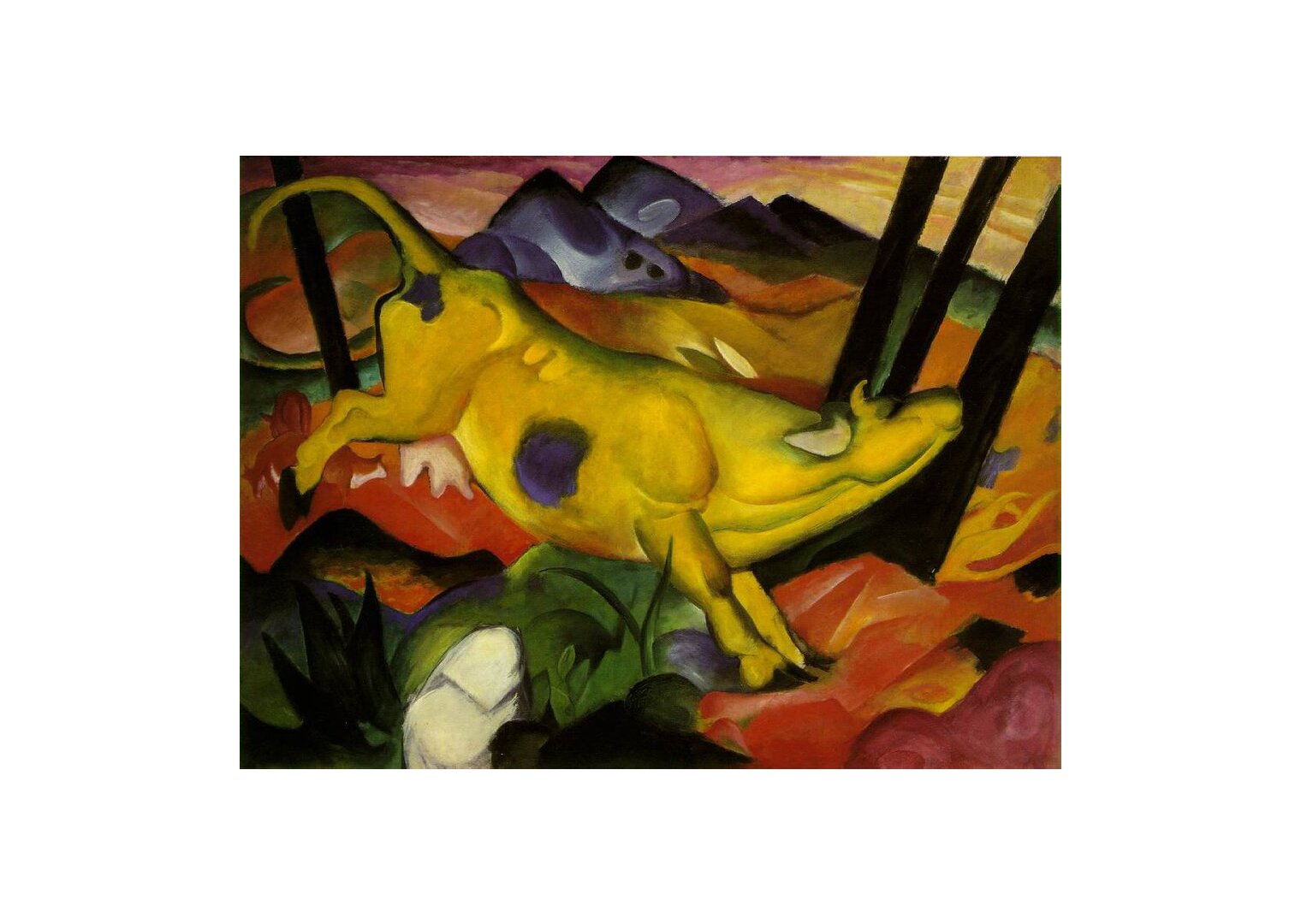
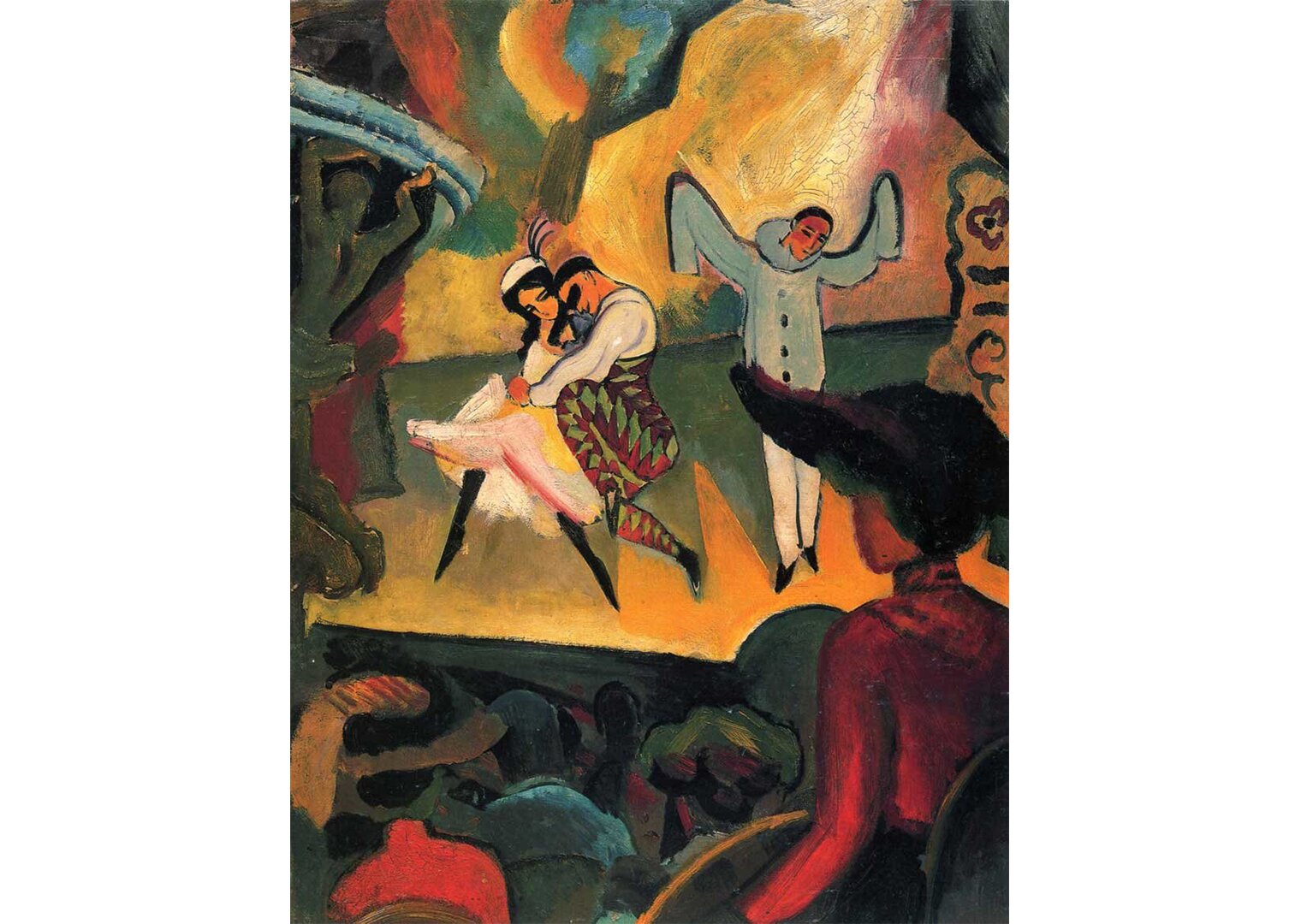
Expressionists believed that art should provoke a bourgeois sense of taste and reality, also through the grotesque shaping of the world. Justify the notion that the paintings included in the gallery below depict expressionist movement.
RbbtMUcRGiXbJ
Obraz przedstawia żółtego byka biegnącego pomiędzy drzewami na wielokolorowym podłożu. W tle znajdują się jedna zielona i dwie niebieskie góry.
The Yellow Cow
Source: Franz Marc, The Yellow Cow, 1911, Solomon R. Guggenheim Museum, New York, domena publiczna.
RQt1Bbf2F88vG
Obraz przedstawia ludzi obserwujących tancerzy tańczących na scenie zajmującej większość obrazu. Dwójka tancerzy - kobieta i mężczyzna - tańczą we dwoje, obok stoi trzeci tancerz unoszący ręce.
Russian Ballet
Source: August Macke, Russian Ballet, 1912, domena publiczna.
R12iExr9Kd84c
Obraz przedstawia kobietę z krótkimi, czarnymi włosami, ubraną w futro z czarnym kołnierzem. Uśmiecha się. Ma wydatne, zaakcentowane czerwone usta. Na głowie czarny kapelusz z czerwonym kwiatem po lewej stronie. W tle po lewej stronie tańcząca para.
Bildnis Gerda
Source: Ernst Ludwig Kirchner, Bildnis Gerda, 1914, domena publiczna.
RDhdCXa34kdiT
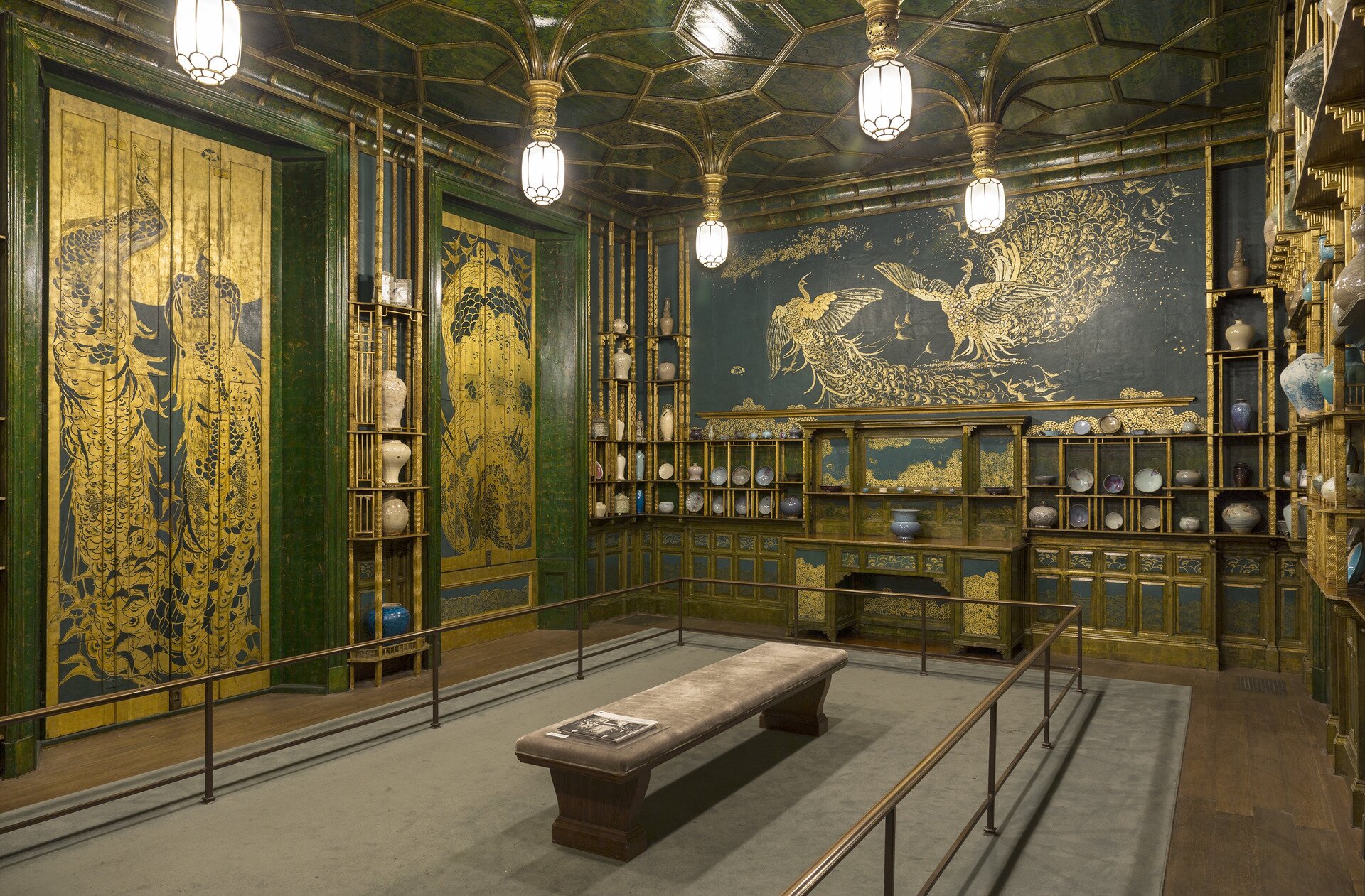
Fotografia przedstawia zdjęcie bogato zdobionego pokoju. Na ścianach dominują motywy, które przedstawiają pawie po środku stoi ławka w okół której znajduje się barierka. Na suficie wiszą ozdobne lampy.
The Peacock Room
Source: James McNeill Whistler, The Peacock Room, Freer Gallery of Art, Waszyngton, licencja: CC BY 2.0.
Aestheticism is a movement established in Great Britain at the end of the 19th century, which was also strongly developing in France. Its main assumption was to perceive art as an exceptional value, whose superior value is not utility, but beauty (hence the term „art for art's sake”). One of many examples reflecting this type of attitude is The Peacock Room, created by Thomas Jeckylla, and then James McNeill Whistler, which was richly decorated with golden patterns resembling the titular birds. The aesthetic foundations were also represented by a dandy showing exaggerated care for his appearance, who wanted to be perceived as a work of art himself. Oscar Wilde, an Irish writer, was a person who was an exceptional example of aestheticism.
Exercise 5
Własnymi słowami zdefiniuj wybrane terminy ze słownika.
Własnymi słowami zdefiniuj wybrane terminy ze słownika.
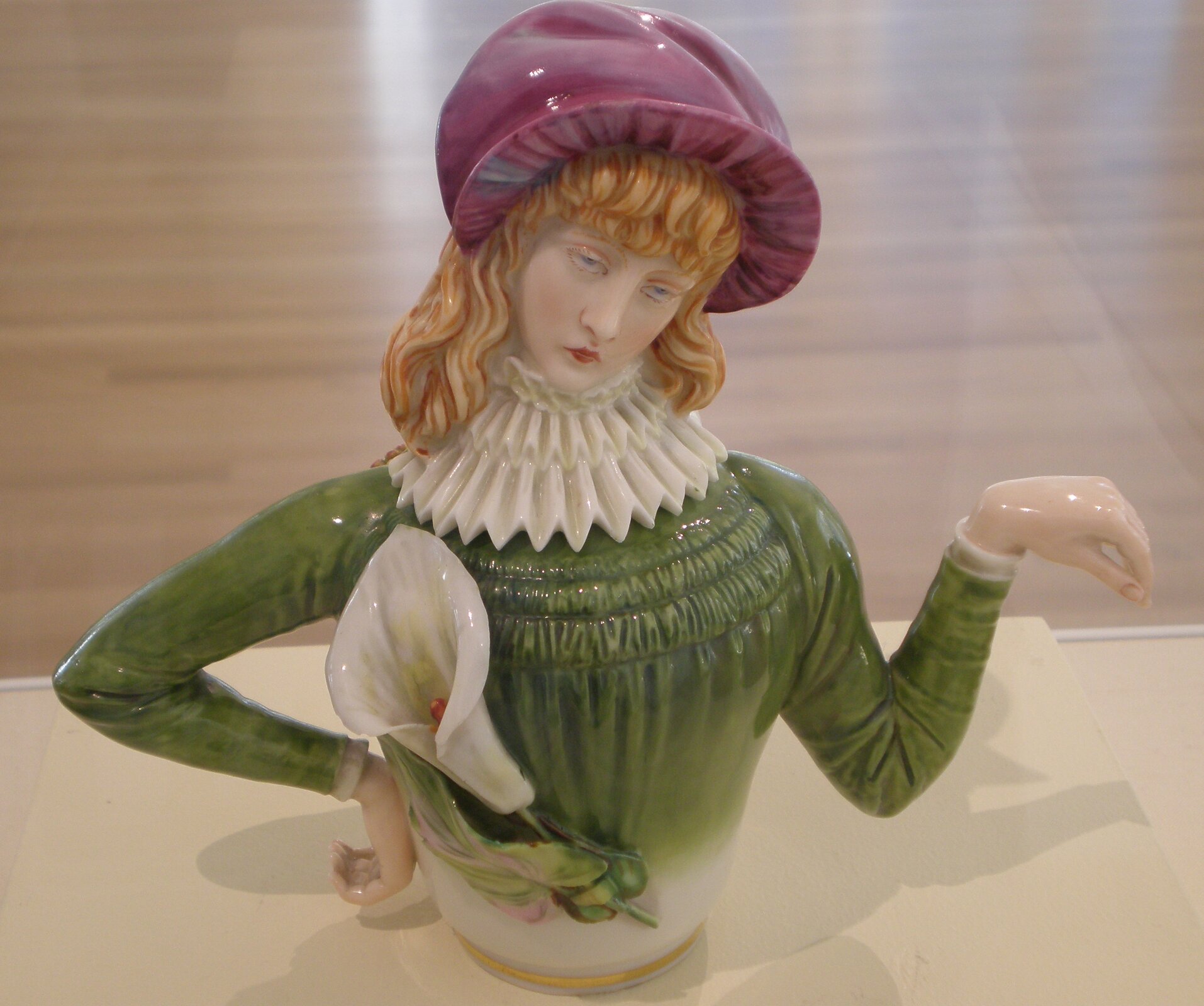
Justify that the paintings included in the gallery below depict the aesthetic movement.
R1XCrBWDopoxI
Obraz przedstawia czajnik zaprojektowany w kształcie człowieka - popiersie. Osoba ma na głowie różowy czepiec. Pod szyją białą kryzę - okrągły, fałdowany kołnierz. Reszta ubrania jest zielona. Na ubraniu po lewej stronie biała lilia. Włosy jasne, falowane, do ramion. Lewa ręka wsparta na talii służy za uszko czajnika. Druga ręka uniesiona i zgięta z dłonią leniwie opadającą w dół tworzy dziobek czajnika.
Aesthetic teapot, Aesthetic teapot designed by R.W. Binns and modeled by James Hadley
Source: BrokenSphere, 1881, licencja: CC BY-SA 3.0, [online], dostępny w internecie: https://pl.wikipedia.org/wiki/Plik:Binns_-_Aesthetic_teapot_CPLH_2004.113a-b.JPG.
RvMUEYKdiy2Wd
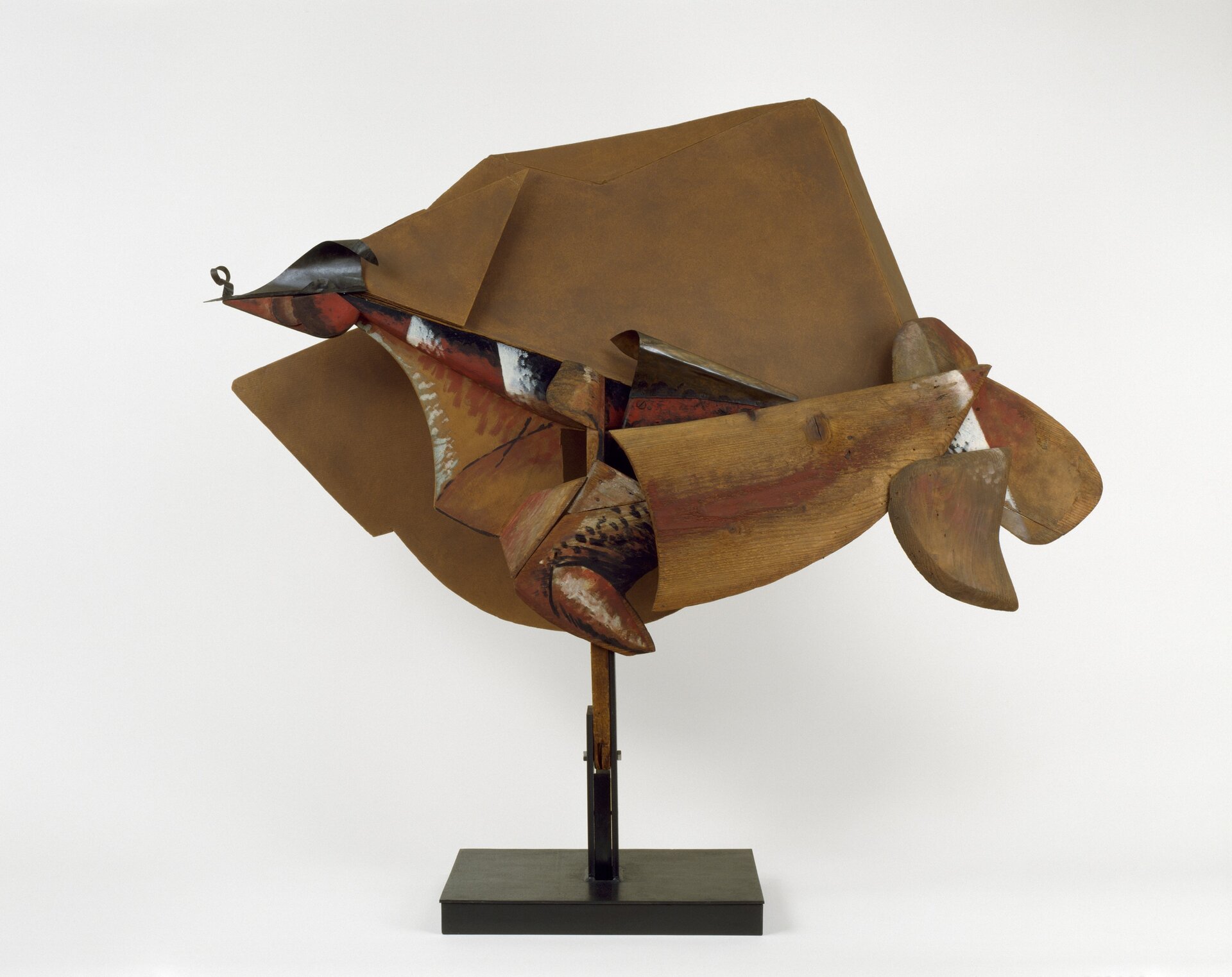
Rzeźba przedstawia futurystyczną wizję konia i domów. Wykonana została między innymi z drewna, papieru i metalu. Umieszczona na cienkim stojaku.
Dynamism of a Speeding Horse + Houses
Source: Umberto Boccioni, Dynamism of a Speeding Horse + Houses, 1915, Peggy Guggenheim Collection, Venice, domena publiczna.
R1ZT8dmO5gvYu
Exercise 6
Match the features to the appropriate movement.
Expressing fierce emotions
Capturing volatile, passing images
The cult of beauty, art for art’s sake
Możliwe odpowiedzi:
1. aestheticism,
2. impressionism,
3. expressionism
Match the features to the appropriate movement.
Expressing fierce emotions
Capturing volatile, passing images
The cult of beauty, art for art’s sake
Możliwe odpowiedzi:
1. aestheticism,
2. impressionism,
3. expressionism
Match the features to the appropriate movement.
aestheticism, expressionism, impressionism
Expressing fierce emotions
Capturing volatile, passing images
The cult of beauty, art for art’s sake
Exercise 7
How is art perceived nowadays? Can we find examples of contemporary aestheticism? Look for the answer in any available resources and justify your opinion.