Atmospheric pressure
what is water vapor and how it is formed;
what are the physical states of substances and how they change.
describe the composition of the air;
explain what pressure is;
use atmospheric pressure measurements for short‑term weather forecasting.
What is the atmosphere?
Above the surface of the Earth there is an adjacent coating, many kilometers thick called the atmosphereatmosphere. It is made up of a mixture of gases called airair. It consists mainly of nitrogen, oxygen and small amounts of other gases. The most important for us is oxygen which we use during breathing or when burning wood. These processes produce carbon dioxide which is used by plants. Also in the air is water vapour, which after condensation can form clouds. When describing the composition of the air, water vapour is omitted, because its quantity is very variable.
The atmosphere makes life possible on our planet. We breathe using the oxygen in the air. Due to the atmosphere on Earth, the right temperature is maintained. In addition, this coating protects us from harmful radiation.
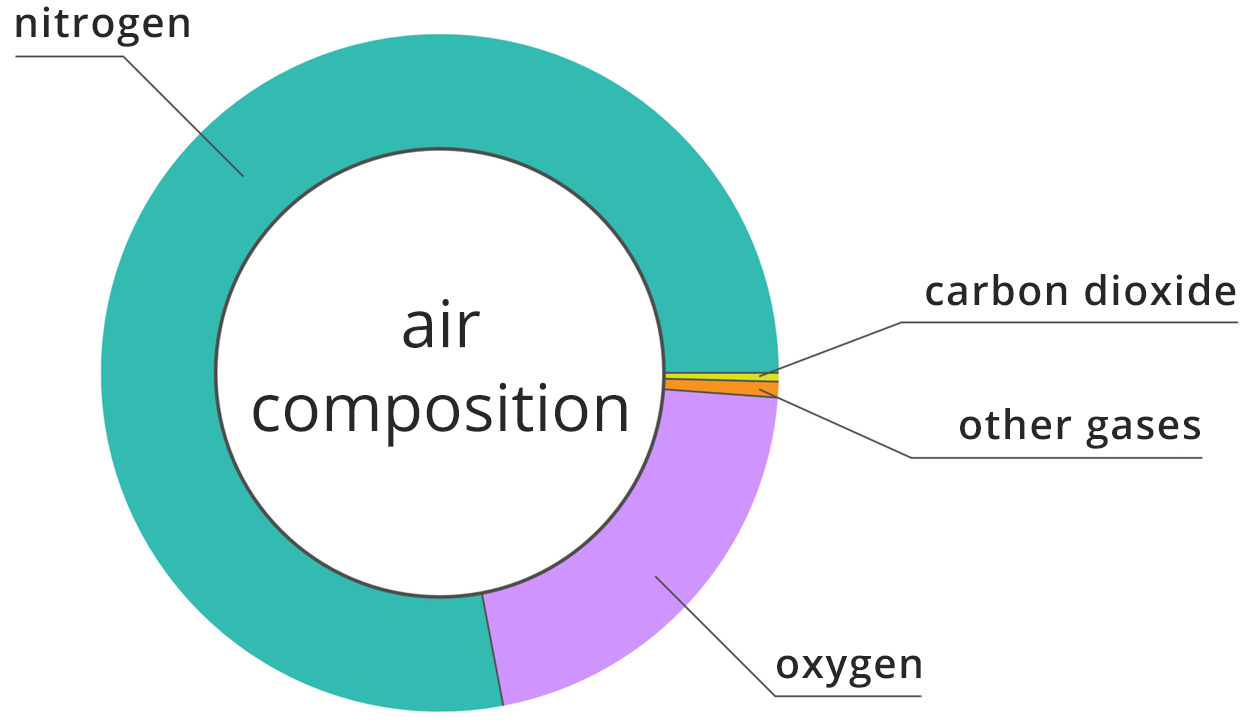
Clean air has no taste, no smell and no colour. You can not see it because it is transparent. How can you convince yourself that it exists?
Prove the presence of air around us
a tall container,
water,
straw.
Pour water into the container.
Close one end of the straw with your finger.
Dip the straw vertically with the open end down. Make sure that both ends of the straw are under water. What's happening?
Remove your finger from the top of the straw and observe what happens.
If bubbles started to leak out of the straw after the finger was removed, it means the straw could not be empty – it was filled with gas. This is the air.
Checking for the presence of oxygen in the air.
jar,
candles,
matches.
Place a lit candle in the centre of a plate and cover it with a jar.
Observe what happens until the flame goes out.
When all the oxygen from the glass is consumed due to combustion, the candle will go out.
What is atmospheric pressure?
The air consists of particles, so it has a mass. It means that it pushes against everything that is under it and within it. This pressure related to the air is called atmospheric pressureatmospheric pressure.
Heated air becomes lighter than its surroundings and rises upwards, which somewhat reduces the air pressure in an area. In contrast, when cooling down, it becomes heavier and falls down, which will increases the pressure. High in the mountains, the atmospheric layer pressing on the surface of the Earth is thinner. Therefore, the pressure will be lower there compared to the areas located closer to sea level.
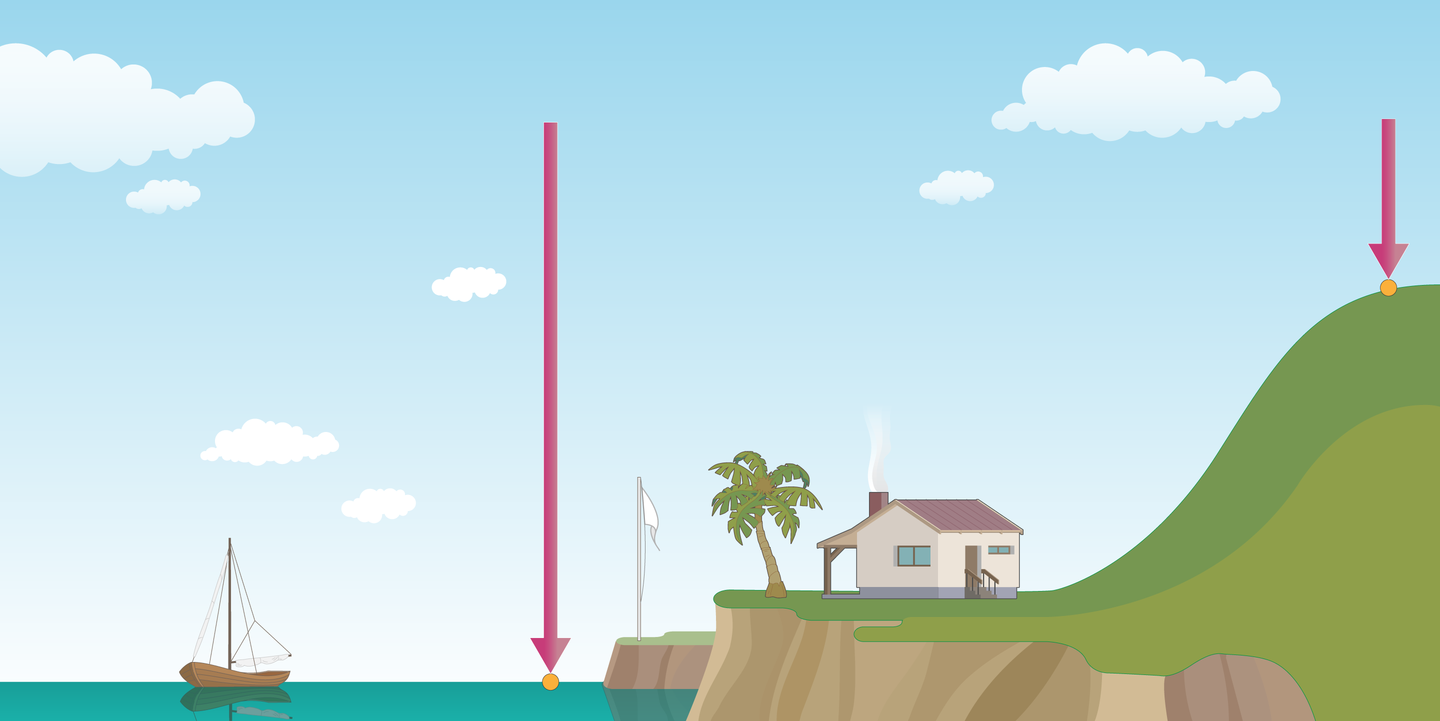
Let us now consider whether atmospheric pressure exerts pressure only from above. It seems obvious. However, remember that the air consists of particles that move in all directions. So maybe pressure affects objects from different sides?
How do we measure atmospheric pressure?
Atmospheric pressure is measured in pascals – shortened to Pa. Because it can reach high values, for convenience in weather forecasts they are given in hectopascals (1 hPa = 100 Pa). Atmospheric pressure measurements are made using a device called a barometerbarometer.
How do you use a barometer? If you have such a device in your school, then do the observation.
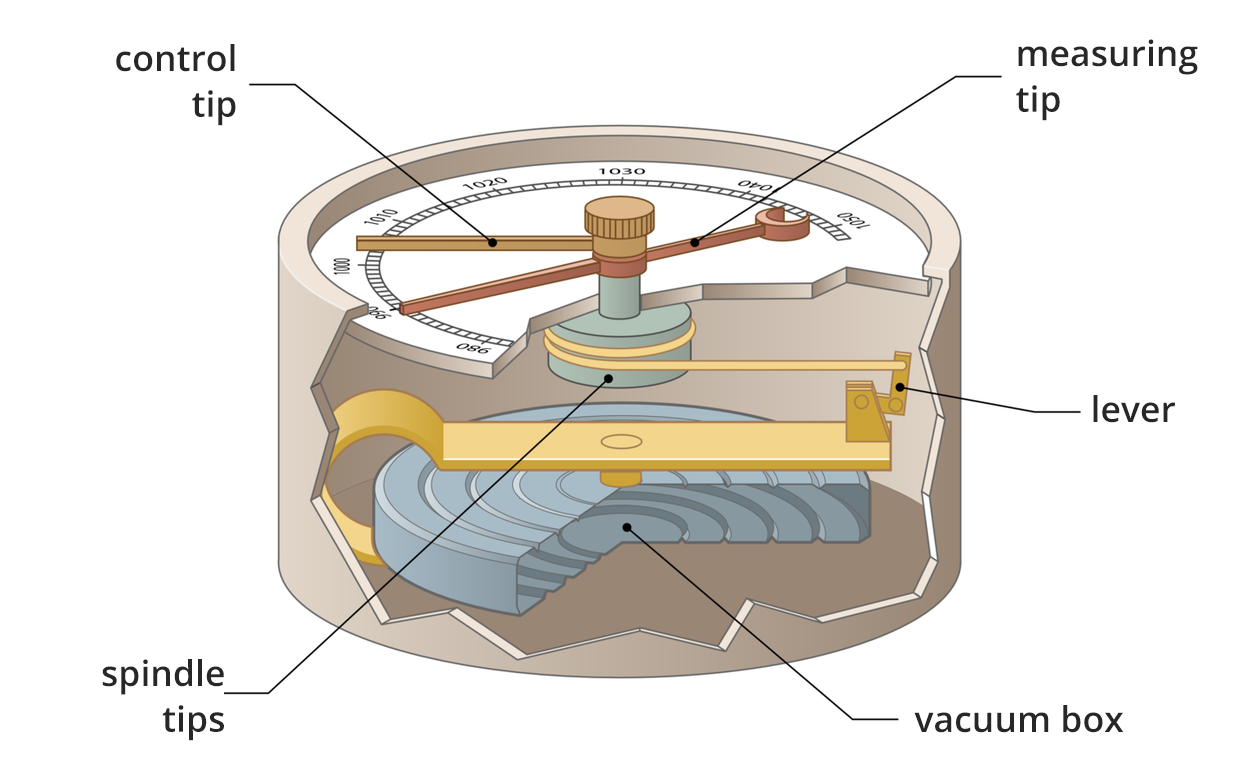
Reading a barometer.
barometer.
Check the barometer’s pressure reading in the morning.
Set the control pointer manually so that it coincides with the reading.
Take pressure readings during the day. When it changes, compare it to the previously marked reading.
By observing the barometer you can predict the weather. If the measurement shows a higher value than the control pointer, it means that the pressure is rising and the weather will be sunny. However, if it shows a lower value, it means that the pressure has dropped and rain may appear.
Before you watch the movie „Atmospheric pressure – how to build a barometer”, note the research question and hypothesis. Watch the video and make observations, and finally make conclusions.

Film dostępny na portalu epodreczniki.pl
Nagranie filmowe dotyczące budowy barometru
Summary
The air exerts pressure on every surface. It is called atmospheric pressure.
The pressure varies with altitude – the higher it is above sea level, the lower it is.
The pressure measured using a barometer.
Keywords
atmosphere, air, pressure,
Match the pairs: English words with Polish definition.
mieszanina gazów występująca w atmosferze, której głównymi składnikami są azot i tlen, przyrząd służący do pomiaru ciśnienia atmosferycznego, powłoka złożona z mieszaninu gazów, otaczająca ciało niebieskie, np. Ziemię, ciśnienie atmosferyczne informuje nas, jaki nacisk wywiera powietrze na jednostkę powierzchni ciała (np. 1m2); jednostką miary ciśnienia jest paskal (1Pa); powszechnie używana jest też jednostka 100 razy większa --- hektopaskal (1hPa = 100Pa)
| atmosphere | |
| barometer | |
| atmospheric pressure | |
| air |
Glossary
atmosfera – powłoka złożona z mieszaninu gazów, otaczająca ciało niebieskie, np. Ziemię
barometr – przyrząd służący do pomiaru ciśnienia atmosferycznego
ciśnienie atmosferyczne – ciśnienie atmosferyczne informuje nas, jaki nacisk wywiera powietrze na jednostkę powierzchni ciała (np. 1mIndeks górny 22); jednostką miary ciśnienia jest paskal (1Pa); powszechnie używana jest też jednostka 100 razy większa – hektopaskal (1hPa = 100Pa)
powietrze – mieszanina gazów występująca w atmosferze, której głównymi składnikami są azot i tlen