Can words change the world?
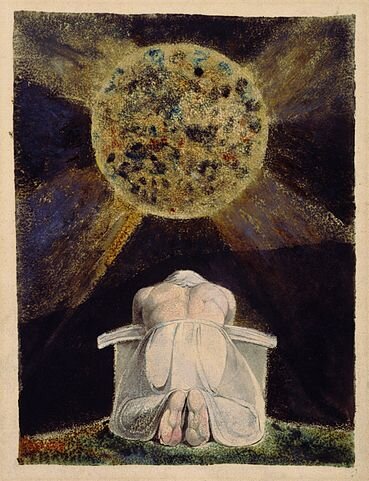
The Gospel of John, 1:1-3In the beginning was the Word,
and the Word was with God,
and the Word was God.
He was in the beginning with God.
All things were made through him,
and without him was not any thing made that was made.Source: The Gospel of John, 1:1-3 , dostępny w internecie: https://www.biblestudytools.com/esv/john/passage/?q=john+1:1-18 [dostęp 30.10.2018 r.].
The above fragment is the beginning of the Gospel according to St. John. It suggests the power of God who created the world by His word. Can the words spoken by an ordinary person change reality? During today’s lesson we will try to answer this question.




Information
Magical function of language
When the aim of our statement is to influence reality (objects, events) or to provoke supernatural intervention, we may say that we use the magical function of language. It arises from the human belief that the world can be changed or the objects can be influenced with words.
Spells and prayers
The magical function of language is demonstrated in different types of statements, mainly in spells (“One coin here, one coin there, prosperity is everywhere”), and curses (“God damn you!”), but also in tales and prayers or other religious texts (“May the blessing of Almighty God: Father, Son, and the Holy Ghost descend upon you”). In the Bible we can find many examples of the magical function of statements. For example: “You deaf and mute spirit, I command you to come out and never enter him again!” (Words of Jesus, Gospel by St. Mark 9:25)

Magic objects
In literary texts the magical function may be played by specific objects. As an example we can list the Excalibur sword from the legend of King Arthur and the Knights of the Round Table. There are also other items, used mainly by the characters from legends and fairy-tales. For example: a table-be-set, a stick in a box, seven-league boots, a flying carpet, a glass slipper, a spindle, a ring, a flint, wands, a crystal ball, a magic pencil or a magic bead.

Superstitions and word plays
Statements that have magical functions can be of religious character (i.e.: May the Virgin Mary protect you!”), or be connected with superstitions that origin from Pagan beliefs or black magic. Many texts of this type were created as a result of word plays, that are particularly popular amongst children.
Did you know that the commonly known spell “Abracadabra” is of the Aramaic origin, derived from the phrase: “Avra kadavra”, which means “It will be created in my words”. While the phrase “Sim Sala Bim” was used by the famous magician Harry August Jansen. He borrowed it from the German folk song that was probably based on the composition from the Middle Ages.
Finish the following spells with rhyming words.
What types of statements are represented by the following texts?
prayer, spell, blessing, curse, wish
| Angel of God, my Guardian dear, to whom God's love commands me here, ever this day, be at my side. | |
| The fire will consume you! | |
| Double, double toil and trouble Fire burn, and cauldron bubble. | |
| May the Lord bless you, good man. | |
| Happy New Year! |
Look at the illustrations. In the speech bubbles write the statements with the magical function. Define the type of statement that you’ve used.

What wishes are connected with the following names: Justin, Henry, Thaddeus, Eugenia, William, Sophie Match the following names with their wish.
well-born, justice, strong, courageous heart, protector, wisdom
| Justin | |
| Henry | |
| Thaddeus | |
| Eugenia | |
| William | |
| Sophie |
Information
Everyday magic
In everyday communication we also deal with the magical function of our statements. For example, when we say “good morning”, we believe that thanks to our words the recipient will really have a good day. When we wish someone i.e.: “good health, happiness, and success”, it is similar, we believe that our words will come true. Some names have the same function - in the past, parents who named their child: Amadeus, believed that this child will be loved by God.
Magic in commercials
While we discuss magic, it is worth mentioning magic words in commercials. These are the words that evoke positive feelings and their aim is to put us - the customers - in a good mood. The main purpose is to persuade us to buy the advertised product. Among such words we can list: “love”, “strength”, “mother”, “friend”, “home”, “clean”, “fresh”.
Does your namename contain a good wish? To check it you can use the Dictionary of Names by Jan Grzenia or Wikipedia. If it is possible, ask your parents, how did they chose the name for you.
Hope, Victoria, Joyce... Complete this list of names that are derived from common words and contain a wish for the child.
Assign the following texts to the right column. Drag the elements to the right places.
,
| Texts with magical function | Texts without magical function |
|---|---|
Remind yourself five adverts in which so‑called “magic words” were used, and which evoke pleasant feelings. Indicate these words.
Suggest your own sequence for keywords for this topic. You can do it according to what was interesting, moving, surprising, etc. for you. Justify your suggestion.
magical function of languagemagical function of language
name
wish
spell
prayer
curse
Keywords
magical function of language, wish, spell, prayer, curse
Glossary
Nagranie dostępne na portalu epodreczniki.pl
Nagranie dźwiękowe słówka: magical function of language.
magiczna funkcja języka
imię
życzenie
zaklęcie
modlitwa
przekleństwo