Nagranie audio prezentujące proces zatężania roztworu. The process during which the amount of substance in the solution increases
The process during which the amount of substance increases in the solution
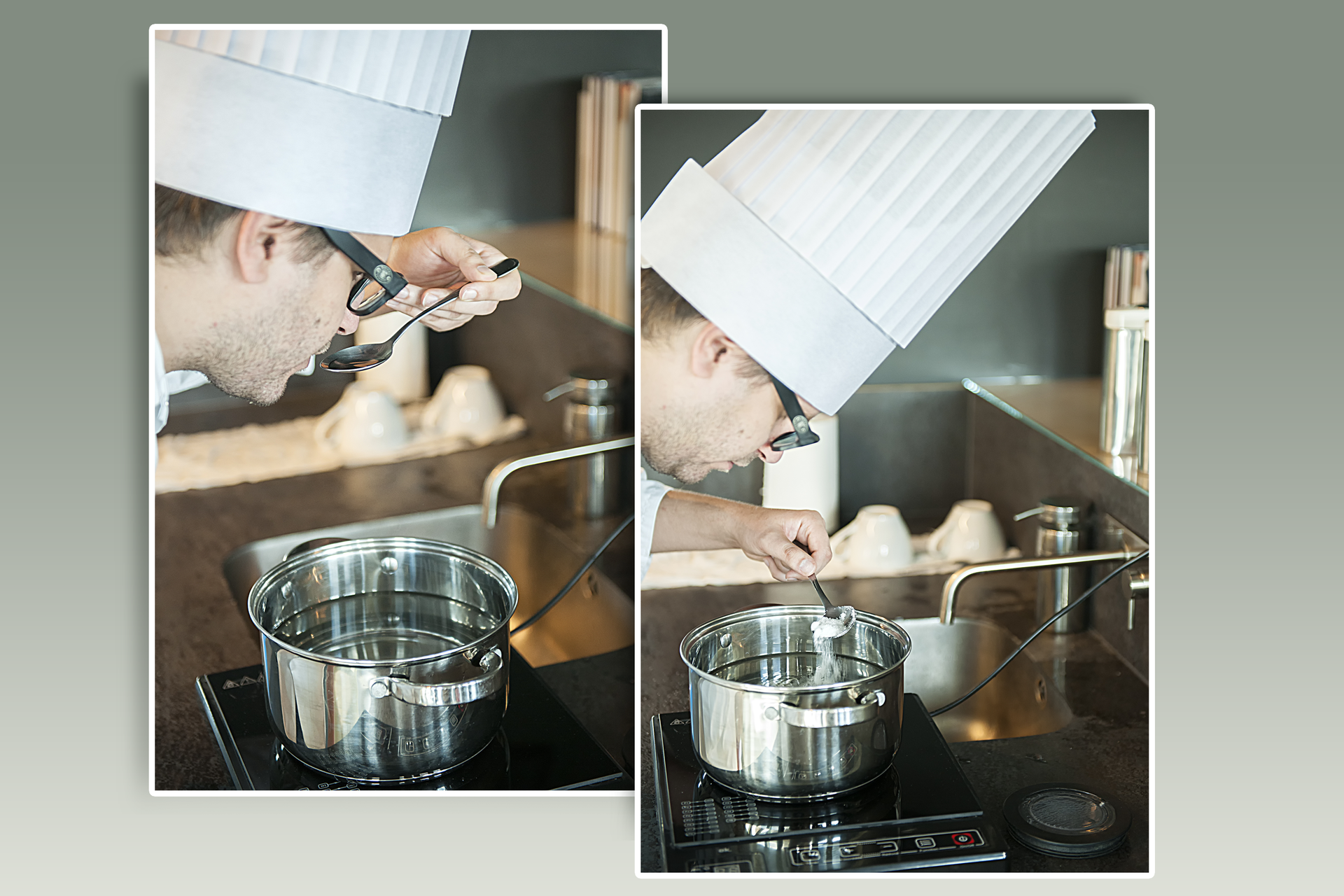
Sometimes, when drinking tea or other drink, we find that they are not sweet enough. Then we add another portion of sugar to them. We do the same with soup, which we consider to be quite salty – we also add it. In each case, we deliver the dissolved substance to its solutions. During these treatments, the amount of water does not change. The activity we do is an example of concentrationconcentration of the solutionconcentration.
RSKMXl0DeKWPY
Ilustracja składa się z dwóch zdjęć umieszczonych obok siebie. Na pierwszym zdjęciu mężczyzna kucharz stojący przy kuchni próbuje metalową łyżką przeźroczystej substancji znajdującej się w metalowym garnku stojącym na kuchence. Na drugim zdjęciu kucharz w tej samej scenerii dodaje do garnka łyżkę białego proszku.
Too little amount of table salt in pickling cucumbers can make pickling these vegetables fail. Therefore, the cook always tastes the solution before using it and if necessary add another portion of salt
Task 1
Consider and answer what happens to the concentration of the substance during concentration.
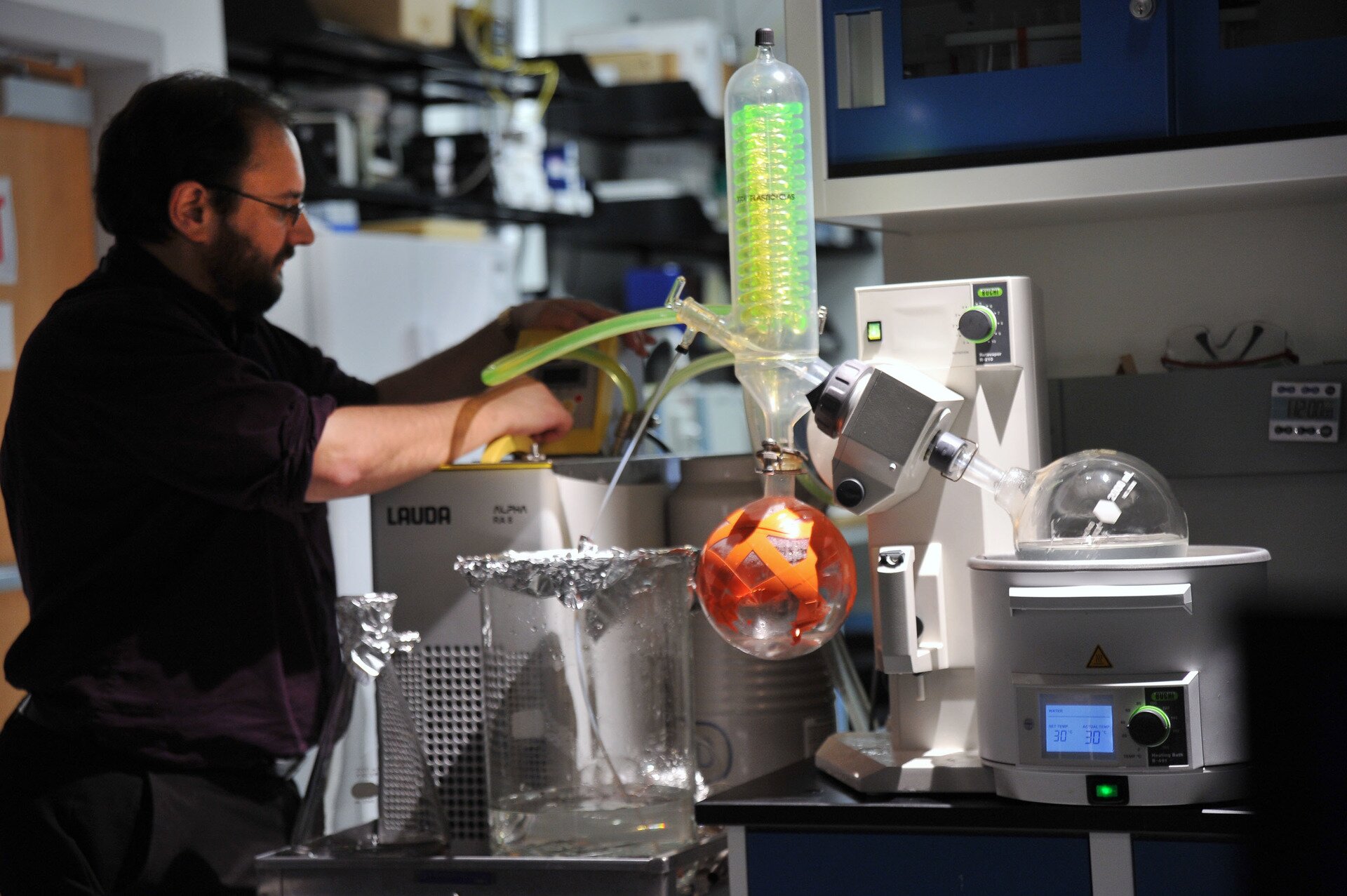
In analytical laboratories, sometimes the amount of test substance in the solution is so small that attempts to detect it may fail. Therefore, very often before the analysis, the solvent is evaporated from the solution in order to increase the concentration of the test substance. Evaporation of the solvent is also a common process used in the food industry, eg during the production of sugar, concentrates, jams, concentrated stocks or juices.
R3F3qpsEBrfSP
Ilustracja przedstawia mężczyznę w laboratorium chemicznym. Mężczyzna ma brodę, okulary nie jest ubrany w strój ochronny. Obsługuje specjalistyczny sprzęt laboratoryjny.
In chemical laboratories there is often a need to evaporate the solvent from solutions. This treatment is performed using a device called an evaporator
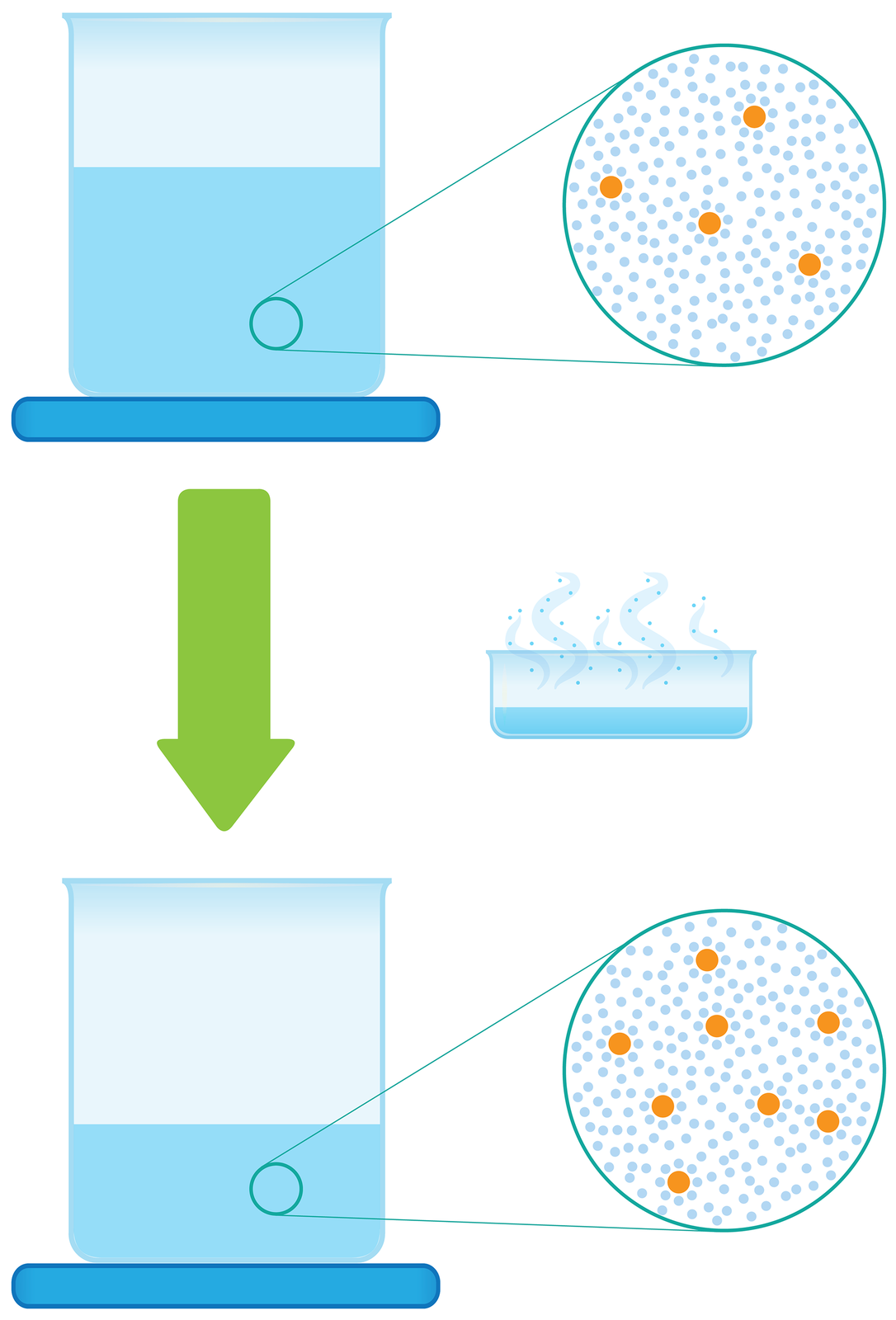
What happens in solutions during concentration?
RnJhqaaZwdCzq
Ilustracja przestawia schemat przedstawiający zlewkę z niebieską cieczą. Po lewej stronie zlewki znajduje się w kole symulacja cieczy w przybliżeniu- składa się ona z dużej liczby małych niebieskich kropek oraz nielicznych większych pomarańczowych kropek. Pod zlewką znajduje się strzałka skierowana w dół, obok niej widać w małym płaskim naczyniu parowanie cieczy ze zlewki. Pod strzałką ponownie zaprezentowana jest zlewka z niebieską cieczą oraz schemat cieczy w przybliżeniu. Tym razem na schemacie znajduje się wiele pomarańczowych kuleczek rozmieszczonych pomiędzy drobnymi niebieskim kuleczkami.
The model of the solution concentration process by evaporation of the solvent. During the evaporation of the solvent from the solution, the number of solvent particles per diluted matter particles decreases. Thus, the mass of solvent relative to the mass of solute decreases
RuR2gqecyEUB3
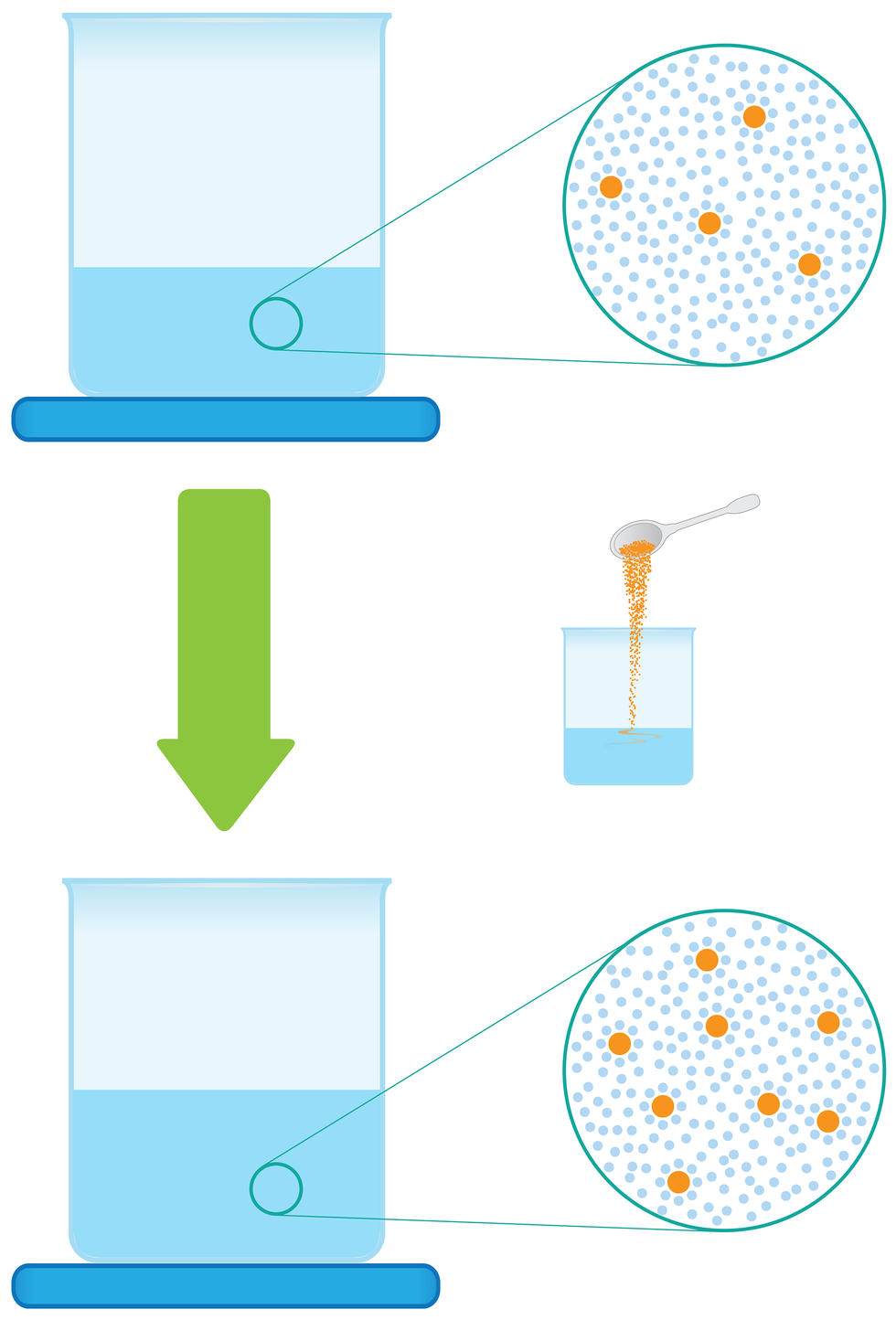
Ilustracja przestawia schemat przedstawiający zlewkę z niebieską cieczą. Po lewej stronie zlewki znajduje się w kole symulacja cieczy w przybliżeniu- składa się ona z dużej liczby małych niebieskich kropek oraz nielicznych większych pomarańczowych kropek. Pod zlewką znajduje się strzałka skierowana w dół, obok niej widać proces dosypywania do zlewki pomarańczowej substancji (pomarańczowego proszku). Pod strzałką ponownie zaprezentowana jest zlewka z niebieską cieczą oraz schemat cieczy w przybliżeniu. Tym razem na schemacie znajduje się wiele pomarańczowych kuleczek rozmieszczonych pomiędzy drobnymi niebieskim kuleczkami.
The model of the process of concentrating the solution by adding another portion of the substance to it. When a new portion of substance is added to the solution, the number of particles is increased for the solvent particles. The weight of the substance increases with respect to the weight of the solvent
Task 2
Watch the presentation „Stages of solving the task for calculating the concentration”. Pay attention to the methods of calculating the percentage when diluting the solution by adding water.
R7aFsuD8g13hg
Ilustracja przedstawia napisy: Stages of solving the task to calculate percentage concentration during the increasing concentration of the solution by evaporation of water.
How to calculate the percentage concentration during concentration of solution by evaporation of water? Let's check the example.
Source: GroMar Sp. z o.o., licencja: CC BY-SA 3.0.
R46bkgiE5n86I
Ilustracja przedstawiająca szklane naczynia chemiczne służące do pomiaru substancji chemicznych. Na pierwszym planie znajduje się zlewka, kolba oraz probówka wypełnione częściowo wodą.
30g of water were evaporated from 70g of a 25% solution of sulphuric acid. What is the percentage concentration of the solution obtained?
Source: GroMar Sp. z o.o., licencja: CC BY-SA 3.0.
RC7Ce5eSWtuhB
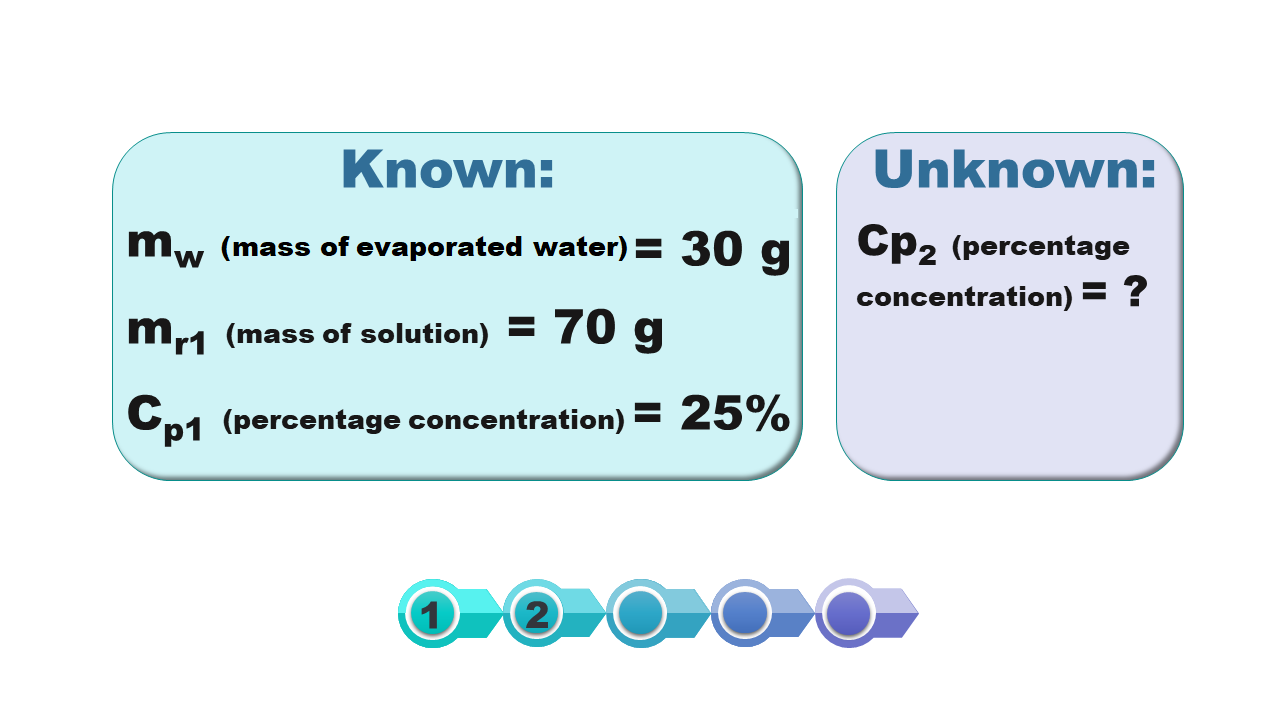
Ilustracja zawiera napisy: Known: mw(mass of evaporated water)=30g, mr1(mass of solution)= 70g, cp1(percentage concentration)= 25%, Unknown cp2(percentage concentration)=?)
We are writing out data and searched based on the content of the task.
Source: GroMar Sp. z o.o., licencja: CC BY-SA 3.0.
ROTzASrJp0IGs
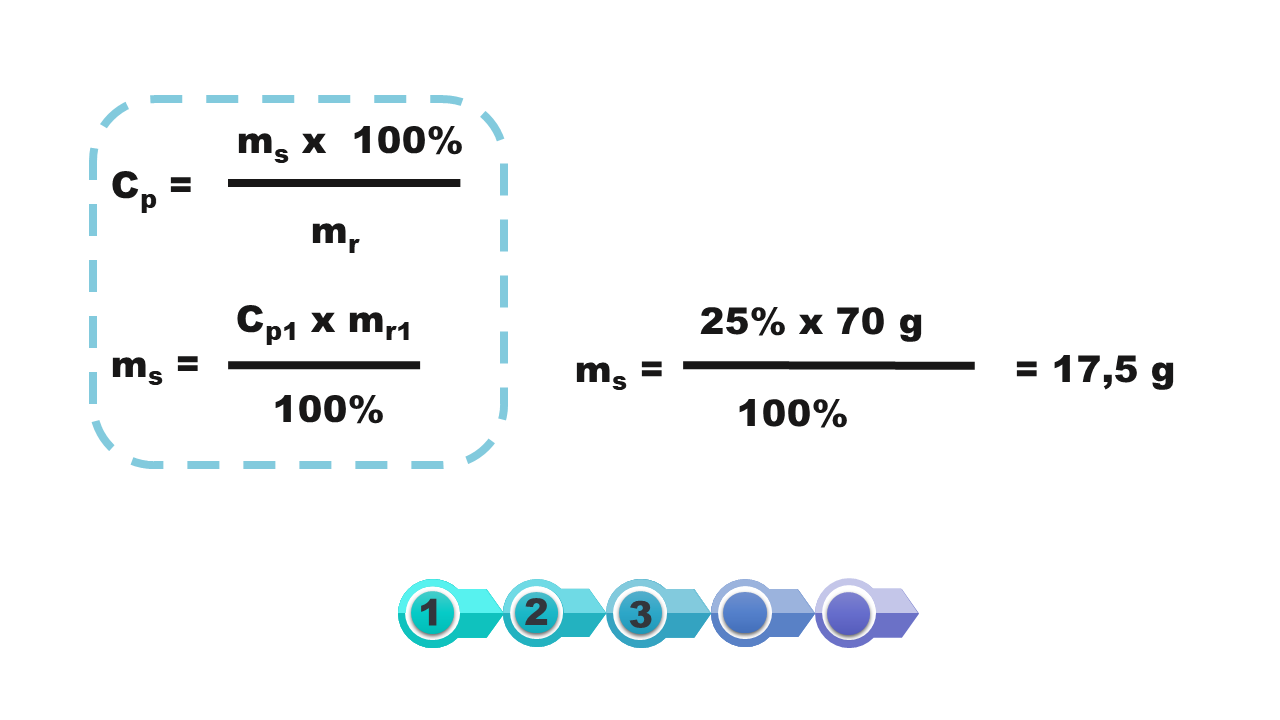
Ilustracja zawiera napisy cp=msx100% dzielne na mr, ms= cp1xmr1 dzielone na 100%, ms=25%x70g dzielone na 100%=17,5g.
Let's use the formula, transform it and substitute our data into it. We calculate the mass of the substance contained in 25-percent solution - the first solution.
Source: Contentplus.pl sp. z o.o., licencja: CC BY-SA 3.0.
Rh01JDouh3aQR
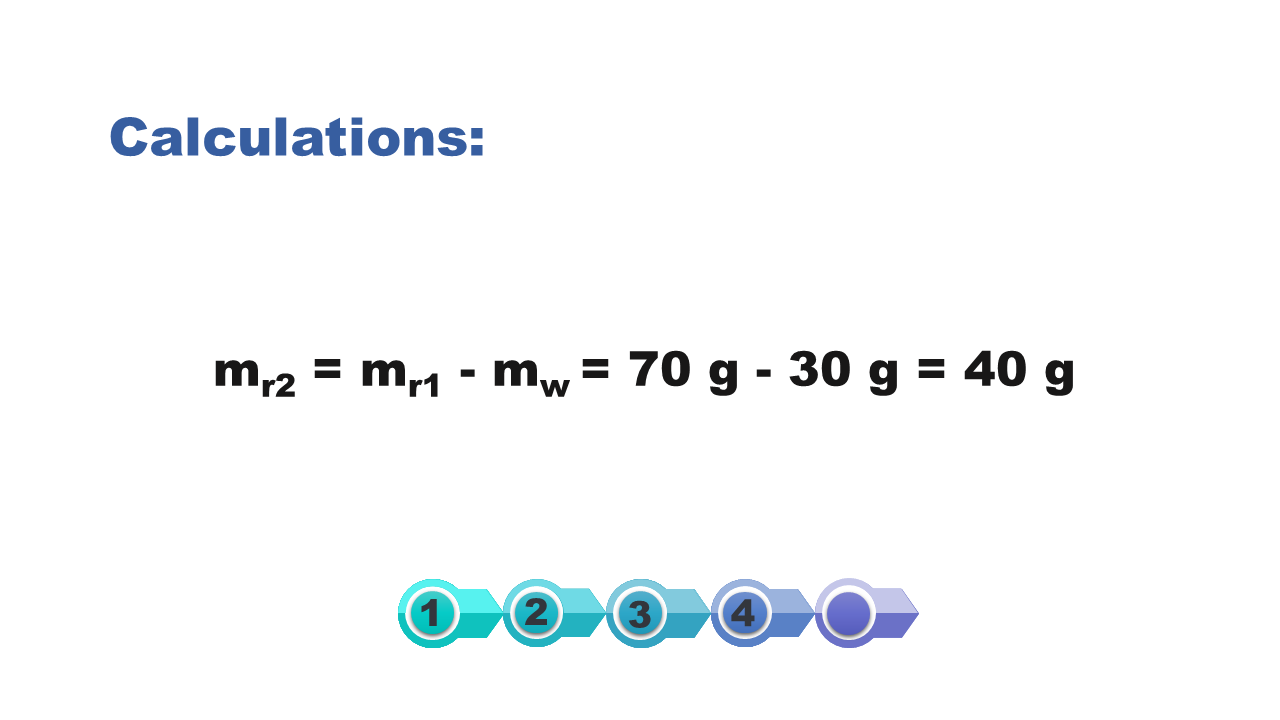
Ilustracja przedstawia napisy: mr2= mr1- mw= 70g-30g=40g.
We calculate the mass of the solution after evaporation of water, i.e. the mass of the second solution - after concentration.
Source: GroMar Sp. z o.o., licencja: CC BY-SA 3.0.
R1A4NVs9s7eUo
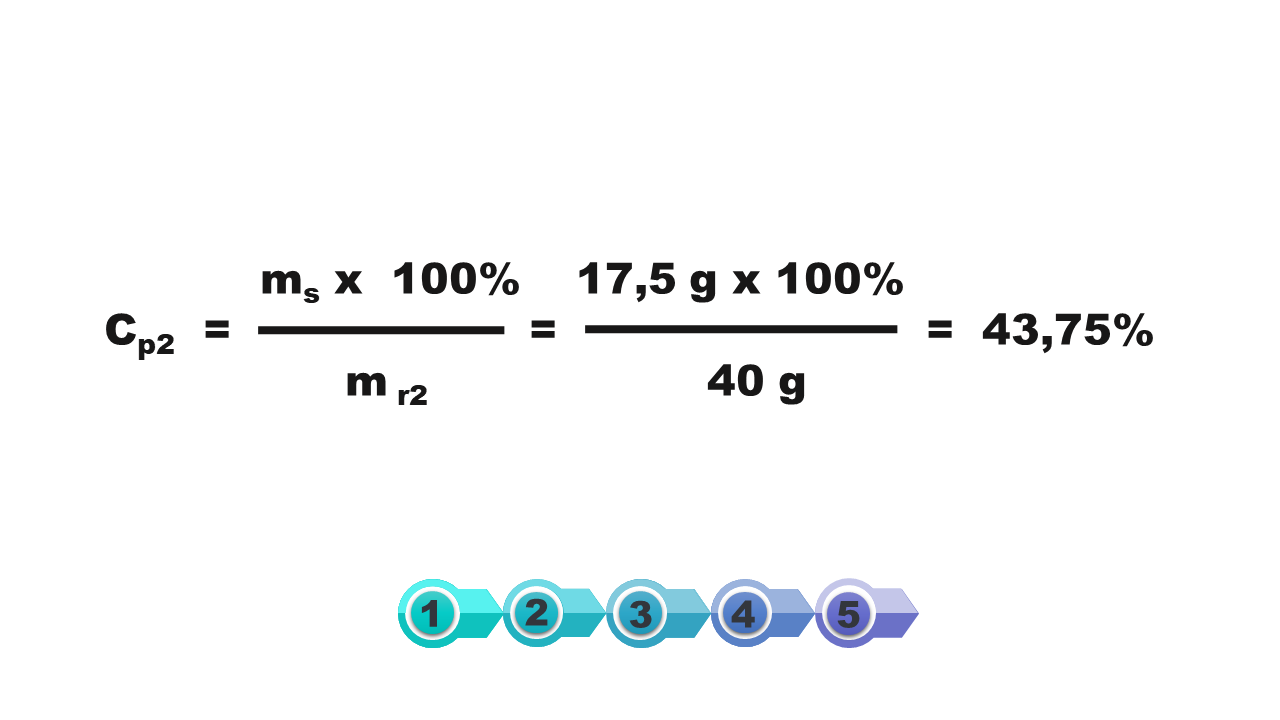
Ilustracja zawiera napisy cp=ms razy 100% dzielone na mr, ms= cp1 razy mr1 dzielone na 100%, ms=25% razy 70g dzielone na 100%=17,5g
Knowing the mass of the substance calculated from the first solution and the mass of the solution after concentration, we calculate the concentration of the solution after concentration (after evaporation of water). The concentration of the newly obtained solution is 43.75%.
Source: GroMar Sp. z o.o., licencja: CC BY-SA 3.0.
21 g of sugar was added to 230 g of a 54% sugar solution. Calculate the percentage concentration of the resulting solution.
RCYDFwPKn0VgR
Wykonaj ćwiczenie zgodnie z poleceniem.
Wykonaj ćwiczenie zgodnie z poleceniem.
Exercise 2
A 3% vinegar solution is used for preserving cucumbers. Calculate the mass ratio of mixing 6% vinegar with water to obtain the desired fill.
Roc50CJyQk3Yg
Wykonaj ćwiczenie zgodnie z poleceniem.
Wykonaj ćwiczenie zgodnie z poleceniem.
Can we calculate the concentration of the solution resulting from the mixing of two solutions?
Sometimes we mix solutions of the same substance with each other. If the concentration of both solutions is the same, the solution after mixing will also have the same concentration.
R1GrKnD18sQpY
Ilustracja przedstawia trzy szklane butelki octu spirytusowego o stężeniu 10%.
10% vinegar, regardless of where it was produced, always contains the same amount of acetic acid in a given mass of water
If, however, we mix solutions of the same substance with different concentrations, the concentration of the resulting solution will be different from the concentration of both solutions used. You can calculate them.
Task 3
Watch the presentation „Stages of solving the problem for calculating the percentage concentration when mixing solutions of two different concentrations according to the rule of St. Andrew”. Pay attention to the cross‑flow pattern in solving this type of tasks.
RWhIsMgdI75TC
Ilustracja zawiera napisy stages of solving the task to calculate percentage concentration when mixing solutions of two different concentrations according to the Rule of the Cross.
How to calculate the percentage when mixing solutions with two different concentrations? Let's check the example.
Source: GroMar Sp. z o.o., licencja: CC BY-SA 3.0.
RQyop6GAeQcDm
Ilustracja przedstawia szklane naczynia chemiczne, różnych kształtów służące do pomiaru substancji chemicznych.
Calculate the mass ratio of mixing a 20% sodium hydroxide solution with a 70% solution of this substance to obtain a 50% solution.
Source: GroMar Sp. z o.o., licencja: CC BY-SA 3.0.
RYknbZjYSZGrY
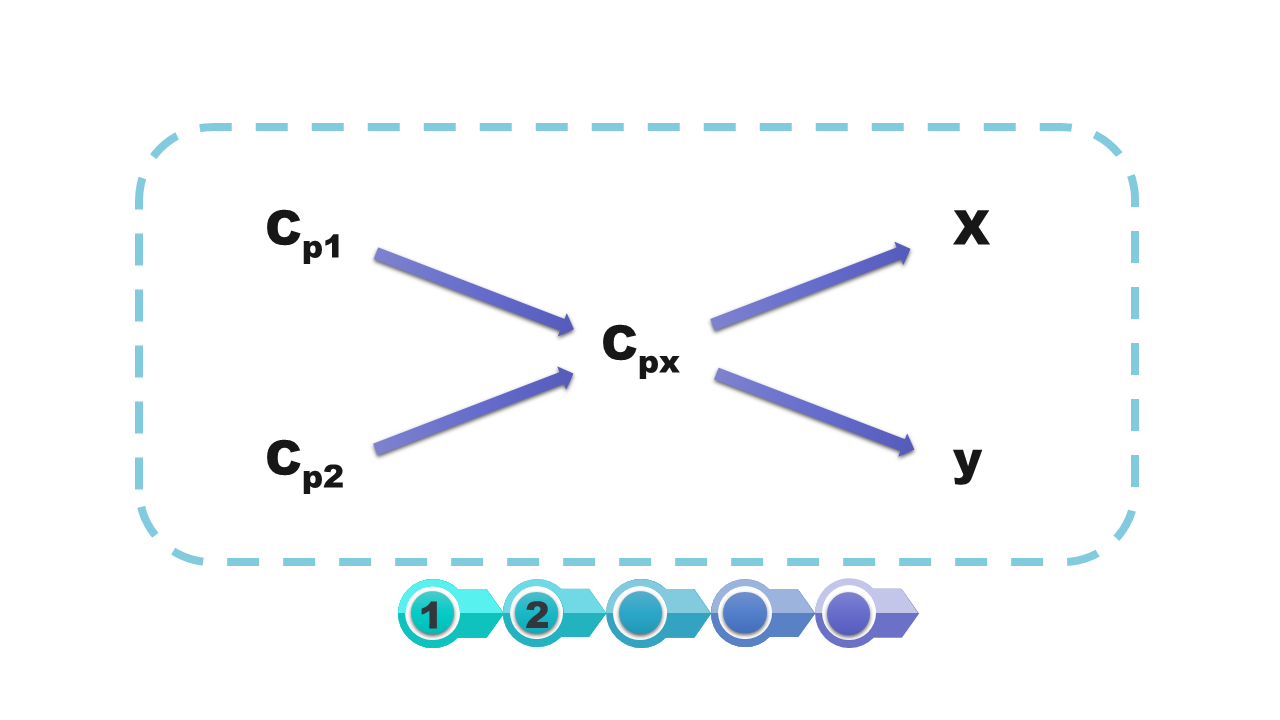
Ilustracja przedstawia schemat składający się z pięciu elementów cp1, cp2, cpx, x, y. Po lewej stronie wykresu znajdują się elementy cp1, cp2. cp1 strzałka w prawo do cpx, cp2 strzałka w prawo do cpx. Element cpx znajduje się w środkowej części schematu. Od elementu cpx znajdują się strzałki w prawo do elementów znajdujących się po lewej części schematu. Pierwsza strzałka do elementu x, druga strzałka do elementu y.
For such calculations, in practice, a cross-pattern is used, also called the Rule of the Cross. This is due to the inverse proportionality of the mass of the initial solution to the difference in concentrations of the initial and final solution.
Source: GroMar Sp. z o.o., licencja: CC BY-SA 3.0.
RxSvhonRuzKIn
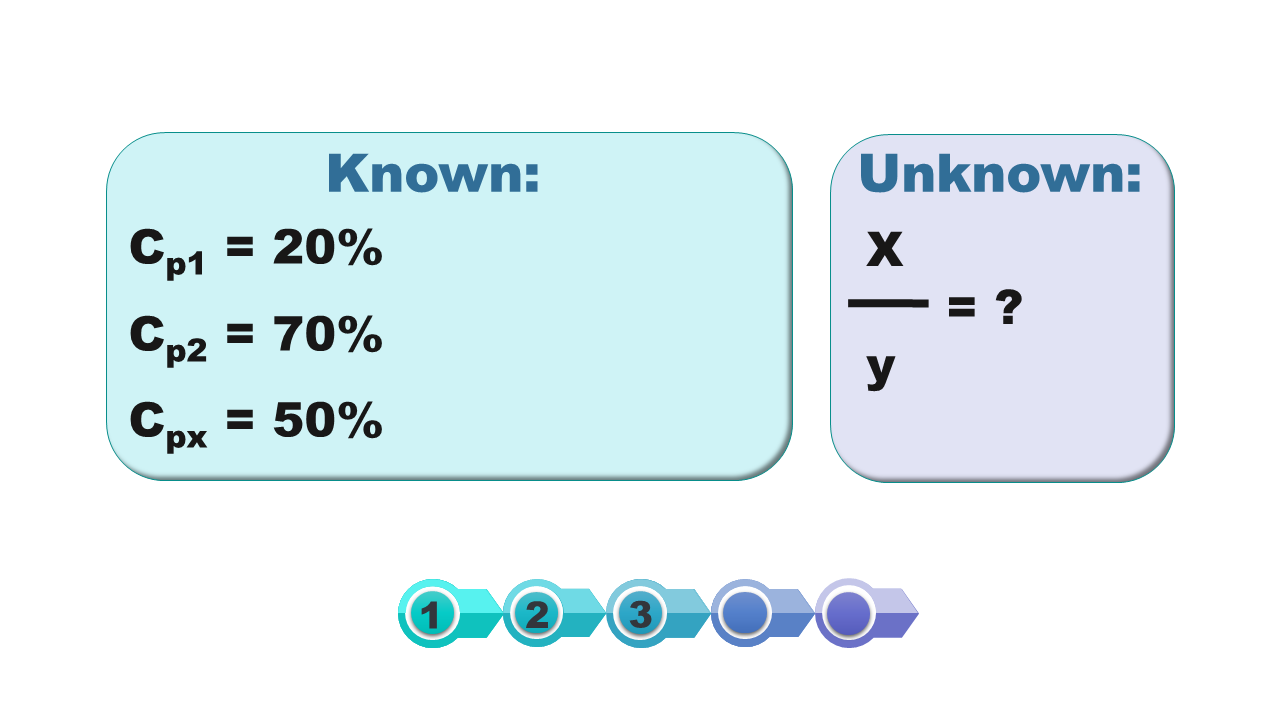
Ilustracja przedstawia napisy : Known: cp1= 20%, cp2=70%, cpx=50%. Unknown:x dzielone na y=?
Let's write out our data and searched indicated in the content of the task.
Source: GroMar Sp. z o.o., licencja: CC BY-SA 3.0.
R2MaXUK0Wt3hm
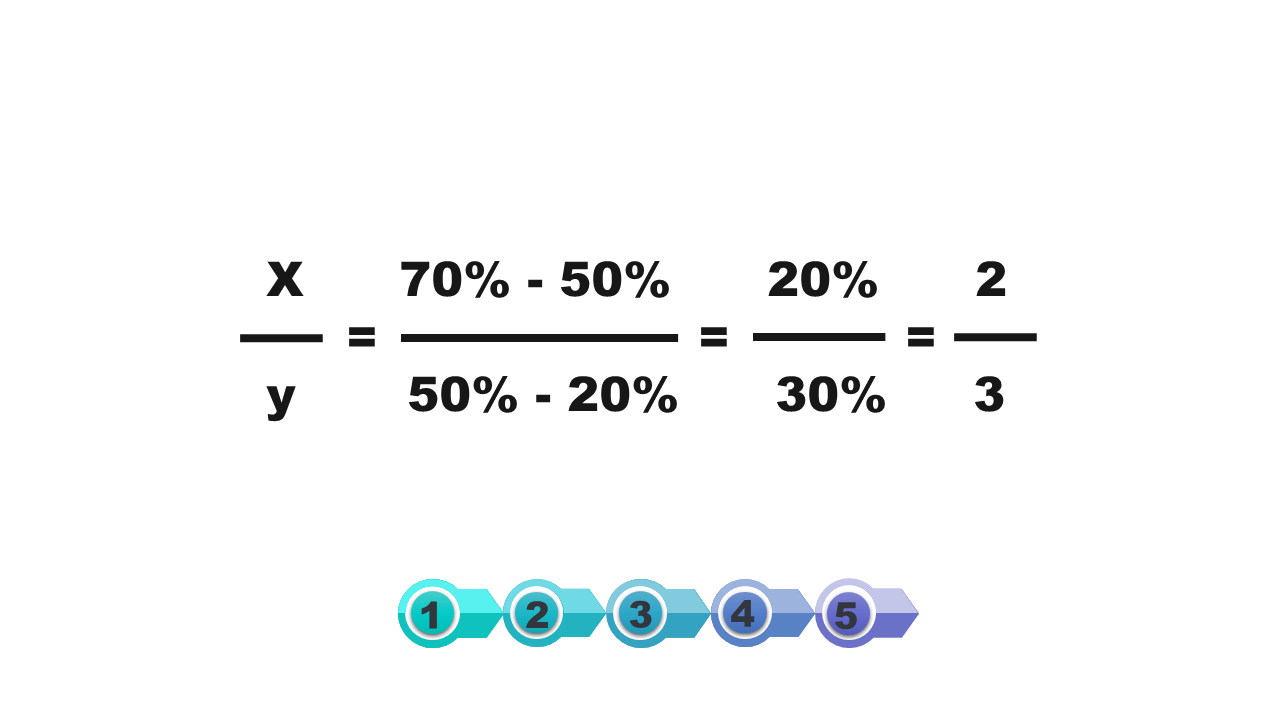
Ilustracja zawiera zapisy: x dzielone na y= 70%-50% dzielone na 50%-20%= 20% dzielone na 30%= 2 dzielone na 3.
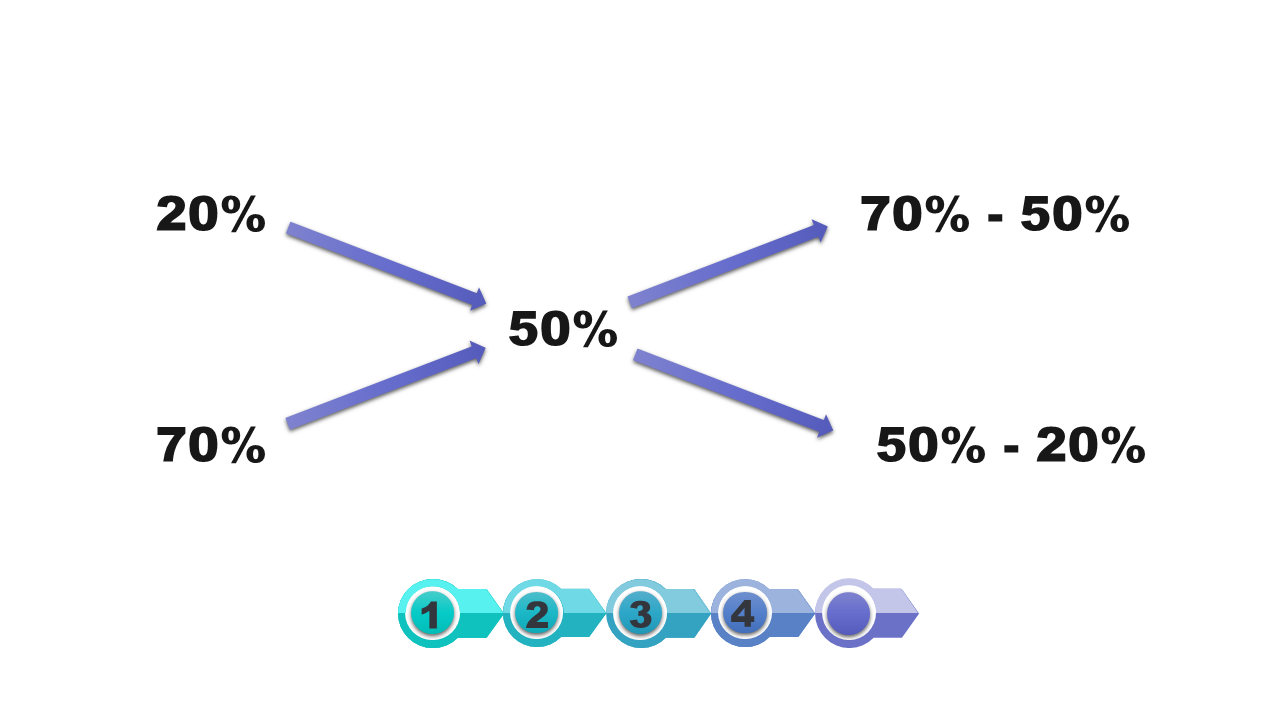
Let's apply a cross rule, subtracting a smaller value from the larger concentration value.
Source: GroMar Sp. z o.o., licencja: CC BY-SA 3.0.
R5XfY2a557ijC
Ilustracja zawiera zapisy: x dzielne na y= 70%-50% dzielone na 50%-20%= 20% dzielone na 30%= 2 dzielone na 3.
Mix 2 mass parts of a 20% solution with 3 mass parts of 70% solution, i.e. a mass ratio is 2 to 3.
Source: GroMar Sp. z o.o., licencja: CC BY-SA 3.0.
Two sugar solutions were mixed together: 50 g of 6% and 40 g of 15%. Calculate the concentration of the resulting solution.
Rx3NRIhU9qVse
Wykonaj ćwiczenie zgodnie z poleceniem.
Wykonaj ćwiczenie zgodnie z poleceniem.
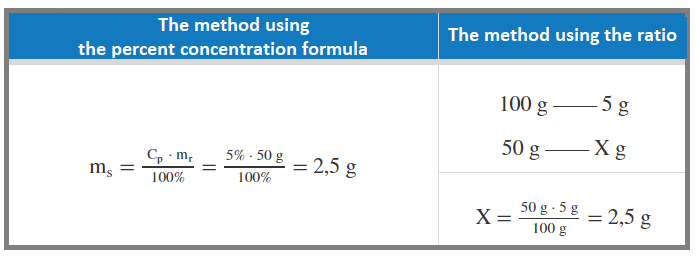
We calculate the mass of sugar in both solutions. Calculations for a 5% solution:
Rbg1MmOGiaWTC
Ilustracja prezentuje tabelę zawierającą dwie kolumny:1. The method using the percent concentration formula, ms= cpmr/100%= 5% 50g/100%=2,5g 2. The method using ratio. 100g-5g, 50g-xg, X= 50g5g/100g=2,5g
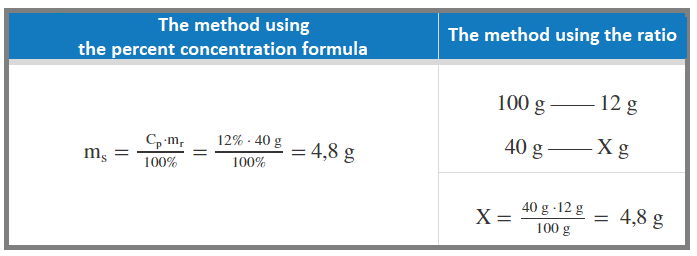
Calculations for a 12% solution:
R17Aes0ZEwDuA
Ilustracja przedstawia tabelę. Tabela składa się z dwóch kolumn: The method using the percent concentration formula, ms= cpmr dzielone na 100%= 12%40g dzielone na 100%=4,8g. 2. The method using the ratio, 100g kreska pozioma 12g, 40g kreska pozioma xg, x= 40g12g dzielone na 100g=4,8g.
We calculate the total weight of sugar:
total mass of sugar = mass of sugar from a 5% solution + mass of sugar from a 12% solution = 2.5 g + 4.8 g = 7.3 g
We calculate the total mass of the solution resulting after mixing:
total solution weight = 50 g + 40 g = 90 g total solution weight = 50 g + 40 g = 90 g
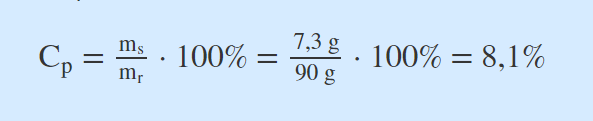
Calculate the percentage concentration of the solution after mixing:
RfhoN0DllwTc4
Ilustracja zawiera napis cp=ms dzielone na mr razy 100%= 7,3g dzielone na 90g razy 100%=8,1%.
RGXGhnLKSyp0V
Exercise 4
Indicate activities whose execution will increase the percentage value of a given solution: Możliwe odpowiedzi: 1. evaporation of the solvent, 2. addition of solvent, 3. adding a solution with lower concentration, 4. addition of substances, 5. adding a solution with a higher concentration
Indicate activities whose execution will increase the percentage value of a given solution: Możliwe odpowiedzi: 1. evaporation of the solvent, 2. addition of solvent, 3. adding a solution with lower concentration, 4. addition of substances, 5. adding a solution with a higher concentration
Indicate activities whose execution will increase the percentage value of a given solution:
evaporation of the solvent
addition of solvent
adding a solution with lower concentration
addition of substances
adding a solution with a higher concentration
Summary
The concentration of the solution may be varied by dilution or concentration.
As a result of dilution, the concentration of the solution decreases, and as a result of concentration – increases.
The solution can be diluted by adding a solvent to it.
Increasing the concentration of the solution occurs after evaporation of the solvent or the addition of a new portion of solute.
The concentration of the solution that will result from mixing solutions of the same substance but with different concentrations will differ from the concentrations of the solutions used to mix.
R1YRTMLwcVF3Q1
Tablica interaktywna. How was this lesson? Did you like it? Finish selected sentences. Propozycje 1.It was easy for me.(uzupełnij).., 2.It was difficult for me..(uzupełnij)., 3.Today I learned.(uzupełnij).., 4.I understood that.(uzupełnij).., 5. It surprised me(uzupełnij)...
Tablica interaktywna. How was this lesson? Did you like it? Finish selected sentences. Propozycje 1.It was easy for me.(uzupełnij).., 2.It was difficult for me..(uzupełnij)., 3.Today I learned.(uzupełnij).., 4.I understood that.(uzupełnij).., 5. It surprised me(uzupełnij)...
Source: GroMar Sp. z o.o., licencja: CC BY-SA 3.0.
Keywords
percentage concentration of the solution, concentration change, solution, solvent, concentration of the solution
zatężanie roztworu – zwiększenie stężenia roztworu w wyniku dodania do niego dodatkowej ilości substancji rozpuszczonej lub odparowania części rozpuszczalnika