Consequences of soil degradation
the distribution of climatic zones, and the types of climates on Earth;
how climate influences the diversity of vegetation and soils on Earth;
the difference between weathering and erosion;
the sculpting role of flowing water, and wind;
how to justify the need for rational management in an environment with severe fresh water shortages.
to describe the relationship between the degree of soil degradation and the capacity to produce agricultural commodities;
to give examples of measures preventing soil degradation and allowing to increase productivity in agriculture.
The intensity of soil degradation varies. For every continent, it means a reduction in the capacity to produce agricultural commodities. However, the problem does not have the same significance everywhere.
In Europe, the population is growing very slowly and, in addition, many agricultural products are imported. Also, in the highly developed countries of Europe, North America, and Asia, productivity is rising and agricultural production on undegraded soils is increasing. In Africa, especially Sub‑Saharan Africa, the situation is totally different – the population is growing very fast, and low levels of economic development make it difficult or even impossible to import food from abroad.
Continent | Percentage of degraded soils |
Europe | 22.3 |
Africa | 16.2 |
Asia | 15.1 |
South America | 13.0 |
North America | 7.0 |
Prepare a list of measures that are worth implementing on each continent in order to increase agricultural production capacity, taking into account the specificities of each continent.
The statistical data prepared by the Food and Agriculture Organization of the United Nations show a positive trend over the years. Therefore, me may hope that it will continue. This will be possible not only thanks to the activities presented in the lesson Food consumption in the world. Forms of aid to the poorest countries, but also to the stopping and reversing of the trend of soil degradation.
This can be done in many ways. For example, plowing across slopes prevents the washing away of soil, buffer strips weaken the wind thus reducing the evaporation of water and the blowing away of soil, proper crop rotation reduces over‑exploitation of soil and the need for fertilization.
How does soil degradation affect agricultural production? Select the correct answer.
- It directly contributes to the increase in the nutritional value of agricultural products.
- It directly contributes to limiting the capacity of production of agricultural commodities.
- It indirectly contributes to an increase in the exports of agricultural products.
- It directly contributes to reducing the demand for food.
Summary
Agriculture transforms the soil, interrupting the natural food chain, which can result in soil degradation.
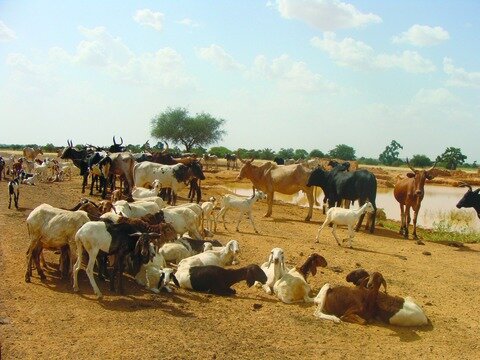
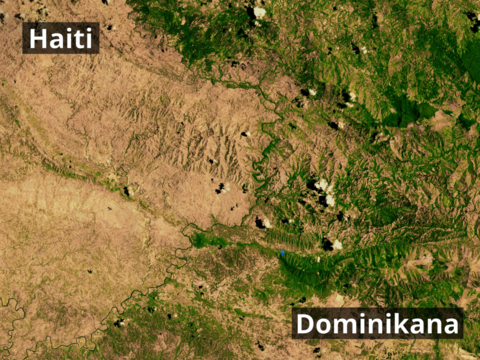
The most frequent causes of soil degradation are overgrazing, deforestation, and poor agricultural management.
The largest percentage of degraded soils is in Europe, but the largest areas are in Asia.
Global per capita tendencies in food production are on the rise, but the effects could be better if the trend of soil degradation was reversed.
Keywords
soil degradation, agricultural production, causes of soil degradation
Glossary
degradacja gleby - ogół procesów i zjawisk, które poprzez pogorszenie właściwości fizycznych, biologicznych lub chemicznych gleby istotnych dla roślin, wpływają ujemnie na jej żyzność, a więc i zasobność.