Dear Diary
you will tell what the genre characteristics of a diarydiary
you will create a diary entrydiary entry
you will identify informative text
you will get to know how prepare the re‑creation of the plot
you will talk about your feelings and emotions
Who is writing or used to write a diary? What do you think, who writes a diary and for whom? What can you note down in a diary?
Diary has its characteristic features that make it easy to recognise among other texts. See what they are.
Read the information “About Diary” below. After reading answer the following questions:
What language is used in the diary?
Who is the author’s intended audience?
What events are described in the diary?
What other descriptions are there in the diary?
How can you express feelings?
About Diary
Diary is written in the first person singularfirst person singular. It is a personal account of events from the author’s life. The author addresses everything he writes to him/herself, because a diary is not intended for other readers. Diary may be written in colloquial languagecolloquial language, or even school slang. It contains descriptions of feelings, experiences and reflections, rather than just dry facts. Emotions may be expressed using not only words, but also punctuation marks: exclamation mark, question mark, ellipsis and letters.
Now, answer the questions:
Present your answers to the class. Listen to other pupils’ answers. Talk about those answers.
Journals in the old days used to be written in special notebooks. Today diaries may be kept in a computer. The objective of a diary is to put joy, or sometimes anger on paper and to ponder over events.
All of us can write a diary to record and organise important events and to express emotions evoked by those events.
Here is an example of a diary entry.
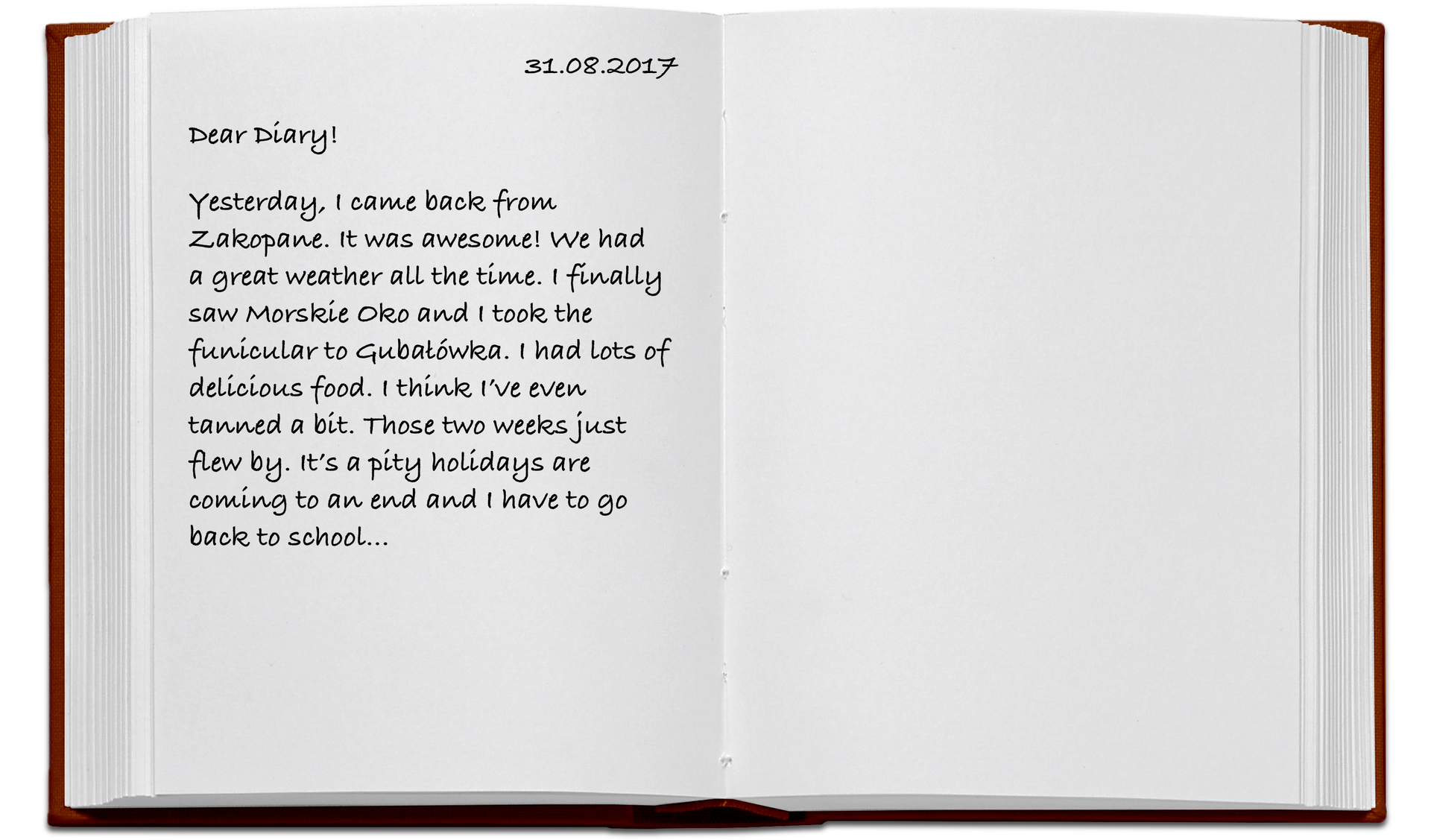
What characteristic features of a diary mentioned in the information “O pamiętniku” can you see in the example above?
You already know what a typical diary entry looks like. However, there are many ways to record important events – depending on the writer's preferences.
Listen to a passage from Dorotka’s diary in the lesson „Mój pamiętniku”. Write answers to the questions below in your notebook. When in doubt, go back to the text in the above‑mentioned lesson.
Questions:
When did the girl write about the events presented? How do you know? Point to respective passages in the text.
Why do you think it is important to indicate time in a diary?
What language is used in this entry?
Information in Dorotka’s diary is a little chaotic. The girl, overwhelmed by emotions, describes a lot of events at the same time. Try to put the scattered pieces of information in the same order as in the text to create a plan of events.
- Grandma gave Dorotka a diary.
- Grandma replants the cuttings.
- Dorotka’s tenth birthday.
- Mom goes to hospital, because Kuba was born.
- Dorotka wrote her first poem.
- Misia had her young.
Events described in a diary may be very exciting. Thanks to information about the author’s feelings and experiences we get to know his/her approach to life.
Match events with corresponding emotions.
I didn’t want to, I’m sorry!, It's so nice!, I had a great time!, I’m a bit scared.
| Yesterday I went to my friend’s birthday party. | |
| My tooth has been aching for a few days now, I think I need to see a dentist. | |
| Parents surprised me and bought the game I was dreaming about. | |
| I accidentally hit my friend with the ball and smashed his nose. |
Think about events you could record in a diary. Can you remember more happy or sad moments?
Create a diary entry – describe the day when something happened that made you very happy.
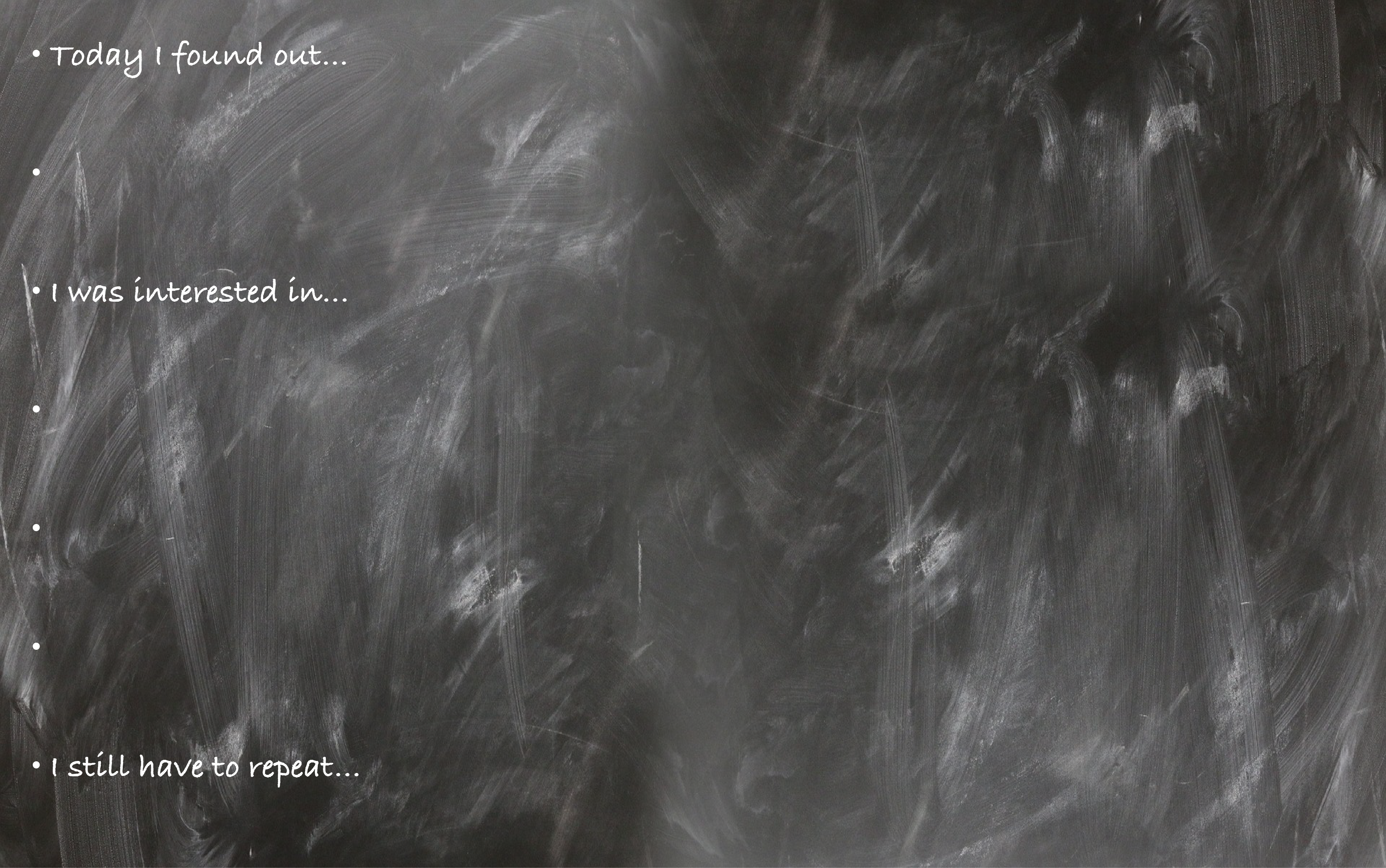
How was this lesson? Did you like it? Finish selected sentences.
Keywords
diary, diary entry, plan of eventsplan of events
Glossary
pamiętnik
kartka z pamiętnika
plan wydarzeń
pierwsza osoba liczby pojedynczej
język potoczny