Tell the others the names of the books that made the biggest impression on you.
Tell the others the names of the books that made the biggest impression on you.
Write down the names of the books that made the biggest impression on you.
Exercise 1
In pairs talk about the books that made the biggest impression on you. What did you like about them? Why are they unique to you? Try to encourage your colleagues to read them.
Do you know that books were once extremely valuable? They were protected from the thieves (which were then called “the book thieves”) by spells placed on the pages.
Here are examples of spells by Kazimierz Zieliński:
Kto książki złośliwie mi kradnie lub psuje, Niech diabeł go porwie i srodze katuje.
Kto książki smaruje i skazy w nich czyni, Ten ryj miast gęby niech ma na kształt świni.
Kto karty zagina czy latem, czy wiosną, Niech uszy mu długie jak osłu urosną.
1
RpG5CDcaF3k88
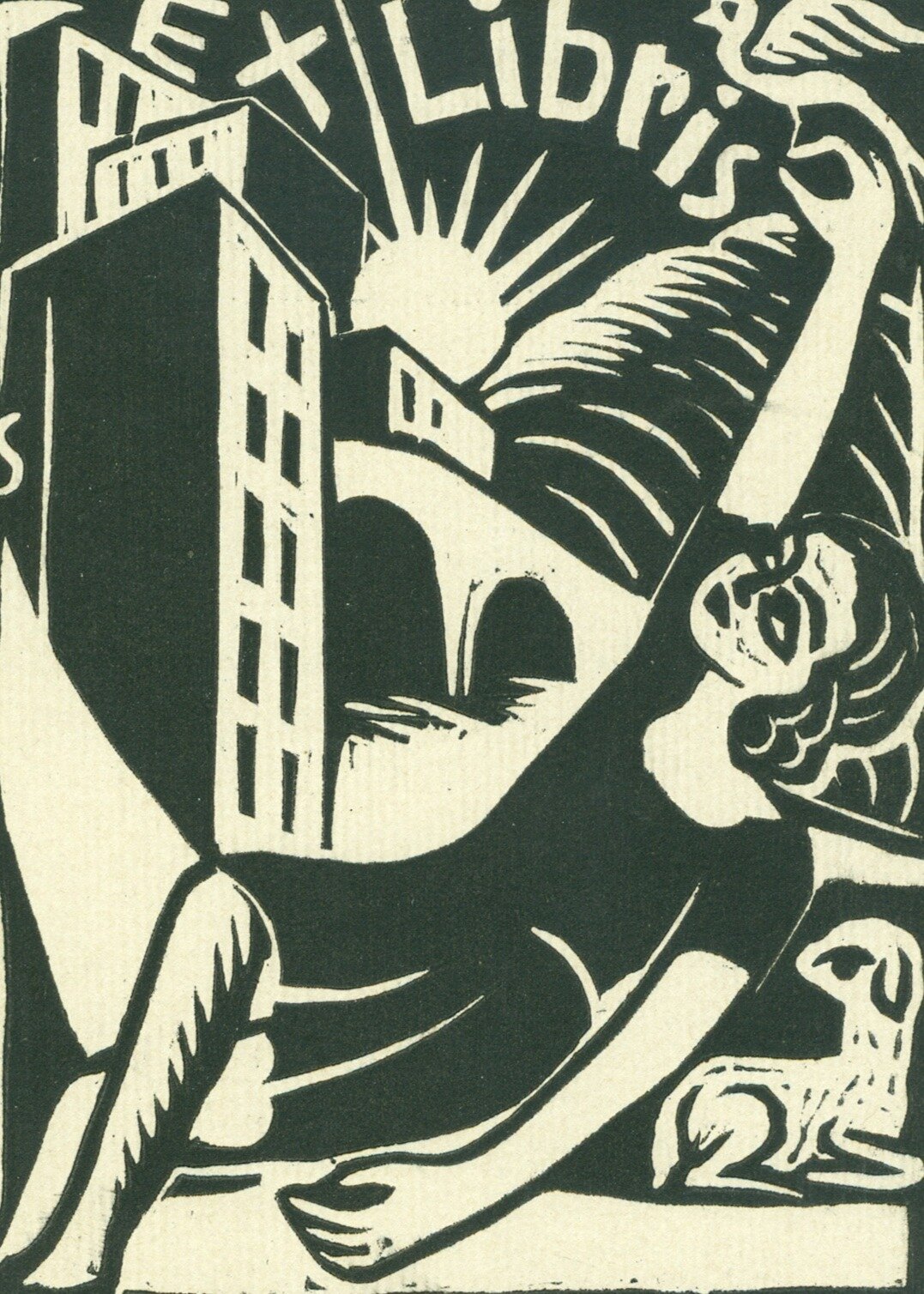
Obraz przedstawia czarno-biały rysunek kobiety sięgającej od dołu ku górze, gdzie znajduje się napis ex libris. W tle widoczne są piętrzące się budynki oraz słońce. Kobieta zdaje się leżeć na ziemi, za nią leży mała owieczka.
Ex libris designed by the German painter Georg Schrimpf, the beginning of the 20th century.
Source: domena publiczna.
RDnogZr5hzGZw
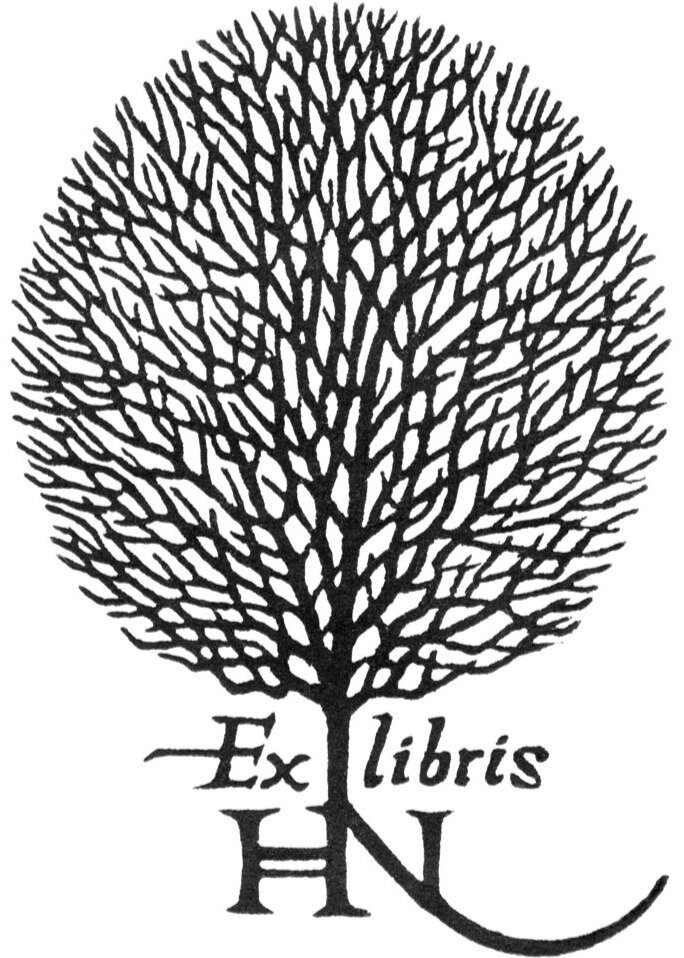
Obraz przedstawia narysowane drzewa bez liści, z wieloma gałęziami o podobnych rozmiarach, które niemal całkowicie wypełniają półkolistą przestrzeń drzewa. Po drzewem, którego konar oddziela słowa Ex libris, gdzie zamiast w korzenie, konar przechodzi w połączone litery H N.
Ex libris designed by the artist Jacques Hnizdovsky in 1972.
Source: Jacques Hnizdovsky, licencja: CC BY-SA 3.0, [online], dostępny w internecie: http://commons.wikimedia.org.
RzOF2bReEaO12
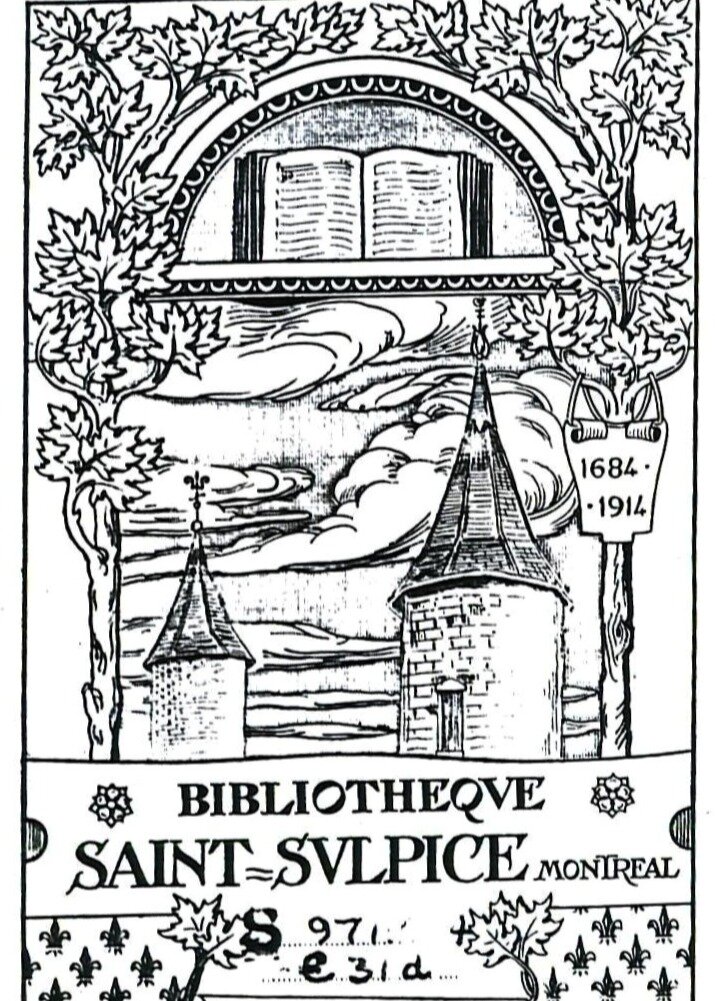
Obraz przedstawia rysunek książki umieszczonej w łuku z zamkniętym dołem. W koło łuku widać liście wyrastające z z dwóch cienkich drzew służących za filary w kompozycji. Pod strukturą, między filarami znajduje się mały pejzaż dwóch wierzy z kamienia ze strzelistymi dachami i iglicami wskazującymi kierunki świata. Widoczne są także kłębiące się chmury. Pod wszystkim widoczny jest napis Bibliotheque saint sulpice montreal na kawałku papieru z dwoma półkolistymi wcięciami pośrodku końców. Pod spodem kartki widoczne są zdobienia z powtarzającej się lilii florenckiej.
Ex libris of Saint-Sulpice library in Montreal designed around 1914.
Source: domena publiczna.
RDZVH644mZJaw
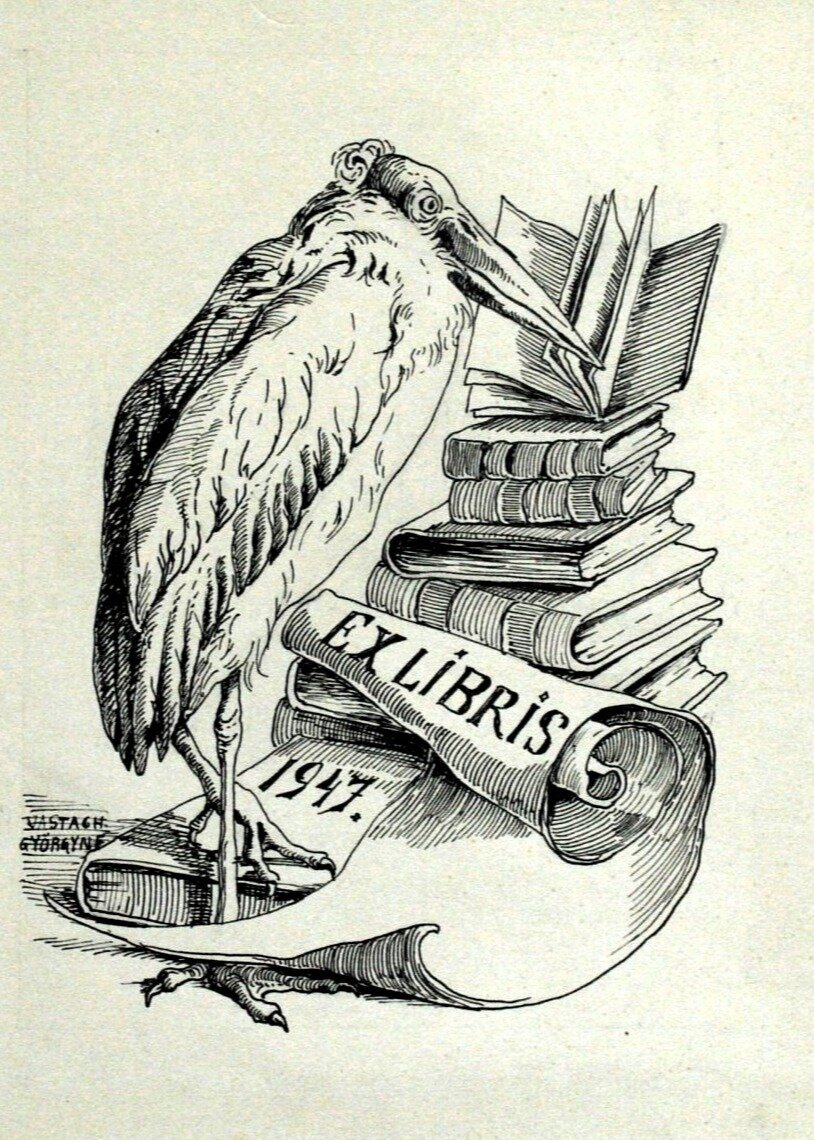
Rysunek przedstawia ptaka z wielkim dziobem, czytającego książkę, którą owym dziobem wertuje. Jedną nogą stoi na książce z napisem 1947, drugą na ziemi. Pod ptakiem częściowo rozwinięty papier z jedynym napisem ex libris.
Ex libris designed by Hungarian graphic designer Olga Benczur in 1947.
Source: Olga Benczur, licencja: CC BY-SA 3.0, [online], dostępny w internecie: http://commons.wikimedia.org.
RrAIShAimwIcX
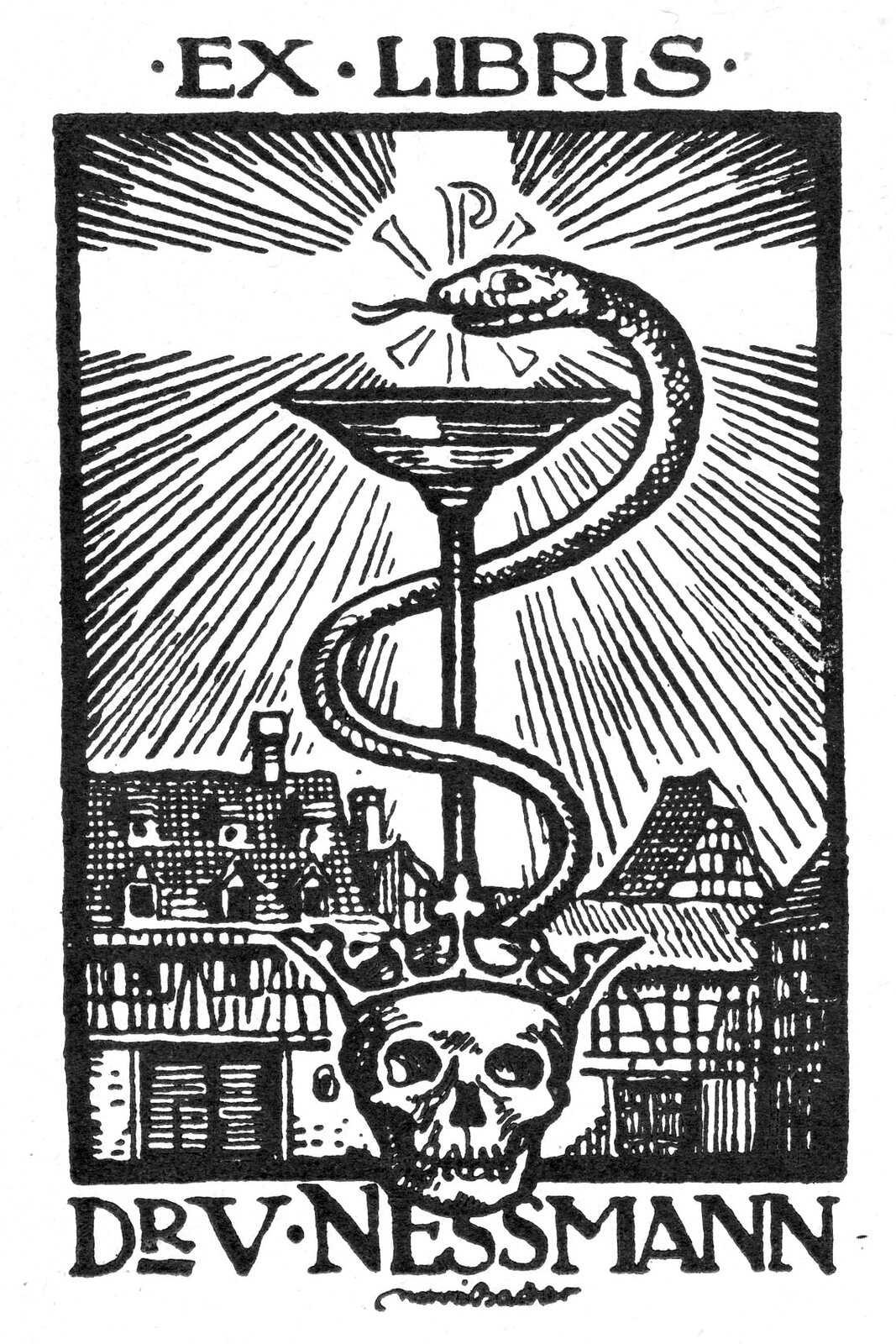
Rysunek przedstawia węża owijającego się wokoło kielicha, nad którym widoczny jest symbol P z X symbolizujący Chrystusa. Za symbolem, a za razem głową węża, częściowo go zakrywającą, znajduje się krzyż ze światła rozpraszający ciemność nad miastem u dołu rysunku. Kielich osadzony jest w czaszce z koroną. Ponad rysunkiem znajduje się napis Ex libris, a pod spodem dru nessmann.
Ex libris designed around 1930 for Victor Nessmann, a doctor and member of the resistance movement.
Source: domena publiczna.
R1ZWz8kwcjFdj
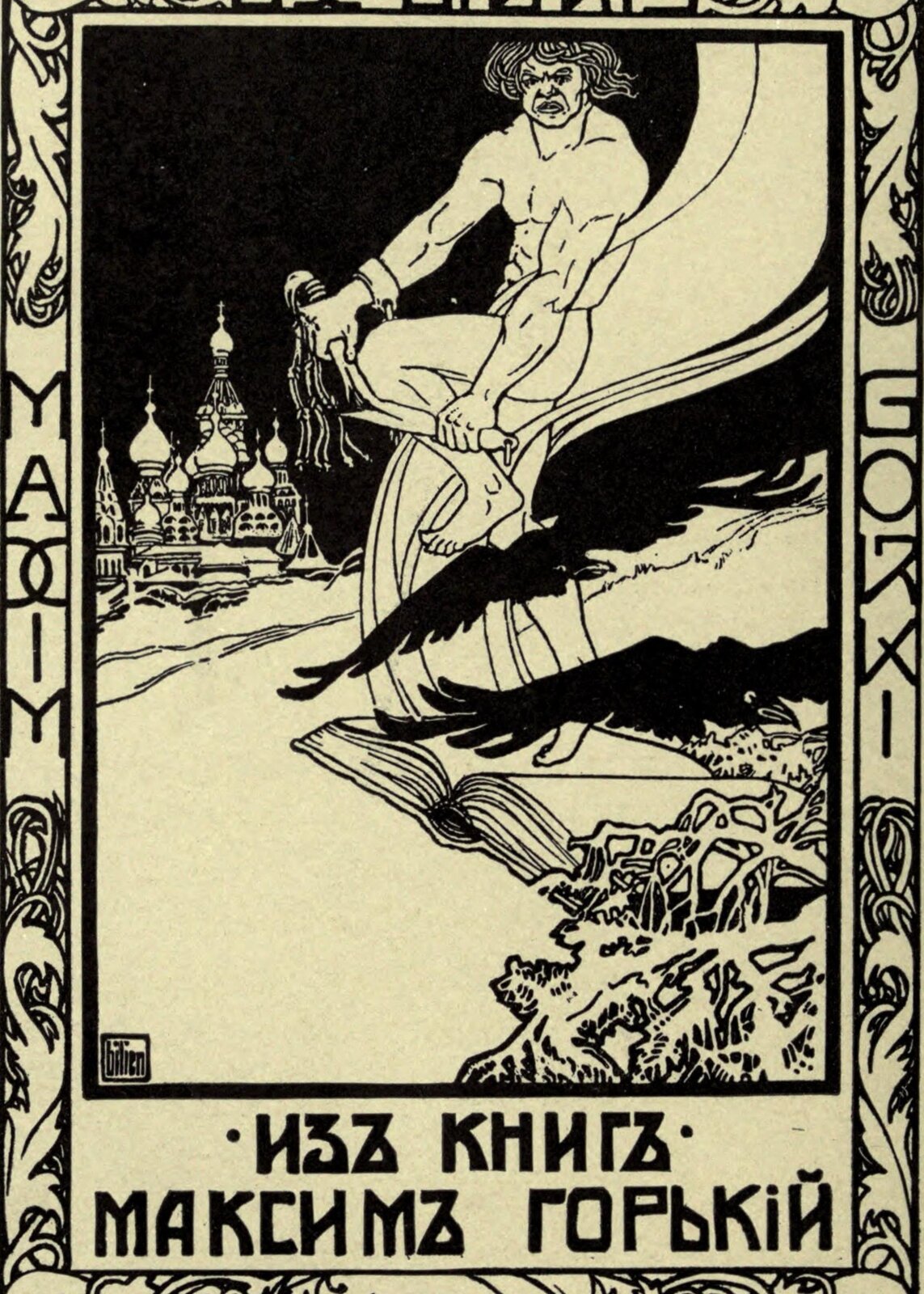
Rysunek przedstawia złego nagiego mężczyznę z długimi włosami wychodzącego z książki. W dłoniach trzyma łamany o własne kolano pejcz, z wieloma sznurkami i pękami związanymi na każdym w równych symetrycznych odstępach. W tle widoczny kreml, u dołu pod książką pola śniegu, dopiero w rogu widoczne są gałęzie wyłaniające się ze śniegu. Nad nimi dwa kruki. W koło rysunku niezupełnie widoczna ramka, zdobiona roślinnymi wzorami, które przerywają się aby ukazać imię i nazwisko autora: Maxim Gorki. U dołu znajduje się napis po rosyjsku.
Ex libris of the Russian writer Maxim Gorky, circa 1905.
Source: domena publiczna.
Currently, we do not put curses on thieves, we place „spells” mainly so that someone who borrows a book remembers whom to give it back.
The proprietary sign of the book, usually decorative, with name and surname of the owner of the book collection (or e.g. stylised initials) or the name of an institution is a bookplate.
A typical bookplate is a small, printed card stuck to the inside of the cover. In a simpler form it can be for example a stamp.
Look at the examples of bookplates on the right. What can you say about them? What can you say about the owners of the books that have such “tags”?
Think about what are books for you? Do you like to own them? Which ones are unique to you? Who did you get them from?
RVjHjwk3DQOVT
Gdybyś mógł mieć swój własny ex-libris, jak by on wyglądał?
Gdybyś mógł mieć swój własny ex-libris, jak by on wyglądał?
Design your own bookplate.
Exercise 2
Read the poem by Janusz Wiktor Gomulicki titled. „Ex libris” in the lesson “Do books have tags?“ on the epodreczniki.pl website. Pay attention to what the person talking compares the book with.
Indicate the fragments about the book’s appearance and its value.
Lyrical subject talks about a tome. What is the difference between a book and a tome?
Why do the nouns Past and Present begin with capital letters?
What is the concept of the immorality of books?
Think about the means by which you can express the mood of literary work.
Rgcls9amkD0LQ
Exercise 3
Wysłuchaj nagrania abstraktu i zastanów się, czego jeszcze chciałbyś się dowiedzieć w związku z tematem lekcji.
Wysłuchaj nagrania abstraktu i zastanów się, czego jeszcze chciałbyś się dowiedzieć w związku z tematem lekcji.
The mood that the poet wants to achieve depends on deliberately chosen words. What is the mood in this poem? Complete the table with neutral or sophisticated words.
Sophisticated vocabulary
Neutral vocabulary, „normal”
I reach
I take
do not give her the ear
barely opened
holding
Engages
RhUxK5ekJUMl4
Exercise 4
From the list of words, select the ones that determine the mood in the poem.
Rewrite them to the notebook and answer the question why the author talks about books in such a tone.
Możliwe odpowiedzi:
1. easy-going,
2. elevated,
3. sad,
4. solemn,
5. happy,
6. mysterious,
7. serious,
8. baleful
From the list of words, select the ones that determine the mood in the poem.
Rewrite them to the notebook and answer the question why the author talks about books in such a tone.
Możliwe odpowiedzi:
1. easy-going,
2. elevated,
3. sad,
4. solemn,
5. happy,
6. mysterious,
7. serious,
8. baleful
From the list of words, select the ones that determine the mood in the poem. Rewrite them to the notebook and answer the question why the author talks about books in such a tone.
easy-going
elevated
sad
solemn
happy
mysterious
serious
baleful
R1aiFUTyvDEum1
Grafika przedstawiająca tablicę szkolną, na której są zdania do dokończenia.
How was this lesson?
Did you like it?
Finish selected sentences.
It was easy for me (uzupełnij).
It was difficult for me (uzupełnij).
Today I learned (uzupełnij).
I understood that (uzupełnij).
It surprised me (uzupełnij).
Grafika przedstawiająca tablicę szkolną, na której są zdania do dokończenia.
How was this lesson?
Did you like it?
Finish selected sentences.
It was easy for me (uzupełnij).
It was difficult for me (uzupełnij).
Today I learned (uzupełnij).
I understood that (uzupełnij).
It surprised me (uzupełnij).
How was this lesson? Did you like it? Finish selected sentences.