„Do unto others as you would have them do to you”
you will describe the characteristic features of the parableparable
you will take part in a discussion about the traits of a neighbourneighbour and a Samaritan
you will interpret the message behind the biblical parable of the Good SamaritanGood Samaritan
you will speak about written and iconic cultural texts
Jesus, wanting to convey his teaching to simple people, used simple examples, stories. In literature they are called parables. Of the approximately 40 of them, the story of the Good Samaritan is among the best known. The definitive introduction to it is a dialogue between Jesus and a PhariseePharisee.
Remember the parable's characteristics. Complete the definition.
symbols, form, fabrication, legend, allegory, plot, scientific, didactic
A parable, otherwise known as an ......................, is a story with a hidden message. It belongs to the ...................... field of literature. It is characterised by: a simplified ......................, schematic ......................, universalism and the prescence of allegories and .......................
Do you know who we can say is a true Samaritan? Choose the terms that match the word Samaritan.
- compassionate
- helpful
- selfish
- empathetic
- generous
- greedy
- insensitive
Explain what the word „bliźni” means. Write a short entry for a Polish monolingual dictionary, and then check in a Polish dictionary if your definition is close to the definition you find there.
Read the excerpt from The Gospel according to Saint Luke, which contains the parable of the Good Samaritan, carefully. Next, complete the tasks under the text.
Ewangelia wg św. Łukasza 10, 25–29(25) A oto powstał jakiś uczony w Prawie i wystawiając Go na próbę, zapytał: Nauczycielu, co mam czynić, aby osiągnąć życie wieczne? (26) Jezus mu odpowiedział: Co jest napisane w Prawie? Jak czytasz? (27) On rzekł: Będziesz miłował Pana, Boga swego, całym swoim sercem, całą swoją duszą, całą swoją mocą i całym swoim umysłem; a swego bliźniego jak siebie samego. (28) Jezus rzekł do niego: Dobrześ odpowiedział. To czyń, a będziesz żył. (29) Lecz on, chcąc się usprawiedliwić, zapytał Jezusa: A kto jest moim bliźnim? (30) Jezus nawiązując do tego, rzekł: Pewien człowiek schodził z Jerozolimy do Jerycha i wpadł w ręce zbójców. Ci nie tylko że go obdarli, lecz jeszcze rany mu zadali i zostawiwszy na pół umarłego, odeszli. (31) Przypadkiem przechodził tą drogą pewien kapłan; zobaczył go i minął. (32) Tak samo lewita, gdy przyszedł na to miejsce i zobaczył go, minął. (33) Pewien zaś Samarytanin, będąc w podróży, przechodził również obok niego. Gdy go zobaczył, wzruszył się głęboko: (34) podszedł do niego i opatrzył mu rany, zalewając je oliwą i winem; potem wsadził go na swoje bydlę, zawiózł do gospody i pielęgnował go. (35) Następnego zaś dnia wyjął dwa denary, dał gospodarzowi i rzekł: Miej o nim staranie, a jeśli co więcej wydasz, ja oddam tobie, gdy będę wracał. (36) Któryż z tych trzech okazał się, według twego zdania, bliźnim tego, który wpadł w ręce zbójców? (37) On odpowiedział: Ten, który mu okazał miłosierdzie. Jezus mu rzekł: Idź, i ty czyń podobnie!
Source: Ewangelia wg św. Łukasza 10, 25–29, [w:] Biblia Tysiąclecia, Poznań 1983.
All who heard the parable were well aware of why there was a descent from Jerusalem to Jericho: Jerusalem is located at an altitude of 740 metres above sea level, whereas Jericho is located in a depression – 230 metres below sea level. A distance of 27 km separates the two cities.
It is also important to explain who certain characters from the parable are:
A Samaritan is an inhabitant of a land called Samaria. Samaria separated the area which was inhabited by the Jews of Galilee (where Jesus grew up) from Judea (where the capital city Jerusalem was located, along with the most important building in the country, Solomon's temple). In the Jews' opinion, Samaritans were an unclean, heathen, renegade, inferior people, and believed that contact with them would „dirty them”.
Levite – a priest's helper. The name has its roots in the Levites' belief that they are descendants of Levi, of the son of the patriarch.
Put the people who saw the man who had been beaten by the robbers in the right order.
- the Priest
- the Samaritan
- the Levite
Organize the synonyms and antonyms of the word "mercy".
tenderness, kindness, disgust, disregard, love, reluctance, generosity, nobility, indifference, indulgence, rage, anger
| Synonyms of the word "mercy" | |
|---|---|
| Antonyms of the word "mercy" |
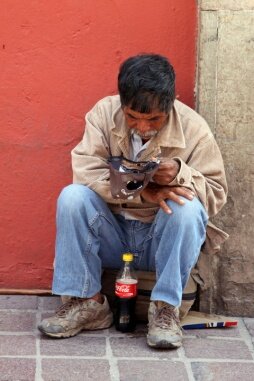
Suggest an order for this topic's keywords. You can base your decision on what interested, moved, shocked you etc. Prepare a short justification for your suggestion.
- mercy
- help
- parable
- a Good Samaritan
- a neighbour
Keywords
parable, Good Samaritan, mercy, neighbour, help
Glossary
przypowieść
miłosierny Samarytanin
miłosierdzie
bliźni
faryzeusz
poganin