Double strand of DNA
nucleic acids contain genetic information;
DNA is located in the cell nucleus of eukaryotes (or in the cytoplasm in prokaryotes);
DNA replicates before the division of the cell nucleus.
to describe the DNA structure;
to describe the relationship between DNA and genes;
to explain the mechanism of replication of genetic information and when it occurs.
A molecule of DNA, i.e. deoxyribonucleic acid, is composed of two evenly spaced strands which are spirally twisted around each other, giving the molecule a helix shape. It can be compared to a string ladder where each step is built by a pair of nucleotidesnucleotides. The DNA structure was discovered by James Watson and Francis Crick.
A nucleotide is the smallest building block of DNA. Each nucleotide consists of a deoxyribose sugar group, a phosphate group and a nitrogenous base. Four different nitrogenous bases are found in DNA: adenine (A), cytosine (C) ,guanine (G), thymine (T). Each nucleotide contains only one nitrogenous base, which is why four types of nucleotides are distinguished: adenine, cytosine, guanine and thymine nucleotides. A single strand of DNA consists of a series of nucleotides that are attached to one another through phosphate groups. Nucleotides forming neighbouring DNA strands are bound together by nitrogenous bases. The bases are connected by hydrogen bondshydrogen bonds in a strictly defined way: adenine always with thymine and cytosine always with guanine. Thanks to this, the order of the nitrogenous bases in one strand determines the location of corresponding bases in the other strand. This feature of nitrogenous bases is known as complementaritycomplementarity.
The estimated length of an unravelled DNA strand in a typical human somatic cell is about 2 metres.
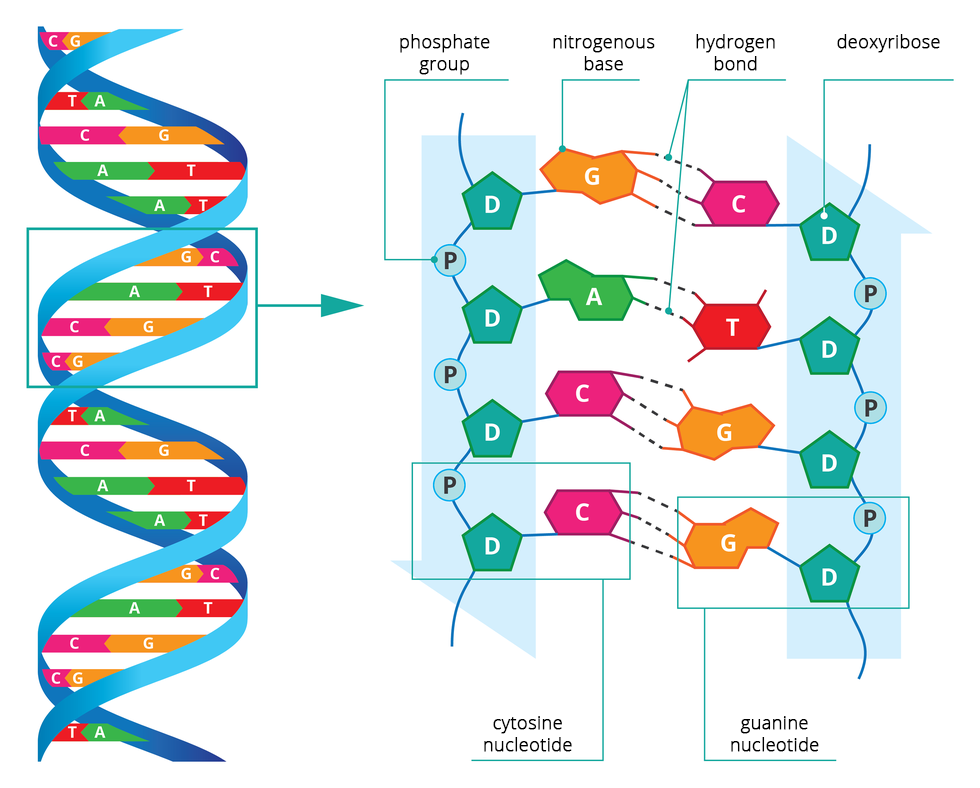
Some items are complementary, which means that they complement or supplement each other, e.g. a car and gasoline that fuels it or a lock and a key necessary to open it. Give other examples of complementarity in your surroundings.
Isolation of DNA from kiwi fruit cells.
1 kiwi
1 level teaspoon of kitchen salt
100 ml of water
10 ml of 95% ethanol (preferably frozen or at least chilled)
a big drop of concentrated (thick) washing‑up liquid
utensils: a glass, a test tube, a funnel, a small bowl, a large bowl
test tube tripod
ice
cutting board
knife
mortar
pestle
coffee filter
toothpick
linen cloth
Mix one teaspoon of kitchen salt with 100 ml of water until the salt dissolves.
Wrap some ice cubes in a cloth, break them into small pieces with a pestle and pour them ice into a bowl.
Cut a 1x2x3 cm piece out of the kiwi and chop it into tiny pieces.
Place the fruit pulp in a mortar, add two tablespoons of the salt solution and the triturate the ingredients into a smooth paste.
Pour the paste into a glass and add more salt solution to it, so that the volume of the suspension increases approximately two or three times.
Add a large drop of washing‑up liquid and stir gently to prevent the solution from foaming up.
Put the glass into a bowl filled with ice. The ice should reach slightly lower than the level of the liquid in the glass.
Wait for about 5 minutes, stirring the suspension from time to time.
Keep stirring the suspension until it becomes sticky. Put a toothpick in the suspension and check with your fingers if the suspension is sticky enough.
Put the tube in a tripod and insert a funnel lined with a coffee filter soaked with water.
Take the mixture out of the ice and pour into the funnel.
Wait for the filtrate to collect in the test tube. Remove the funnel, tilt the tube gently and pour the chilled alcohol carefully over the wall – its volume should not exceed the volume of the filtrate. Leave the tube for 2‑3 minutes.
Watch the tube. Pay attention to the small, white flocs appearing at the interface between the alcohol and the suspension. After 10 minutes, they will form layer on top of the fluid. They can even be wound around a toothpick and removed from the solution. After drying, they become invisible.
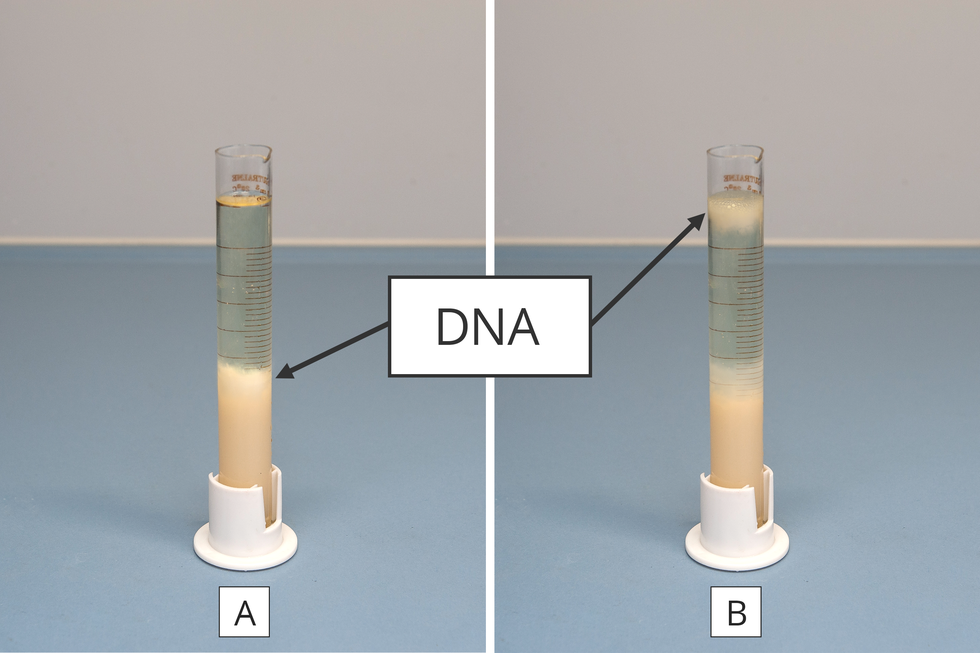
Deoxyribonucleic acid (DNA) is found in cell nuclei, mitochondria and chloroplasts. To extract it from these structures, you have to destroy the cell walls and cell membranes by grinding them and then wash the acid out with aqueous salt solution. The detergent contained in the washing‑up liquid helps with that.
The released DNA would be quickly decomposed by enzymesenzymes contained in the destroyed cells. To prevent this, the mixture is cooled down, because at temperatures close to 0°C the enzymes are not very active.
The kiwi suspension if filtrated through filter paper to separate the DNA from tissue fragments. Alcohol and sodium chloride ions cause the precipitation of DNA, which forms large complexes visible in the solution as long threads.
Before watching the video titled “Let’s build a DNA strand”, write down your research question and hypothesis. Take notes while watching the video and add some conclusions at the end.
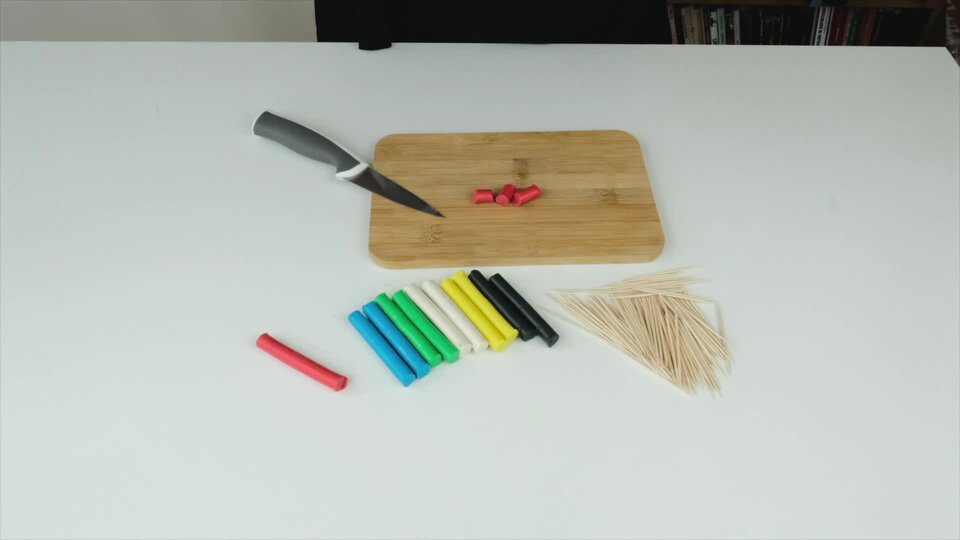
Film dostępny na portalu epodreczniki.pl
Nagranie filmowe dotyczące budowy modelu DNA Let’s build a DNA strand
Match the correct definition to each of the terms below.
the basic structural element of a nucleic acid molecule, an organic compound that together with deoxyribose and phosphate forms a nucleotide, mutual complementation of two elements, spiral, space curve
| helix | |
| complementarity | |
| nitrogen base | |
| nucleotide |
What is the nature of the hydrogen bond binding together a pair of nitrogenous bases?
- It is a relatively weak chemical bond based on electrostatic interaction between two atoms.
- It is a relatively weak chemical bond based on the interaction between two separate molecules.
- It is a relatively strong chemical bond created through the sharing of an electron pair between two different atoms.
- It is a relatively strong chemical bond created through the acquisition of electrons of one atom by another atom.
A fragment of a DNA strand consists of nucleotides containing the following nitrogenous bases: adenine - adenine - thymine - guanine - cytosine - thymine. Bearing in mind the principle of complementarity, type the names of the nitrogenous bases located in the other strand of the same DNA fragment in the correct order in the empty boxes below.
.............. – .............. – adenine – ................ – .............. – ..............
Summary
DNA contains genetic material. It is a record of information about the structure and functioning of the body.
A DNA molecule is composed of nucleotides and has a double‑stranded structure.
Each DNA nucleotide consists of a deoxyribose sugar, a phosphate group and one of nitrogenous bases: adenine, cytosine, guanine or thymine.
Nitrogenous bases of the corresponding nucleotides of both strands are bound together by hydrogen bonds in accordance with the principle of complementarity.
Keywords
nucleotide, nucleic acids, deoxyribose, phosphoric acid
Glossary
enyzm – białko pełniące funkcję katalizatora; przyspiesza przebieg reakcji biochemicznych
kwasy nukleionowe – organiczne związki chemiczne zbudowane z nukleotydów; pośredniczą w produkcji białek oraz stosunkowo rzadko pełnią funkcję enzymów; znane są dwa rodzaje kwasów nukleinowych: DNA i RNA
nuklotyd – podstawowy element strukturalny kwasu nukleinowego, zbudowany z cukru (rybozy lub deoksyrybozy), reszty kwasu fosforowego oraz zasady azotowej
replikacja DNA – proces polegający na skopiowaniu cząsteczki DNA; zachodzi przed podziałem komórki
wiązanie wodorowe – stosunkowo słabe wiązanie chemiczne; oddziaływanie elektrostatyczne między atomem wodoru a atomem pierwiastka silnie elektroujemnego, np. tlenu, fosforu, fluoru lub azotu
zasada komplementarności – zasada wzajemnego uzupełniania się par zasad azotowych budujących kwasy nukleinowe; w przypadku DNA komplementarne są adenina i tymina oraz cytozyna i guanina