The conductorconductorconductor is a body in which electrons orbiting the atomic nucleus are weakly bound to the atomic nucleus. The electrons in the outermost orbits can move freely throughout the body.
R6Y1jfcVOq9Xj
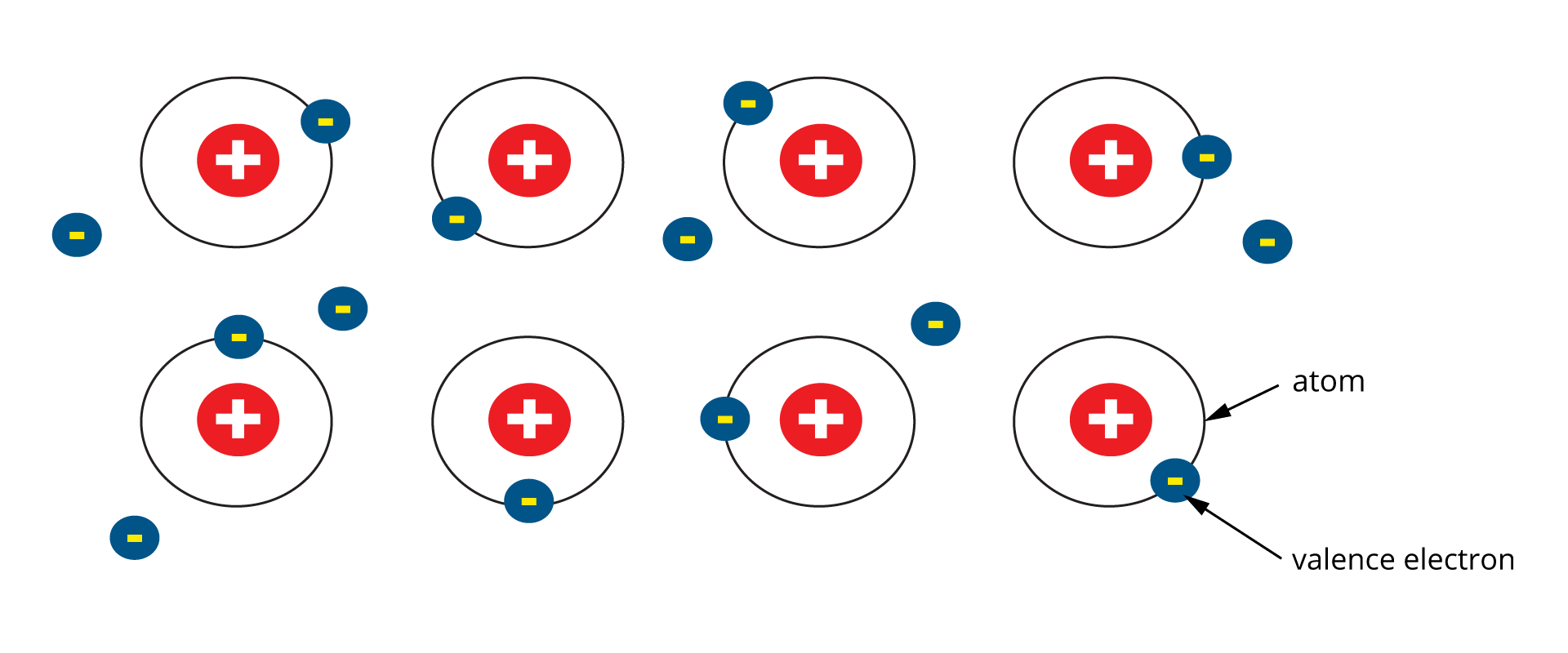
Na rysunku przedstawione jest schematycznie osiem atomów: kółko ze znakiem plus, wokół niego okrąg, na którym jest kółko ze znakiem minus. Kółka ze znakiem minus znajdują się także w wolnej przestrzeni między atomami. Jeden z atomów podpisany atom, jedno kółko ze znakiem minus znajdujące się na okręgu podpisane valence electron.
Let's take a closer look at the structure of conductors
The most commonly used conductors are metals. Atoms are placed in them regularly. They have no freedom of movement. The force of their mutual interactions holds them at constant distances and allows only slight vibrations.
The electrons that are farthest from the atomic nucleus (so‑called valence electrons) can easily detach themselves from their atoms, and because the forces acting on these electrons from all metal atoms are balanced, these electrons can move freely in the entire volume of the conductorconductorconductor.
They belong to the entire conductor, not just the parent atoms. Other electrons, those closer to the atomic nuclei, are unable to break free and remain at their parent atoms.
RO3VriA7SC53x
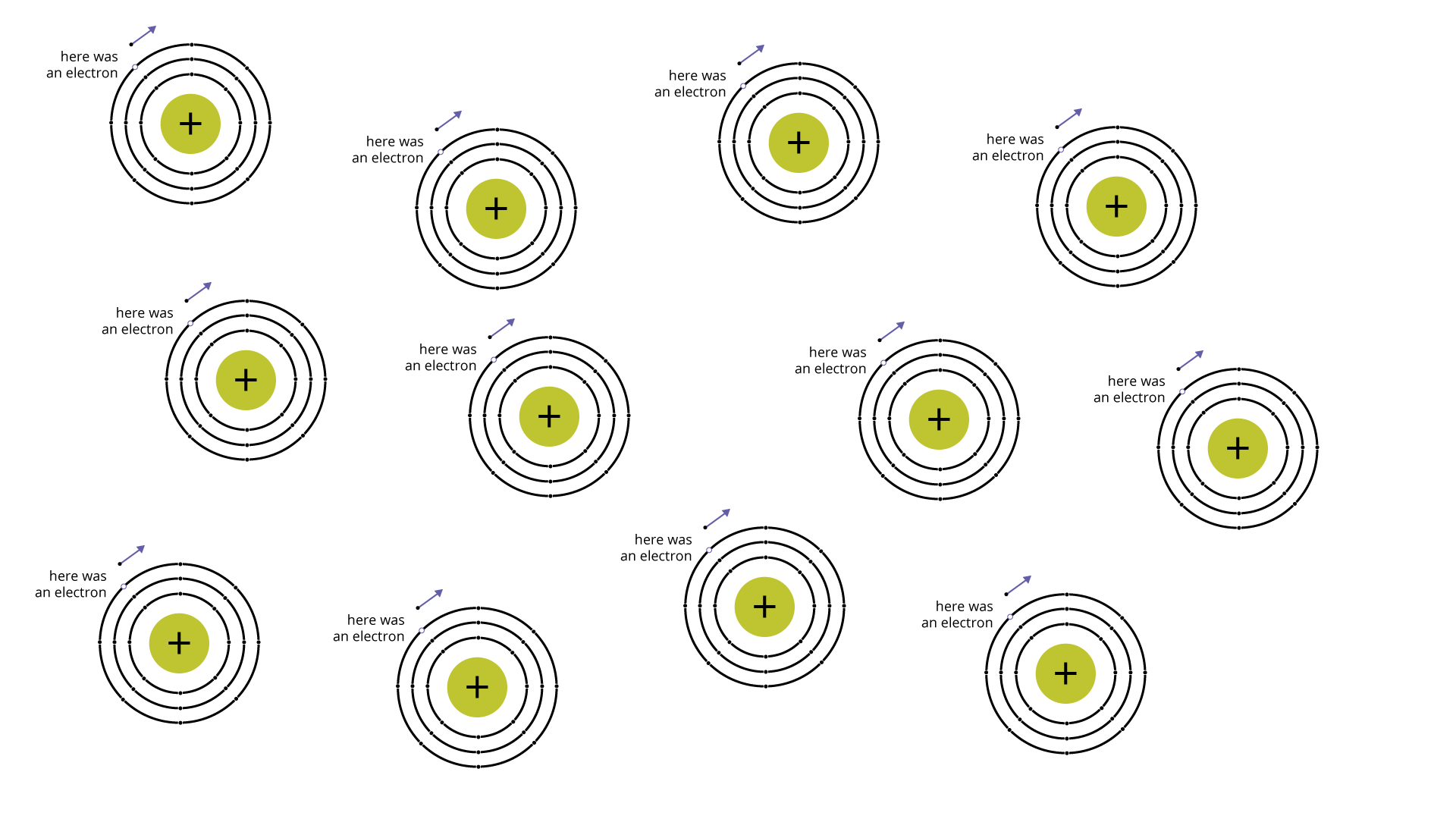
Na rysunku przedstawione jest schematycznie dwanaście atomów. Każdy z nich zbudowany z kółka ze znakiem plus, wokół niego trzy okręgi. Na zewnętrznym okręgu narysowany jest mały okrąg, obok niego takiej samej wielkości małe kółko, od niego strzałka skierowana ukośnie do góry. Mały okrąg opisany here was an electron.
The electrons located on the farthest orbits (so-called valence electrons) can move in the entire volume of the conductor. They form so-called electron gas and allow the flow of electric current
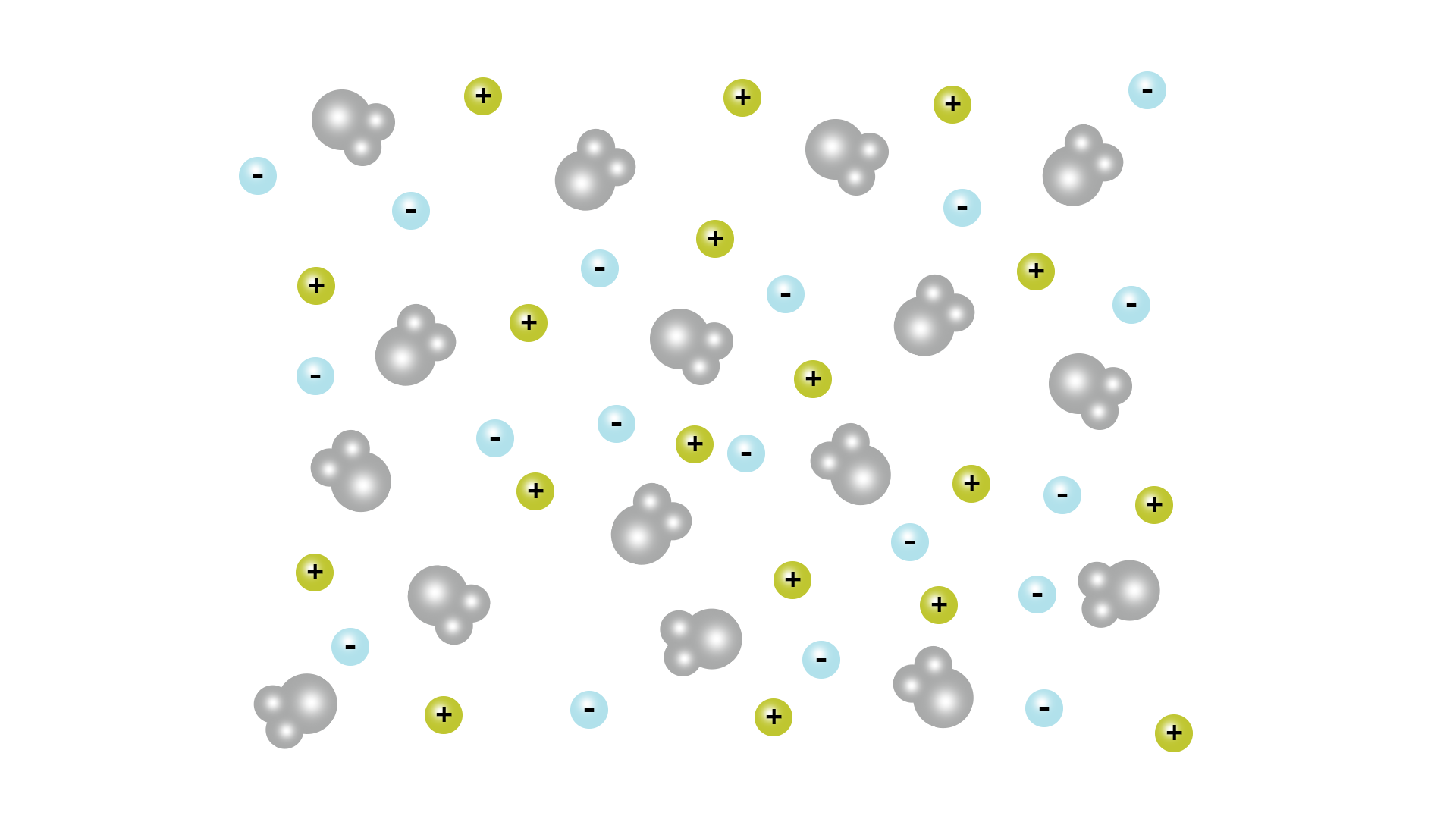
So it is in metals. But not only there the charges are free to move. Another example of conductors are electrolytes, i.e. solutions of acids, bases and salts. Water molecules act on the molecules of acids, bases and salts like scissors - they cut them into parts, one of which is a positive ion and the other a negative ion. Like water molecules, they are free to move. In a liquid (not like in metals) there are no forces that could hold particles in place.
RKHDlTSAyTIYK
Na rysunku przedstawione jest schematycznie osiemnaście kółek ze znakiem plus, osiemnaście kółek ze znakiem minus, szesnaście połączonych ze sobą elementów złożonych z jednego kółka większego i dwóch kółek mniejszych. Kółka rozmieszczone są w nieuporządkowany sposób.
The chaotic ion movement in the liquid also allows electric current to flow
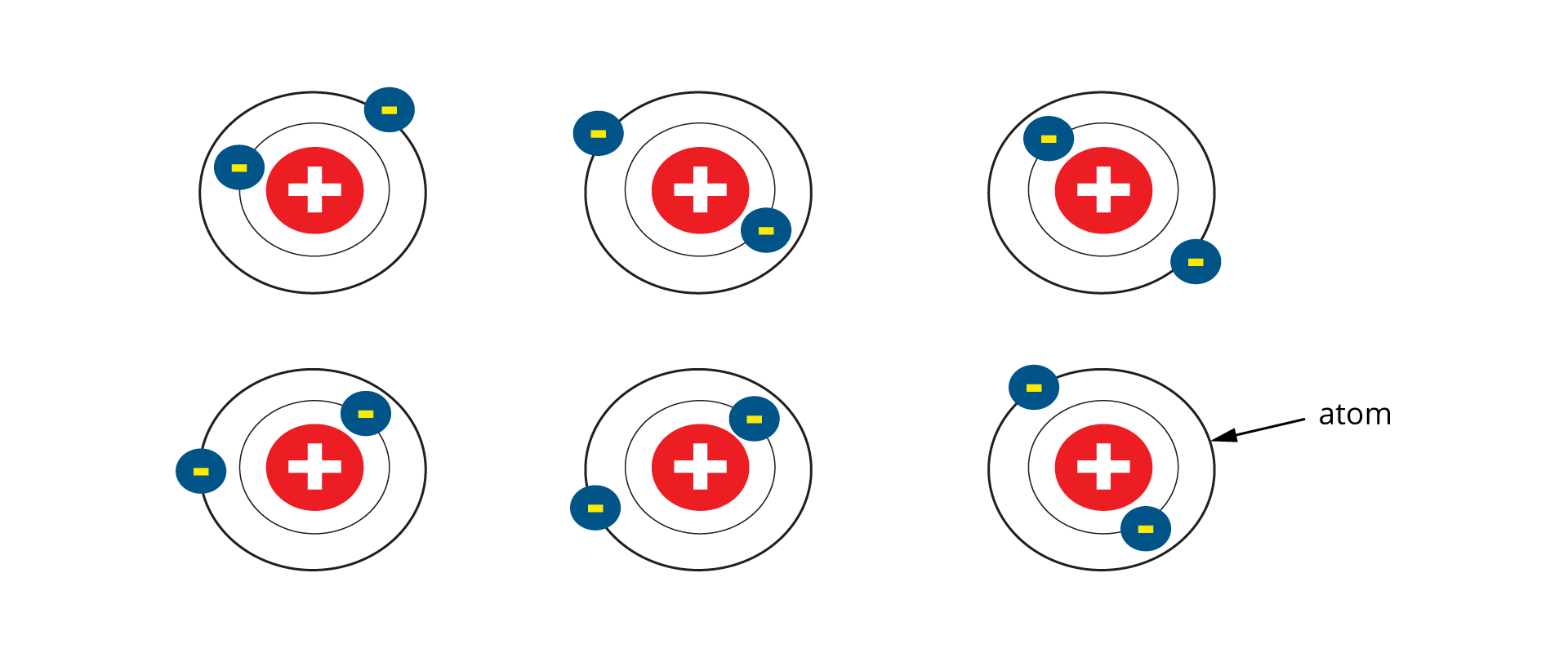
The insulatorinsulatorinsulator is a body in which electrons orbiting the nucleus are strongly bound to the nucleus and absolutely cannot move throughout the body. In certain situations, they can move slightly within the volume of an atom.
RaFc8vo39tNVV
Na rysunku przedstawione jest schematycznie sześć atomów: kółko ze znakiem plus, wokół niego dwa okręgi, na każdym z nich jest kółko ze znakiem minus. Jeden z atomów podpisany atom.
Insulators are materials whose internal structure is characterized by the fact that electrons are very strongly bound to atoms. They cannot easily break away from atoms and do not have the possibility of free movement within the body. They can be charged by friction - then some electrons detach from atoms and move to the surface of other body. Insulators include among others glass, porcelain, plastic, wood, rubber, distilled water, dry air.
RFdhiYJHnzhLd
W górnej części ilustracji interaktywnej przedstawione jest schematycznie sześć atomów: kółko ze znakiem plus, wokół niego dwa okręgi, na każdym z nich jest kółko ze znakiem minus. Jeden z atomów oznaczony jest numerem 1, jedno kółko ze znakiem minus oznaczone jest numerem 2. W dolnej części ilustracji interaktywnej przedstawione jest jest schematycznie osiem atomów: kółko ze znakiem plus, wokół niego okrąg, na którym jest kółko ze znakiem minus. Kółka ze znakiem minus znajdują się także w wolnej przestrzeni między atomami. Jeden z atomów oznaczony jest numerem 3, jedno kółko ze znakiem minus oznaczone jest numerem 4. Na ilustracji widoczne są numery, a na nich podpisy. 1. insulators {audio}, 2. electrons move only around the parent nucleus {audio}, 3. conductors {audio}, 4. electrons move in the entire volume {audio}.
W górnej części ilustracji interaktywnej przedstawione jest schematycznie sześć atomów: kółko ze znakiem plus, wokół niego dwa okręgi, na każdym z nich jest kółko ze znakiem minus. Jeden z atomów oznaczony jest numerem 1, jedno kółko ze znakiem minus oznaczone jest numerem 2. W dolnej części ilustracji interaktywnej przedstawione jest jest schematycznie osiem atomów: kółko ze znakiem plus, wokół niego okrąg, na którym jest kółko ze znakiem minus. Kółka ze znakiem minus znajdują się także w wolnej przestrzeni między atomami. Jeden z atomów oznaczony jest numerem 3, jedno kółko ze znakiem minus oznaczone jest numerem 4. Na ilustracji widoczne są numery, a na nich podpisy. 1. insulators {audio}, 2. electrons move only around the parent nucleus {audio}, 3. conductors {audio}, 4. electrons move in the entire volume {audio}.
We already know that bodies, which as a whole are electrically neutral, hide within themselves charges of both signs. We also know that there are bodies called conductors, where some of these charges (electrons or ions) are free to move. The movement of these charge carriers is chaotic. However, if an external factor arranges the movement of charges, we deal with electric currentelectric currentelectric current.
R1YNtamYKWfGx1
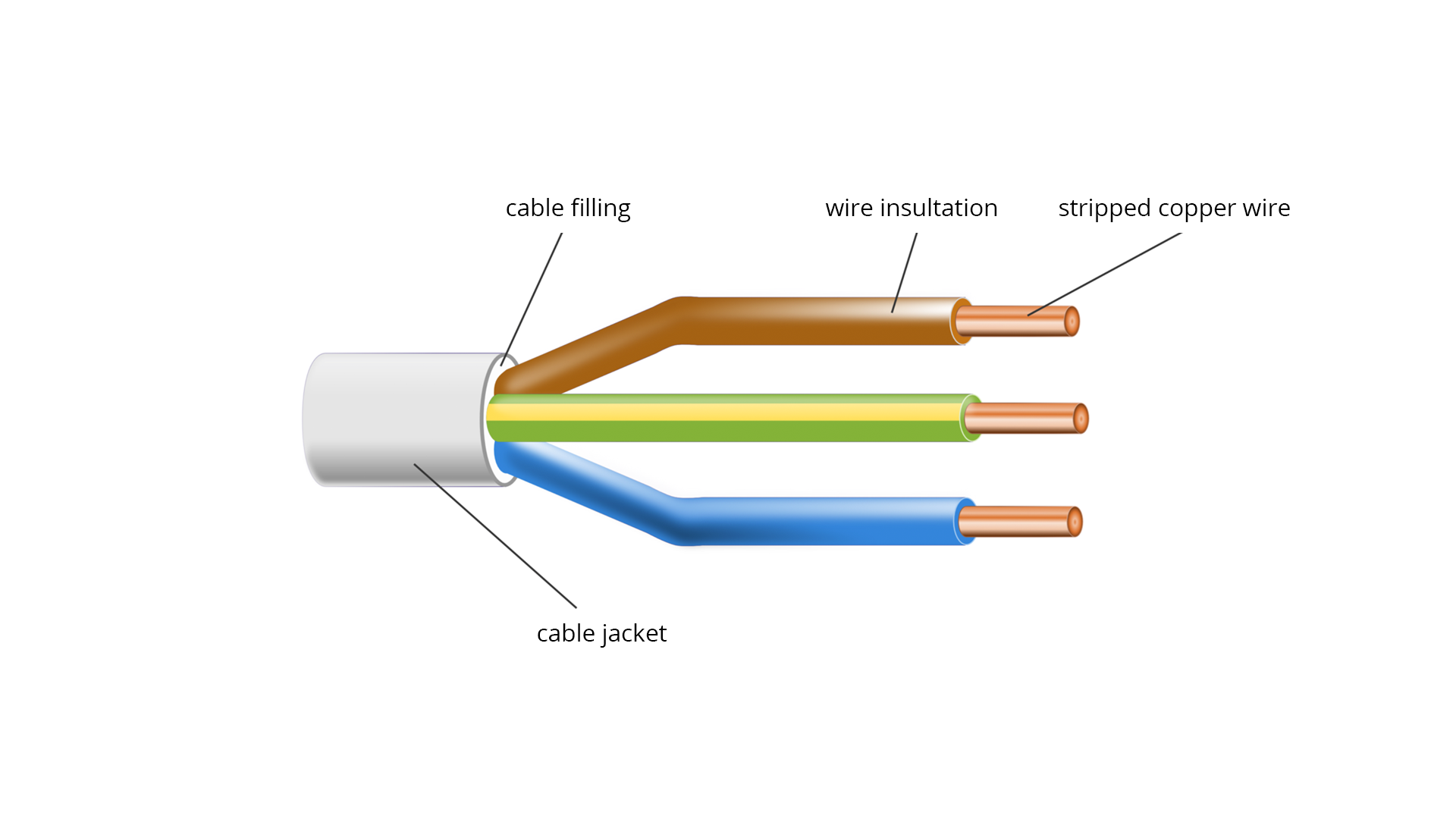
Na rysunku przedstawiony jest schematycznie typowy przewód elektryczny stosowany w instalacjach domowych. Od lewej walec opisany cable jacket, wewnątrz którego znajdują się trzy walce, każdy w innym kolorze. Jeden z nich opisany wire insulation. Wewnątrz każdego z nich walec opisany stripped copper wire. Wnętrze największego walca opisane cable filling.
Depending how easy bodies conduct electricity, we divide them into conductors and insulators.
The internal structure determines the electrical properties of the bodies. Valence electrons play an important role.
The valence electron is the electron located on the last (outermost) shell of the atom. The number of valence electrons and how strongly they are bound to the nucleus of an atom affect many of the physical properties of the element, including thermal and electrical conductivity.
The conductivity can be electronic or ionic.
The electric current conductorconductorconductor is the body in which the electric charge is carried by the valence electrons. The metallic conductors include mainly metals, like copper, aluminium, iron and gold.
In the ionic conductor, the charge carriers are positive or negative ions. The flow of electric currentelectric currentelectric current is accompanied by visible mass transport. Electrolytic conductivity occurs in liquids, solids and gases.
An insulatorinsulatorinsulator is a substance that does not conduct electricity and is characterized by low concentration of charge carriers. Insulators include among others: rubber, polystyrene, dry wood, distilled water and dry air.
Exercises
Rp8AaRipM3Dgn
Exercise 1
Wersja alternatywna ćwiczenia: Determine which sentences are true. Możliwe odpowiedzi: 1. In metallic conductors there are free protons that can move freely in the entire volume of the conductor., 2. In metallic conductors there are free electrons that can move freely in the entire volume of the conductor., 3. There are no electrons in the insulators and therefore the electric current cannot flow through the insulator., 4. In insulators, electrons can only move within the region of the parent atom.
Wersja alternatywna ćwiczenia: Determine which sentences are true. Możliwe odpowiedzi: 1. In metallic conductors there are free protons that can move freely in the entire volume of the conductor., 2. In metallic conductors there are free electrons that can move freely in the entire volume of the conductor., 3. There are no electrons in the insulators and therefore the electric current cannot flow through the insulator., 4. In insulators, electrons can only move within the region of the parent atom.
Determine which sentences are true.
In metallic conductors there are free protons that can move freely in the entire volume of the conductor.
In metallic conductors there are free electrons that can move freely in the entire volume of the conductor.
There are no electrons in the insulators and therefore the electric current cannot flow through the insulator.
In insulators, electrons can only move within the region of the parent atom.
zadanie
Source: GroMar, licencja: CC BY 3.0.
Exercise 2
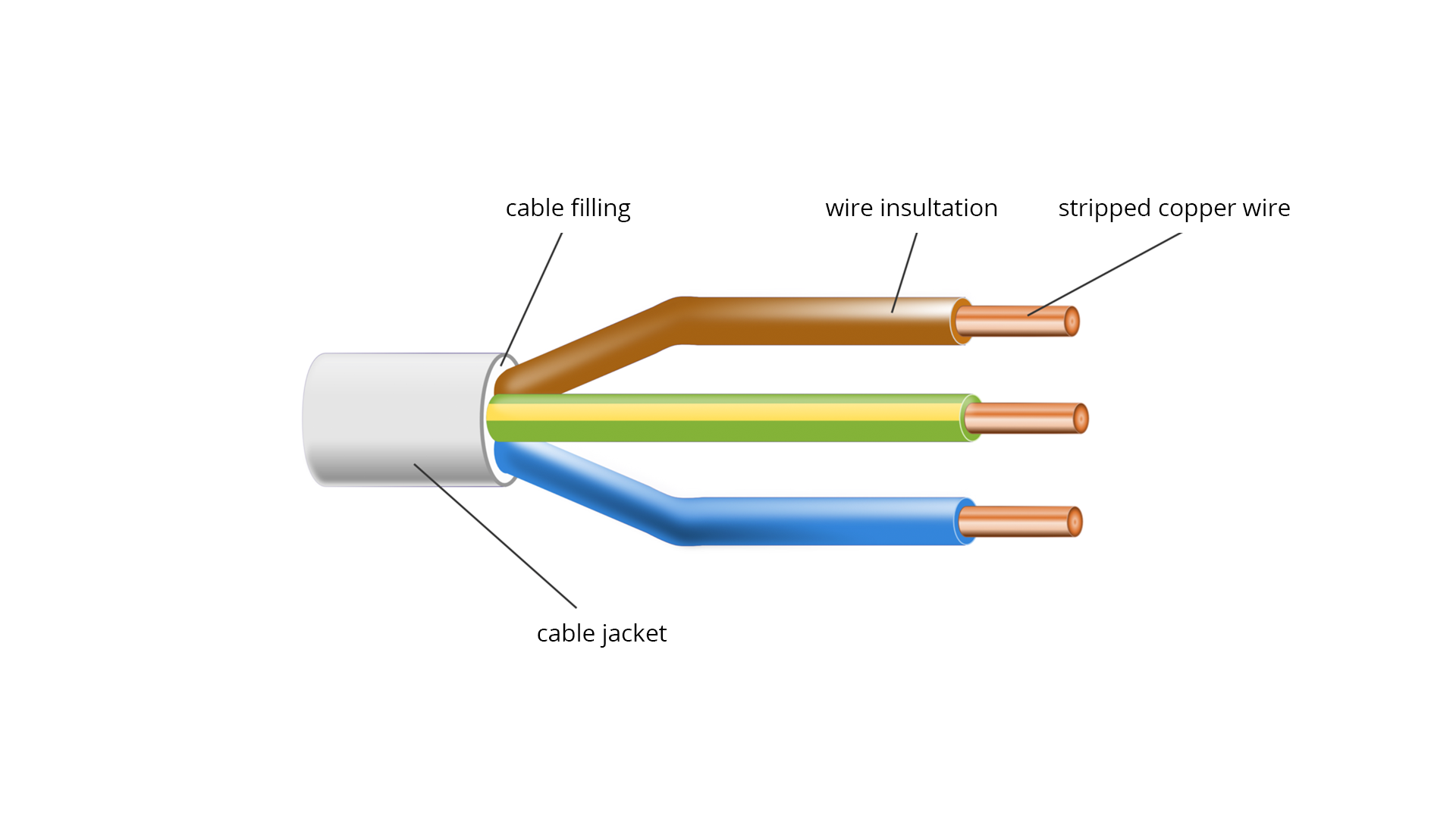
Illustration shows the construction of a typical cable used in home installations. Explain what function copper wire has in this cable and what function has insulation around this conductor.
R8mf0EMetzv83
Na rysunku przedstawiony jest schematycznie typowy przewód elektryczny stosowany w instalacjach domowych. Od lewej walec opisany cable jacket, wewnątrz którego znajdują się trzy walce, każdy w innym kolorze. Jeden z nich opisany wire insulation. Wewnątrz każdego z nich walec opisany stripped copper wire. Wnętrze największego walca opisane cable filling.
A typical electrical cable used in home installations
The copper wire conducts electric current, insulation prevents the flow of electric current in an undesirable direction.
Exercise 3
Write in English a note about the use of insulators and conductors. Indicate the sources from which you got information.
RILijfZXrsGUM
Exercise 4
Wersja alternatywna ćwiczenia: Indicate which pairs of expressions or words are translated correctly. Możliwe odpowiedzi: 1. przewodnik - conductor, 2. izolator - insulator, 3. wolne elektrony - free electrons, 4. prąd elektryczny - free electrons, 5. ruch ładunku - electric current
Wersja alternatywna ćwiczenia: Indicate which pairs of expressions or words are translated correctly. Możliwe odpowiedzi: 1. przewodnik - conductor, 2. izolator - insulator, 3. wolne elektrony - free electrons, 4. prąd elektryczny - free electrons, 5. ruch ładunku - electric current
Indicate which pairs of expressions or words are translated correctly.
przewodnik - conductor
izolator - insulator
wolne elektrony - free electrons
prąd elektryczny - free electrons
ruch ładunku - electric current
zadanie
Source: GroMar, licencja: CC BY 3.0.
R1OM5chZaHWOH1
Interaktywna gra, polegająca na łączeniu wyrazów w pary w ciągu jednej minuty. Czas zaczyna upływać wraz z rozpoczęciem gry. Jeden ruch to odkrywanie najpierw jednej potem drugiej karty z wyrazem. Każdy wyraz jest odczytywany. Kolejny ruch to odkrywanie trzeciej i czwartej karty. W ten sposób odsłuchasz wszystkie wyrazy. Nawigacja z poziomu klawiatury za pomocą strzałek, odsłuchiwanie wyrazów enterem lub spacją. Znajdź wszystkie pary wyrazów.
Interaktywna gra, polegająca na łączeniu wyrazów w pary w ciągu jednej minuty. Czas zaczyna upływać wraz z rozpoczęciem gry. Jeden ruch to odkrywanie najpierw jednej potem drugiej karty z wyrazem. Każdy wyraz jest odczytywany. Kolejny ruch to odkrywanie trzeciej i czwartej karty. W ten sposób odsłuchasz wszystkie wyrazy. Nawigacja z poziomu klawiatury za pomocą strzałek, odsłuchiwanie wyrazów enterem lub spacją. Znajdź wszystkie pary wyrazów.
Match Polish terms with their English equivalents.
przewodnik
izolator
wolne elektrony
insulator
free electrons
conductor
Source: Zespół autorski Politechniki Łódzkiej, licencja: CC BY 3.0.