Escape in revolution. Japan
about the new political ideas and cultural phenomena that appeared in Japan in the second half of the nineteenth century;
the reasons for the MeijiMeiji revolution;
the effects of modernisationmodernisation in Japan.
For the majority of the nineteenth century, Japan was a feudal state, reminiscent of social relationships from the Middle Ages in Europe. Since the beginning of the 18th century, America and Europe had tried without success to set up commercial relationships with Japan. One carefully planned American expedition was successful and in 1854 a friendship and trade treaty was signed in Kanagawa. Similar treaties were soon signed by Russia and the Netherlands. In 1868, the transformation of Japanese civilisation began. This became possible thanks to changes in the systme of power. Military rule by provincial princes was abolished. Direct rule by the emperor was restored. The era of „enlightened government” or Meiji, dawned. The rise of modern Japan in the Far East can be compared to the development of powerful nation‑states in Europe and America: the unification of Germany or the restructuring of the United States. China became the first target of colonial activity. It depended most of all on the wealthy Korea, which was under the political influence of China.
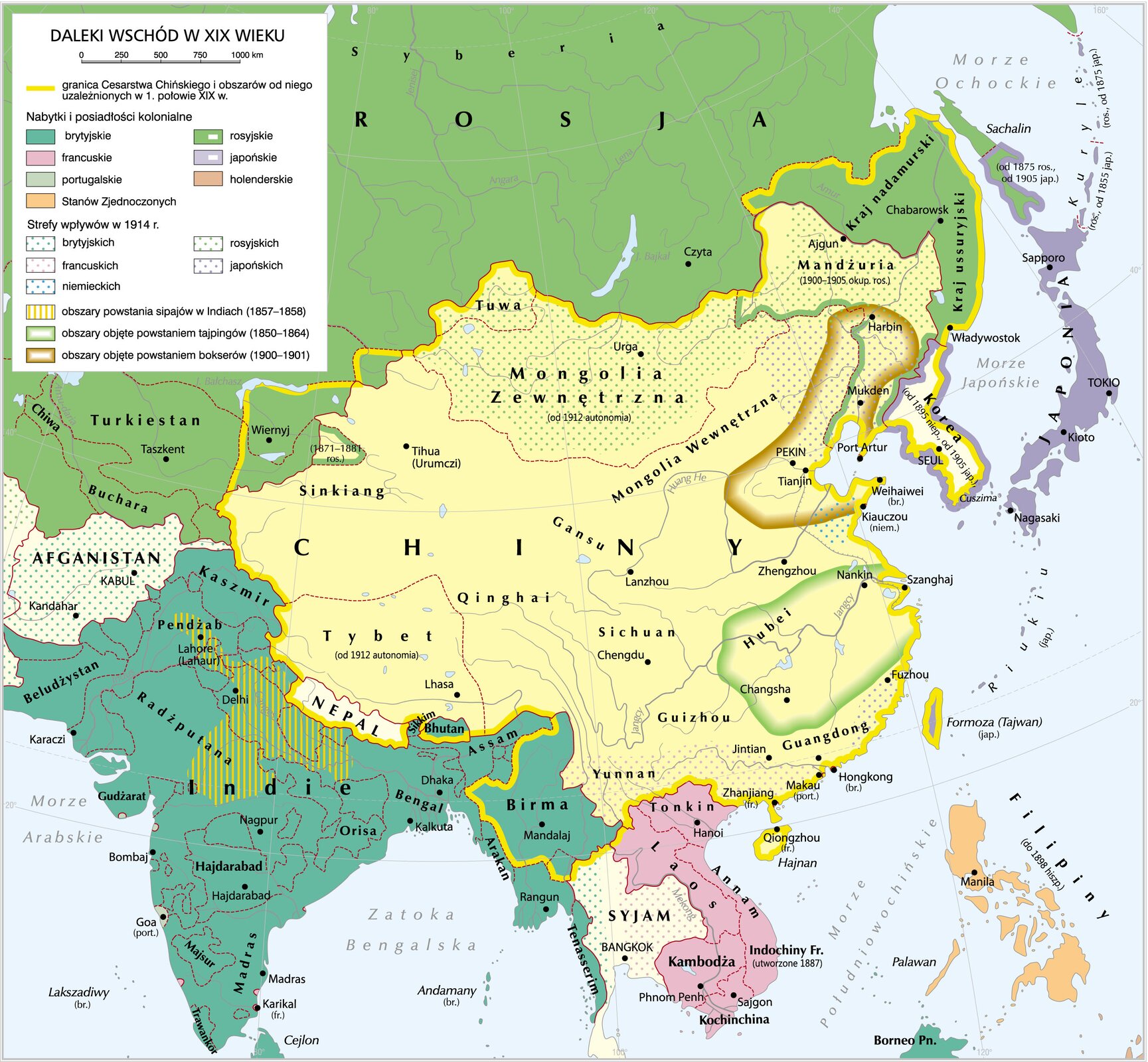
Become familiar with the timeline and learn more about the revolution in Japan.
Match the pairs: English words with Polish definition.
w języku japońskim: oświecone rządy; okres w historii Japonii obejmujący panowanie cesarza Mutsuhito (1868---1912);, unowocześnienie
| modernisation | |
| Meiji |
Keywords
Japan, revolution, modernisation
Glossary
modernizacja – unowocześnienie
Meiji – w języku japońskim: oświecone rządy; okres w historii Japonii obejmujący panowanie cesarza Mutsuhito (1868–1912);