RuuxpAbODLsx1

Europe at the height of power. Colonial conquests

Maps of the world
Source: Ylanite Koppens /https://www.pexels.com/, domena publiczna.

Link to the lesson

You will learn
  • to list the causes of colonialism;

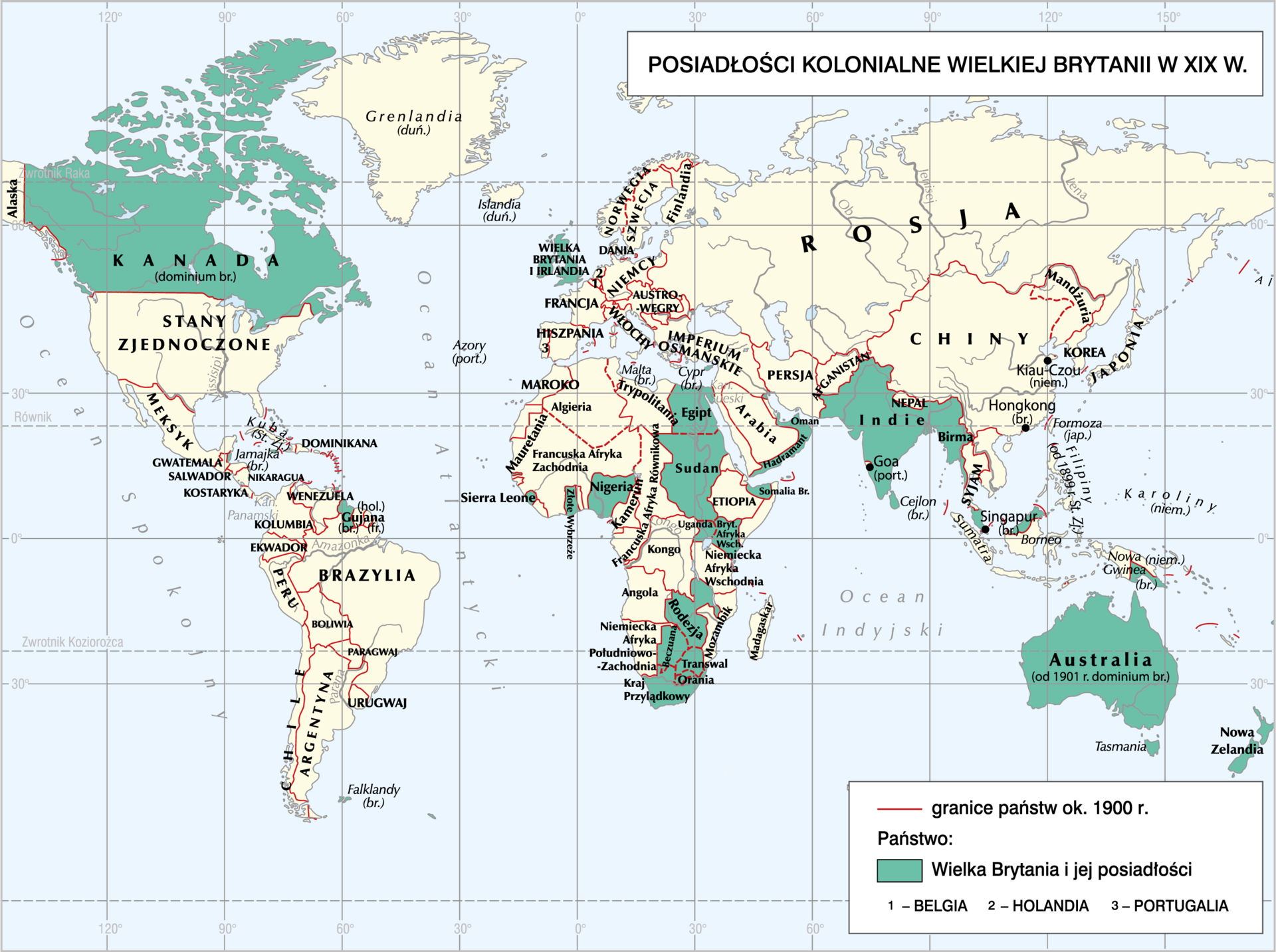
  • to point out on the map the colonial empires of the 19th century;

  • to characterize the differences in the colonisation of Asia and Africa in the 19th century.

RUJPrlsiHmFHZ
Nagranie dźwiękowe abstraktu

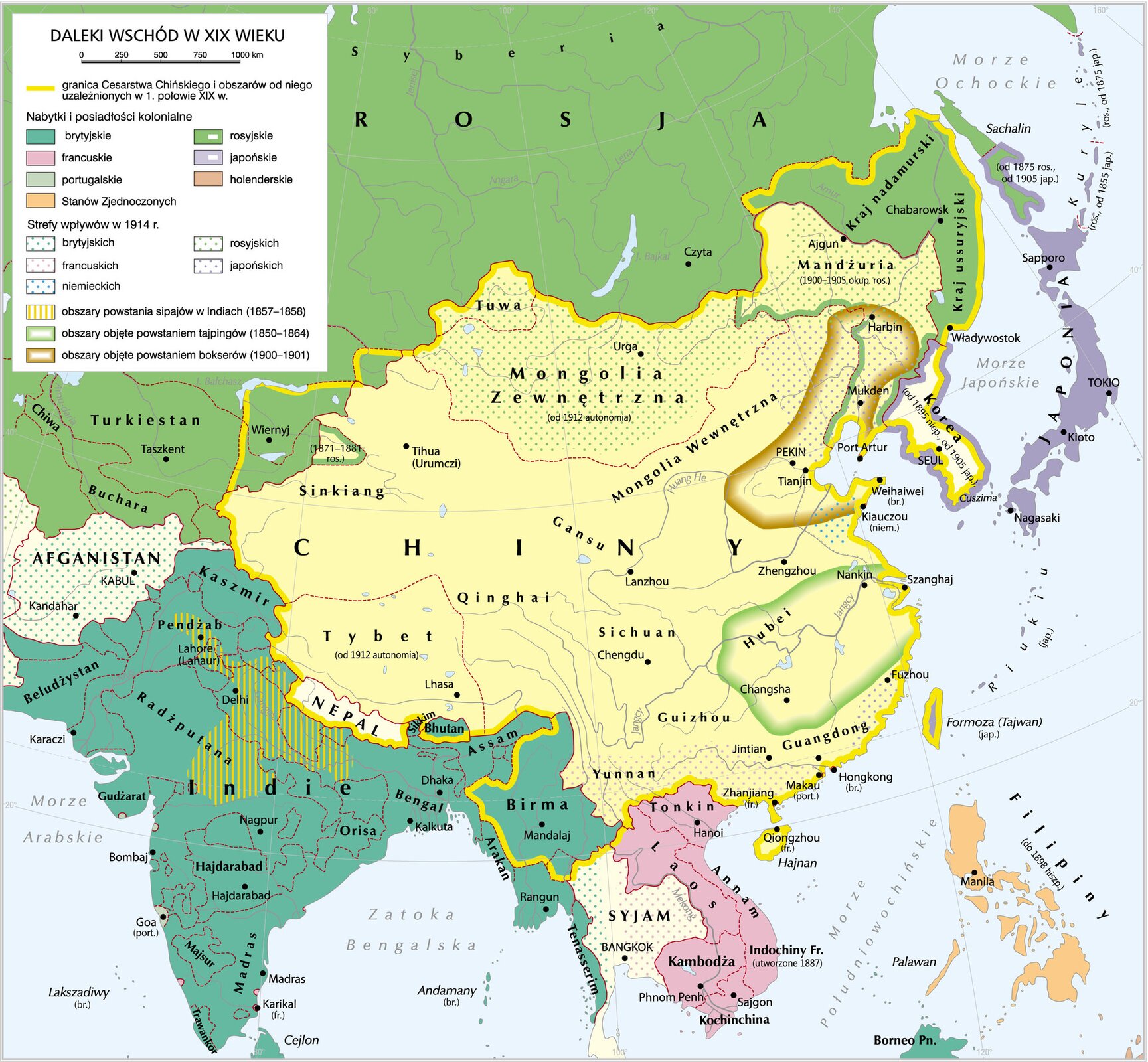
The industrial revolution has given a new face to European colonial expansion. The rapid economic development of Europe forced Europeans to look for new markets and opportunities to invest capital. ColoniesColoniesColonies were also seen as a source of cheap raw material. The most fierce competition took place in Africa and Asia. In Africa, the colonies were founded by: the British, the French, the Belgians, the Germans, the Italians and the Portuguese. In Asia, Great Britain dominated India, while the French occupied Indochina. Also Russia conquered numerous Asian areas. The weakened China has been divided into spheres of influence between many countries. Competition for colonial and subsequent conquests led to armed conflicts between the states and the native population of the colonies.

1
Task 1

Familiarize yourself with the definition of the term colonialism. Remember what are, in your opinion, its most important elements.
R11uC3y7MSfeX
Ilustracja przedstawiająca plantację cukru w brytyjskiej kolonii na wyspie Antigua.Familiarize yourself with the definition of the term colonialism. Remember what are, in your opinion, its most important elements. 1. The term „colonialism”, although fairly well-known, is poorly specified. When we use it in colloquial language, there is a fear of inaccuracies and generalizations. Therefore, it is worth explaining its origin and scope.The word "colony" originates from ancient Rome; where it meant a group of citizens sent to settle a territory that had not yet been inhabited or was conquered by the Romans. Hence the area was called the "colony". This term also referred to the legal status of this territory - it was partly autonomous, but subordinated to the center in Rome. It was not until the fourteenth century that the term "colony" penetrated the European languages, but for the next two centuries it meant only the ancient Greek and Roman colonies, not the achievements of Europeans on other continents (as these were just beginning)., 2. In the eighteenth century, the term "colony" began to refer to the overseas properties of England and France, and finally the ideologically marked term – "colonialism" – appeared.Generally speaking, colonialism means a certain kind of relationship between the countries-colonizers and their dependent territories. The distribution of forces is dictated by the first ones in this system.In a natural way, colonialism, like any attitude or ideology, quickly found an opponent in the form of "anti-colonialism", which was followed by the idea of "decolonization". These terms illustrate the historical processes that the countries with colonies and their possessions have undergone - from subordination, through opposition, to independence., 3. Colonial influences were built by taking over more areas or subordinating local power structures.Territories controlled by the metropolis, but managed by local authorities, were called protectorates.States officially independent, but economically dependent on Europeans, were referred to as semicolonies. By contrast, dominions; were defined as those British colonies that had full autonomy in internal (and sometimes foreign) policy.Because they were a place of intense white settlement, they could count on greater financial commitment and privileges from the British crown.
Sugar plantation in a British colony on the island of Antigua.
Source: William Clark, GroMar Sp. z o.o., [na podstawie: Karolina Pasionek, http://miedzykulturowa.org.pl], licencja: CC BY-SA 3.0.
Task 2
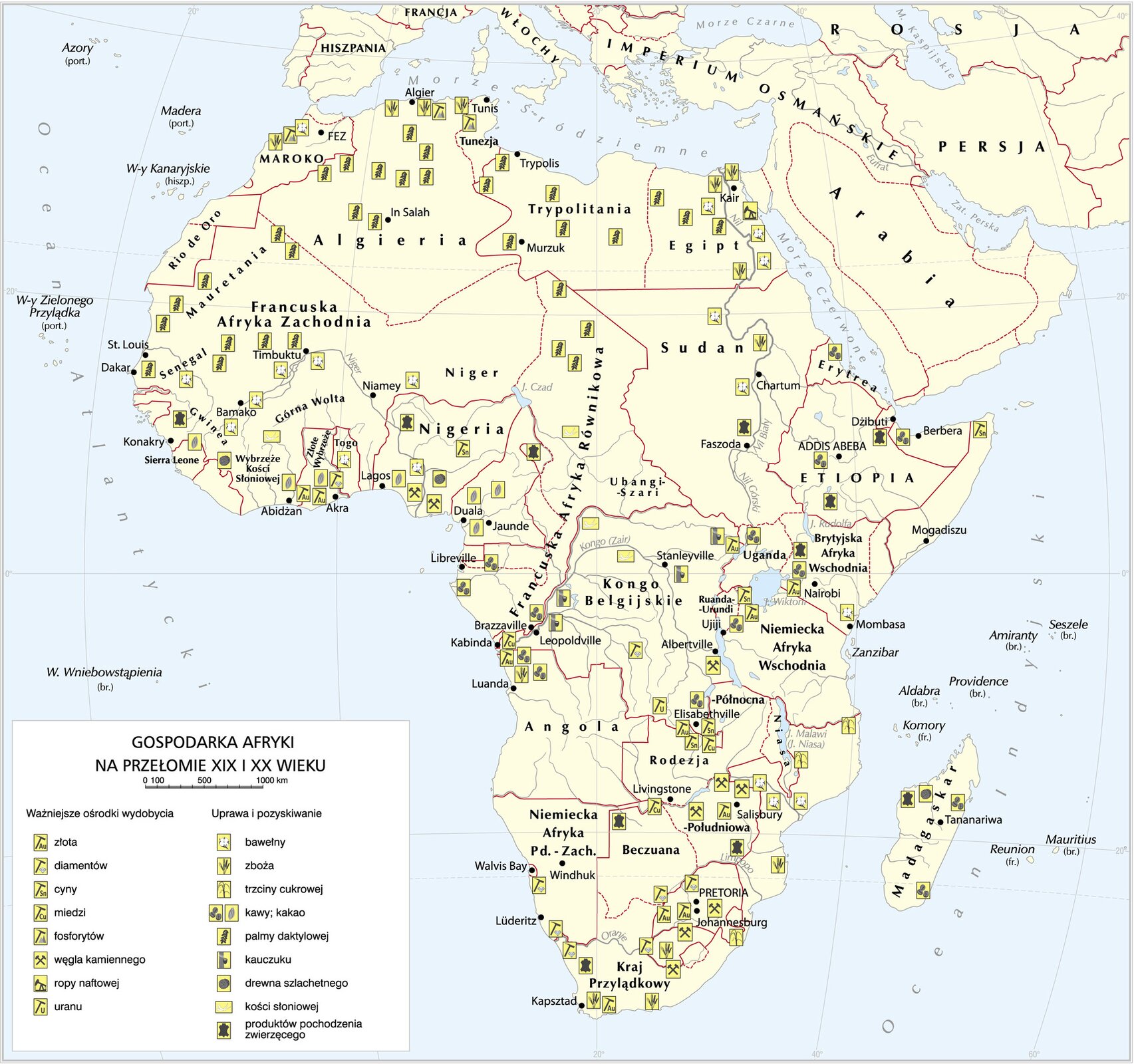
Look for information in the available resources and make a list of the raw materials available on the African continent in the 19th century.
R18ChGbkp7LCg
Task 3
Look for information in the available resources and name the countries of the Far East in the 19th century.
RMYLj8azijdpc
Task 4
Poszukaj informacji w dostępnych ci źródłach (np. w internecie, encyklopedii lub specjalistycznych publikacjach) i odpowiedz na pytanie: What are the properties belonging to Great Britain. Which of them had the status of dominions?
RpRmILBtDDcck
Task 5
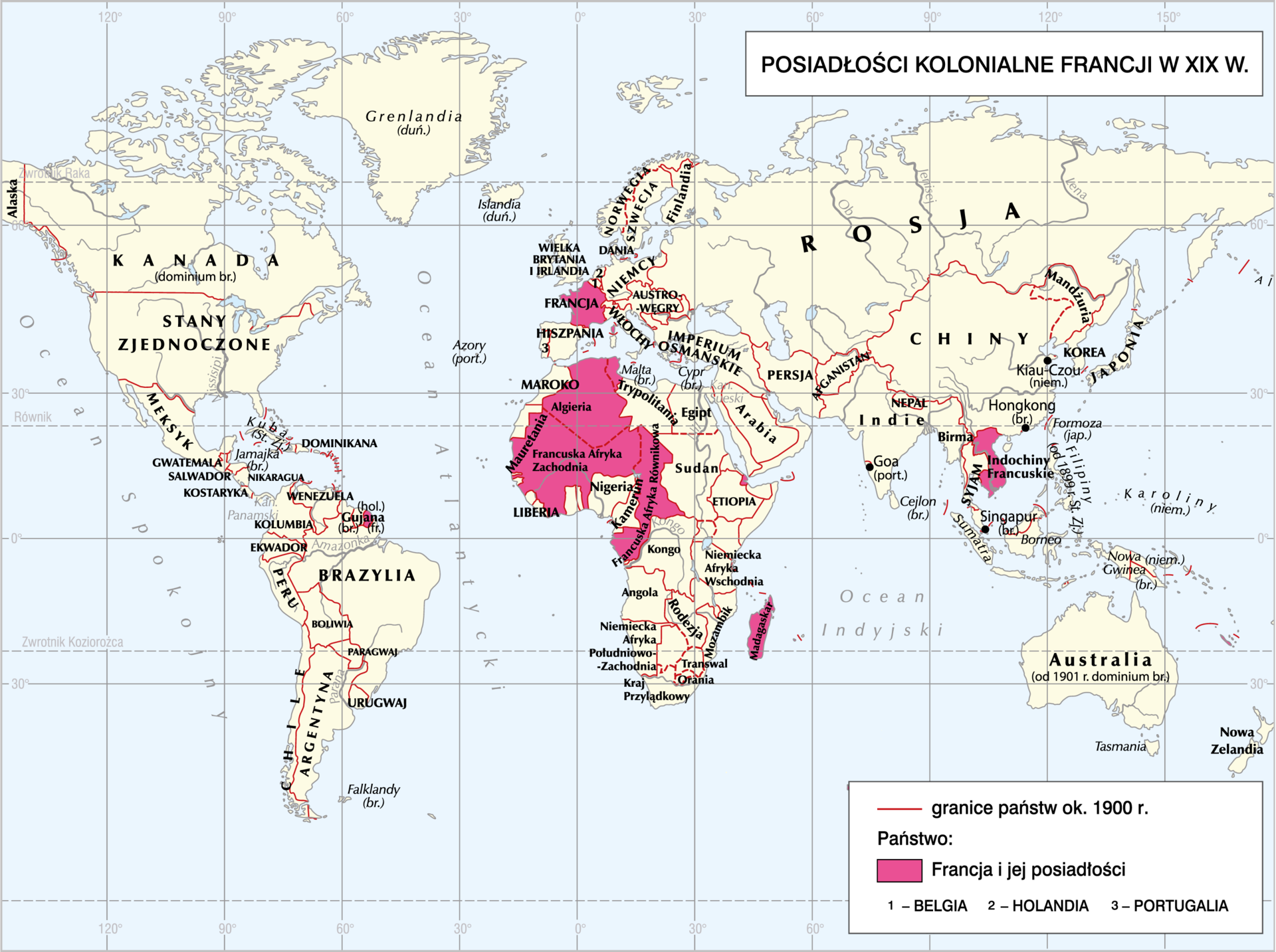
Poszukaj informacji w dostępnych ci źródłach (np. w internecie, encyklopedii lub specjalistycznych publikacjach) i odpowiedz na pytanie: What are the properties belonging to France.
Ri1ekUP1LWekZ
Task 6
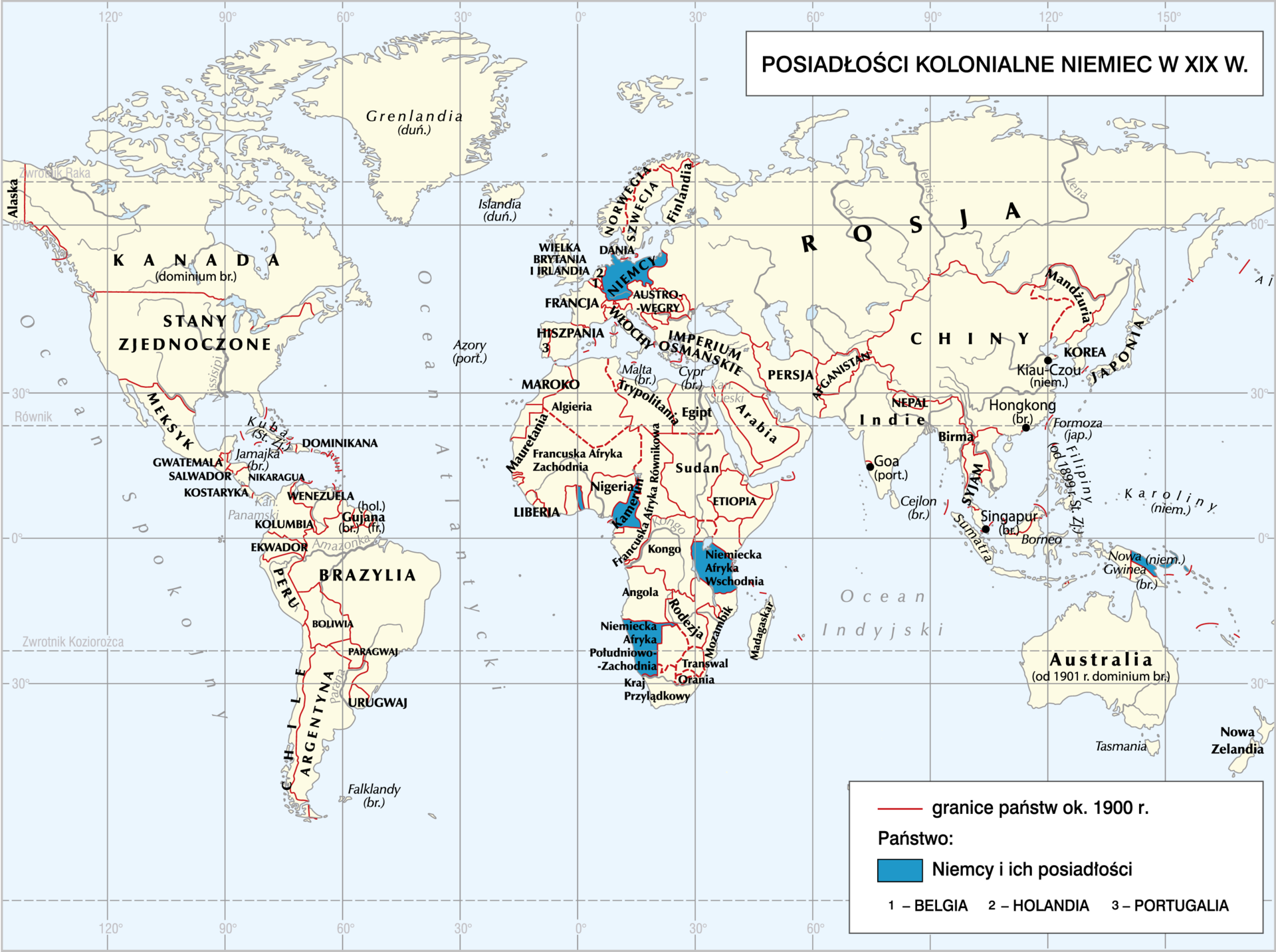
Poszukaj informacji w dostępnych ci źródłach (np. w internecie, encyklopedii lub specjalistycznych publikacjach) i odpowiedz na pytanie: What are the properties belonging to Germany.
RFWafzqxw1wkj
Exercise 1

Read the text. Next, sort the names of the following countries in order – from the largest to the smallest in terms of the size of their colonial empire:

The largest of the colonial empires belonged to Great Britain. It spread over an area more than 3 times larger than the entire European continent, and the colonies of this state were located on all continents. Conquering India, South Africa and Egypt enabled Great Britain to rule over the world, and the construction of the Suez Canal created a gateway between Europe and Asia. The second largest empire was built by France. It also included colonies on all continents (without North America), the most important ones being Indochina, North Africa and Madagascar.

The Netherlands and Belgium had smaller, comparable colonial areas. Germans were placed at the very end, as it was the last country to join the race for colonies. The main area of their interest became South‑West Africa. East Africa, on the other hand, was the area of Italian expansion. The old colonial powers, Spain and Portugal, only possessing small estates, no longer played a major role in the colonial race.

R1UNpG87v7WlS
Organize the names of countries - from the largest to the smallest in terms of their colonial territory: Elementy do uszeregowania: 1. France, 2. Spain and Portugal, 3. Netherlands and Belgium, 4. Germany and Italy, 5. Great Britain
Task 7
Własnymi słowami zdefiniuj wybrane terminy ze słownika.
R1GuIjb5SrZKF
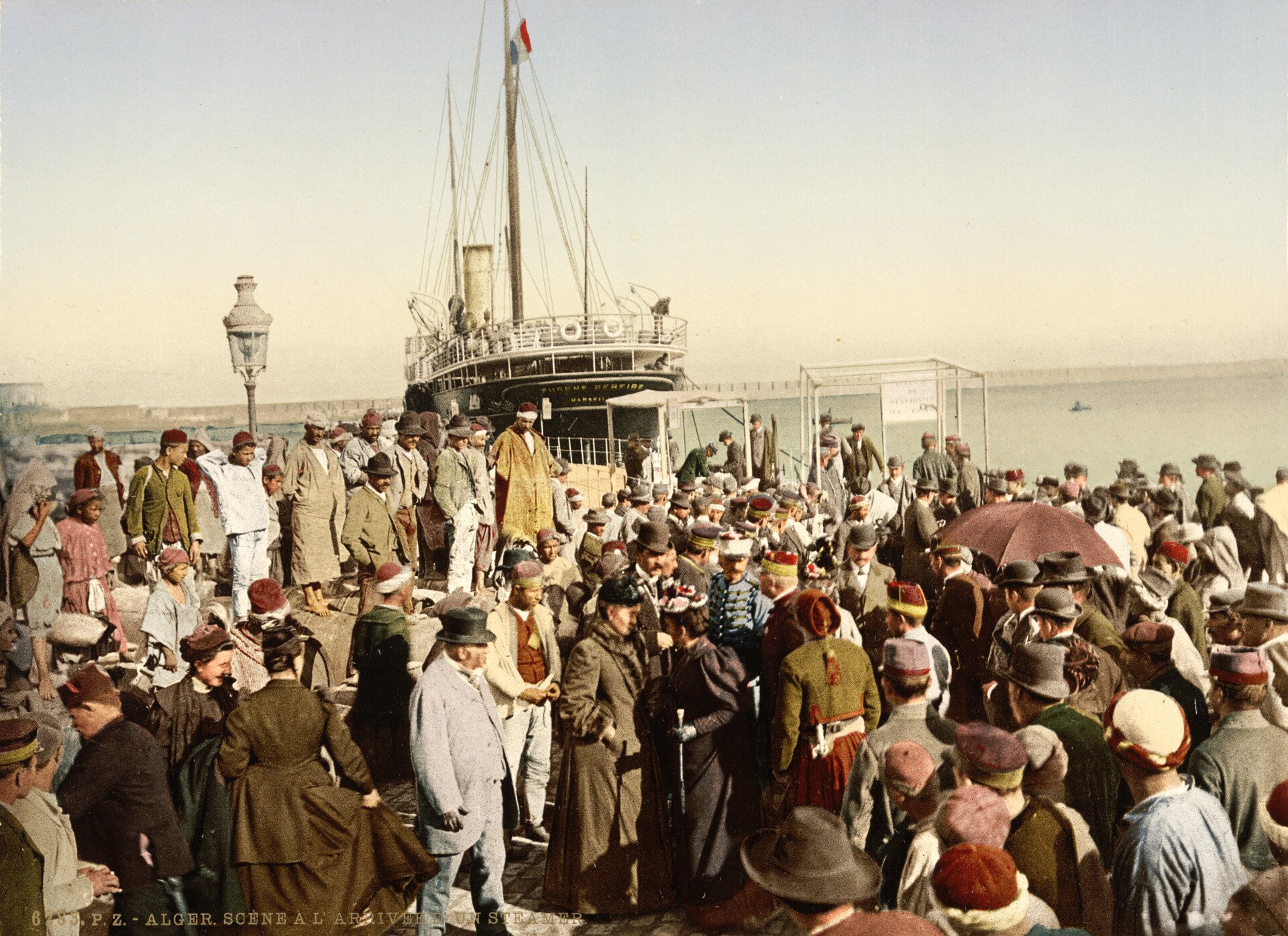
Algieria
Source: Detroit Publishing Co, Algieria, 1899,, domena publiczna.

Keywords

colonies, protectorate, semicolony, dominiumDominiondominium

Glossary

Colonies
Colonies
RhzOW8r5P6y9a
Nagranie dźwiękowe słówka

kolonie – zamorskie posiadłości państw europejskich

Protectorate
Protectorate
RiYxMcEMkbwux
Nagranie dźwiękowe słówka

protektorat – terytorium kontrolowane przez metropolię, lecz zarządzane przez lokalne władze

Semicolony
Semicolony
R9K2aWSM8r8cd
Nagranie dźwiękowe słówka

półkolonia – państwo oficjalnie niepodległe, lecz uzależnione gospodarczo od Europejczyków

Dominion
Dominion
RWgiSCZDDK0X4
Nagranie dźwiękowe słówka

dominium – brytyjskie kolonie, które miały pełną autonomię w sprawach polityki wewnętrznej; a niekiedy również zagranicznej.

Eurocentrism
Eurocentrism
Rqso64Kuy8OTY
Nagranie dźwiękowe słówka

europocentryzm – postawa polegająca na stawianiu europejskiej kultury i wartości wyżej niż te z innych kręgów kulturowych.