Ferns
ferns are shade‑tolerant plants.
explain why ferns belong to embryophytes and spore plants;
identify fern representatives in the environment;
indicate selected adaptations of these plants to the environment and performing vital functions;
present the meaning of Pteridophytes for environment and humans.
Living environment and characteristics of Pteridophytes
Pteridophytes is a common name for a group of terrestrial plants, which include ferns, horsetails and club mosses. These organisms are commonly found in the temperate zone, where they are a component of the undergrowth and underbrush. They can also be found in swamps, meadows and fields. Few species live in water reservoirs. However, the greatest diversity is found in warm and humid rainforests. Many species of exotic Pteridophytes are grown as ornamental plants in gardens and apartments.
Pteridophytes are perennial, not too large plants, which, however, achieve larger sizes than mosses. This is possible, among others, thanks to the creation of conductive tissues that facilitate the transport of nutrients and water over long distances, as well as strengthening tissues that stiffen the grown sprout and protect it from damage, e.g. wind breakage. For this reason, they are referred to as vascular plantsvascular plants.
Pteridophytes are also organisms. Their stems often take the form of an underground rhizomerhizome, which acts as a storage. Thanks to it, plants after losing leaves can survive winter underground and in the spring, using the stored nutrients to create new above‑ground organs. The roots of Pteridophytes grow out of the rhizome in the form of short, dense beams. Their task is to fix the plant in the substrate and to collect water along with mineral salts. The leaves can have various shapes, from inconspicuous, scaly, to large and spread, resembling frayed feathers. They play a dual role: they produce nutrients in the process of photosynthesis and produce spores for asexual reproduction. Pteridophytes reproduce also by dividing the rhizome. Sexual reproduction, similarly to bryophytes, depends on the presence of water.
Pteridophytes are embryophytes and spore plants. They do not produce flowers and fruits.
Look for pot ferns grown at home, in the classroom, in gardening stores. Distinguish their leaves and stems. Take photos of plants, find information about the species you like best.
Ferns
Ferns produce short and quite thick rhizomes that grow underground. Many roots grow out of them downwards, and upwards – leaves. Young leaves (fiddleheads) of ferns are coiled and covered in brown scale that protect them from drying, whereas adult leaves (fronds) take different shapes. They are usually complex and consist of numerous smaller leaves that have the same main axis. There are also species with tapered, fan‑shaped or branched leaves. The leaves can have two functions: nutrition and reproduction. Assimilative leavesAssimilative leaves are green. Sometimes on their bottom side one can find yellow, then sori producing spores. Sometimes some sporangia are created on brown trophophyll leaves.
The size of ferns is very diverse – from tiny, a few centimeters long floating on water to tree forms growing in tropical forests that reach a height of several meters.
Look at the illustration showing the structure of the fern leaf. What functions do its individual elements perform?
Distinction of fern organs.
a specimen of fern grown in a biological laboratory,
magnifying glass.
Gently remove the fern from the pot, remove the soil. Identify the leaves, rhizomes and roots.
Describe the shape of the leaves, point the location of the sporangium clusters, find the rhizome in the tangle of roots.
Using a magnifying glass, look at the sporangium clusters and the bases of leaves.
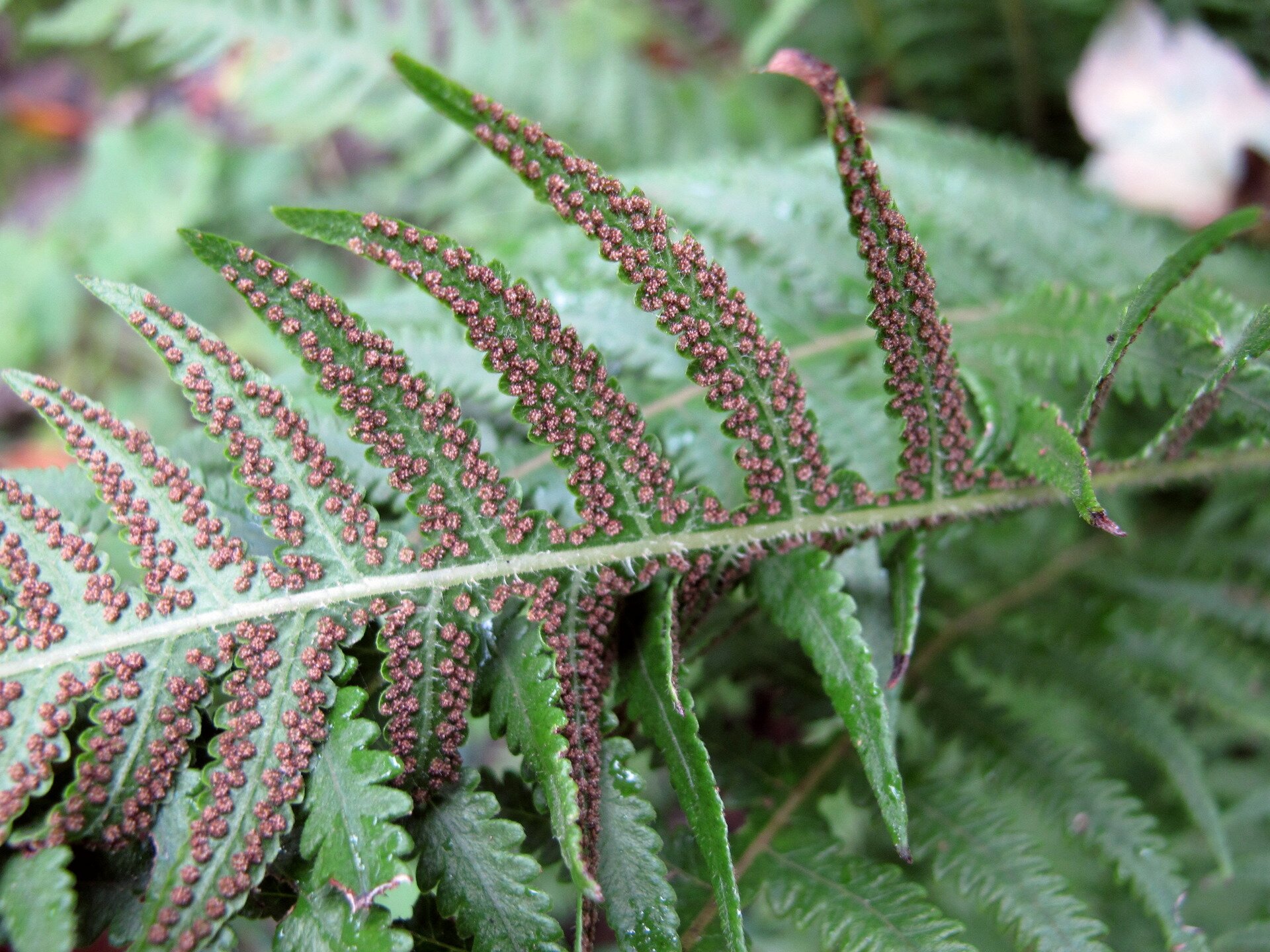
Common fern creates a bunch of leaves that have brown clusters of sporangia on the underside. The lower parts of the petioles are covered with dry scales protecting against water loss.
The male fern (Dryopteris filix‑mas) is a common fern found throughout Poland. It grows on fertile soils in deciduous and mixed forests. It occurs on rocks, along streams and under bushes. It produces feathery divided, magnificent leaves. Its healing properties have been known since antiquity. Decoction of the rhizome is used for compresses for difficult to heal wounds and rheumatic pains. In parks and gardens, it is planted as an ornamental plant.
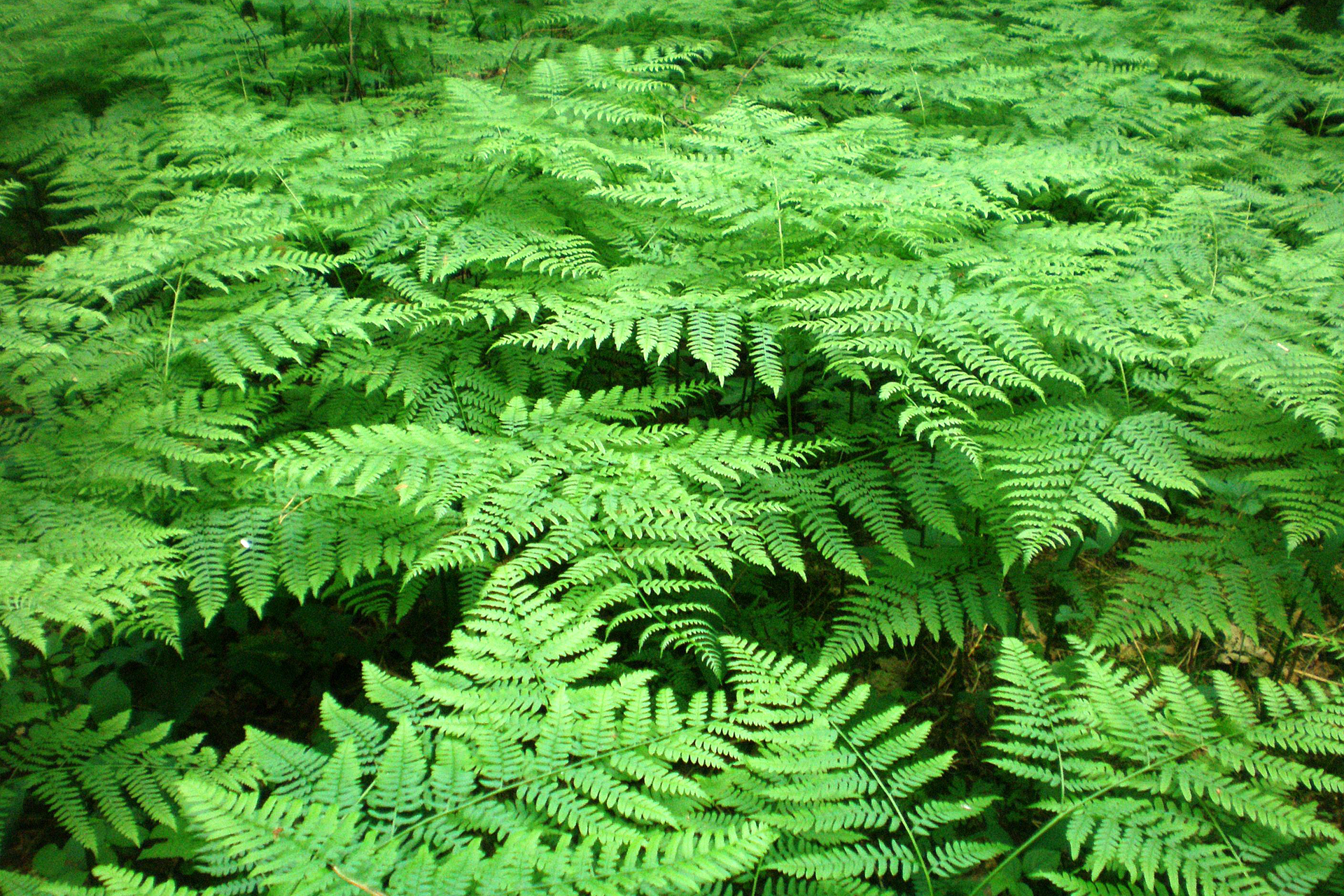
The eagle fern (Pteridium aquilinum) is found on sandy, clear and dry soils of pine and mixed forests. Its leaves grow individually from the rhizomes and are divided three times. Spores are placed on the edges of assimilative leaves.
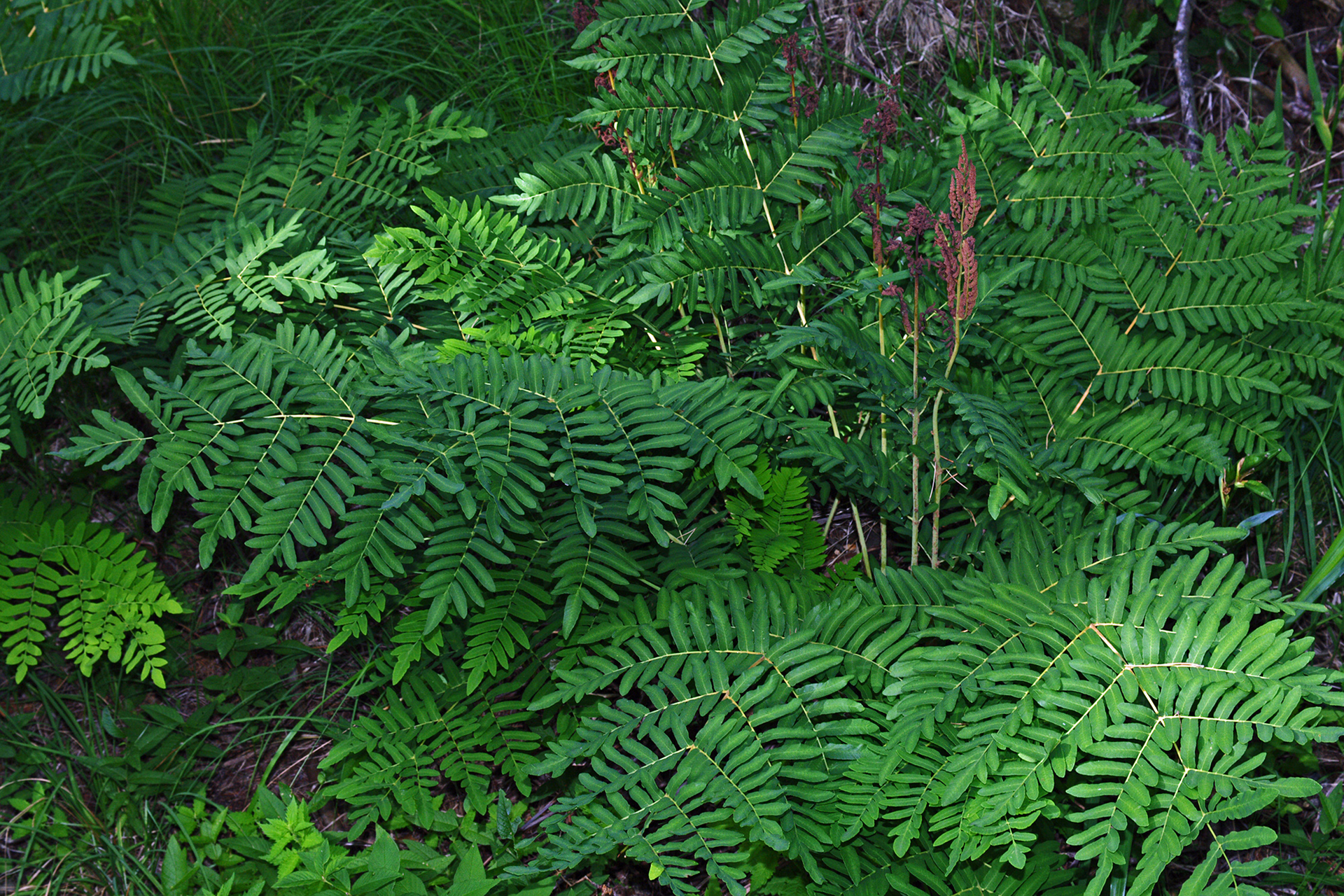
Royal fern (Osmunda regalis) occurs in areas with a mild climate. It grows in wet, shady deciduous forests and on peat bogs. Its leaves are divided into the lower –-- assimilating part and the upper part containing sporangia. In Poland, it is subject to strict species protection. It is sometimes grown as an ornamental plant.
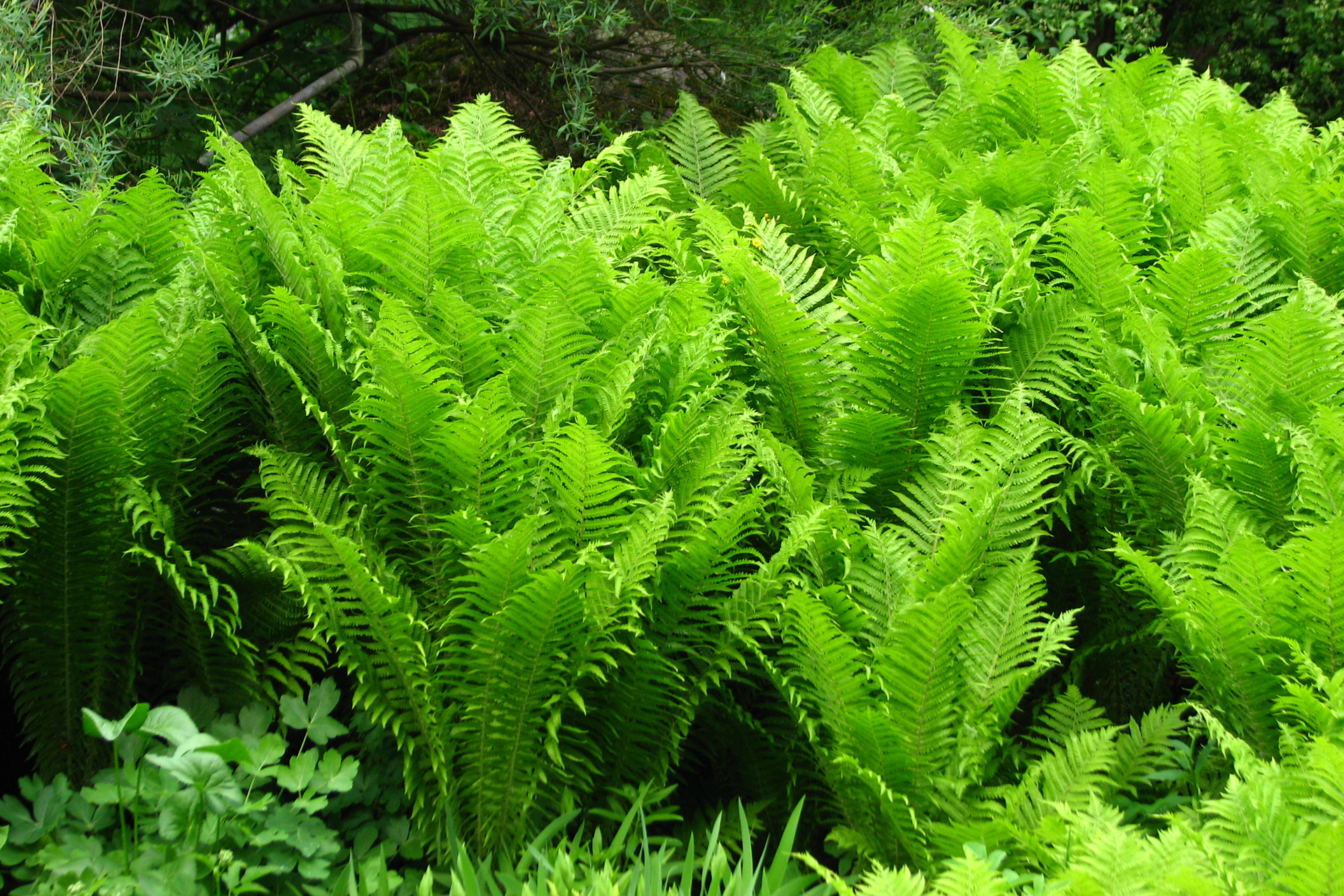
An ostrich fern (Matteuccia struthiopteris) is found on the banks of streams, wet meadows and forest glades. It produces two types of leaves: funnel‑shaped assimilative leaves and dark brown, stiff ostrich‑like sporophyllssporophylls. It is planted in the gardens as a decorative plant.
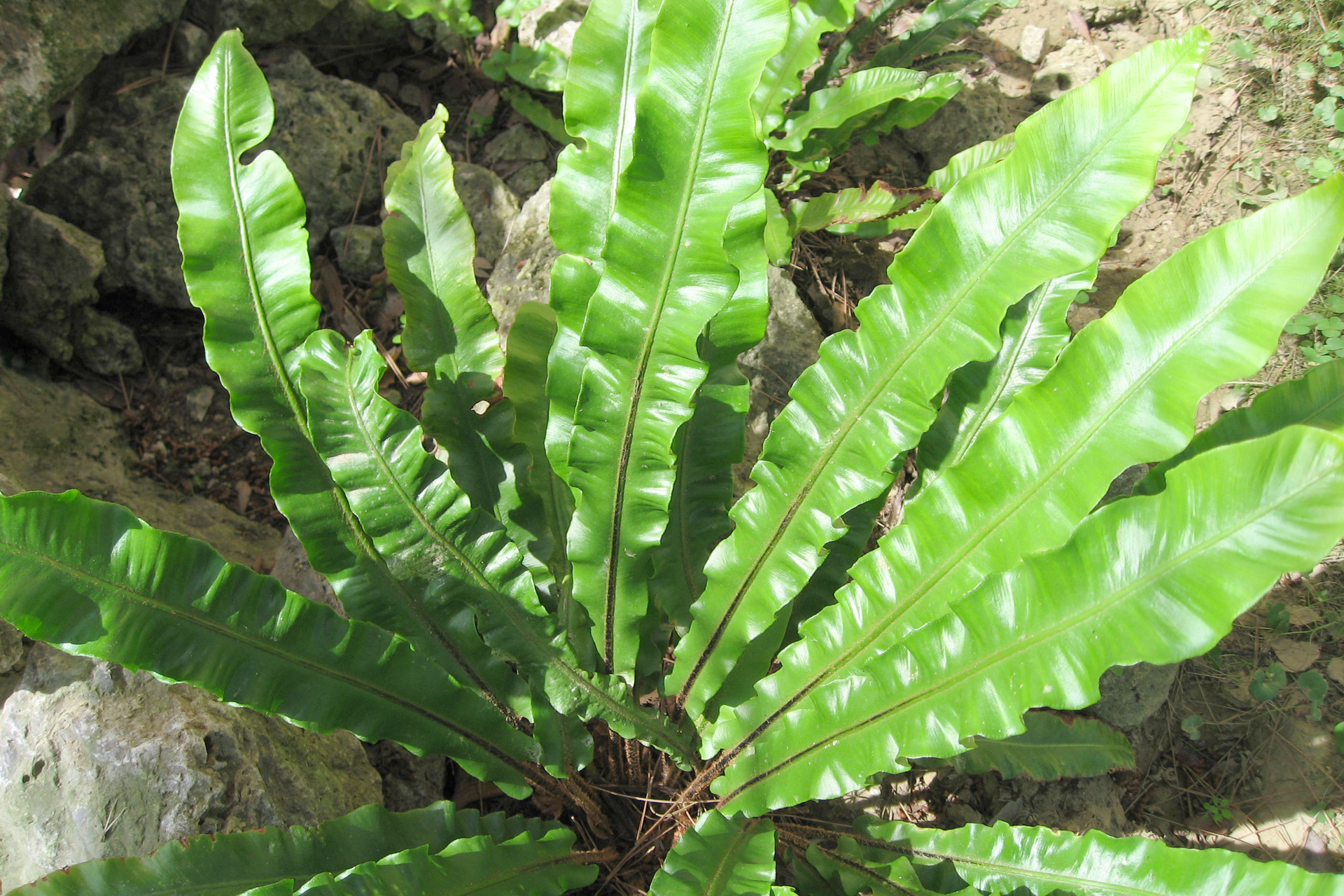
The hart‑tongue fern (Phyllitis scolopendrium) is found in the mountains, in shady and damp places. Its undivided leaves grow directly from the rhizome to form a plume. Sporangia arise underneath the assimilative leaves. It is a dying species, in Poland subject to strict species protection. Imported from Asia, it is grown as an ornamental plant.
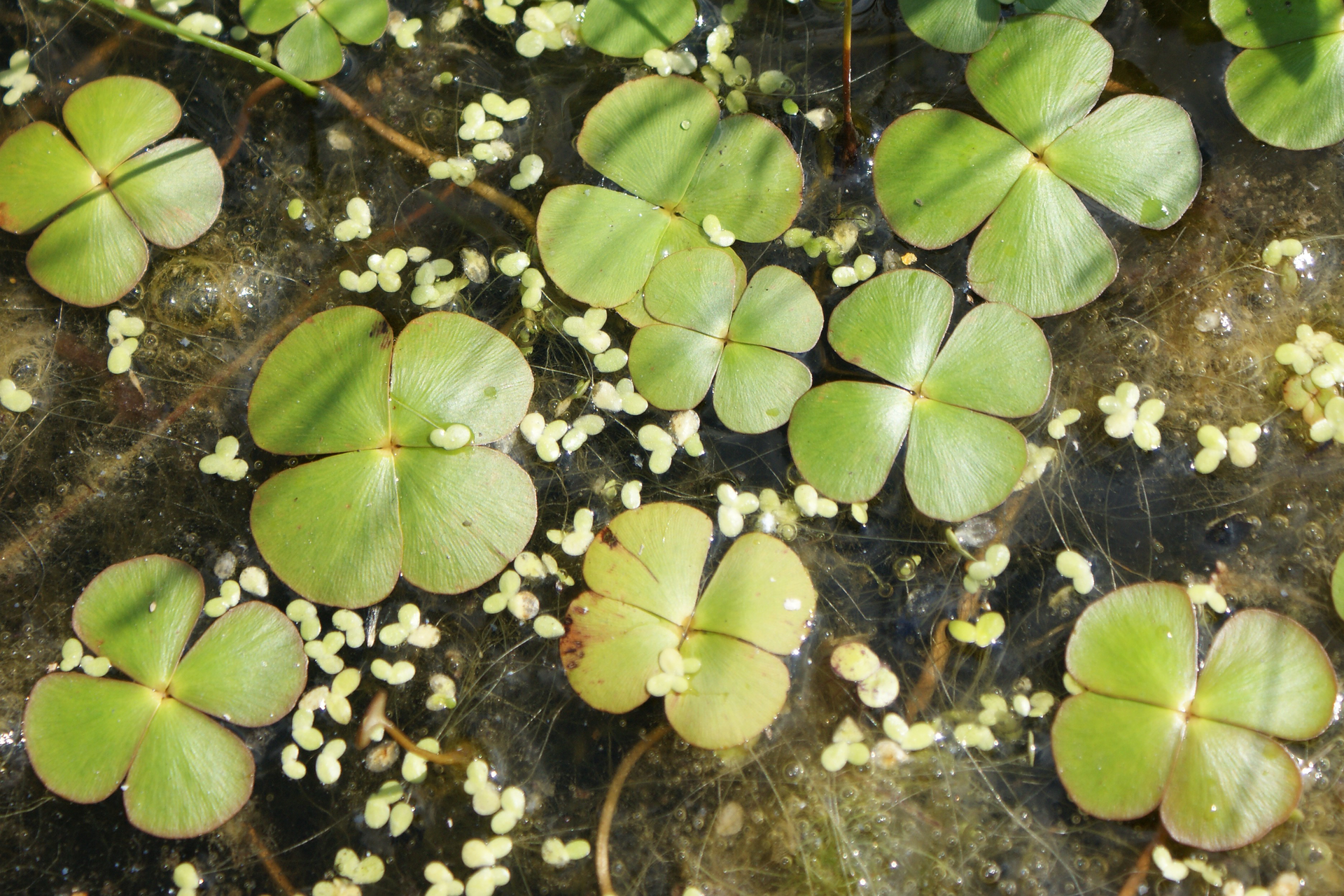
Common water clover (Marsilea quadrifolia) is water fern growing on the muddy banks of shallow water reservoirs. From the thin rhizomes, the leaves are divided into four‑part folios, which makes them resemble a four‑leaf clover. In Poland, it is protected by species protection.
Summary
Ferns have a body differentiated into organs: roots, leaves, stems; they do not produce flowers and fruits.
Shoots of ferns produce spores.
Numerous species of ferns are protected species.
Describe the adaptation of ferns to life on land.
Match the pairs: English words with Polish definition.
liście przeprowadzające fotosyntezę., rośliny, które mają tkanki przewodzące; należą do nich paprotniki i rośliny nasienne., przekształcona łodyga podziemna magazynująca substancje odżywcze wyprodukowane w procesie fotosyntezy., liście, na których tworzą się zarodnie z zarodnikami, służą do rozmnażania bezpłciowego.
| vascular plants | |
| assimilative leaves | |
| sporophylls | |
| rhizome |
Keywords
fern, organ, rhizomes
Glossary
rośliny naczyniowe – rośliny, które mają tkanki przewodzące; należą do nich paprotniki i rośliny nasienne.
liście asymilacyjne – liście przeprowadzające fotosyntezę.
liście zarodnionośne – liście, na których tworzą się zarodnie z zarodnikami, służą do rozmnażania bezpłciowego.
kłącze – przekształcona łodyga podziemna magazynująca substancje odżywcze wyprodukowane w procesie fotosyntezy.