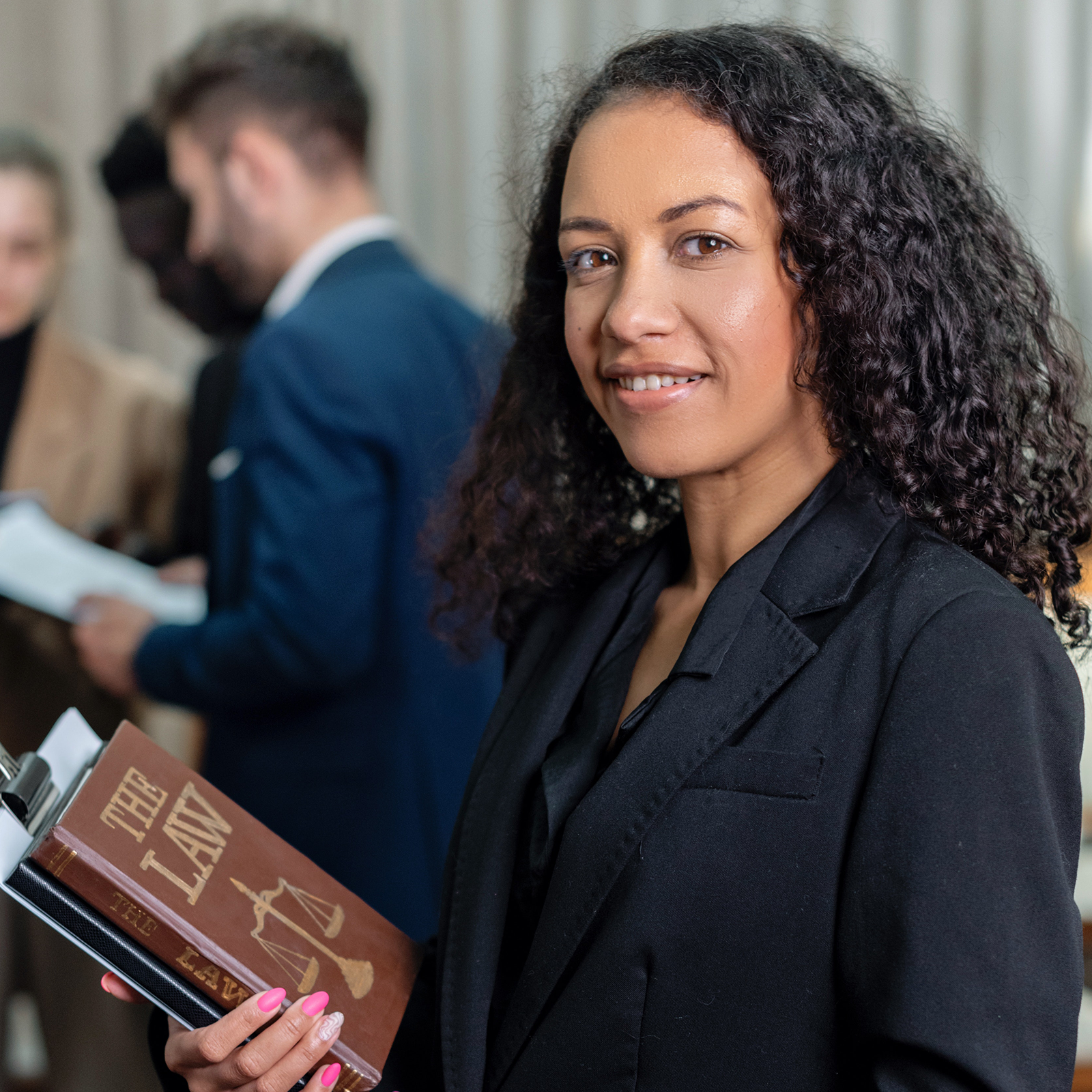
M: Hello, Julia. Welcome to our programme.
J: Hello, Max and welcome everyone.
M: Julia, you work in the law field, is that correct?
J: Yes, I’m a barrister in a private company in Oxford.
M: Could you tell us the difference between a barrister and a lawyer?
J: Certainly. If you graduate from law school, you aren’t always a lawyer. You just get a law degree, and then you can do the LPC, which stands for a Legal Practice Course and takes 2 years. If you get a training contract in a law firm afterwards, you become a solicitor.
M: Does a solicitor do the same things as a barrister, then?
J: A solicitor can’t represent clients in higher courts. Only a barrister can.
M: Who is a lawyer, then?
J: A lawyer is a person who graduated from a law school, has a law degree, and practices law in his or her workplace. For example, as a paralegal, somebody who assists lawyers of higher ranks.
M: And a barrister represents clients in court, right?
J: Yes, that is what a barrister does. If a lawyer takes a bar exam, he or she becomes a barrister. In other words, not all lawyers are barristers or solicitors, but all barristers and solicitors are lawyers.
M: It seems pretty complex.
J: It might be for people who don’t work in the law field, I agree.
M: What does your typical day look like?
J: Well, I wake up at around 6:30 and spend about 30 minutes working out. It helps me to focus on my tasks during the day.
M: Do you have breakfast?
J: Yes, I do. After my training and morning routine, I have a healthy meal – usually a bowl of muesli and plain yoghurt. Then I get dressed and head to the office. It takes me about 45 minutes to get there.
M: Do you begin work at 9:00 a.m.?
J: Yes, at 9:00 I get to the office. I answer emails and questions from my clients, especially those that don’t need any additional documents. Then I go to the court and spend about 2 to 3 hours there. After that, I meet my new clients and answer phone calls.
M: Are your meetings always in person?
J: Nowadays no, they aren’t. Since 2020, I have conducted online meetings, too. In addition, some of the trials take place online.
M: Does that mean that you can sit in your armchair instead of getting to court?
J: Oh no, not at all. Even during online meetings and trials, I am always in my office. I need to be professional at all times.
M: Naturally! Why have you decided to follow a law career?
J: I have always enjoyed helping people. I was also an avid reader. For a while, I hesitated between pursuing a medical career and a career in law, but eventually, I chose law.
M: Why was that so?
J: Well, I did research and found out that I need to take history or civics on my high school graduation exam to enter law school. In the case of medical school, I needed a biology exam or a chemistry exam, and science was not my best area. The decision was quite obvious.
M: What specialty did you choose?
J: Initially, I was focused on entertainment law, but then I got interested in intellectual property, so I went into that.
M: What is intellectual property?
J: This can be a company logo, a commercial slogan, a device, or a design. It’s anything that is created by a person and person's rights to it are recognised as such by law.
M: And intellectual property law? Tell us more about it, please.
J: With pleasure. Intellectual Property Law has a few areas such as copyright law, patent law, trademark law, and trade secrets.
M: OK, I guess I can imagine what Patent Law or Copyright Law are about, but what are trade secrets?
J: Examples of trade secrets would be recipes for a cake or a dish that are created and used by a patisserie and are protected without registration. However, the owner or owners must keep them confidential.
M: So what exactly do you do?
J: Well, I do plenty of technical analyses and counsel my clients. I make sure that the invention they’ve created or the brand they want to establish doesn’t exist yet and then take measures to protect it for them. I also represent them in court proceedings.
M: What happens when you realise that, let’s say, such a device already exists?
J: It depends whether it’s already been granted the patent. If it has, then I suggest modifications to the product or logo, etc. Luckily, it hasn’t happened yet that any of my clients were forced to drop their idea for an invention.
M: That’s good news. What about the battles between lawyers, like the ones we can witness on TV or on streaming platforms? Do you have it in your area of expertise?
J: Not exactly. I don’t participate in courtroom battles like the ones you see in TV series or films. Instead, I’m more of a detective.
M: Like Sherlock Holmes?
J: In a way. I conduct interviews, review plenty of documents, and analyse technical documentation. I help inventors secure patents. I search and scrutinise data.
M: What do you like about your job?
J: I enjoy the diversity. One day, I may be helping a musician protect his lyrics, and the other, I am checking whether the logo chosen by a bakery is still available. Constant newness and high demand for people like me are also positive aspects of the job.
M: What degree did you get?
J: I did a JD (Juris Doctor) and then completed a certificate in IP, Intellectual Property Law.
M: Did you get any experience during your studies?
J: Yes, I did. During my studies, I gained experience doing internships in local firms, for example, in automotive companies. They often looked for trademarks and needed to get patents for their products.
M: What personality features characterise an IP lawyer?
J: From my experience, I can say that IP lawyers are conscientious and analytical. You need to pay attention to detail, because a blunder may have grave consequences for both your client and you. IP lawyers need to be dedicated to finding ways to protect clients’ property and willing to defend them in court proceedings. This job is far from mundane, so such lawyers must enjoy changes.
M: What people would you recommend this job to?
J: I would recommend it to people who love law, and enjoy learning and keeping up to date with the newest documents. They need to possess good communication skills and be flexible to adapt to changes. Ideal candidates are those people who know the entertainment industry and have a technical background.
M: Is IP a mainstream field in law?
J: No, it isn’t. The mainstream field would be family law and criminal law. However, if you are in places where the entertainment industry develops, you might think IP is mainstream indeed.
M: What about salary of an IP lawyer?
J: It depends on your experience, but generally, it is satisfactory.
M: What advice would you offer to students considering a law career?
J: I would say that they should give it a go if they feel they are made for it. They should research specialties and learn about them already when attending high school, because then they will know earlier whether law is for them or not. It is also a good idea to read blogs and forums and to join social media groups for law students. These places will provide lawyers‑to‑be with first hand experience.
M: Thank you so much, Julia, for your advice and the interview.
J: Thank you, it was a real pleasure to chat with you today.
M: Goodbye!
J: Goodbye!