Fish – aquatic animals
fish are aquatic animals;
the body structure of animals depends on their habitat.
to indicate and describe the fish’s adaptation to the life in water (based on observation);
to indicate the relationship between fish's mode of life and its shape;
to describe the structure of gills and explain the mechanism of gas exchange in fish.
Body structure of fish
The fish's body consists of the head, trunk and tail, its skin is covered with scales that overlap in a regular arrangement like roof tiles, forming a flexible covering. It allows the body to bend and protects it against mechanical injuries. The surface of the body is covered with mucus. ScalesScales and mucus make the skin slippery and reduce water friction during movement. FinsFins, special folds of skin stretched on a rigid ray frame, are a characteristic element of fish's body structure. The fins occur in pairs (paired fins)– pectoral and pelvic fins as well as individually – dorsal, caudal and anal fins. Fins have a large surface, therefore they facilitate movement in water.
In addition to the well‑developed organs of the sense of sight, hearing, taste and touch, fish also have a lateral line organlateral line organ. With its use, fish perceive water movement as well as changes in its temperature, pressure and chemical composition. The lateral line provides excellent orientation in the water, also in the dark, helps to avoid obstacles and move in the shoal.
Decide whether it is true that the caudal fin is the fish’s locomotive organ (as claimed by some people).
Description of external body structure and movement of aquarium fish.
various aquarium fish in a school fish tank, e.g. angelfish, blue leopard corydoras, neon tetras, guppies, veiltails, horse face loaches or algae eaters.
Observe the fish’s movement. Observe what fish uses the pectoral fins and tail for.
Draw the shape of the body of each fish species as seen from the front and side. Evaluate which shape allows the fish to reach the highest speed.
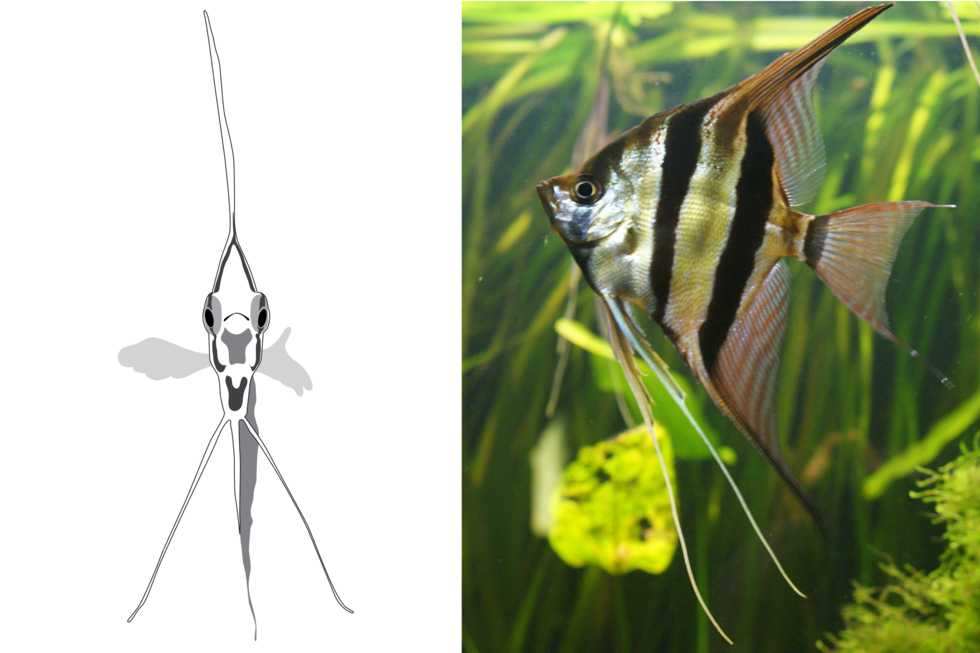
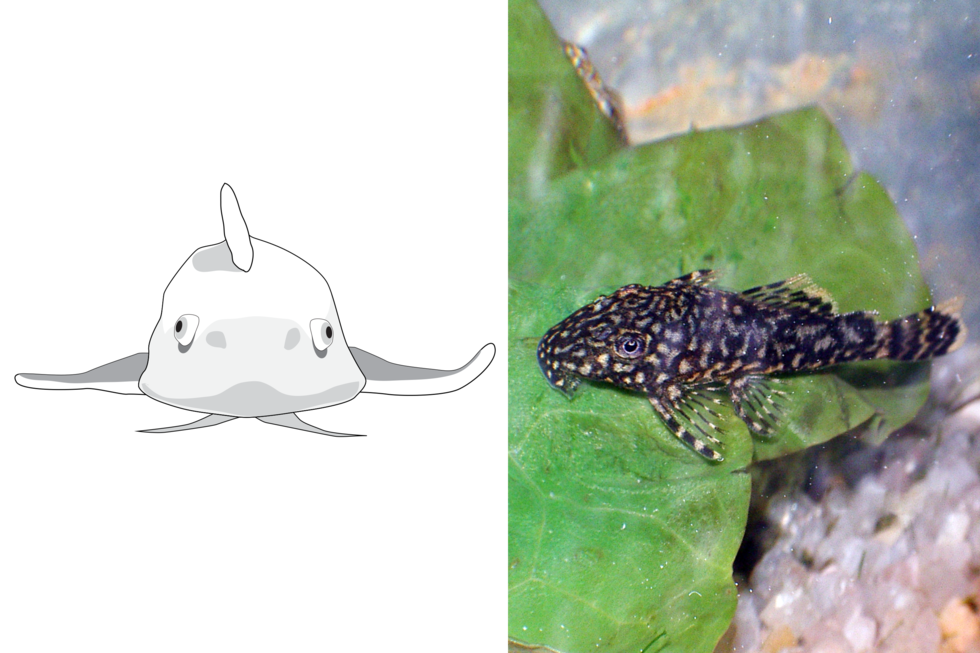
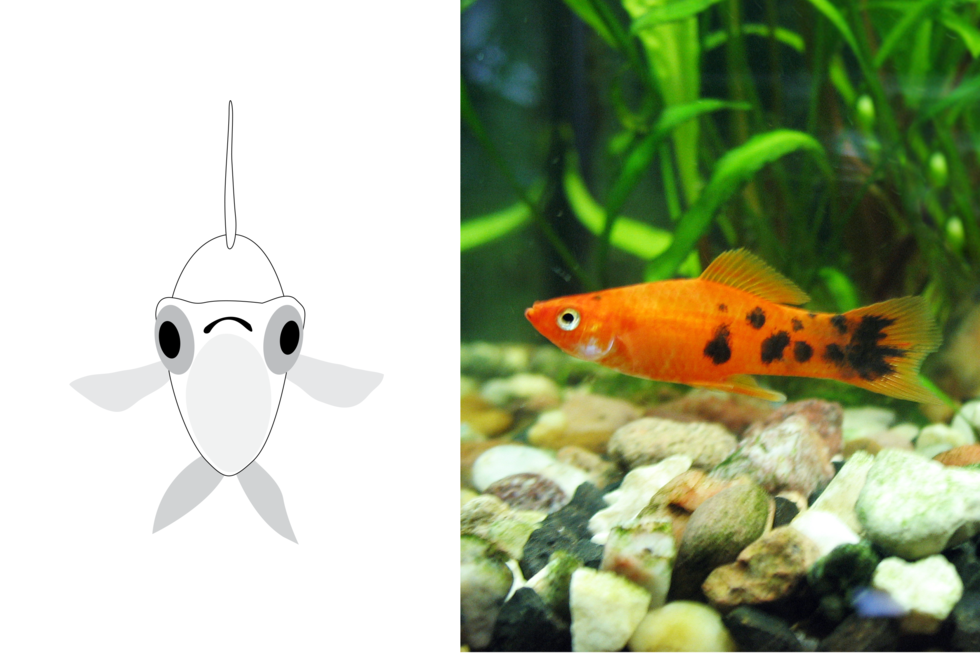
Fish have different shapes. They depend on the environment in which they live, their mode of life and the food intake method.
Diversity of fish
The fish live in fresh and salty waters around the globe: in rivers, streams, ponds, lakes, seas and oceans. Fish are cold‑blooded vertebrates (poikilotherms), which means that their body temperature depends on the temperature of the environment.
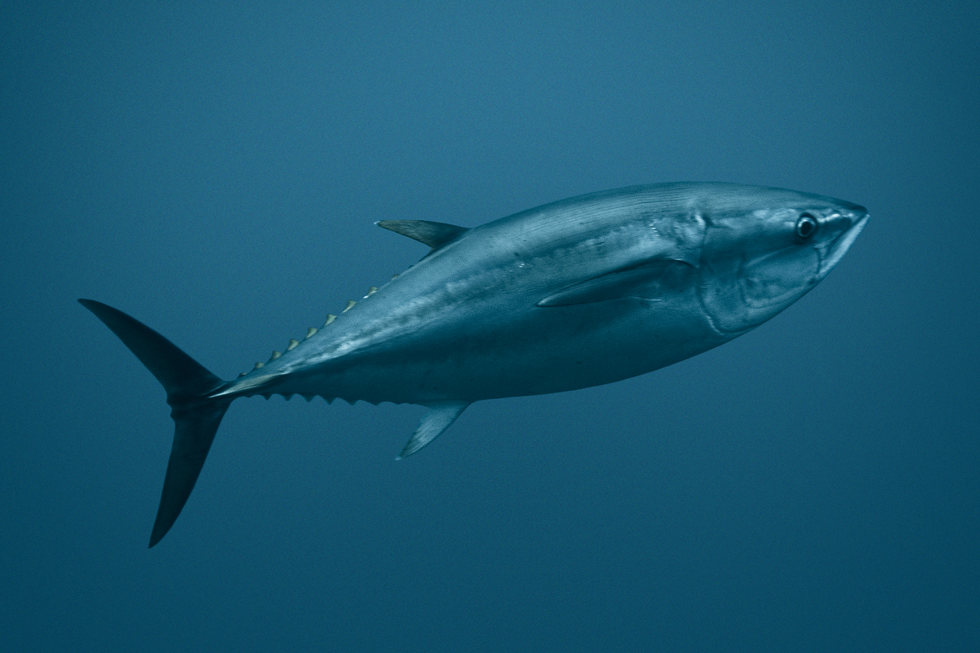
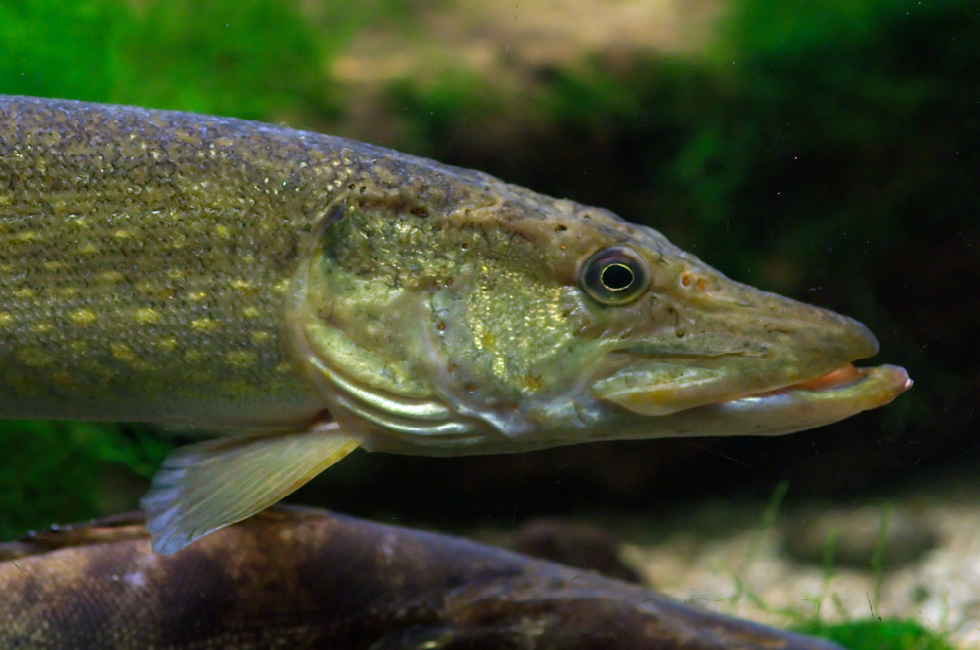
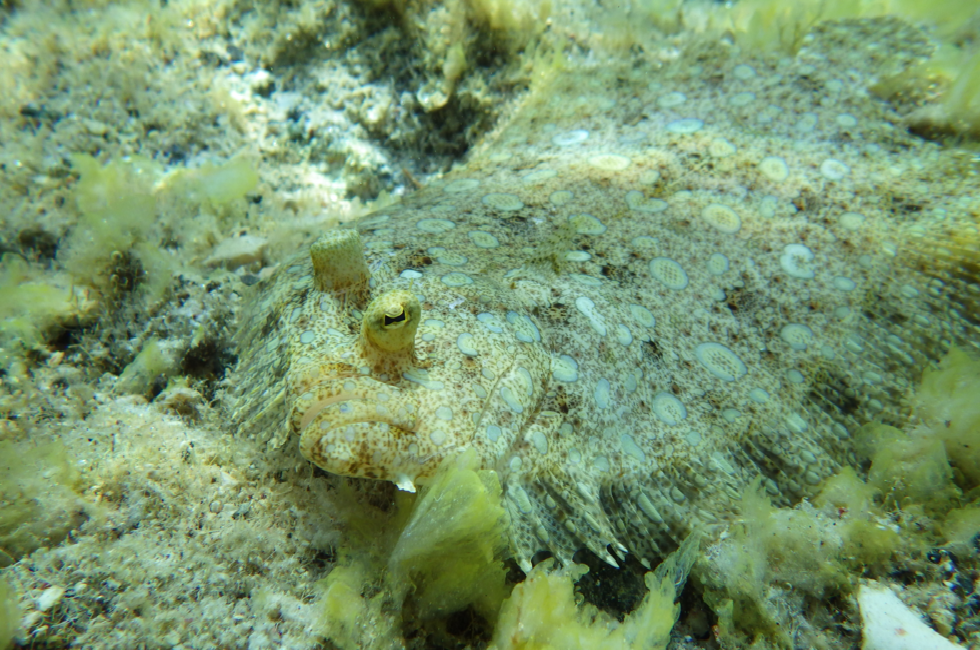
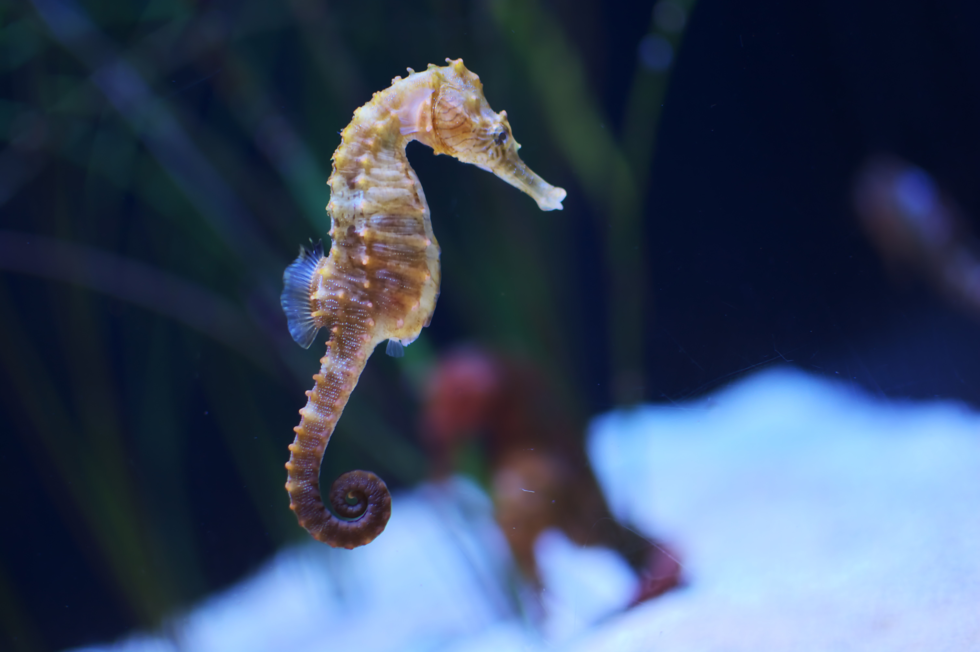
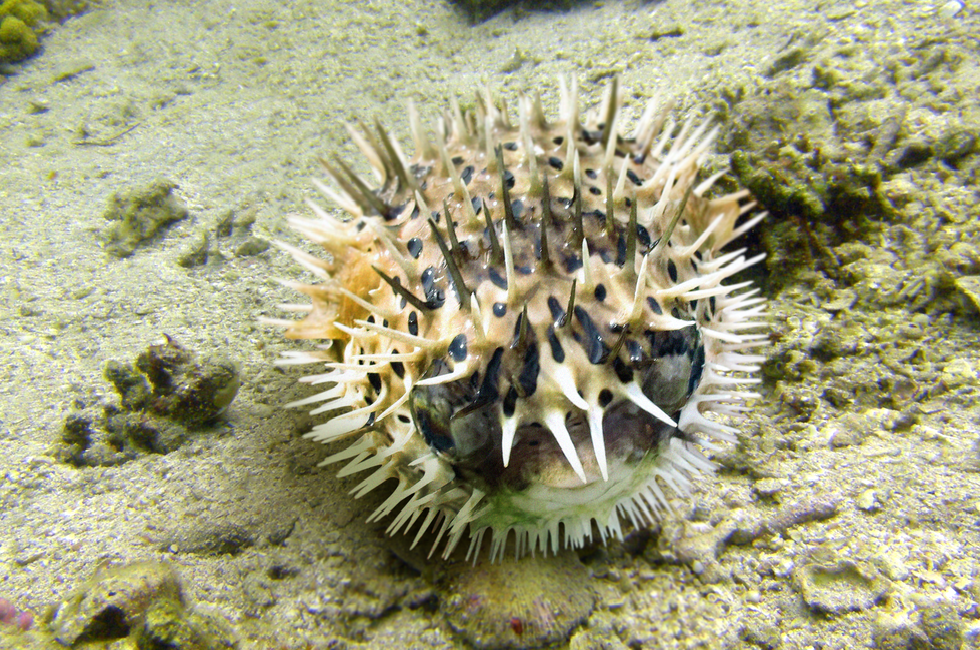
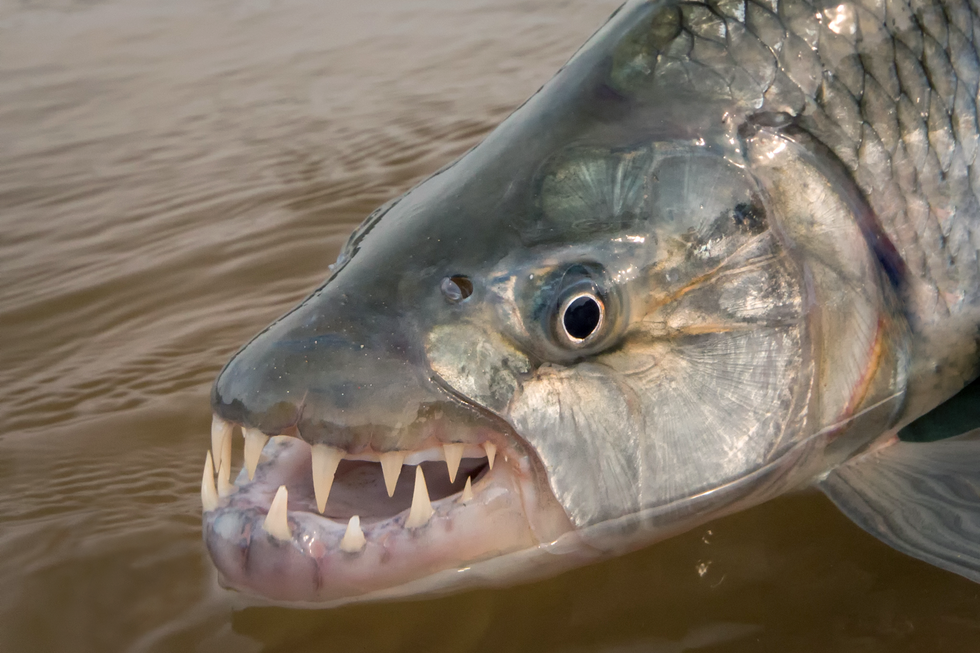
The shape of the fish's body depends on its mode of life. Fast swimming fish (herring, tuna and pike) have a spindle‑like, streamlined body shape. Species that live among aquatic plants or rocks, such as bream and carp, have a laterally flattened body, making it easier for them to swim between obstacles. Flounders live at the bottom of the sea and are flattened dorsoventrally. Thanks to it, they can bury themselves in sand. The body of seahorses can develop special protrusions that mask them among seaweed. Porcupine fish has got scales transformed into spikes that protect it against attacks by predators. Threatened, it fills its body with water and takes on the appearance of a spiky sphere.
Most fish have got masking colouring. The pectoral part of the body of many fish is bright, which makes it more difficult for predators looking for victims from the bottom to spot them against a clear sky. In turn, the dark dorsal part makes it more difficult to spot them from the air. Some fish take a warning colouring.
Fish respiration
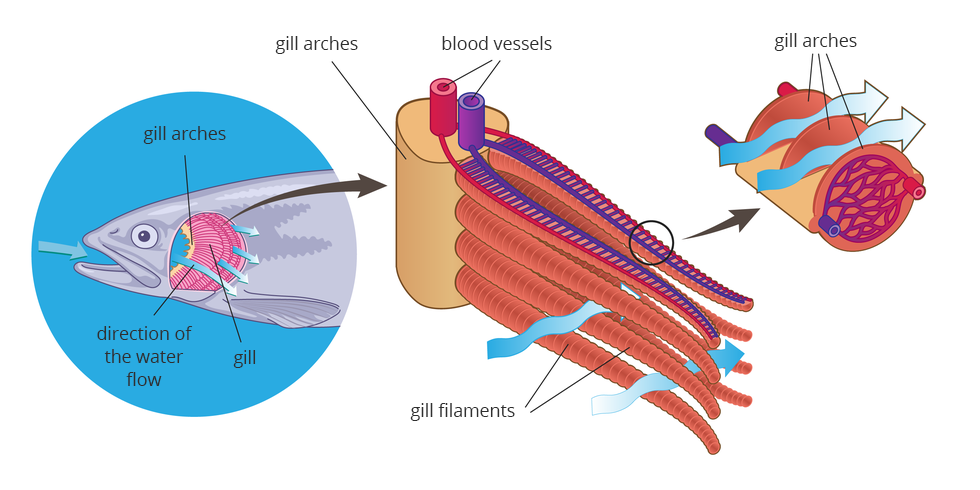
The fish take oxygen dissolved in water by means of gas exchange organs called gillsgills. They are located on both sides of the pharynx. They consist of numerous, small and thin gill laminae, which take on a red colour because they contain many blood vessels. They can be hidden under operculumsoperculums, as pike's, or they may lack covering, as shark’s are (than on the sides of the body we observe individual gill slits). Oxygen‑containing water enters the fish's mouth and then squeezes outside between the gill laminae. Oxygen from the water penetrates into the blood through diffusion, and carbon dioxide from blood vessels penetrates into the water and with it leaves the body. The number of respiratory movements depends on the activity of the fish and the oxygen content in the water.

Film dostępny na portalu epodreczniki.pl
Nagranie filmowe przedstawiające wymianę gazową u ryb. Woda wpływa przez otwór gębowy i opływa skrzela i wypływa pod wieczkiem pokrywy skrzelowej. Fish absorb oxygen dissolved in water using gills. Zbliżenie na skrzela. W skrzelach obecne są naczynia krwionośne. Blood transfers oxygen into cells. Aerobic respiration takes place in cells. Zbliżenie na sieć naczyń włosowatych w skrzelu. Oxygen wnika do naczyń krwionośnych, carbon dioxide je opuszcza. Energy needed by the fish to live is emitted, as well as carbon dioxide. Blood takes carbon dioxide into gills. There, the gas is transferred into water. Gas exchange takes place in gills. Schemat przedstawiający budowę głowy ryby. Otwór gębowy jest otwarty. Mouth opened, jaw lowered. Woda wpływa do jamy gębowej (oral cavity). Ryba zamyka otwór gębowy- woda już nie wpływa. Woda zaczyna przepływać przez skrzela (gills) i wypływać pod otwartymi wieczkami pokryw skrzelowych. Mouth closed, operculum opened.
The skin of an eel is covered with tiny scales and thick mucus layer. This fish can crawl on land at night and breathe atmospheric air. Explain how it is able to do so.
Indicate the fish’s adaptations to aquatic mode of life.
- presence of head
- fins
- gills
- oral cavity
- streamlined body shape
- spiral body shape
- slippery body surface
- mucus covering the skin
- skin covered with scales
Conclusion
Fish are cold‑blooded animals living in fresh and salt water.
The body of most fish is of a streamlined shape and is divided into the head, trunk and tail.
Fish skin coverage reduces friction between them and water during movement.
Fish are characterized by the presence of paired and individual fins.
A distinctive sense of fish is their lateral line informing them about water movements.
Fish's gas exchange occurs through the gills.
Most fish are oviparous, reproduce through external fertilization.
Keywords
fish, vertebrates, poikilothermy
Glossary
kręgowce – zwierzęta dwubocznie symetryczne, mające szkielet wewnętrzny chrzęstny lub kostny; jego część osiowa to kręgosłup biegnący po grzbietowej stronie ciała
łuski – wytwory skóry pokrywające ciało wielu zwierząt, np. ryb, gadów, niektórych ptaków i ssaków, a także nielicznych bezkręgowców, np. motyli; ich zadaniem jest ochrona przed urazami mechanicznymi
narząd linii naboczne – narząd zmysłu ryb i larw płazów, położony wzdłuż boków ciała, pozwalający na odbieranie ruchów oraz zmian ciśnienia wody
płetwy – narządy zwierząt wodnych służące do utrzymywania pożądanej pozycji ciała oraz do poruszania się, występujący u ryb, gadów i ssaków; płetwy posiadają wewnętrzny szkielet, u ryb utworzony przez promienie płetw, a u gadów i ssaków przez kości odpowiednich kończyn
pokrywy skrzelowe – struktury, którymi są osłonięte skrzela ryb kostnoszkieletowych; ich rytmiczne otwieranie się i zamykanie umożliwia stały przepływ wody przez skrzela
skrzela – narząd wymiany gazowej organizmów wodnych, takich jak ryby, larwy płazów, a także mięczaki i skorupiaki, umożliwiający oddychanie tlenem rozpuszczonym w wodzie
symetria dwuboczna – cecha planu budowy organizmu pozwalająca na wyznaczenie jednej płaszczyzny symetrii, występuje głównie u zwierząt aktywnych, zarówno kregowców, jak i bezkregowców
zmiennocieplne organizmy – organizmy, których temperatura ciała zależy od temperatury otaczającego je środowiska