Fruits and seeds
after pollination a flower transforms into a fruit;
after fertilization an ovule is transformed into a seed.
identify elements of a fruit structure and describe their functions;
identify different types of fruit;
describe the structure of a seed, paying attention to the role of its elements;
determine the conditions necessary for the seed germination process;
describe the seed germination course;
distinguish the ways of spreading seeds and fruit.
Fruit anatomy
A fruitfruit is the matured ovary enclosing the seedsseeds. It is produced by angiospermsangiosperms. Despite the fact that fruits take on different forms, each consists of the same parts: pericarp and seeds.
The process of fruit development begins after the fertilisation – a sperm cell and an egg cell coming together inside the ovule located in the ovary. After fertilisation, the ovule transforms into a seed, and the ovary wall into a triple layer pericarp. The outer layer is called exocarp, often fitted with different outgrowths – wings, hooks, hair. They facilitate transporting fruits by animals or wind. The middle layer is called mesocarp, it can be thick and fleshy like that of a peach, or thin and dry like that of a pea. The inner layer (endocarp) surrounds the seeds. It is woody in the case of drupes, leathery in the case of apples, and in the case of peas – membranous. The pericarp’s function is to protect seeds and facilitate their propagation. A fruit can contain one or many seeds.
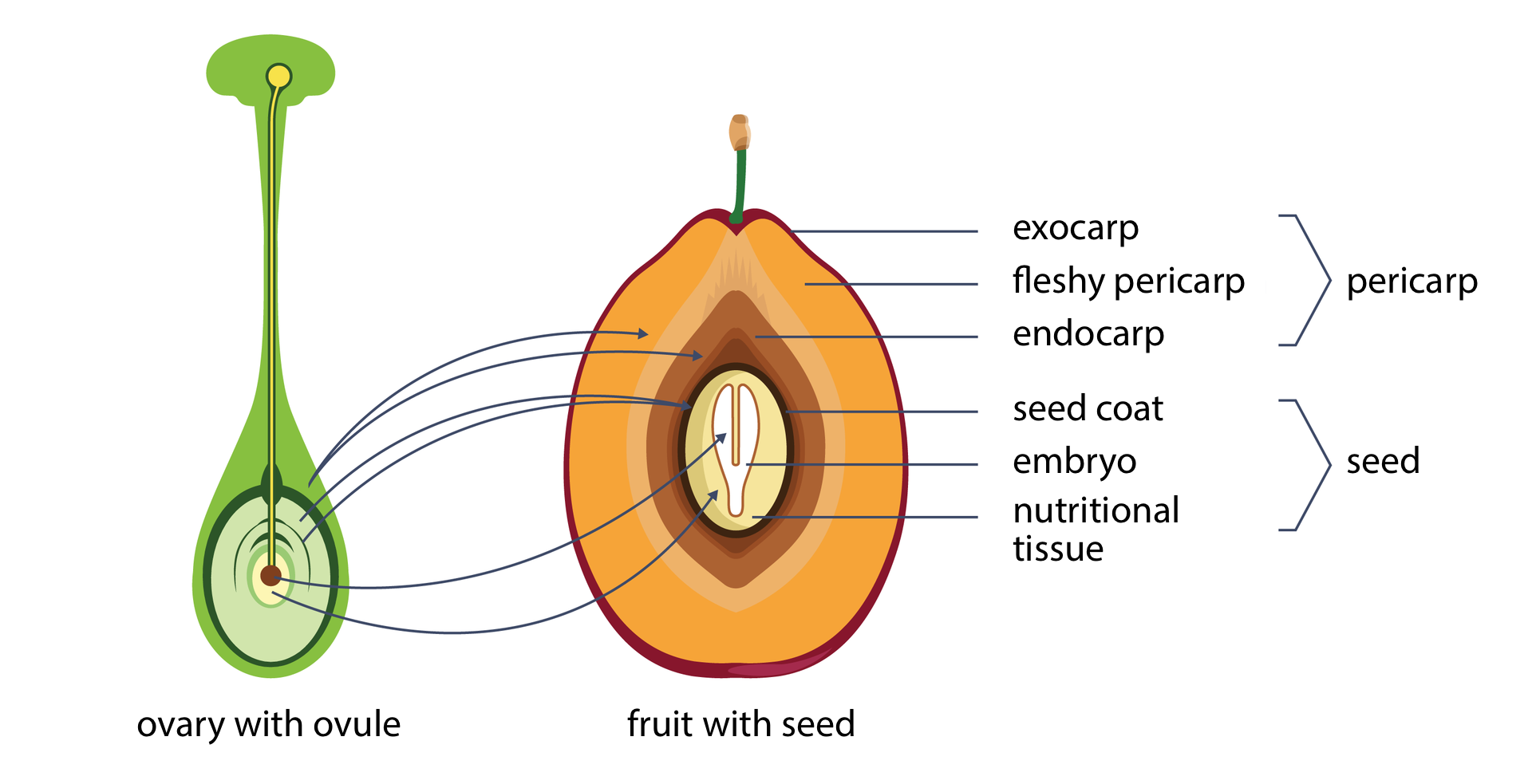
In vegetable stores, plums, apples, bananas are sold as fruit, while cucumbers, tomatoes, aubergines, courgettes as vegetables. Is this classification correct from the point of view of biology? Justify the answer.
Fruit types
Fruits display different adaptations for seeds propagation, reflected in their structure.
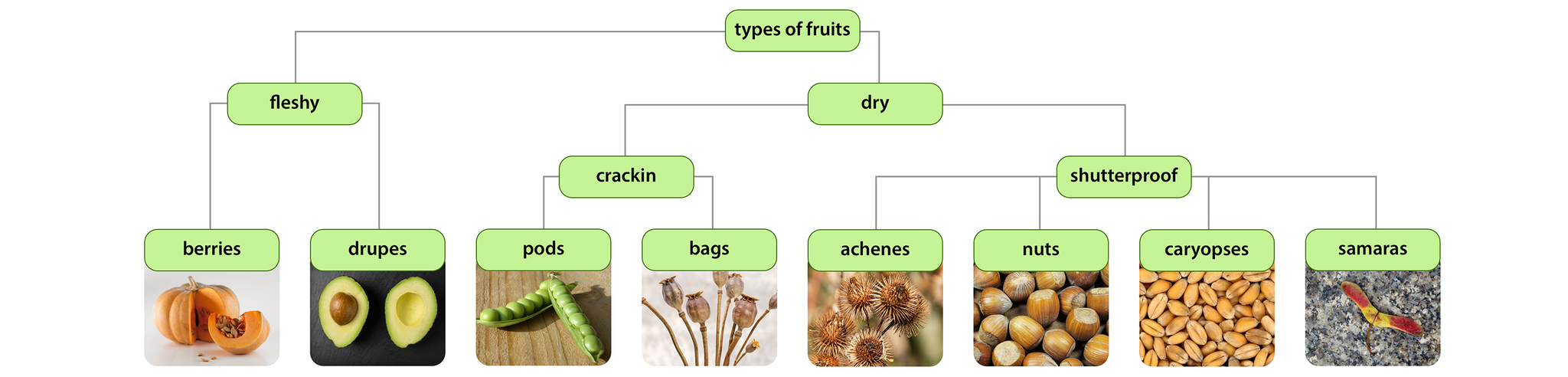
Singular fruits develop from a single ovary of a single flower. When they ripen, they can be fleshy or dry. Berries are fruits with the pericarp made of soft tissue, usually containing many seeds, like for example the watermelon. Drupes are fleshy fruits with a stone, represented by the cherry. Abundant edible flesh developed from receptacle growing around the ovary is a trait of accessory fruits like apple. In their case, the pericarp is a small part of the fruit, covering leathery seed cases. The pear and chokeberry are both examples of similarly structured fruits.
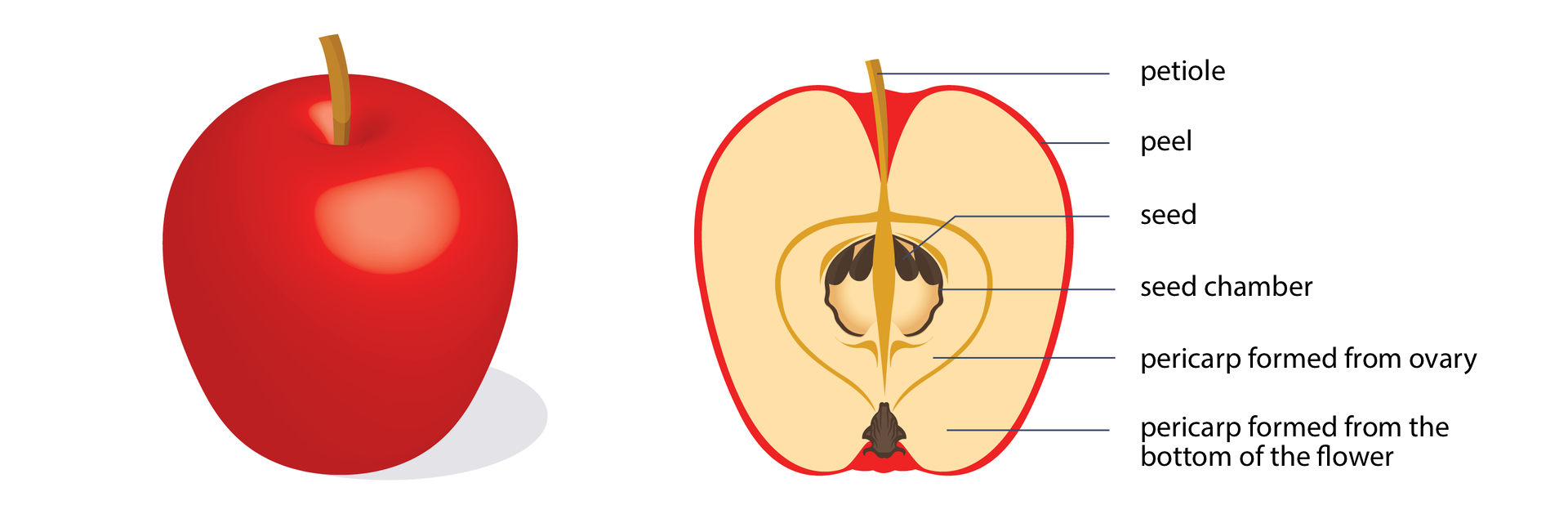
Majority of plants produces dry fruits with hardened pericarps. Dehiscent fruits are an example of those. When they ripen, they dry and open violently, launching seeds over long distances. They are divided into three categories: capsules (poppy), pods (bean) and siliques (rapeseed). Indehiscent dry fruits don’t open when they’re ripe. They have a hard and thick pericarp that cracks only when the seed sprouts. An example of those is the caryopsis – a type of fruit found in the wheat and corn, which develops as a result of the seed coat and thin pericarp fusing, making it look like a seed, and not like a fruit.
Similar to caryopsis, achenes have the pericarp and seed unfused, making it easy to separate them, for example in the case of the sunflower. On many achenes’ pericarps (thistle, dandelion) structures for seed propagation develop. A schizocarp (hollyhock fruit for example) contains many seeds. After ripening, it breaks down into mericarps. A completely hardened pericarp of a nut usually contains only a single seed. Fruits of the hazelnut tree, oak and buckwheat are nuts.
Give classification of fruit.
fruit of various plant species (e.g. apple, tomato, raspberries, strawberries, cherries, beans, peas, poppy, sunflower, maize, dandelion, maple, beech),
knife,
magnifying glass.
Divide fruit into dry and fleshy.
Distinguish seeds and fruit.
Cut the fleshy fruits so that the seeds are visible.
Try to husk the seeds from dry fruits.
Determine what types the observed fruits belong to.
Fruit classification can be made based on observation. A fleshy fruit has a colourful and juicy pericarp, from which it is easy to extract the seeds. A dry fruit is hard and woody. Some pericarps break easily, others need to be split to get to the seeds. Pericarps of corn cannot be separated from the seed.
When you visit a vegetable store, observe the displayed fruit, including the exotic ones. Classify them to the right types.
Seed structure and types
Seeds perform survival function. They adapted to stay dormant until conditions are right for sprouting. Annual plants stay dormant through the winter (in our climate) or the dry season, which is the only way for them to survive the wait for the right conditions. In the mature seed the processes of growth and development cease and the respiration is heavily slowed down. The dormancy can last from several days to many years. A typical seed consists of the embryo, the nutrition storage called endosperm, and the seed coat.
The hard and difficult to crack episperm protects the seed from drying, damage and pathogens. Many species develop all kinds of outgrowths facilitating propagation. Nutrition storage contained in the seed is barely used during the dormancy, when life processes are very slow. It is mainly used during sprouting, serving the embryo as an energy source during the growth and transformation into a seedling. In the beginning, the seedling uses the nutrition storage until it develops leaves and is able to photosynthesise.
Because of the origin of the nutrient tissue, we divide the seeds into endospermous and non‑endospermous seeds. The former have a small embryo surrounded by the big endosperm, like in cereals. The latter, like beans and sunflowers, have embryo filling the whole seed. In this case the endosperm was used during the embryo’s development, which resulted in creating large and thick cotyledonscotyledons serving as storage organs.
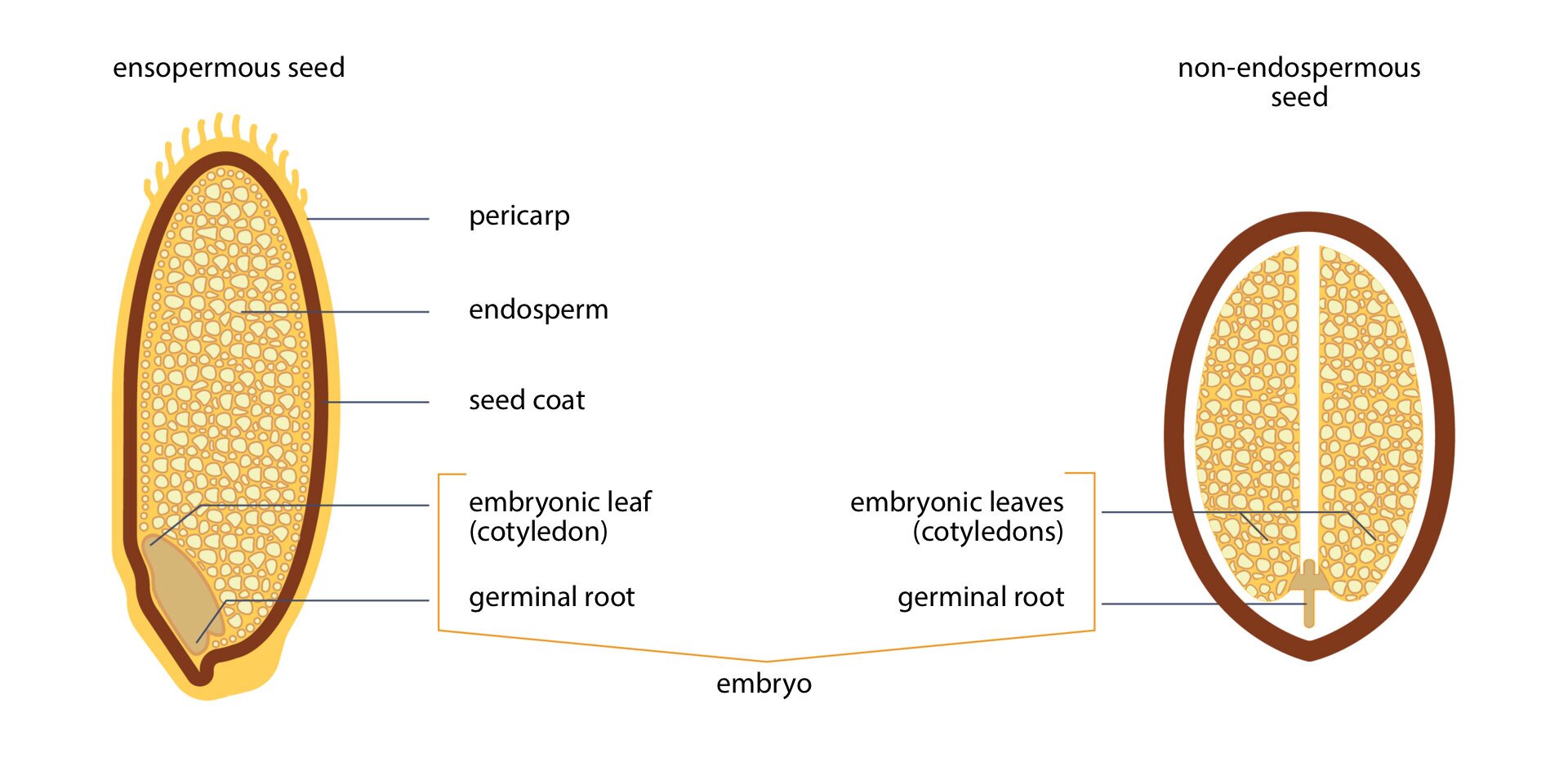
The nutrients accumulated in the seeds vary. Depending on which substance dominates, we differentiate oilseeds, containing a lot of fat such as those of the sunflower and rapeseed, starchy seeds typical for cereals, and protein seeds such as the bean or pea.
What nutrients are contained in the seeds?
Each seed contains fat, protein and starch.
wheat, sunflower seeds and pea seeds,
3 boxes of filter paper or a sheet of paper,
3 mortars with pestles,
3 test tubes,
Lugola liquid,
concentrated nitric acid (V),
water.
Put wheat, sunflower and pea seeds in separate mortars. Mash them with a pestle.
Check if they contain: starch – add a drop of the Lugola liquid to a sample of material from each plant, fat – press the paper firmly to the crushed seeds, protein - place the samples of material from each plant in separate tubes and ask the teacher to add a drop of concentrated nitric acid (V) to each of them. The appearance of a yellow colour indicates the presence of protein in the sample.
Record the results of the observation.
Reagents such as concentrated nitric acid and the Lugola liquid allow detecting protein and starch in the samples, respectively. Because the tested fruit and seeds contain different amounts of starch and protein, the intensity of the colour can vary. Filter paper is used to detect fat - the oily spot confirms that there is fat in the tested material.
Seeds are used to enrich meals due to the spare substances accumulated therein. Name foods consisting mainly of seeds and food products made from oil, starch and protein seeds.
Fruits and seeds propagation
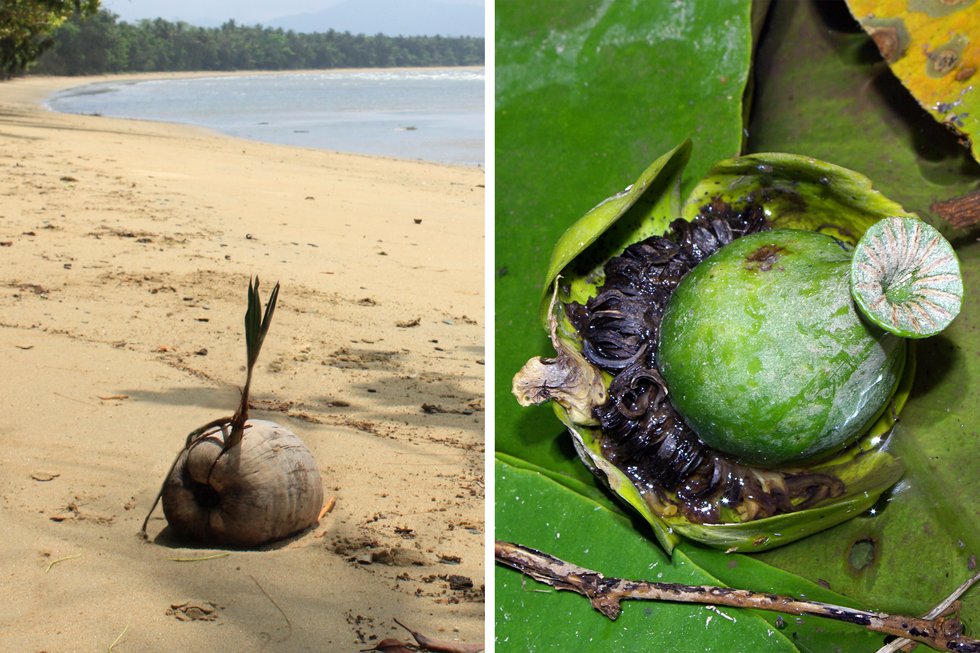
Plants lack the ability to move. They can spread only thanks to fruits and seeds. The propagation can occur without any external help or via carriers such as wind, water and animals. In the case of some plants, it’s the whole fruit that gets propagated, in the case of others – it’s just the seed.
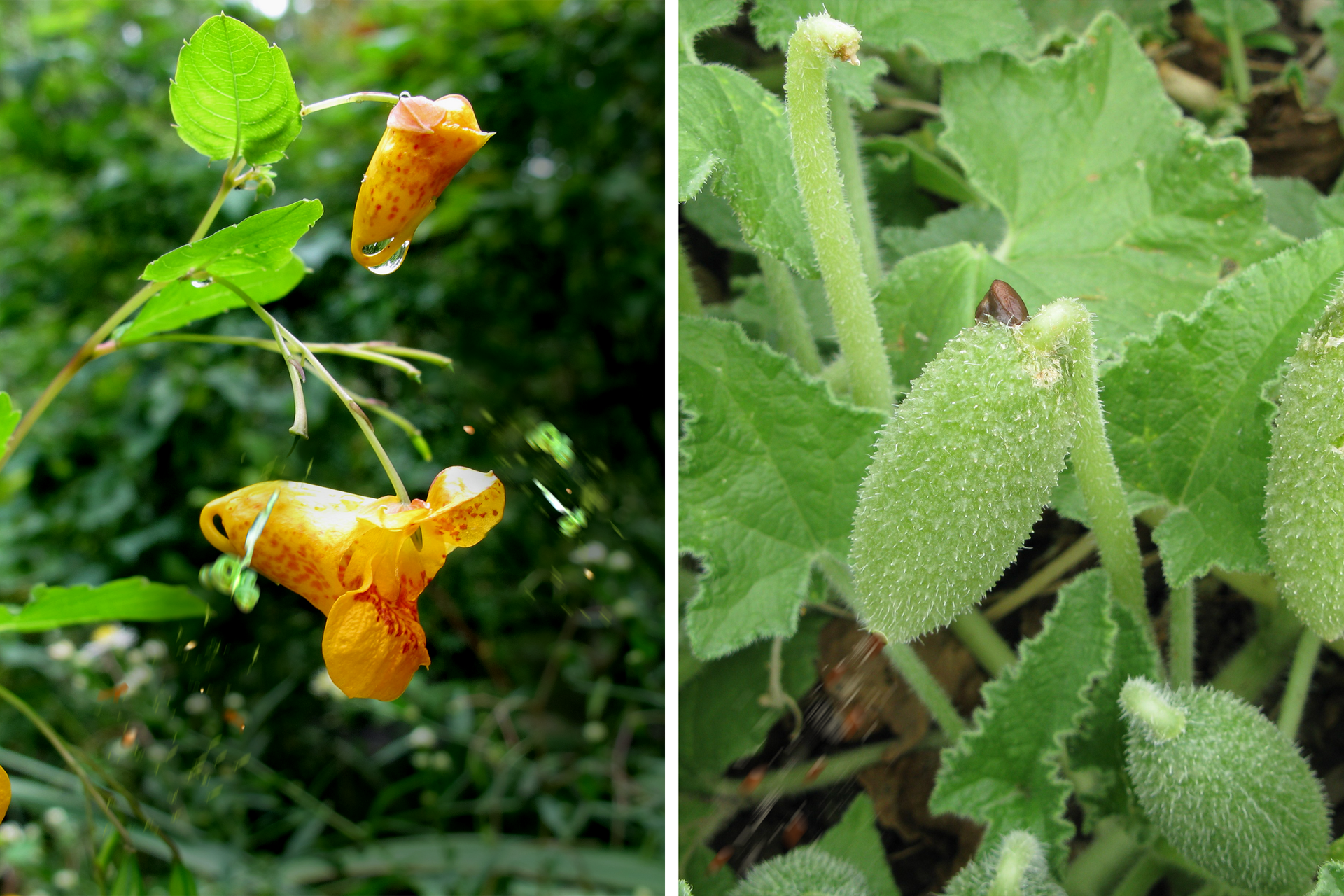
The self‑propagating of seeds is possible thanks to the inner forces acting on the fruit. Dry bean pods twist and explode, launching the seeds into the air violently. Capsules of the snapweed and violet fruits open up in a similar way: barely touched, they shoot their seeds several meters away. A plant called exploding cucumber squirts a stream of mucilaginous liquid containing its seeds.
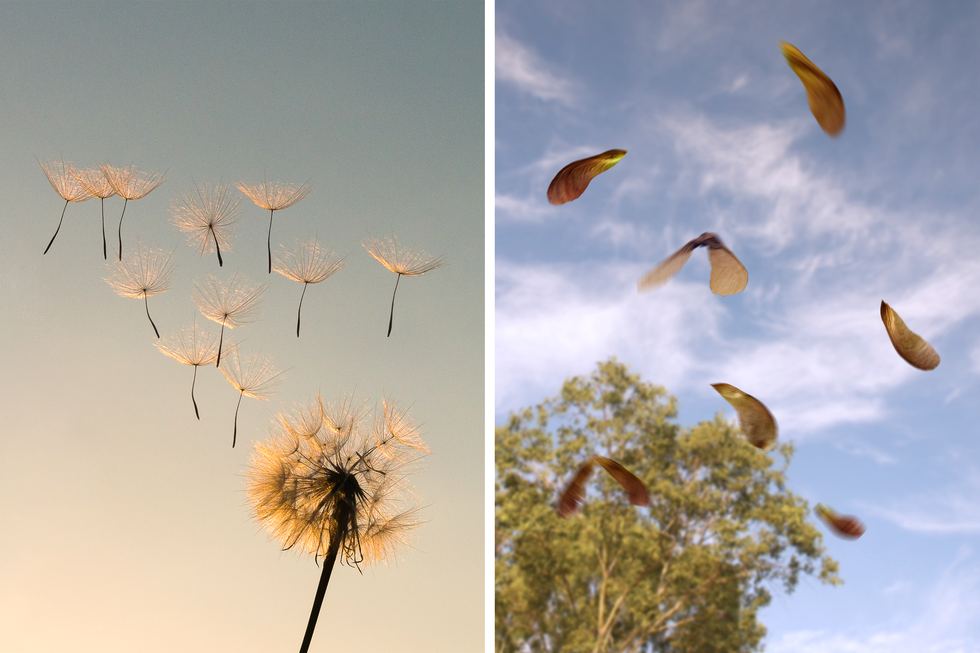
The wind carries seeds and fruits adjusted to such method of locomation: lightweight and equipped for air travel. Maple and ash fruits have wings; dandelion and poplar fruits have pappus that increases their surface area.
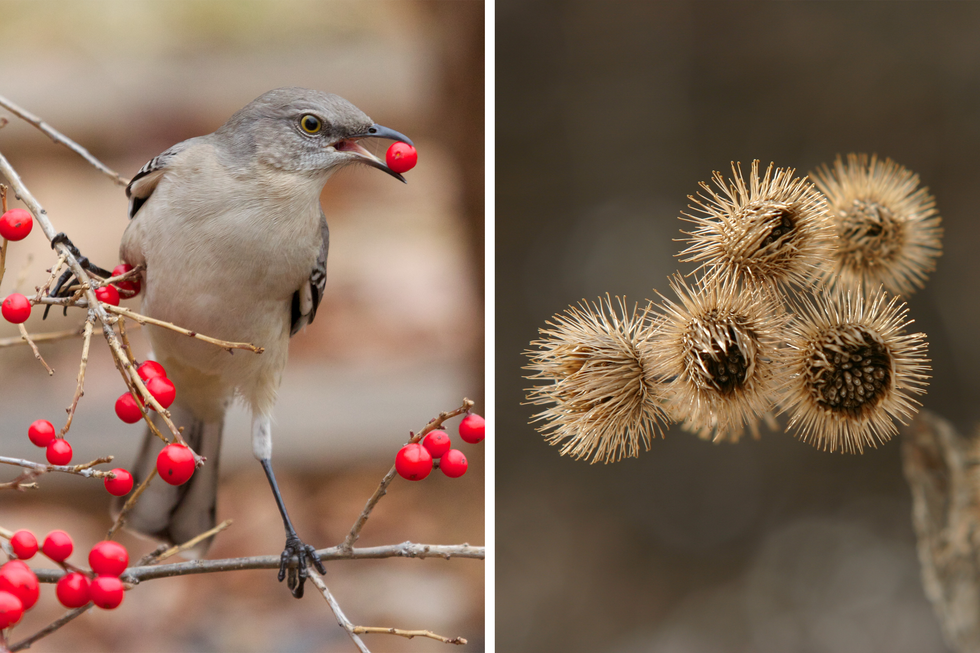
Animals play an important part in transporting seeds and fruits, which can stick to their fur and feathers thanks to hooked outgrowths or spikes. Such catching devices can be found in burdock, cleavers and some species of sorrel. On the other hand, fleshy, juicy and colourful fruits make alluring food for animals. Inside their digestive tract, the pericarp is digested and the seeds get excreted unharmed with faeces. Humans in particular play a huge role in propagating fruits and seeds, consciously sowing plants in selected places and importing exotic decorative plants seeds from distant countries.
Seed germination
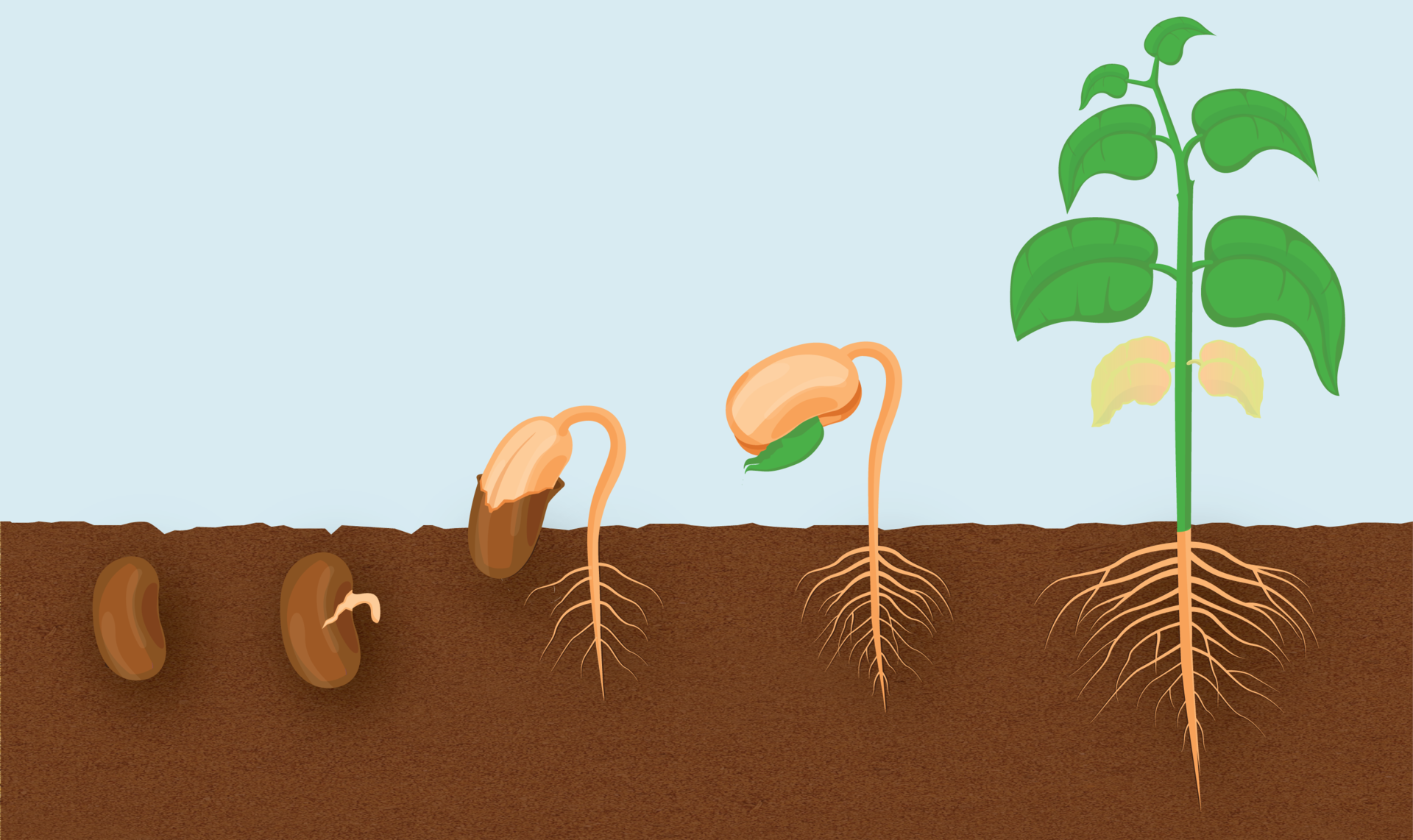
When the conditions in the environment are favourable, seeds start to germinate. During the first phase of germinationgermination they draw water intensely and puff up, gaining mass and increasing their volume. As a result, the seed coat cracks open. The radicle is the first to appear, going down into the soil. Soon the stem appears, and cotyledons with it. Once they’re in light, they become green and can begin to photosynthesise. The embryo slowly turns into a seedling. When the endosperm nutrition storage is all used up, the cotyledons wither and fall off.
During germination the seed wakes from the dormancy and life processes speed up inside the developing embryo. The presence of water is necessary for this process to commence. Water activates the enzymes that break down nutritious substances from the endosperm and cotyledons. The temperature of the environment is also important. Different plants seeds germinate in temperatures characteristic for the species, in the 0.5 – 40 °C range. Germinating seeds respire intensely, thus oxygen is also needed. Its deficiency or absence can be the cause of stopping the germination. In case of some plants, the process can be influenced by the light. It can both stimulate germination (lettuce) or inhibit it (cereals).
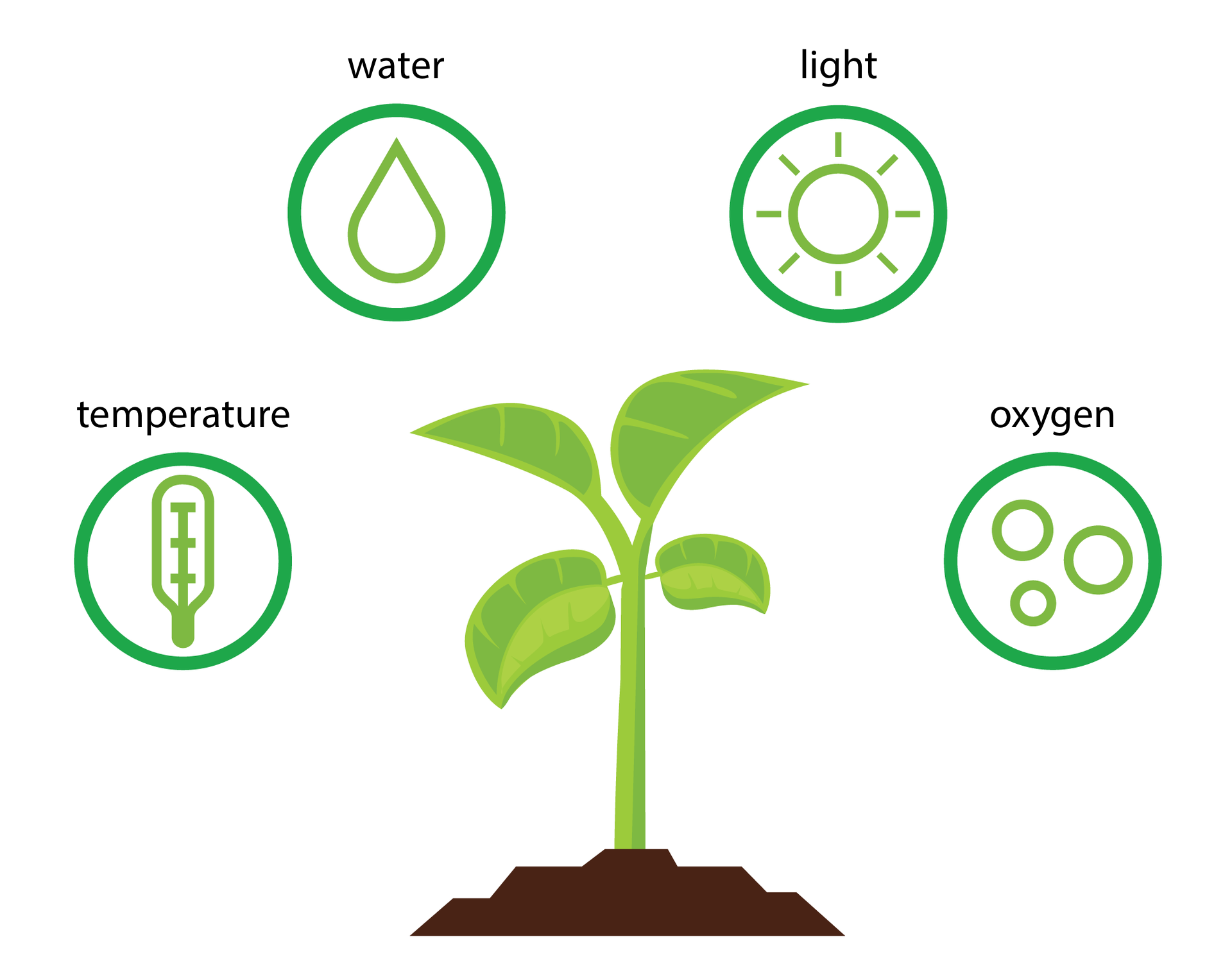
What are the external factors that determine seed germination?
Germination of seeds depends on the amount of water in the substrate.
30 bean seeds,
3 plates,
lignin or cotton wool,
water.
Soak the seeds for several hours in water.
Put lignin or cotton wool in the plates, mark them as sets A, B and C.
Place 10 seeds on each plate.
Place all sets under the same temperature conditions (about 20°C) and lighting.
Conduct the experiment according to the scheme: Set A – do not water the seeds. Set B – water the seeds regularly with a small amount of water. Set C – completely pour water over the seeds.100truefalsenofalsetruenone
Observe the breeding for 7 days, once a day count how many seeds germinated, and record the results of the observation.
After completing the observation, formulate and write down your conclusion.
The hypothesis has been confirmed, but the following problem needs to be solved: Why did the seeds sprinkled with water not sprout?
Assign the main nutrient contained in the seed to the plant.
rapeseed, protein and starch, fat
| canola oil | |
| beans, corn, wheat | |
| sunflower |
Plan and conduct an experiment in which you will check the effect of temperature on seed germination.
Summary
Fruit is an organ typical of angiosperms only.
Fruit protects the seeds and facilitates their spreadingspreading.
Seeds have a survival function.
Seeds contain the embryo of a new plant.
Seeds and fruit have different adaptations to spreading.
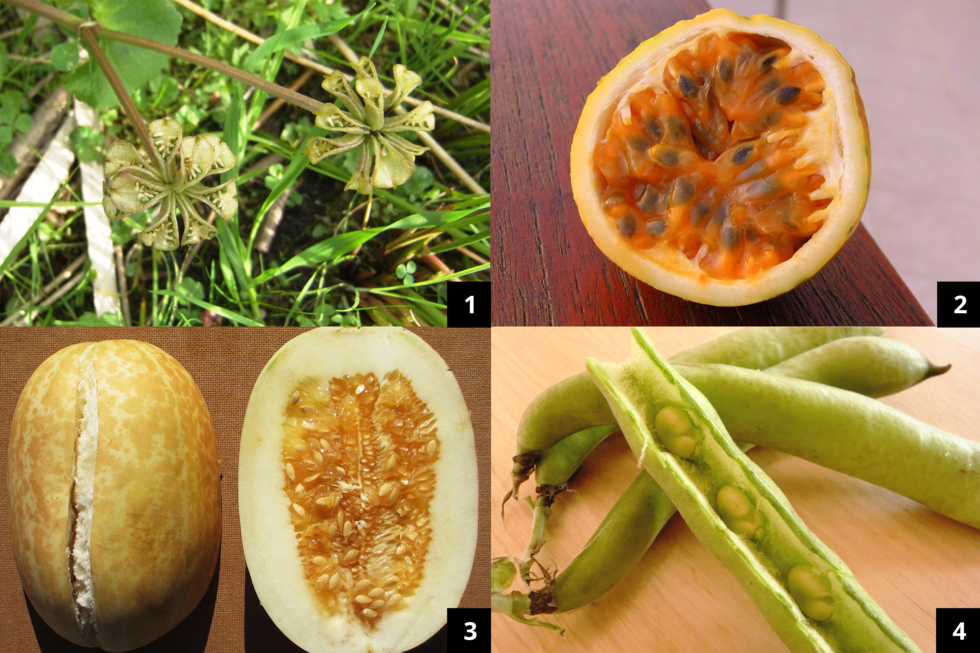
Classify the fruits shown in the illustrations and indicate their adaptation to seed spreading.
Name the similarities and differences in the structure of endospermic and non‑endospermic seeds.
Describe the germination stages and name the conditions necessary for its course.
Keywords
fruit, pericarp, seed
Glossary
kiełkowanie – pierwsza faza rozwoju i wzrostu zarodka roślin, w czasie której młoda roślina przekształca się w siewkę.
liścienie – liście zarodkowe; u niektórych gatunków gromadzą materiał zapasowy niezbędny do rozwoju siewki.
nasiono – organ roślin nasiennych służący im do rozprzestrzeniania się; zawiera zarodek nowej rośliny, tkankę odżywczą i łupinę nasienną.
okrytonasienne – rośliny, które po zapyleniu i zapłodnieniu wytwarzają owoce; ich nazwa pochodzi od tego, że w przeciwieństwie do roślin nagonasiennych ich nasiona ukryte są we wnętrzu owoców.
owoc – organ charakterystyczny tylko dla roślin okrytonasiennych; powstaje z zalążni słupka, a u niektórych roślin także z dna kwiatowego; składa się z owocni i nasion.
rozsiewanie – rozprzestrzenianie nasion; odbywa się samoczynnie lub dzięki wodzie, zwierzętom albo wiatrowi.