How hormones work
hormones regulate life processes of the body;
hormones stimulate only target cells which have specific receptors;
one hormone can stimulate many different organs and one organ can be stimulated by many different hormones.
to give examples of life processes regulated by hormones;
to explain the antagonism in how insulin and glucagon work;
to describe the results of too much and too little of growth hormone, thyroxine and insulin;
to describe the influence of medicine and hormones on your body.
Hormones of metamorphosis
Changes in our body in subsequent developmental stages happen mainly because of the hormones secreted by 3 endocrine glands: pituitary gland, testicles and ovaries. Pituitary gland produces growth hormonegrowth hormone, which speeds up the digestion of spare fats and glycogen, increases the absorption of calcium and phosphates needed for building bones, and stimulates cells to multiply. Its work causes a child's silhouette to become more slender, and the body to become taller. Growth hormone deficiency in childhood, caused by decreased pituitary function, leads to dwarfism. A child suffering from this condition will be no taller than 140‑150 cm in adult years. The condition may be prevented when the patient is given growth hormone. Too much of the growth hormone, caused by the increase in pituitary gland functioning, may lead to gigantism. Kids with this problem grow faster than their peers and very often they are over 205 cm when they are adults.
Acromegaly is a hormonal disorder that develops when your pituitary gland produces too much growth hormone during adulthood. When this happens, bones increase in size, including those of hands, feet and face. If excess growth hormone is produced during childhood the result is gigantism.
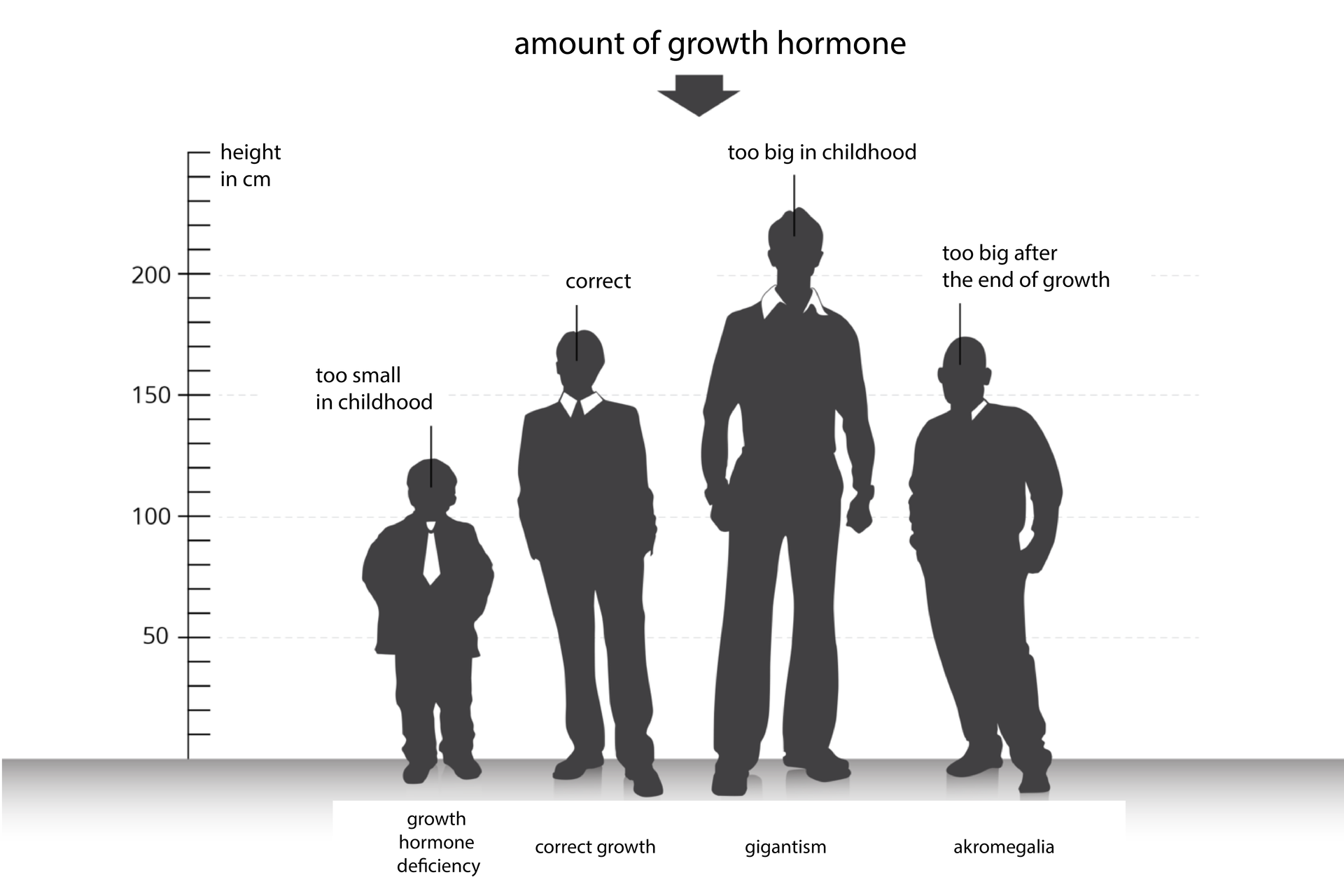
Growth hormone, together with sex hormones produced by gonads – testosteronetestosterone (produced mainly in testicles) and estrogensestrogens (produced mainly in ovaries) contributes to our body’s development in puberty. Gonads stay dormant until we enter puberty, when their secretion increases. Higher levels of sex hormones causes the development of sex organs and shapes the characteristic silhouette of our body.
Hormones that control metabolism
ThyroxineThyroxine secreted by the thyroid has partial influence on our development and growth. It speeds up metabolism, increases the pace of burning fat in tissues, raises sugar level in blood and body temperature. Thyroxine deficiency can lead to suppression of growth and mental development, low metabolism, whereas too much of thyroxine leads to weakening of the body, heart problems, nervousness, increased appetite and hot flashes.
InsulinInsulin and glucagonglucagon are responsible for processes of transforming sugars. The hormones work in an antagonistic way and are secreted by the cells of the pancreas. They maintain correct level of glucose in our blood, which should be around 70‑110 mg in 100 ml of blood on an empty stomach. Insulin lowers the sugar level in blood, whereas glucagon is responsible for raising it. The amount of insulin depends on the level of glucose – the higher the level, the more insulin is produced. Lack of insulin leads to diabetesdiabetes. This disease can damage the kidneys, cardiovascular system and even cause sight loss. Treatment of diabetes is based on a special diet focused on regular meals, limiting sweets and using insulin and other drugs that lower the level of blood in the body.
Hormone of fight and flight
AdrenalineAdrenaline is one of the hormones produced by adrenal glands. It is usually produced in small amounts. Its amount increases very quickly when we are stressed and when there are factors that disturb the homestasis of our organism. For example, in life threatening situations, this hormone initiates a number of processes that mobilize the organism and that allow us to fight or flight. Under the influence of adrenaline, the amount of blood that reaches the heart, muscles, brain and skin is increased. At the same time, the blood vessel of the abdomen become narrower, e.g. the vessels that are around the intestine. This limits digestion. Because of adrenaline, the frequency and strength of heart contractions is increased, same with blood pressure. We take quicker breaths, glucose level in blood increases. Muscle cells receive a lot of fuel and oxygen, thanks to which they are able to make a lot of effort, in extreme situations this effort is described as superhuman.
The influence of medicine and hormones on our body
Lowered amount of hormones in blood may cause various diseases. In order to alleviate the results of decreased amount of hormones or force a gland to work, we use hormone‑based drugs. E.g. in order to restore the homestasis in our body caused by decreased functioning of the ovaries and estrogen deficiency during menopause, the hormone replacement therapy is used. This means that the patients receive physiological amounts of estrogen in order to replenish its deficiency.
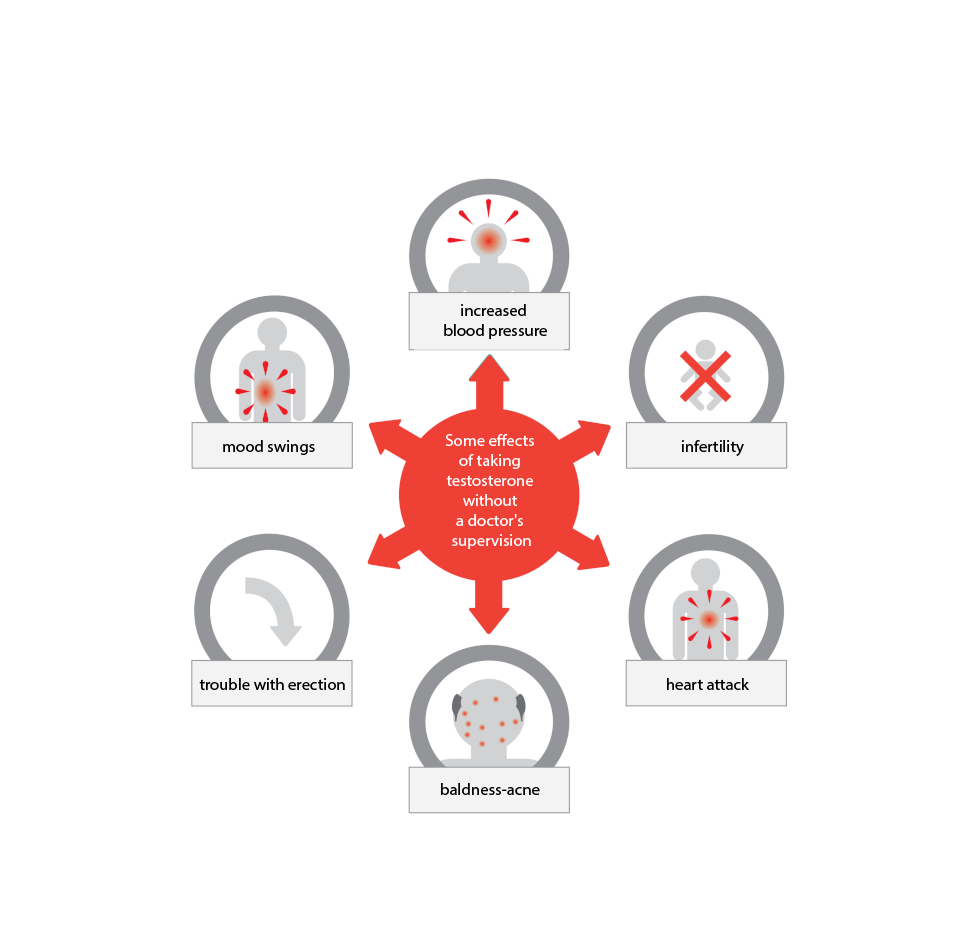
Some hormones have strong anti‑inflammatory and stimulating properties. Cortisol is given in acute allergic reactions, whereas adrenaline – in heart problems. Hormonal medicine used in motor system diseases are anabolic steroid, e.g. testosterone used as a medicine that stimulates muscular development. Taking hormonal medicine is connected with serious side effects, which is why the medicine should be taken under doctor’s supervision.
Match the name of the hormone with the gland that produces it.
adrenal gland, testicles, thyroid, pancreas
| testosterone | |
| adrenaline | |
| glucagon and insuline | |
| thyroxine |
Summary
Correct development of the body depends on hormone levels.
Adrenaline is responsible for initiating processes that mobilize the organism, either to fight or to flight.
Insulin and glucagon work antagonistically, regulating the sugar level in the blood.
Keywords
homeostasis, insulin, glucagon
Glossary
adrenalina – hormon wydzielany przez nadnercza, odpowiedzialny za mobilizację organizmu w sytuacji stresowej
cukrzyca – przewlekła choroba metaboliczna związana z niedoborem lub brakiem insuliny we krwi
glukagon – hormon wydzielany przez komórki wewnątrzwydzielnicze trzustki; podwyższa poziom glukozy we krwi
estrogeny – hormony wydzielane głównie przez jajniki; odpowiadają za wytworzenie żeńskich cech płciowych
hormon wzrostu – hormon wydzielany przez przysadkę mózgową; odpowiada za wzrost i rozwój organizmu
insulina – hormon wydzielany przez komórki wewnątrzwydzielnicze trzustki; obniża poziom glukozy we krwi
testosteron – hormon wydzielany głównie przez jądra, odpowiedzialny za wytworzenie męskich cech płciowych
tyroksyna – hormon wydzielany przez tarczycę; kontroluje procesy przemiany materii oraz wzrost i rozwój organizmu