I am a student
You are able to explain what self‑government and local government are.
You are able to characterize what human needs are.
You will be able to analyze the principles of the school's operation.
You will be able to present the school organs.
You will be able to explain what the student selff‑government is and analyze its role in school.
You will be able to discuss the educational system in Poland.
You will be able to explain the student's rights and duties.
Probably everyone knows the statement that “we learn and relearn our whole lives”. However, apart from the so‑called informal education (i.e. learning at home, at work or during contacts with peers), the most common form of learning is associated with education at school. The school is a learning and educating institution, but the school is also a community of teachers and students.
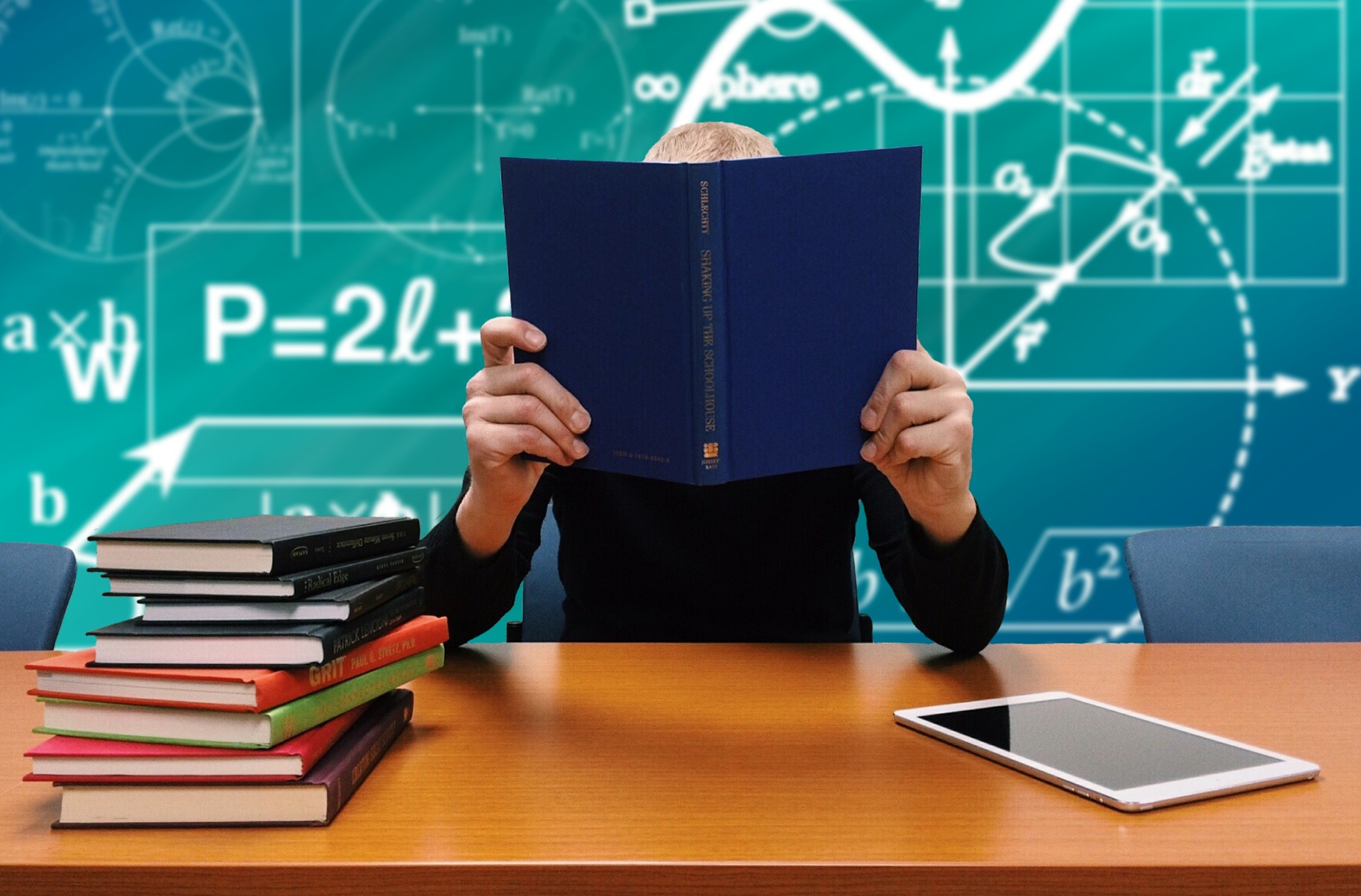
1. educational – transmitting scientific knowledge and skills, teaching to think logically, implementing social norms, indicating social values
2. social – teaching to co-exist with other people, preparing for playing various social roles
3. cultural – introducing to the culture of a given society, to use cultural goods
4. protective – creating conditions to meet the various needs of students
School organs are people and groups of people with legally assigned competences. School authorities include:
the school headmaster,
the teachers’ council,
the school council,
the student self‑government.
For the good functioning of the school, the cooperation of all its bodies is necessary.
The student self‑government
The student self‑government is not only the „class three” (the class president, vicepresident and the treasurertreasurer), the students’ council, its chairmanchairman or board. It is not just a narrow group of people who have been entrusted with all the responsibility for what is happening at school. The students' self‑government is created by all the students of the school, regardless ofregardless of the class they are studying in, their age, grades from particular subjects, or behaviour assessment. „Everyone” means, thereforetherefore, that every student in a given school is also a member of its student self‑government.
The rules for choosing and functioning of self‑government bodies are set out in the regulations adopted by all students in equal, secret and universal voting. The self‑government bodies are the only representatives of all students.
The students’ self‑government may submit proposalssubmit proposals and opinions to the school council, the teachers’ council and the headmaster on all matters of the school, particularly concerning the implementation of students' basic rights.

1. the right to learn about the curriculum, its content, purpose and requirements
2. the right to public and substantiated assessment of their progress in learning and behavior
3. the right to organize school life, making it possible to maintain the right balance between schooling and the opportunity to develop and satisfy one's own interests
4. the right to edit and publish a school newspaper
5. the right to organize – in consultation with the headmaster – the cultural, educational, sports and entertainment activities in accordance with their own organizational needs and possibilities
6. the right to selection of a teacher who will act as a self-government tutor
The students' self‑government may submit proposals (e.g. for introducing changes, adopting new solutions) and opinions (positive or negative) in all school matters. The mention of the above six specific examples serves only to emphasize that they are in particular within the scope of self‑government activities.
Pre‑school education is considered to be the first level of the education system. Pre‑schools are optional for 3-, 4- and 5‑year‑old children and obligatory for 6‑year‑olds. Every child has an entitlement to a place in a pre‑primary setting. Compulsory education in grade 1 of primary school starts at the age of 7. Parents of 6‑year‑olds have a choice – they can enrollenroll their children in the 1 grade of primary school or keep them in a pre‑school institution. 8‑year primary school is compulsory for all pupils who are usually aged 6/7–15. It includes two stages:
grades 1–3 (early school education),
grades 4–8 where teaching is done by subject.
The compulsory external exam takes place in grade 8 of primary school and its results influence admission to secondary schools.
The new reformed structure of upper secondary education envisages the following types of schools:
4‑year general secondary school,
5‑year technical secondary school,
3‑year sectoral VET (vocational education and training) school (stage I),
2‑year sectoral VET (vocational education and training) school (stage II).
Students of vocationalvocational schools – basic vocational schools and technical upper secondary schools – may take exams confirming vocational qualifications in a given occupation during the course of study or upon completion of school to receive a diploma confirming their vocational qualifications. Graduates of general upper secondary schools and technical upper secondary schools may take the external upper secondary school leaving examination to obtain the Matura certificate, which gives access to higher education.
Check if you can understand the text. Complete the following excerpt with appropriate words and expressions.
qualifications, secondary, matura, skills, certificate, post-secondary, intended for, education, to obtain, vocational
Post-secondary ............................ is considered to be a part of ............................ education. Post-secondary schools are ............................ graduates of general upper secondary schools who wish ............................ a diploma confirming their vocational ............................. The schools offer courses lasting from 1 to 2.5 years. The students of ............................ schools and students of basic vocational schools and technical upper secondary schools take ............................ exams of the same type.
There are two types of Higher Education Institutions:
university‑type (uczelnia akademicka),
non‑university‑type (uczelnia zawodowa).
They both offer first- and second‑cycle programmes as well as long‑cycle Master’s degree programmes while only university‑type HEIs can offer third‑cycle programmes (doctoral studies) and are authorized to award doctoral degrees. Studies are organized in the form of full‑time or part‑time programmes. First‑cycle programmes lead to two types of degrees:
licencjat (equivalent of Bachelor’s degree) – 3–4 year programmes,
inżynier (equivalent of Bachelor’s degree) – 3.5–4 year programmes.
Holders of the Bachelor’s degree can enter second‑cycle programmes, which take 1.5–2 years depending on the area of study.
Only several fields of study offer long‑cycle Master’s degree programmes that last for 4–6 years (medicine, psychology, law). First‑cycle, second‑cycle and long‑cycle Master’s programmes end with a diploma examination and students who have passed it are granted a relevantrelevant degree.
The Master’s degree (magister or its equivalent) entitles its holder to practice a given profession and provides access to third‑cycle studies. They are organised in HEIs or research and development institutions other than HEIs and last for 3–4 years.
Getting an education and being a student is associated with many rights, but also duties.
The concept of human rights presupposes that every human being has certain rights resulting from human dignity. The Universal Declaration of Human Rights, adopted in 1948, recognizes education as a fundamental human right. This means that every person in the world has the right to receive free education at least at a basic level. The Convention on the Rights of the Child obliges national governments to provide free basic education for all children. The document also states that all children have the right to education, which will prepare them for active, responsible life in a free society, respecting the environment and dignity of others.
The Constitution of the Republic of PolandArticle 70
Everyone shall have the right to education. Education to 18 years of age shall be compulsory. The mannermanner of fulfilment of schooling obligations shall be specified by statute.
Education in public schools shall be without payment. Statutes may allow for payments for certain services provided by public institutions of higher education.
Parents shall have the right to choose schools other than public for their children. Citizens and institutions shall have the right to establish primary and secondary schools and institutions of higher education and educational development institutions. The conditions for establishing and operating non‑public schools, the participation of public authorities in their financing, as well as the principles of educational supervision of such schools and educational development institutions, shall be specified by statute.
Public authorities shall ensure universal and equal access to education for citizens. To this end, they shall establish and support systems for individual financial and organizational assistanceassistance to pupils and students. The conditions for providing of such assistance shall be specified by statute.
The autonomy of the institutions of higher education shall be ensured in accordance with principles specified by statute.
Source: The Constitution of the Republic of Poland.
- the right to education,
- the right to be brought up in a family,
- the right to be brought up without violence,
- the right to information,
- the right to freedom of thought, conscience of religion,
- the right to freedom of expression.
- familiarize yourself with the curriculum of individual subjects,
- get acquainted with the school assessment system and be assessed according to its assumptions,
- properly organized educational process,
- educational care and ensured safety conditions,
- kind, subjective treatment in the process of education and upbringing,
- develop your interests and talents in class and extracurricular activities,
- be informed about the date and scope of written tests,
- rest during holidays and vacations,
- get help in case of learning difficulties,
- access to health care as well as pedagogical and psychological counseling and therapy,
- use the school rooms, teaching equipment, library collection during
- both lessons and extracurricular activities,
- participate in organizing cultural, sports and entertainment events at school.
The student's rights
The basic rights resulting from the most important legal act in Poland, which is the Constitution of the Republic of Poland, are:
- the right to education,
- the right to be brought up in a family,
- the right to be brought up without violence,
- the right to information,
- the right to freedom of thought, conscience of religion,
- the right to freedom of expression.
On the other hand, the rights strictly resulting from the schooling obligation and related to it are the rights to:
- familiarize yourself with the curriculum of individual subjects,
- get acquainted with the school assessment system and be assessed according to its assumptions,
- properly organized educational process,
- educational care and ensured safety conditions,
- kind, subjective treatment in the process of education and upbringing,
- develop your interests and talents in class and extracurricular activities,
- be informed about the date and scope of written tests,
- rest during holidays and vacations,
- get help in case of learning difficulties,
- access to health care as well as pedagogical and psychological counseling and therapy,
- use the school rooms, teaching equipment, library collection during
- both lessons and extracurricular activities,
- participate in organizing cultural, sports and entertainment events at school.
The observanceobservance of the student's rights is ensured, among others, by a Student Ombudsman, who may be a student or a teacher. The rules of the Ombudsman's operation are set out in the school statute. The Ombudsman acts on the request of the person concerned or on his own initiative. As part of his duties, he takes care of enforcing and adhering to the legal provisions concerning students. He may also propose new regulations concerning students. The Ombudsman participates in the meetings of the teachers’ council with the right to present the problems of students’ rights observance.
The catalog of students’ duties differs in individual institutions. There is not one „universal” regulation. However, the following duties are most often mentioned:
systematic and active participation in class and school life,
carrying required textbooks and school supplies,
adherence to the principlesadherence to the principles of a culture of social relations with regard to colleagues, teachers and other school staff,
responsibility for one's own life, health and hygiene,
being honest and truthful,
care for common good and order at school,
care for the aesthetic appearance of the school and the environment,
care for class and school honor,
wearing appropriate gym clothes for gym classes,
participation in ceremonies and events organized by the school.
The primary place of formal education is the school. It fulfills not only a teaching function, but also an educational or cultural one. In order to implement them, schools have bodies, including a headmaster or a teachers’ council. The student self‑government occupies a special position, thanks to the students’ self‑givernment all students participate in the life of a school. The studnets’ self‑government also plays an important role in ensuring the observance of the student's rights. The student's rights are regulated not only in internal school documents, such as school statutes, but in national law documents – the Constitution and statutes.
Listen to the abstract recording to review the material and new vocabulary. Then do the vocabulary exercise. Match the pairs: English and Polish words.
składać wnioski, zapoznać się z, przestrzeganie (zasad), przestrzeganie (praw), uzasadniony, zawodowy, opiekun samorządu uczniowskiego, zapisać (np. do szkoły)
| to submit proposals | |
| sunstantiated | |
| student self-government tutor | |
| to enroll | |
| vocational | |
| to familiarize oneself/get aquainted with | |
| (rights) observance | |
| adherence to (principles) |
Keywords
informal/formal education, school functions, school organs, headmaster, teachers’ council, school council, student self‑government, pre‑school education, primary school, secondary school, VET (Vocational Education and Training) school, Higher Education Institutions (HEI), bachelor, master’s, student ombudsman, rights and obligations of a student
Glossary
skarbnik
przewodniczący
bez względu na
zatem
składać wnioski
program nauczania
uzasadniony
utrzymywać
zaspokajać
opiekun samorządu uczniowskiego
zapisać (np. do szkoły)
zawodowy
szkoła policealna
odpowiedni
sposób
wsparcie
przemoc
sumienie
Nagranie dostępne na portalu epodreczniki.pl
Nagranie słówka: to familiarize oneself/get aquainted with
zapoznać się z
założenie
podmiotowe
wychowanie
zajęcia pozalekcyjne
przestrzeganie (praw)
przestrzeganie (zasad)