Inhabitants of medieval cities
to characterize the social groups that inhabited the medieval city and their role and status in the city;
to explain the importance of joint responsibility and cooperation of the inhabitants of the medieval city;
to describe the need to establish rules for honest work;
to compare living conditions in a medieval and contemporary city.
Inhabitants of medieval cities are called townspeople. These were mainly merchantsmerchants and craftsmencraftsmen. They paid taxes for the needs of the city, for example for the construction of city walls, maintenance of order and cleanliness. They were also obliged to defend the city in case of an enemy invasion.
The most numerous group of inhabitants were craftsmencraftsmen. In the Middle Ages, unlike today, most of the goods needed by city inhabitants were produced locally, in small workshops and small quantities. Craft workshops were located on the ground floors of the tenement houses. From the 13th century craftsmencraftsmen, with the support of the city authorities, started to establish their own organisations, called guildsguilds. The guildguild consisted of craftsmencraftsmen of one or more related specialities. CraftsmenCraftsmen of the same speciality often lived close to each other on the same street. This is evidenced by the names of some streets that have been preserved to this day.
MerchantsMerchants were amongst the richest inhabitants of medieval cities. They had an impact on the city governance because they were members of the city council. They lived off trade in goods, which they often imported from faraway lands. There were also many small merchantsmerchants among the townsmen, who carried the sold goods with them on their backs and reached the townspeople's houses directly. The cities were also inhabited by priests who served in churches and monks (for example, Franciscans and Dominicans) who founded their monasteries within the city walls. The city also attracted numerous beggarsbeggars and vagrantsvagrants.
Read the text carefully and note the most important information.
Merchants
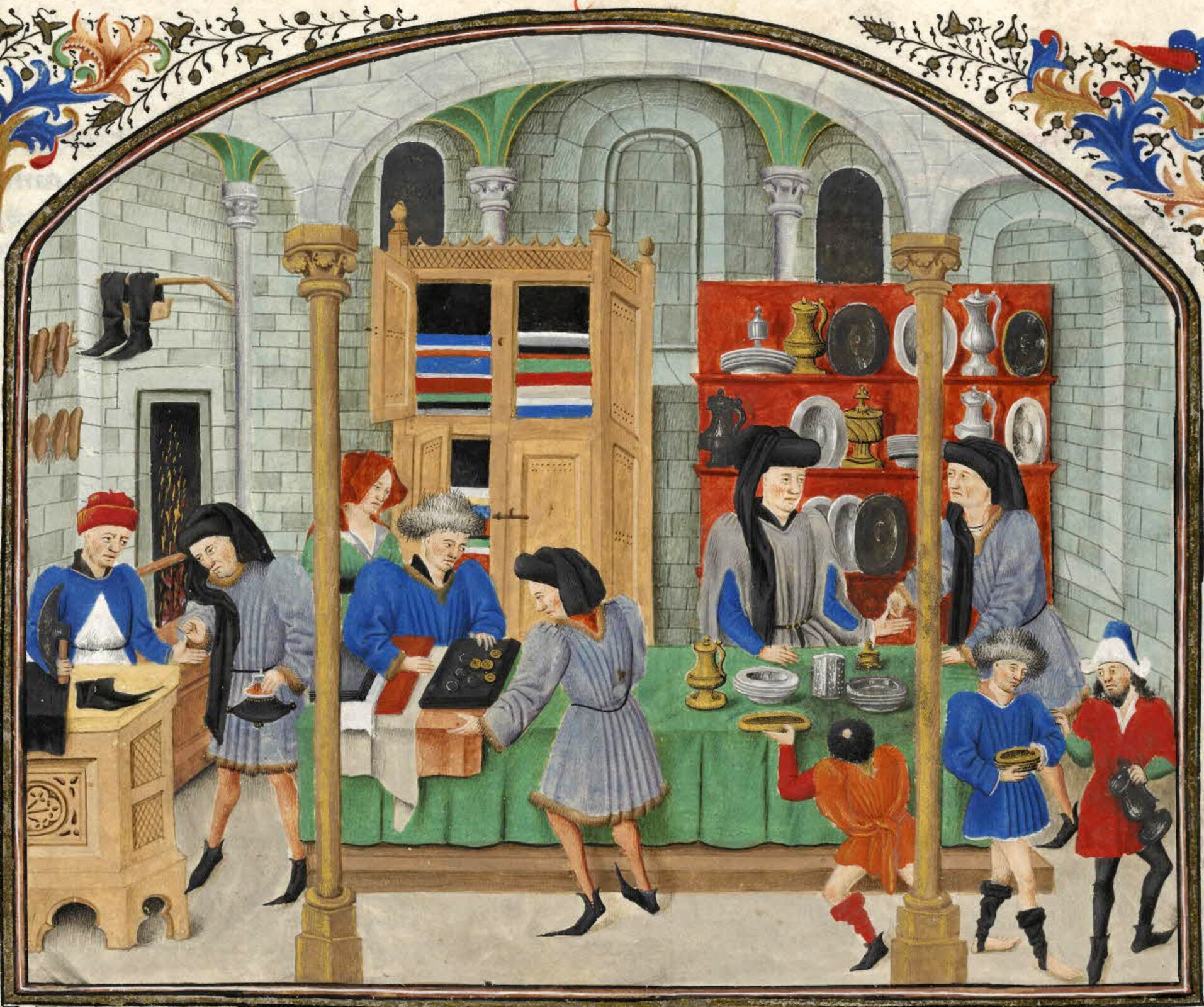
MerchantsMerchants were amongst the richest inhabitants of medieval cities. They lived in beautiful and richly decorated tenement houses, they dressed in expensive clothes. They had an impact on the city governance because they were members of the city council. They lived off trade in goods, which they often imported from faraway lands. They sold their goods mainly at municipal markets or in cloth hall. There were many small merchantsmerchants in cities, who carried the sold goods with them on their backs and reached the townspeople's houses directly.
MerchantsMerchants carrying goods could use the designated roads. If the roads led to a city/town which had a so‑called staple right, they had to stop there and display all their goods.
On Polish roads, there was a law called a road mir. According to it, the ruler, through his people, was supposed to ensure the safety of the travellers. Anyone who attacked others on the road had to face serious punishment. However, the road mir was often violated.
Craftsmen
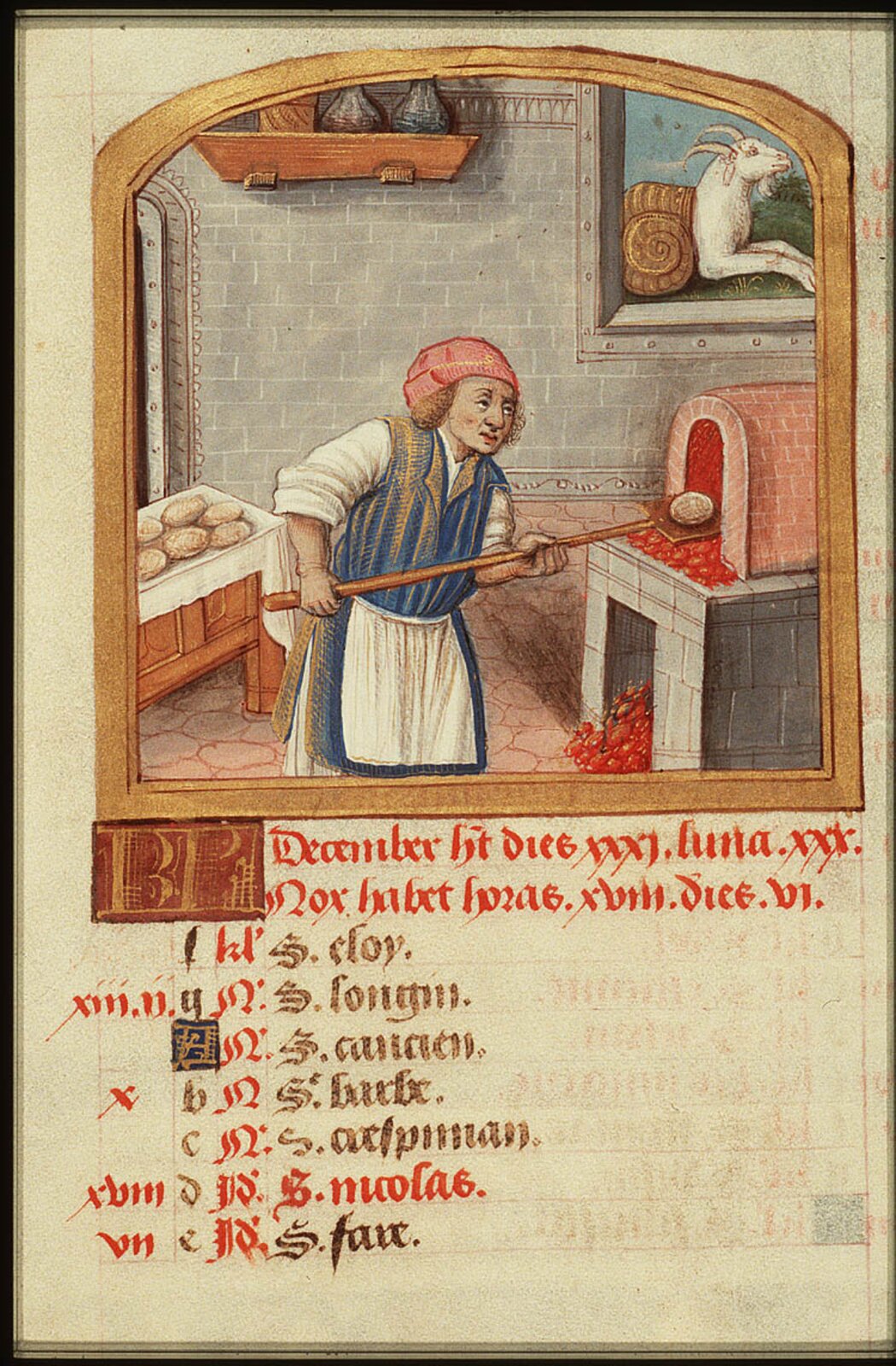
The most numerous group of inhabitants were craftsmencraftsmen. These included bakers, butchers, tailors, shoemakers, potters and weavers. In the Middle Ages, unlike today, most of the goods were produced in small workshops and in small quantities. The inhabitants of the cities needed the goods produced by the craftsmencraftsmen. Craft workshops were located on the ground floors of the tenement houses. Rich craftsmencraftsmen occupied dwellings above their workshops, poor ones lived in attics.
From the 13th century craftsmencraftsmen, with the support of the city authorities, started to establish their own organizations, called guildsguilds. The guildguild consisted of craftsmencraftsmen of one or more related specialties. The guildsguilds took care of high quality of manufactured goods, protected their members against unfair competition, set salaries and working hours (for example, forbade night work). In the event of a breach of the regulations, the craftsman was brought before the guildguild court. The guildguild members also took care of the families of deceased craftsmencraftsmen who were in need.
From student to master
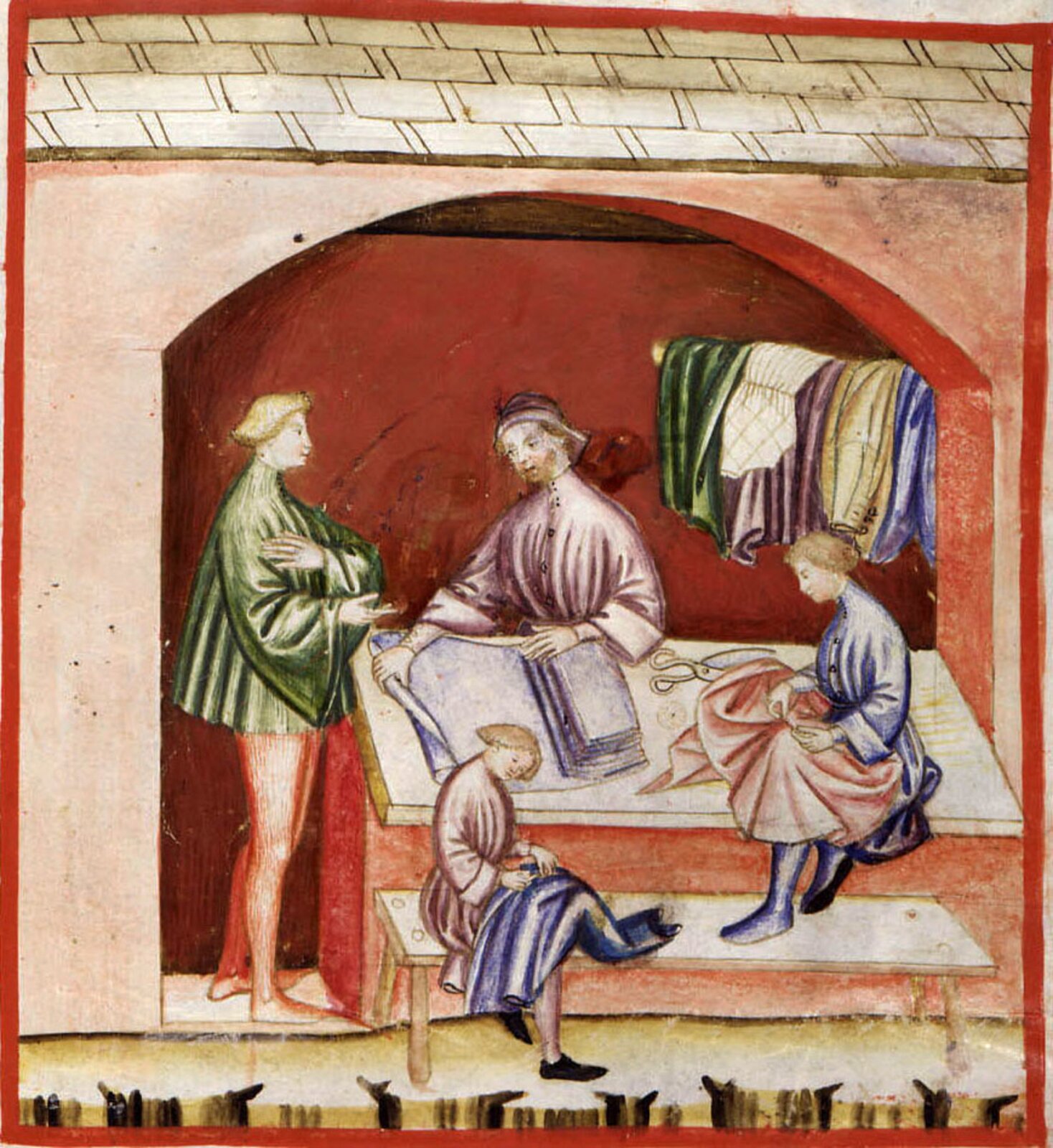
In order to be granted craftsmanship rights and to be able to run one's own workshop, one had to become a master. It took a long time to gain the title of a master, even several years. First, under the supervision of an experienced craftsman, the student learned basic skills. Then he/she became a journeymanjourneyman. In order to become a master, the journeymanjourneyman had to make an item related to the type of his/her craftsmanship, for example, a tailor had to sew a dress, a shoemaker had to make shoes. The quality of such work, called masterworkmasterwork, was assessed by guildguild masters. Well done work confirmed the acquired skills. After accepting the masterwork, the journeymanjourneyman could become a master.
Others
Inhabitants of medieval cities are called townspeople. These were mainly merchantsmerchants and craftsmencraftsmen. The cities were also inhabited by priests who served in churches and monks (for example, Franciscans and Dominicans) who founded their monasteries within the city walls. The city also attracted numerous beggars and vagrants.
Read an extract of a document that lists the rights of guildsguilds such as: needlers, tinkers, button makers, tin casters, and rosary makers, and then do an exercise.
Nagranie dostępne na portalu epodreczniki.pl
Wersja alternatywna ćwiczenia: Wymień kilka anglojęzycznych słów związanych z tematem lekcji.
First of all, no one has the craft to perform, who would not get the municipal law and did not bring a document to perform his profession.
Every quarter has every guildguild companion to give one.
Whoever enrolls in science is to give the guildguild 6 groszy.
Whoever goes to an early convention with a dagger or other weapon, he has the guildguild to pay one penny.
Whoever maliciously speaks in the morning assembly, the one with such a malicious word is to give one penny.
If a journeymanjourneyman at his master borrows, he is legally obliged to serve him and no other master can hold him or support him with the highest punishment.
If a journeymanjourneyman leaves his master and owes him money, he is entitled to take care of dresses or other equipment, and no master can hold him until he strikes.
Source: , [w:] Ze statutów cechów wrocławskich w XIII w. Miasta i mieszczaństwo średniowiecza do schyłku XV w., red. opracował R.Heck, Warszawa 1959.
Check that you understand the rules of the city guild. Combine passages with appropriate interpretations.
A craftsman should know his craftsmanship and carry it out on the basis of a permit issued by the city authorities., Masters should be in solidarity with each other., Penalties shall be imposed on the offences specified by law.
| First of all, no one has the craft to perform, who would not get the municipal law and did not bring a document to perform his profession. | |
| Whoever goes to an early convention with a dagger or other weapon, he has the guild to pay one penny. Whoever maliciously speaks in the morning assembly, the one with such a malicious word is to give one penny. | |
| If a journeyman leaves his master and owes him money, he is entitled to take care of dresses or other equipment, and no master can hold him until he strikes. |
Match the pairs: English and Polish.
baszta, czeladnik, cech, majstersztyk
| fortified tower | |
| features or properties | |
| journeyman | |
| masterwork |
Keywords
townspeople, city, Middle Age, guild, merchants, artisans
Glossary
kupiec
rzemieślnik
baszta – okrągła lub czworokątna budowla, stanowiąca element murów miejskich.
cechy – organizacje skupiające rzemieślników jednej lub kilku pokrewnych specjalności.
czeladnik – jeden ze stopni kwalifikacji zawodowych rzemieślnika
majstersztyk – przedmiot mający być sprawdzianem umiejętności zawodowych członka cechu, stanowiący warunek do uzyskania tytułu mistrza, obecnie: szczególnie udane dzieło sztuki lub rzemiosła albo popularne powiedzenie oznaczające coś dopracowanego w szczegółach.
żebrak
włóczęga – bywalcy miast, nie zaliczani do stałych mieszkańców.