Katalog interaktywny
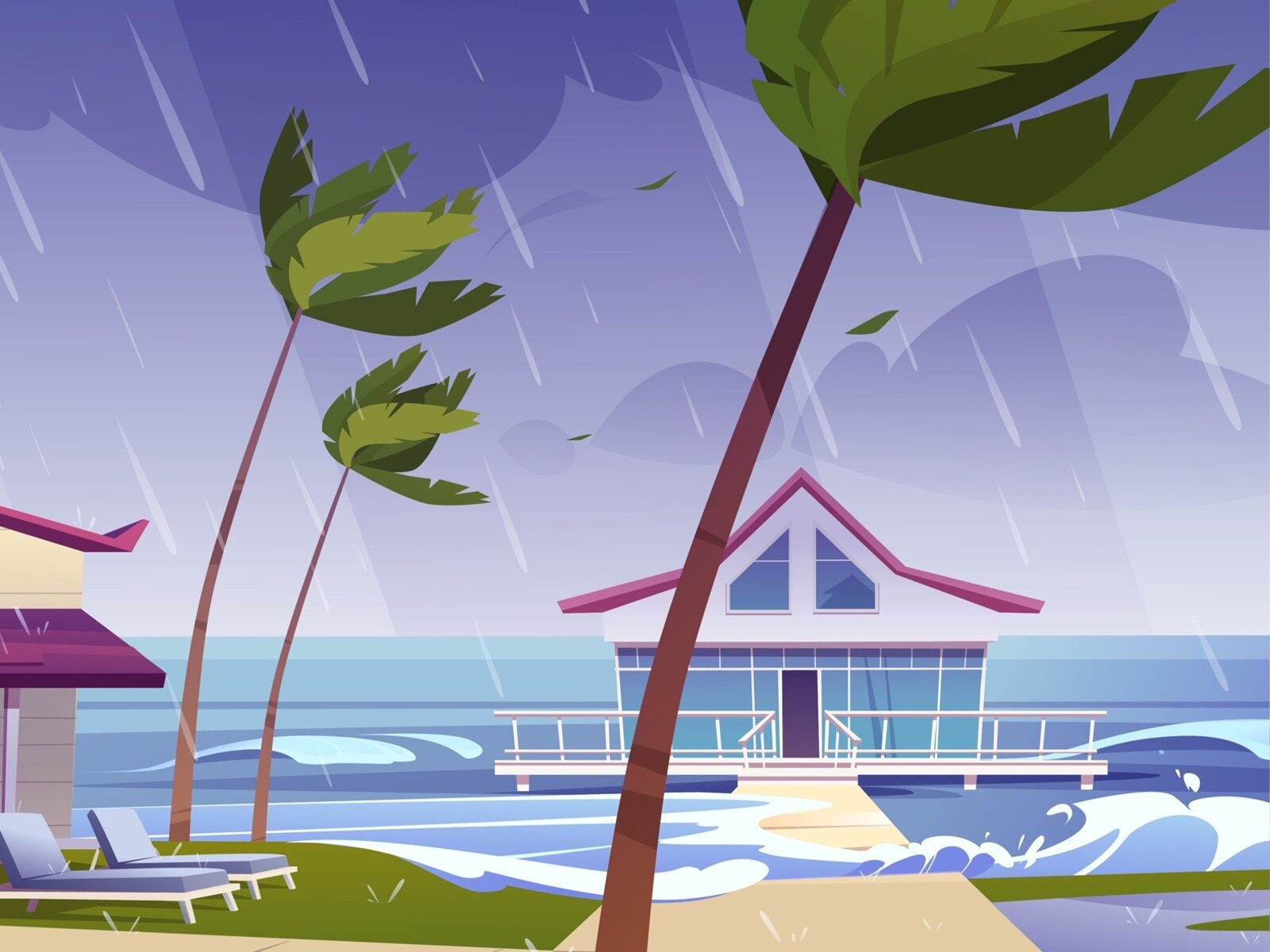
Who has not been dreaming about living near the beach, with a spectacular ocean view and palms all around? Isn’t that a common visualisation of a safe haven protected from all the evil of the world? Unfortunately, we tend to ignore the fact that such areas are often affected by tropical storms and hurricanes, and inhabitants often lose all their possessions. How much do you know about hurricanes? Do you know the difference between hurricanes, cyclones and typhoons? What is a tornado? You will find the answers in the interactive catalogue below.
Kto nie marzy o zamieszkaniu w domku na plaży ze spektakularnym widokiem na ocean i palmami wokół? Czy nie jest to częste wyobrażenie bezpiecznej przystani z dala od zła tego świata? Niestety często nie zdajemy sobie sprawy z tego, że takie rejony świata są regularnie nawiedzane przez tropikalne burze, a ich mieszkańcy niejednokrotnie tracą dorobki całego życia. Ile wiesz o huraganach? Czy umiesz wskazać różnice między huraganem, cyklonem i tajfunem? Co to jest tornado? Odpowiedzi na te pytania znajdziesz w poniższym katalogu interaktywnym.
Grafika składa się z dziesięciu ilustracji lub zdjęć. Każde z nich posiada punkty interaktywne, po naciśnięciu których pojawiają się nagrania. Transkrypcja do nagrań znajduje się poniżej.
Hurricanes - definition and names.
Hurricanes, typhoons and cyclones are the same weather phenomena, but they form in different regions of the world.
Ilustracja nr 1 przedstawia mapę świata z zaznaczonymi na niej trzema obszarami: Ameryka Środkowa wraz z otaczającymi wodami, Indonezja wraz z częścią Oceanu Indyjskiego oraz Filipiny i Nowa Zelandia wraz z częścią Oceanu Spokojnego.
Specific conditions are necessary for hurricanes to form
If the storm moves over areas with cooler ocean water, it becomes weaker. Only a small number of storms become hurricanes.
Ilustracja nr 2 przedstawia wzburzone morze. Po lewej stronie znajduje się termometr wskazujący temperaturę 26.7 °C. Po prawej stronie grafika przedstawia część procesu parowania wody i tworzenia się chmur burzowych.
Hurricanes are enormous masses of stormy clouds spinning in different direction in the southern and northern hemisphere..
Because hurricanes can cause such extensive damage, it’s important to warn people in advance to give them time to take shelter or evacuate.
Ilustracja nr 3 przedstawia po lewej stronie kulę ziemską, na której w pobliżu obu biegunów oznaczono kierunek, w którym wiruje huragan. Na półkuli południowej obraca się on zgodnie z ruchem wskazówek zegara, natomiast na półkuli północnej w przeciwnym kierunku. Po prawej stronie znajduje się zdjęcie przedstawiające oko cyklonu widziane z lotu ptaka.
NOAA, the National Oceanic and Atmospheric Administration.
The more we know about the formation of such extreme weather phenomena, the better we can prepare for them.
Ilustracja nr 4 przedstawia zdjęcie samolotu podczas lotu, na tle błękitnego nieba W prawym górnym rogu został umieszczony symbol organizacji z nazwą w języku angielskim “NOAA. National Oceanic and Atmospheric Administration. US Department of Commerce”.
HURRICANES ARE GIVEN NAMES.
According to these rules, we already know the names of hurricanes which may occur in 2024. Some examples are: Alberto, Beryl, Chris and Debby.
Ilustracja Nr 5 przedstawia nazwy huraganów w poszczególnych latach.
Hurricane Category Scale.
The Saffir‑Simpson Hurricane Category Scale is criticised for not providing information about the rain which comes with the wind. People who defend the scale say that it’s important that it is simple to understand.
Ilustracja nr 6 przedstawia możliwe zniszczenia w trakcie huraganu.
Apart from strong winds, hurricanes bring a number of other dangers. desc.
The damage caused by the most catastrophic hurricanes take months or even years to repair.
Ilustracja nr 7 przedstawia dwa zdjęcia przedstawiające skutki huraganu. Na pierwszym widoczni ludzie chodzący ulicami zalanymi wodą. Na drugim krowy, które weszły na ganek domu chroniąc się przed napływającą wodą.
Tornadoes are another by‑product of a weakening hurricane.
Although tornadoes can result from weakening hurricanes, they can also form independently.
Ilustracja nr 8 przedstawia zdjęcie uderzenia huraganu w formie trąby powietrznej oraz uderzenie pioruna.
Tornadoes are typical phenomena in the Tornado Alley in the USA.
According to statistics, an average of 1,000 tornadoes occur in the United States every year. Some of them are light or moderate and they cause minimal damage.
Ilustracja nr 9 przedstawia mapę wszystkich stanów w Ameryce z zaznaczonymi miejscami najbardziej zagrożonymi tornado.
Like hurricanes, tornadoes need specific atmospheric conditions to form.
Another similarity between tornadoes and hurricanes is a 5‑degree scale which is used to classify these weather phenomena. The scale is also based on the wind speed.
Ilustracja nr 10 przedstawia zdjęcie trąby powietrznej kierującej się w kierunku miasteczka.
TrueFalse
2. Hurricanes are unlikely to form above waters of temperature below 20 degrees Celsius.
TrueFalse
3. The rotation of the earth makes hurricanes spin faster and faster.
TrueFalse
4. Hurricanes spin in opposite directions in the southern and northern hemisphere.
TrueFalse
5. If you find yourself in the eye of the hurricane, it means that there is nothing more to worry about.
TrueFalse
6. NOAA scientists who do research on hurricanes are called Muppet Hunters.
TrueFalse
7. Hurricanes are given male names in even years and female names in odd years.
TrueFalse
8. Nowadays The Saffir-Simpson Hurricane Category Scale provides information about speed of wind and potential damage.
TrueFalse
9. In the last century three hurricanes received the highest category.
TrueFalse
10. Category 5 hurricanes are highly likely to destroy the whole area completely.
TrueFalse
11. Tornadoes are more likely to occur early in the mornings.
TrueFalse
Refer back to the idioms in the warm‑up activity at the beginning of this section and answer the questions below in one sentence each.
How would you feel if somebody stole your thunder?
Describe a situation when someone rained on your parade.
When were you on cloud nine last time and what caused this state?
What do you need to feel as right as rain?
Is there a person you will always stand by, come rain or shine? Who is it?
Answer the question in 4–5 sentences.
Would you move to a place if you knew that it is affected by hurricanes or tornadoes? Why? Why not?