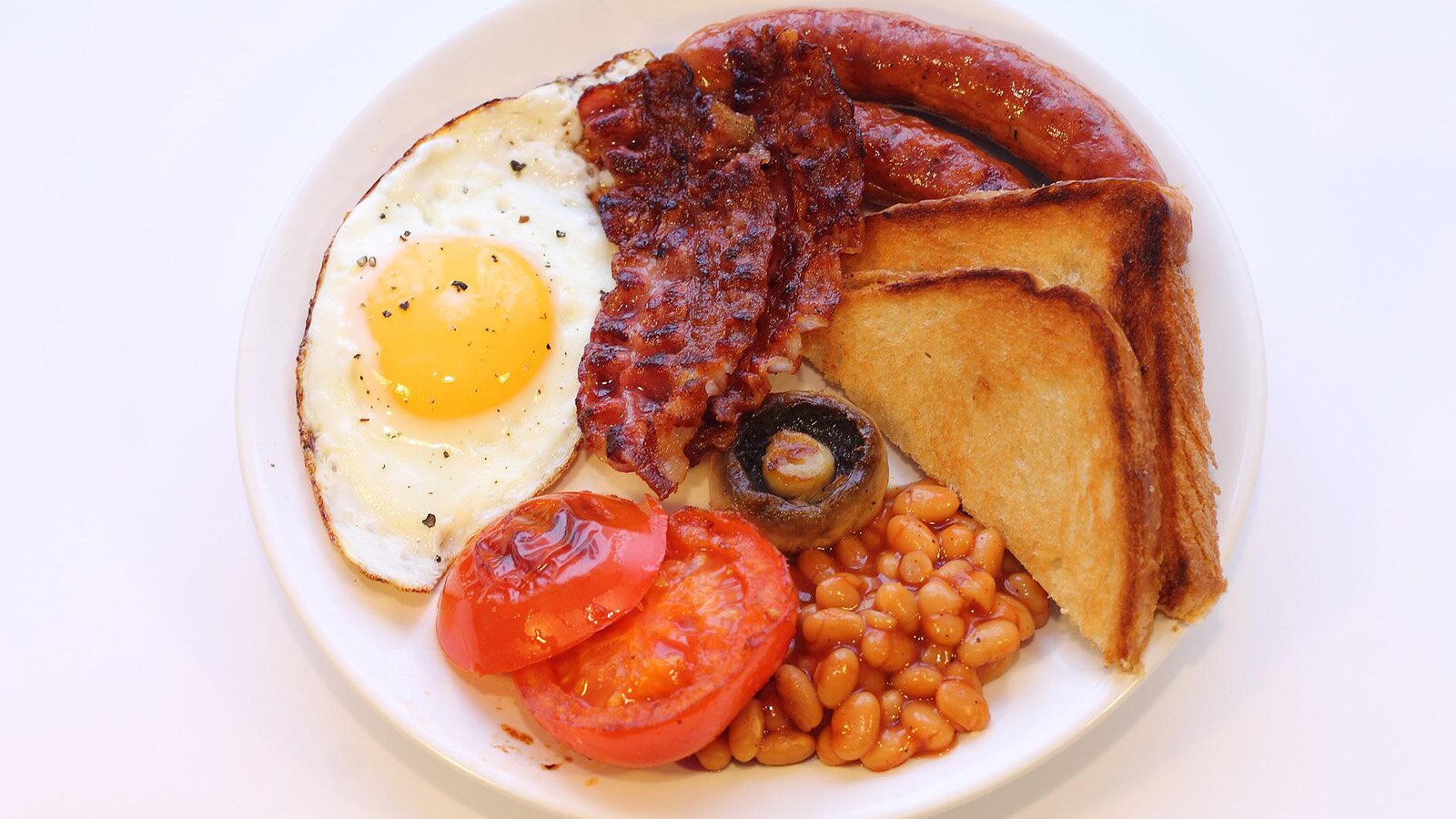
The full English breakfast is a centuries‑old British morning custom with origins in the early 1300s. It was around this time that an English upper class, known as the gentry, adopted this dish as their tradition of social hospitality. Gentry was a privileged layer of English society, who came from wealthy families of land owners and lived in the more expensive country homes.
The English breakfast was becoming not only a meal for the elite but also a meal for the masses. This came about mainly due to the Industrial Revolution, when the working class began to eat the dish on a daily basis, seeing it as a reliable source of energy for heavy manual labour and long hours in the new factories.
This partly answers the question why the Brits would eat such a dish. The other reason that we eat it is that it serves as comfort food for cold and rainy Sundays when you get up late, when the breakfast chef has the time to cook such a meal, and when the family has the time to sit down together and enjoy it.
Bacon is a type of salt‑cured pork made from various typically the belly or less fatty parts of the back. It is eaten as a side dish (particularly for breakfast), and used as a central ingredient or as a flavouring or accent. Bacon is often served with eggs and sausages as part of a full English Breakfast.
At just 78 calories each, eggs are an efficient, rich source of protein and vitamins. A large egg contains about 6 grams of protein. Eggs are also a good source of other nutrients, including vitamin D (which aids bone health and the immune system) and choline (which helps metabolism and liver function), as well as fetal brain development).
Black pudding can be grilled, fried, baked, or boiled in its skin. It can also be eaten cold, as it is cooked in production. In parts of north‑western England and in the Black Country it was common to serve a whole black pudding boiled as a complete meal, with bread or potatoes, but elsewhere in the UK and Ireland slices of fried or grilled black puddings are more usually served as part of a traditional full breakfast.
Nutritionally speaking, beans (typically haricot or cannellini) are a good source of plant‑based protein and are high in fibre, while being low in fat and calories. They also contain minerals such as iron and zinc, and are a good source of B vitamins such as folate. Including beans and pulses in your diet is also associated with a lower risk of cardiovascular disease and may help balance blood sugar levels.
The UK sausages are a very popular and common feature of the national diet and popular culture. British sausages and Irish sausages are normally made from raw (i.e., uncooked, uncured, unsmoked) pork, beef, venison or other meats mixed with a variety of herbs and spices and cereals, many recipes of which are traditionally associated with particular regions (for example Cumberland sausages). They normally contain a certain amount of rusk or bread‑rusk, and are usually fried, grilled or baked.
Because of the bad press on the health front, many British people no longer consume the English Breakfast on a regular basis. However, it still remains popular, mainly since it tastes good and since it is part of the British food culture. Perhaps this is why, the English Breafast is, to this day, widely available in luxury hotels, country inns, guest houses, B&Bs, cafes and restaurants throughout the United Kingdom.
They were very humble in their appearance. They had simple chairs and tables with a chequered plastic table cloth, very basic decoration, and a floor that could easily be scrubbed.
These small cafes were where one could meet the manual workers, labourers who dug up the roads, or the workers on building sites or farms. These men would often start work very early, but by mid‑morning, they would find their way to these cafes known respectfully as “greasy spoons.” They were there for their daily source of energy, the fuel that would allow them to constantly use their bodies as a tool for the rest of the day. Their fuel was a large mug or two of steaming hot tea (called builder’s brew) to wash down a massive plate of fried food always referred to as “Full English Breakfast.” These cafes are no longer with us, but these hard working men are part of our cultural heritage, and so is the plate of fried food commonly known as the “Full English Breakfast.”