Mesopotamia – the land between the Euphrates and the Tigris
what Mesopotamia was and what were the three peoples that lived there in antiquity: i.e. the Sumerians, Babylonians and Assyrians;
the inventions of the Sumerians and understand their importance for the development of civilisation;
distinguish 'history', i.e., a sequence of certain events in the past, from 'histories', i.e., attempts to recreate these events and understand them.
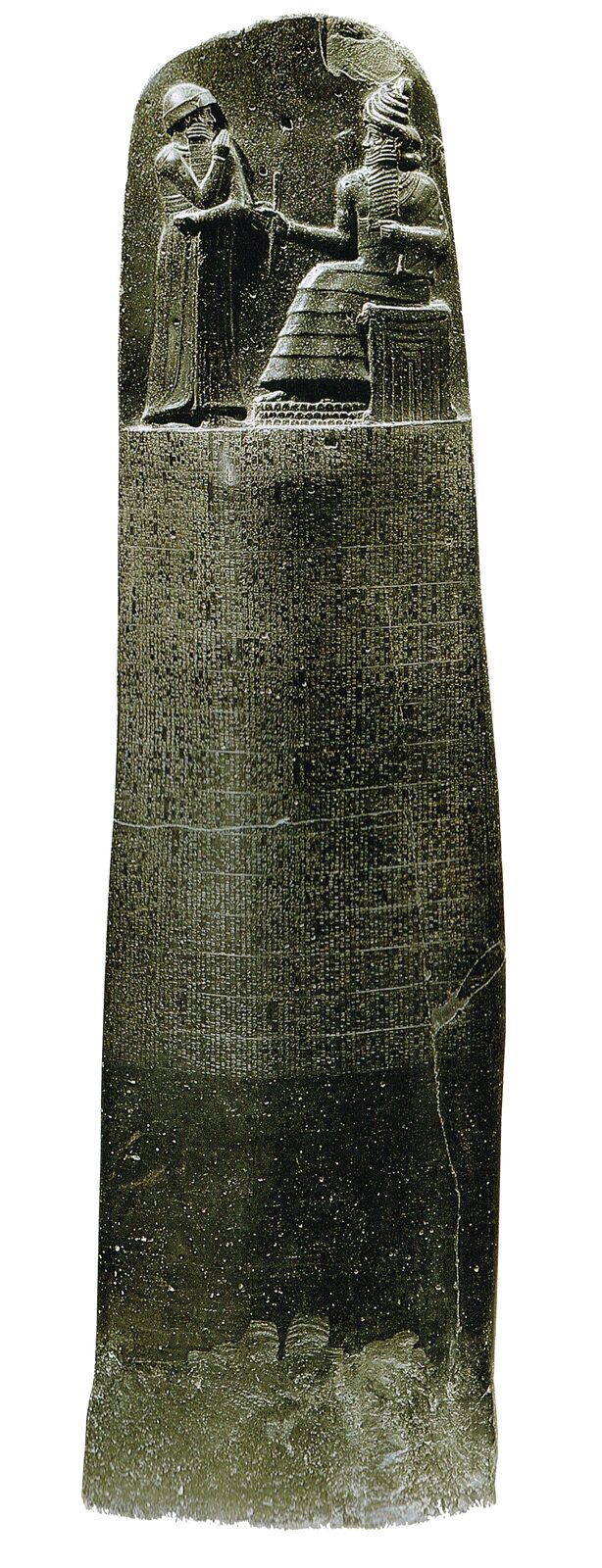
In the fourth millennium BC, the SumerSumerians appeared in MesopotamiaMesopotamia – the land between the great rivers of Euphrates and Tigris (in the territory of today's Iraq). They came up with many inventions, the most important of which was a cuneiform scriptcuneiform script. They also developed a system of canals that brought water from rivers to the fields, thus developing agricultureagriculture. SumerSumerians lived in many city‑states where they built huge ziggurats – buildings resembling pyramids, on the top of which there were temples dedicated to various gods. Next, MesopotamiaMesopotamia came under the rule of the kings of Babylon city. The most famous of them was Hammurabi, who ordered that one of the now oldest surviving code of laws be written down. Later, MesopotamiaMesopotamia was conquered by the AssyriaAssyrians, who created the first great empire of antiquity thanks to a well‑trained army.
The „SumerSumerians” group:
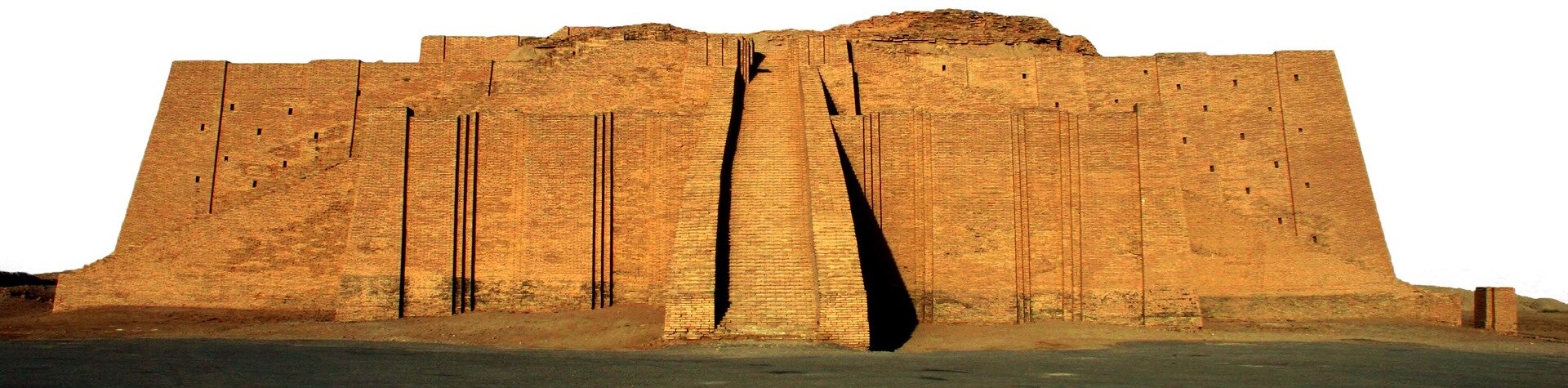
„The oldest people who lived in MesopotamiaMesopotamia over 5,000 years ago were the SumerSumerians. It was they who created the first states in this area. Each of them consisted of a city with its surrounding settlements, which is why we call them city‑states. SumerSumerians believed in many gods. (...). Temples were placed at the tops of structures called ziggurats. In MesopotamiaMesopotamia it was difficult to find the stone, so the ziggurats were built of clay bricks dried in the sun. SumerSumerians came up with many inventions, the most important of which was writing (...). They were the first to use the wheel, thanks to which donkey‑pulled carts could be used for transportation. They also invented bronze – a metal so hard that they made weapons and tools out of it. In addition, they occupied themselves with astronomy, mathematics and medicine. For the purposes of trade, they developed a system of measures and weights. They were the first to learn how to make beer.”
The „Babylonians” group:
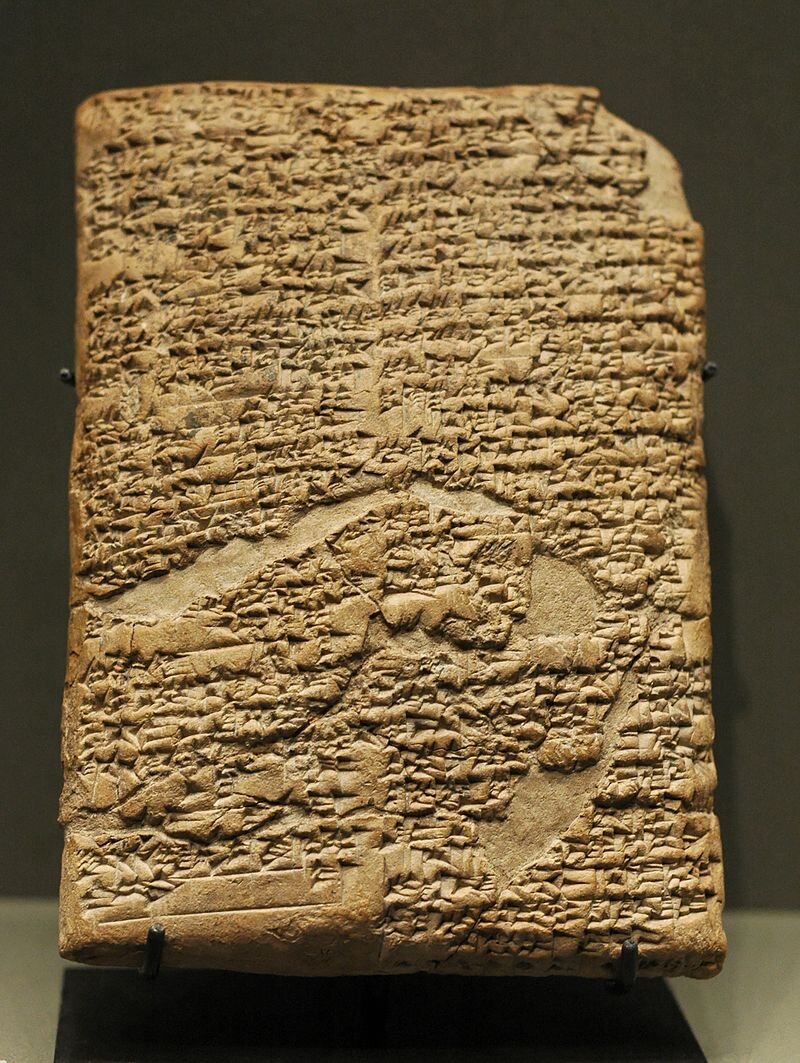
„After the SumerSumerians, MesopotamiaMesopotamia was taken over by the Babylonians. The capital of their state was Babylon – a wonderful and rich city. The most famous Babylonian ruler was Hammurabi, who reigned in the 18th century BC. He ordered a set of laws to be written down (...) The Hammurabi's Code provided for very severe penalties. (...) If someone poked out an eye, knocked out a tooth or broke an arm or leg of someone else, the former person was to be punished by meeting the same fate, i.e., having their own tooth knocked out, eye poked out or limb broken. Therefore, we say that the Code of Hammurabi was based on the principle of „an eye for an eye, a tooth for a tooth”. Babylonians used their astronomical knowledge to make prophecies. They believed that the fate of people was determined by the stars. In their opinion, the moment of birth was particularly important, to which they assigned a specific zodiac sign, designed to determine the character and fate of a person. They were very superstitious. Their times gave rise to the belief that the number 13 is unlucky, 7 – lucky, and that a black cat that crosses the road brings misfortune.”
The „Assyrians” group:
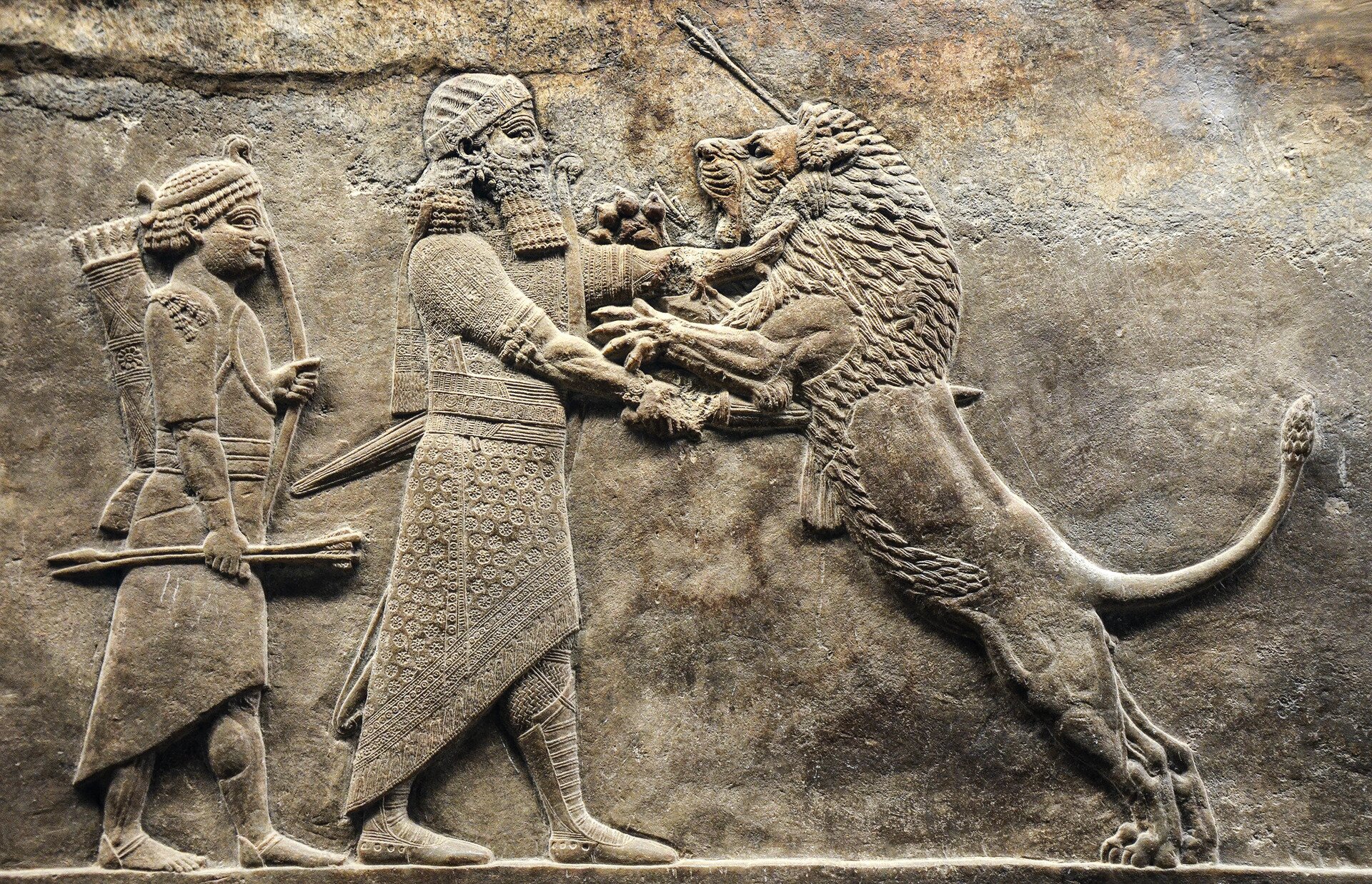
„In the 8th century BC, the Mesopotamian territory found itself under the reign of AssyriaAssyria – a land situated in the upper reaches of the Euphrates and the Tigris. Nineveh was the capital of AssyriaAssyria. Assyrian rulers had a very well‑organised army of soldiers who had been learning military art from childhood. Any enemies were particularly frightened by the units of chariots that were able to move quickly along roads built by the Assyrians. The favourite pastime of Assyrian kings was hunting for lions. Hunting scenes were depicted on the walls of temples and palaces.”
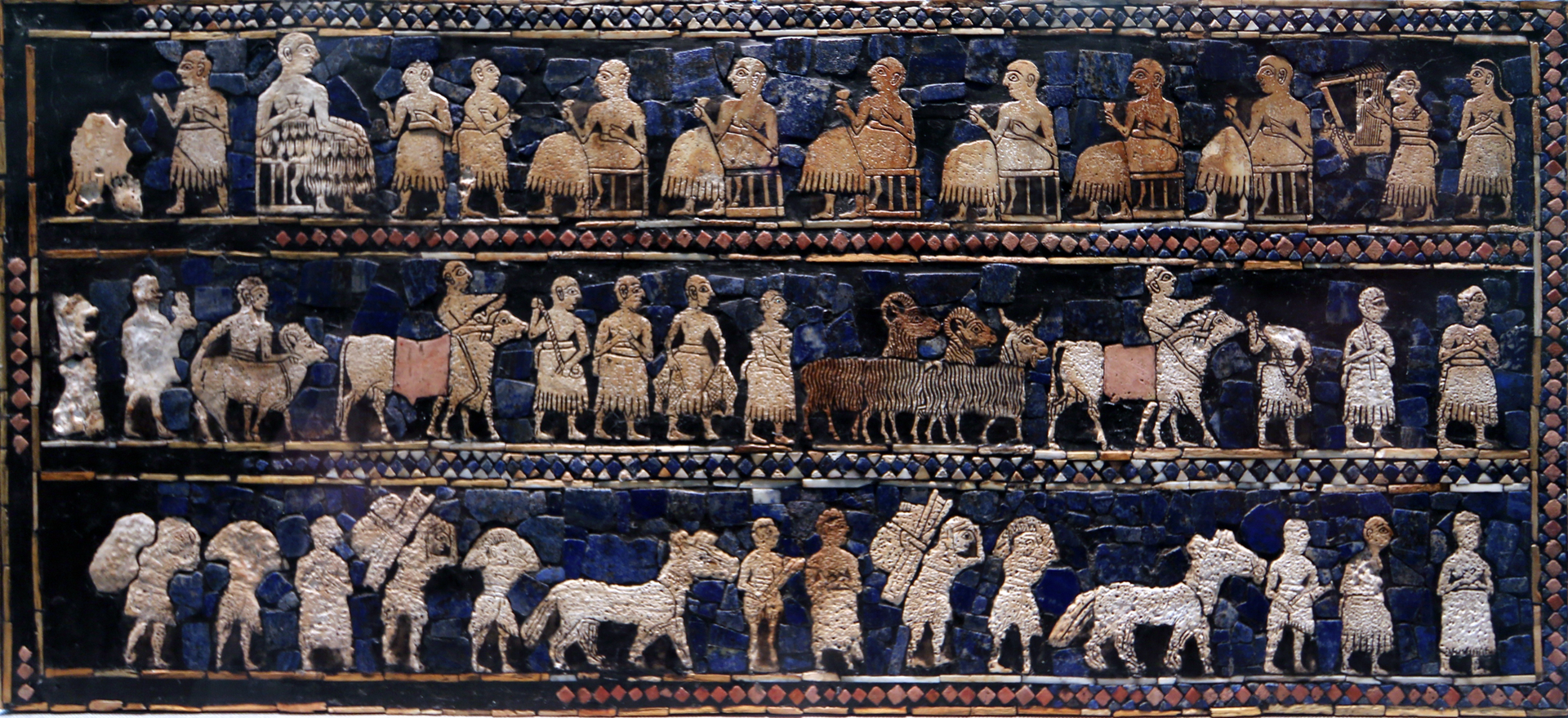
The upper strip of the illustration shows a feast. The servants serve drinks to the ruler and people from his immediate surroundings. Indicate the king, royal dignitaries and the harpist. How did you recognize them? What makes them stand out?
Indicate the animals raised by the SumerSumerians, as shown in the illustration.
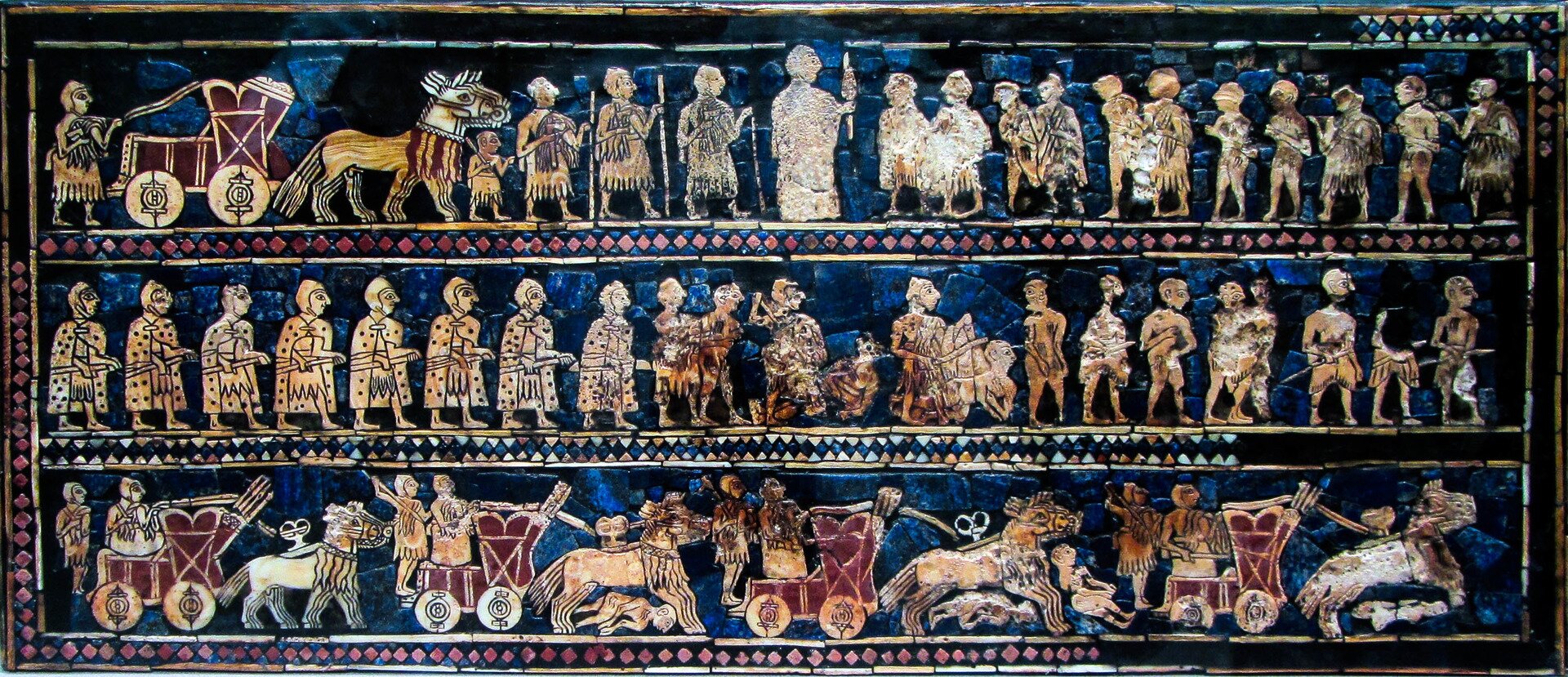
Find chariots (fighter vehicles) and count them.
Identify the charioteer and the spearman.
Describe the appearance of the chariot. Say what SumerSumerian invention was used to build this vehicle.
Explain how chariots were used in battle.
Look for the ruler in the illustration. How was he made to look different in it?
Identify the marching warriors and describe the appearance of one of them.
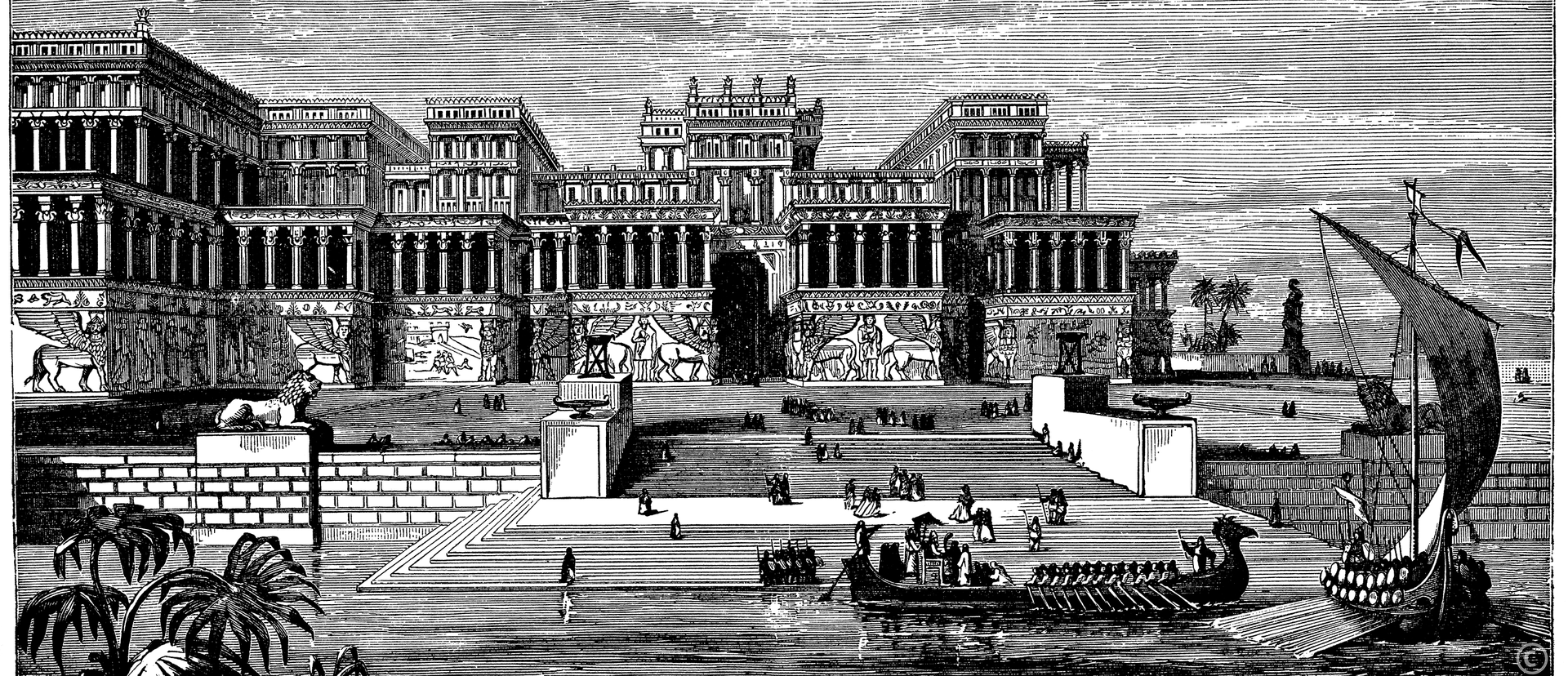
An architectural element, after which one can recognize that the palace was built by the Assyrians, is ...
- flat roofs.
- statues of winged animals.
- column.
świątynie, kanały, Mezopotamia, miasta-państwa, wylewy, rolnictwo, Sumerowie, pismo
| Mesopotamia | |
| canals | |
| floodings | |
| agriculture | |
| writing | |
| Sumerians | |
| temples | |
| city‑states |
Keywords
Mesopotamia, Sumerians, Babylonians, Assyrians, ziggurat
Glossary
Asyria – starożytne państwo w Mezopotamii, pierwsze imperium w dziejach świata.
Babilonia – starożytne państwo na terenie Mezopotamii. Jego najsłynniejszym władcą był Hammurabi.
pismo klinowe – jedno z najstarszych rodzajów pisma wynalezione przez Sumerów; nazwa pochodzi od kształtu znaków‑liter odciskanych na glinianych tabliczkach.
Mezopotamia – kraina na Bliskim Wschodzie leżąca pomiędzy rzekami Tygrys i Eufrat.
koczownik – wędrowiec, człowiek, który nie posiada stałego miejsca zamieszkania.
Sumer – starożytna kraina leżąca w Mezopotamii zamieszkiwana przez Sumerów. Wynaleźli oni m.in. pismo i brąz.
kanały
wylew, powódź
rolnictwo
pismo
świątynie
miasto‑państwo