You surely hear the term „metal” everyday. MetalsmetalsMetals are for example, iron, aluminum, copper or gold. Chemically pure metals are simple substances made up of single elements. In addition to metals, other simple substances (elements) with different properties are also known, called non‑metalsnon‑metalsnon‑metals. These include, gases in the air: oxygen and nitrogen. Carbon and sulfur are also non‑metals.
How to recognize if a substance is a metal or a non‑metal? You have certainly noticed that objects made of different substances heat up at different rates. Iron and aluminum heat up quickly and conduct heat well – we say that they are good conductors of heat.
Metals are solids (with the exception of liquid mercury used, in some thermometers); they have a silver or silver‑gray colour. Only copper is red and golden yellow with it’s characteristic shade. Metals also conduct electricity well. An important feature of metals is that they are also ductileductileductile,I.e they can be stretched and are malleablemalleablemalleable – their shape is easily changed during forging.
What makes metals different?
What makes metals different?
RWrcEWXJq0KNT
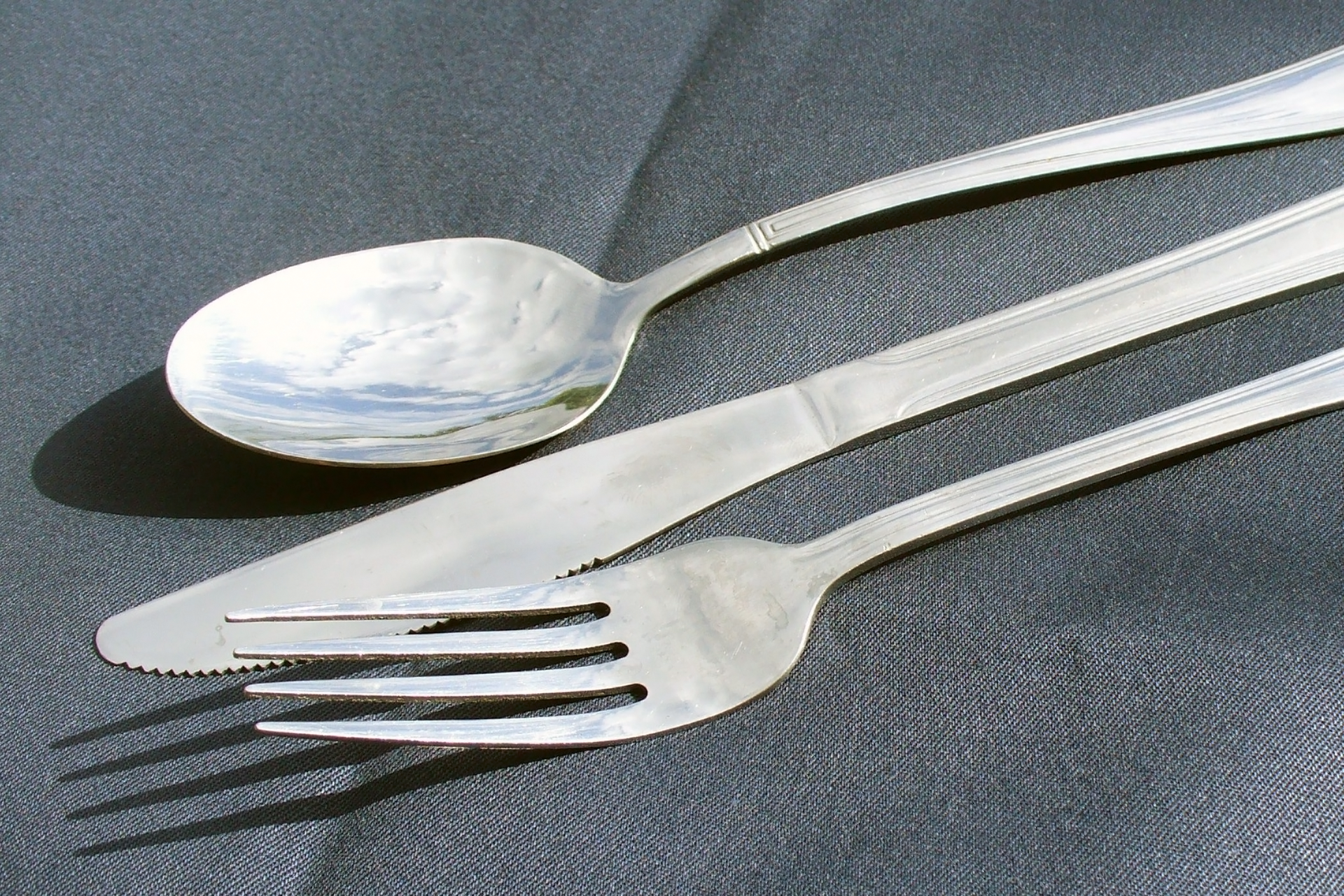
Fotografia przedstawia metalowe sztućce: łyżkę, nóż i widelec na szarym materiale. Na sztućcach widoczny jest charakterystyczny dla metalu połysk.
Objects made of metals have a characteristic gloss
Source: LibreShot.com, http://libreshot.com, licencja: CC BY-SA 2.0.
R1N79uHIFJjdq
Fotografia przedstawia metalowy garnek na kuchence. W garnku pod przykryciem gotuje się woda. Pod przezroczystą pokrywką ze szkła widoczne są bąbelki, wskazujące na wrzenie wody.
Metals are good conductors, which means that heat and current can flow through objects made of them
Source: Ildar Sagdejev, http://commons.wikimedia.org, licencja: CC BY-SA 3.0.
RMh7NKNQFYEZK
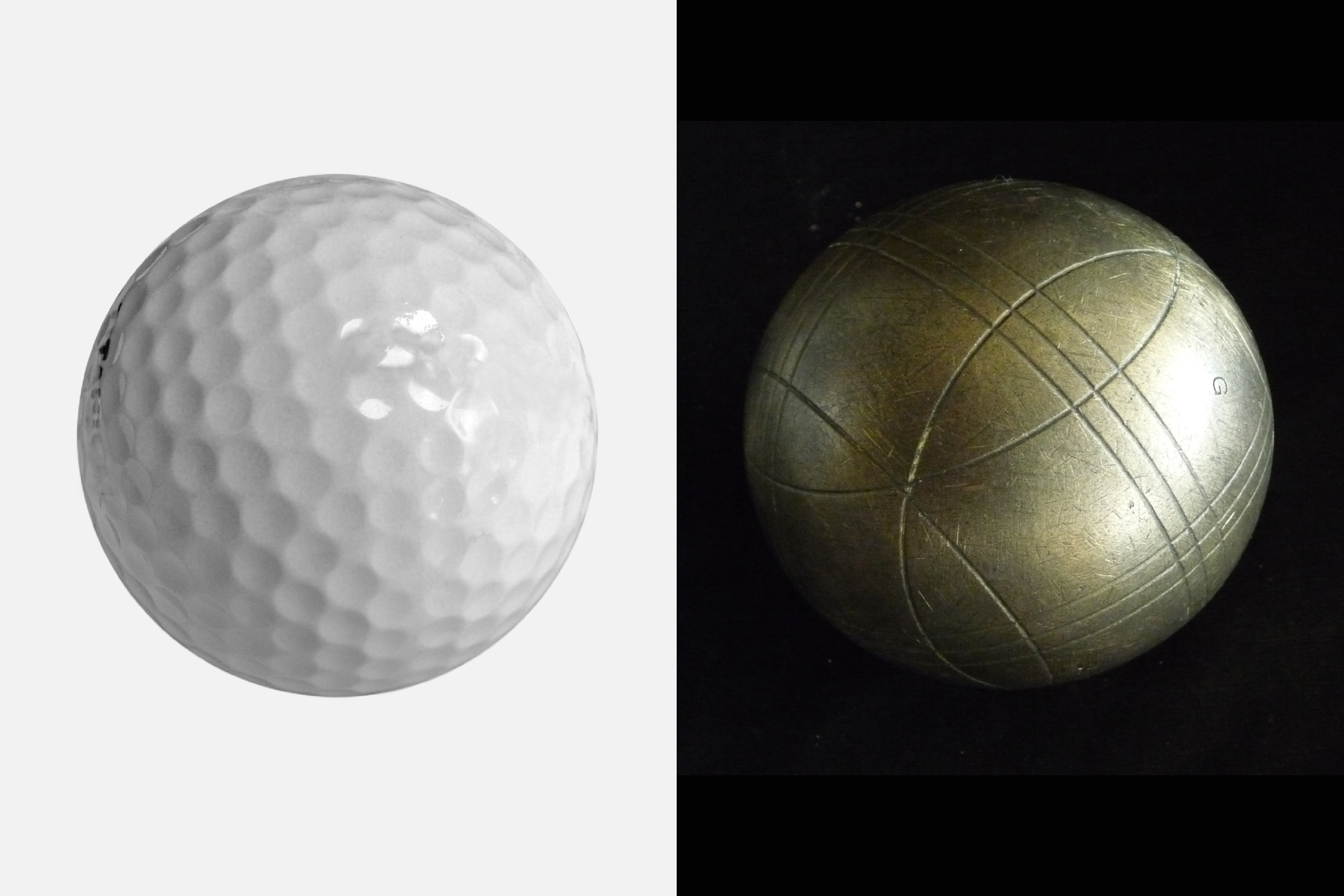
Grafika przedstawia dwie fotografie ułożone obok siebie dla porównania. Na lewej fotografii, na białym tle, biała piłka golfowa zrobiona z plastiku, po prawej, na czarnym tle metalowa kula o tej samej wielkości.
Metals are characterized by heavy weight (metal objects are usually heavier than others of the same size but made of non-metal)
Source: KMJ, Queensland Museum, http://commons.wikimedia.org, licencja: CC BY-SA 2.0.
R1d576doLcFgZ
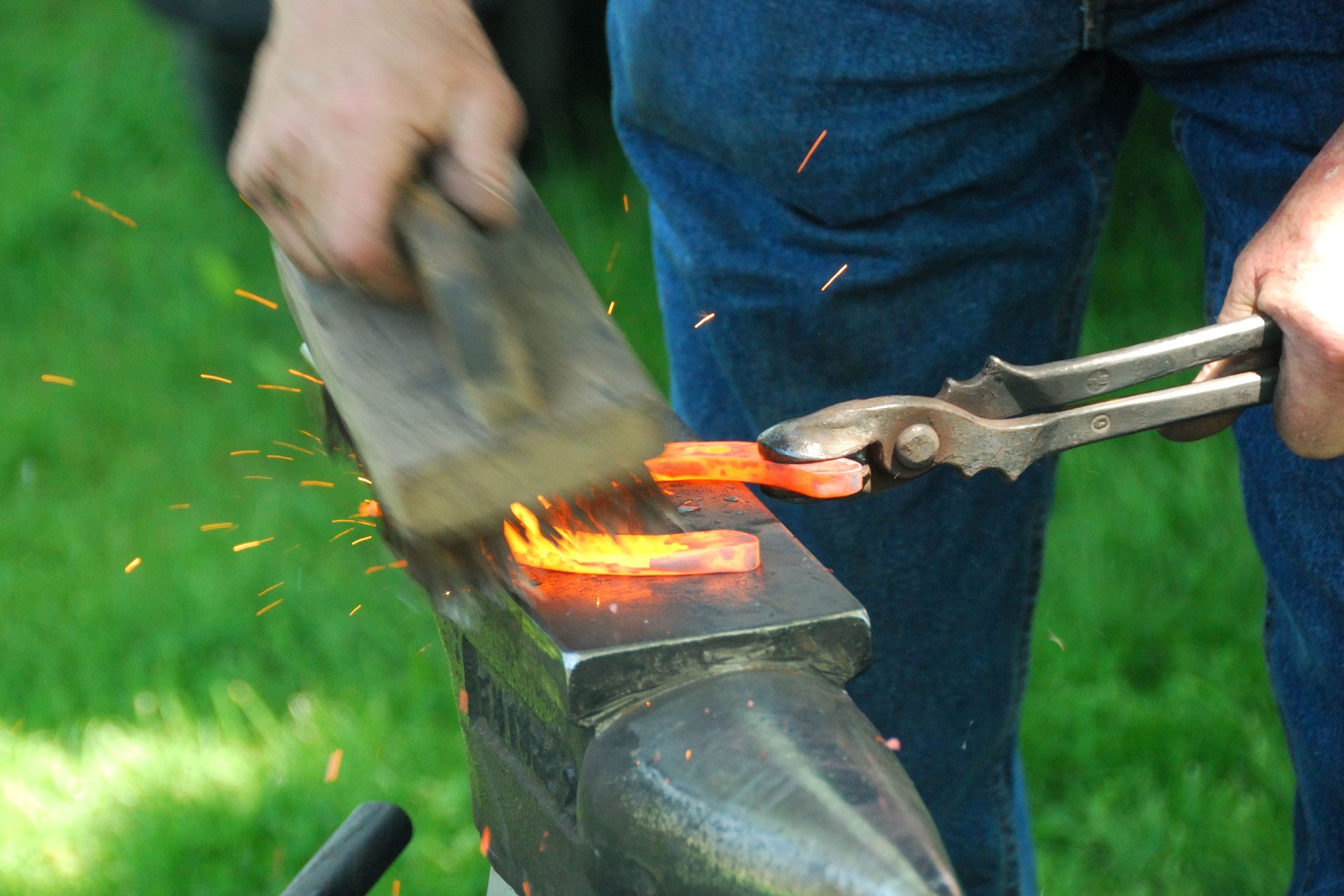
Fotografia przedstawia moment wykuwania podkowy. Na fotografii widoczne są ręce kowala. W lewej trzymane szczypce przytrzymujące rozżarzoną do czerwoności podkowę, opartą o kowadło. W prawej trzymany młot kowalski uderzający o podkowę. Widoczny rozprysk iskier powstały na skutek uderzenia. Na dalszym planie widoczne nogi kowala. W tle zielony trawnik.
Metals are malleable (you can forge different shapes from them). Making a selected shape from a piece of metal is not as easy as, for example, plasticine, but it is possible after heating the metal to a high temperature
Source: mikequozl, http://commons.wikimedia.org, licencja: CC BY 2.0.
In addition to metals, other substances with different properties, called non‑metalsnon‑metalsnon‑metals, are also known. These include, for example, oxygen, hydrogen, carbon and sulfur. They are usually poor conductors of heat and electricity.
Task 1
Before you watch the film „Thermal conductivity of metals, wood and plastic”, write down the research question and the hypothesis. Make notes while watching the movie, and finally make conclusions.
RzkTwdYXeQunm
Analysis of the experiment. Research question (Uzupełnij). Hypothesis (Uzupełnij). Observations (Uzupełnij). Conclusions (Uzupełnij).
Analysis of the experiment. Research question (Uzupełnij). Hypothesis (Uzupełnij). Observations (Uzupełnij). Conclusions (Uzupełnij).
Analysis of the experiment
RkOtIHD2h2JdN
Nagranie eksperymentu. Kawałek masła umieszczono na plastikowym widelcu, drewnianym widelcu i metalowej łyżeczce. Sztućce umieszczono ponowo w naczyniu laboratoryjnym. Wlano ciepłą wodę do połowy naczynia. Najszybciej zaczęło się topić masło umieszczone na czubku łyżeczki.
Nagranie eksperymentu. Kawałek masła umieszczono na plastikowym widelcu, drewnianym widelcu i metalowej łyżeczce. Sztućce umieszczono ponowo w naczyniu laboratoryjnym. Wlano ciepłą wodę do połowy naczynia. Najszybciej zaczęło się topić masło umieszczone na czubku łyżeczki.
Thermal conductivity of metals, wood and plastic
Source: GroMar Sp. z o.o., licencja: CC BY-SA 3.0.
Source: GroMar Sp. z o.o., licencja: CC BY-SA 3.0.
Nagranie eksperymentu. Kawałek masła umieszczono na plastikowym widelcu, drewnianym widelcu i metalowej łyżeczce. Sztućce umieszczono ponowo w naczyniu laboratoryjnym. Wlano ciepłą wodę do połowy naczynia. Najszybciej zaczęło się topić masło umieszczone na czubku łyżeczki.
RZcRBlCd6WtUq
Exercise 1
Wysłuchaj nagrań słówek w słowniczku i naucz się ich prawidłowej wymowy.
Wysłuchaj nagrań słówek w słowniczku i naucz się ich prawidłowej wymowy.
From the given properties, match those that are characteristic of metals and non-metals.
Physical state, Gloss, Colour, Ductility (ease of shaping), thermal and electrical conductivity
Properties
metals
non-metals
Physical state
Gloss
Colour
Ductility (ease of shaping)
thermal and electrical conductivity
Summary
Substances can be separated due to their characteristics, like; brittleness, elasticity and plasticity.
Brittle substances are those that when subjected to pressure can burst (break).
Plastic substances change shape under pressure but do not return to their previous form.
Elastic substances change shape under pressure and can return to their previous form.
Knowledge of a substance properties is used in the manufacture of objects used by us in everyday life.
Among the substances, metals can be distinguished. They are characterized by such properties as: good thermal and electrical conductivity, ductility and malleability and metallic gloss.
Keywords
metals, non‑metals, malleability, ductility
RGEpbCtFpnQI7
Exercise 2
Match the pairs: English words with Polish definition. malleable Możliwe odpowiedzi: 1. grupa substancji (pierwiastków) charakteryzująca się połyskiem oraz dobrym przewodnictwem elektrycznym i cieplnym, 2. właściwość metalu pozwalająca na wyciąganie go w cienki drut, 3. grupa pierwiastków będących złymi przewodnikami ciepła i elektryczności, 4. właściwość metalu polegająca na możliwości nadawania mu różnych kształtów metals Możliwe odpowiedzi: 1. grupa substancji (pierwiastków) charakteryzująca się połyskiem oraz dobrym przewodnictwem elektrycznym i cieplnym, 2. właściwość metalu pozwalająca na wyciąganie go w cienki drut, 3. grupa pierwiastków będących złymi przewodnikami ciepła i elektryczności, 4. właściwość metalu polegająca na możliwości nadawania mu różnych kształtów non‑metals Możliwe odpowiedzi: 1. grupa substancji (pierwiastków) charakteryzująca się połyskiem oraz dobrym przewodnictwem elektrycznym i cieplnym, 2. właściwość metalu pozwalająca na wyciąganie go w cienki drut, 3. grupa pierwiastków będących złymi przewodnikami ciepła i elektryczności, 4. właściwość metalu polegająca na możliwości nadawania mu różnych kształtów ductile Możliwe odpowiedzi: 1. grupa substancji (pierwiastków) charakteryzująca się połyskiem oraz dobrym przewodnictwem elektrycznym i cieplnym, 2. właściwość metalu pozwalająca na wyciąganie go w cienki drut, 3. grupa pierwiastków będących złymi przewodnikami ciepła i elektryczności, 4. właściwość metalu polegająca na możliwości nadawania mu różnych kształtów
Match the pairs: English words with Polish definition. malleable Możliwe odpowiedzi: 1. grupa substancji (pierwiastków) charakteryzująca się połyskiem oraz dobrym przewodnictwem elektrycznym i cieplnym, 2. właściwość metalu pozwalająca na wyciąganie go w cienki drut, 3. grupa pierwiastków będących złymi przewodnikami ciepła i elektryczności, 4. właściwość metalu polegająca na możliwości nadawania mu różnych kształtów metals Możliwe odpowiedzi: 1. grupa substancji (pierwiastków) charakteryzująca się połyskiem oraz dobrym przewodnictwem elektrycznym i cieplnym, 2. właściwość metalu pozwalająca na wyciąganie go w cienki drut, 3. grupa pierwiastków będących złymi przewodnikami ciepła i elektryczności, 4. właściwość metalu polegająca na możliwości nadawania mu różnych kształtów non‑metals Możliwe odpowiedzi: 1. grupa substancji (pierwiastków) charakteryzująca się połyskiem oraz dobrym przewodnictwem elektrycznym i cieplnym, 2. właściwość metalu pozwalająca na wyciąganie go w cienki drut, 3. grupa pierwiastków będących złymi przewodnikami ciepła i elektryczności, 4. właściwość metalu polegająca na możliwości nadawania mu różnych kształtów ductile Możliwe odpowiedzi: 1. grupa substancji (pierwiastków) charakteryzująca się połyskiem oraz dobrym przewodnictwem elektrycznym i cieplnym, 2. właściwość metalu pozwalająca na wyciąganie go w cienki drut, 3. grupa pierwiastków będących złymi przewodnikami ciepła i elektryczności, 4. właściwość metalu polegająca na możliwości nadawania mu różnych kształtów
Match the pairs: English words with Polish definition.
właściwość metalu polegająca na możliwości nadawania mu różnych kształtów, właściwość metalu pozwalająca na wyciąganie go w cienki drut, grupa substancji (pierwiastków) charakteryzująca się połyskiem oraz dobrym przewodnictwem elektrycznym i cieplnym, grupa pierwiastków będących złymi przewodnikami ciepła i elektryczności