Molluscs
annelids move thanks to muscles and body stiffening fluids;
the annelids protect their soft body by the creation of houses or the conduct of an underground, hidden mode of life;
to identify an unknown organism as a representative of molluscs on the basis of the structure features;
to indicate and describe adaptations of the gastropods to terrestrial or aquatic life (based on observation);
to discuss ways of moving, nutrition and breeding of molluscs;
Molluscs are animals with a soft, unsegmented body, usually composed of 3 parts: head, trunk, called the visceral sacvisceral sac and foot. They usually have bilateral symmetry. On the head there is a mouth and sense organs, like tentacles and eyes. The footfoot is strongly muscled and is used for movement. The visceral sac contains the majority of internal organs. On its surface lies the skin fold, called the mantlemantle, which in the majority of molluscs produces a hard, calcium salt‑saturated exoskeleton in the form of a shellshell. In cephalopods and slug, it is reduced to a smaller plate overgrown by the fold of the mantle or does not occur at all. On the inner surface of the shells, there are insertions of muscles used during movement.
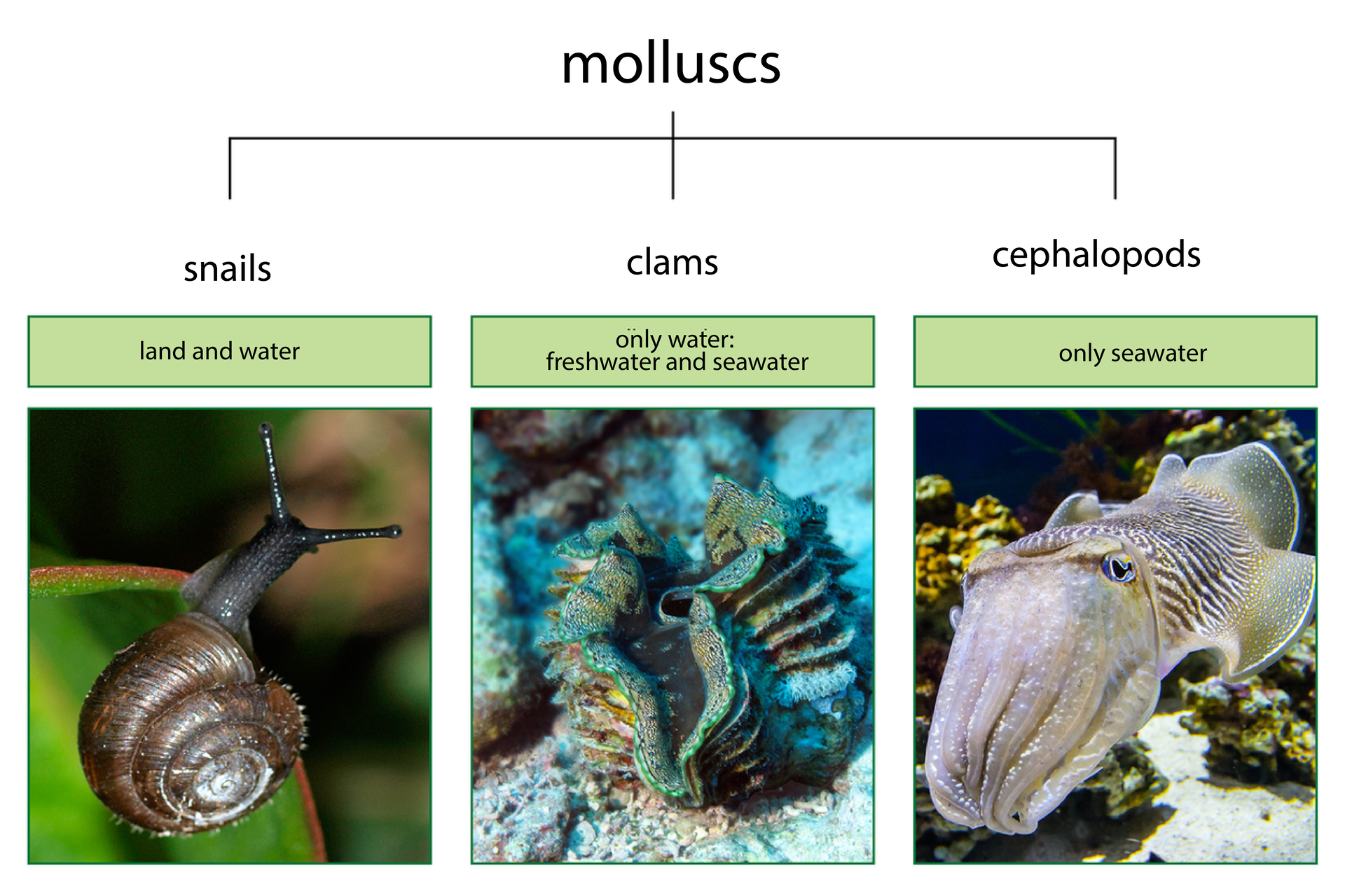
The organs of gas exchange in molluscs living in water are gills located in the mantle cavity, the space between the mantle and the visceral sac. Terrestrial gastropods conduct gas exchange through the strongly supplied with blood surface of the mantle cavity which acts as a lung.
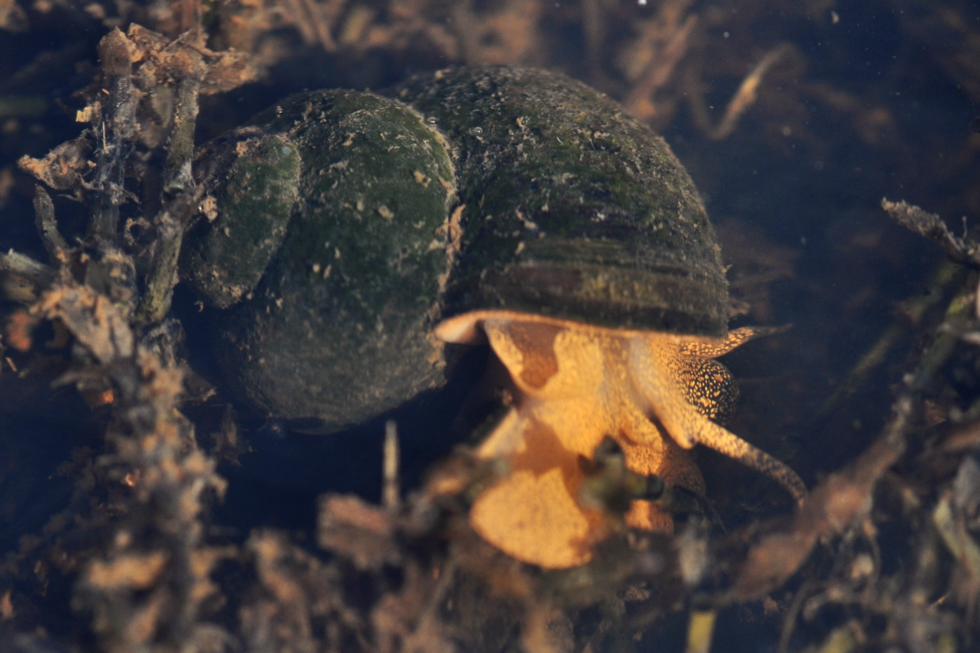
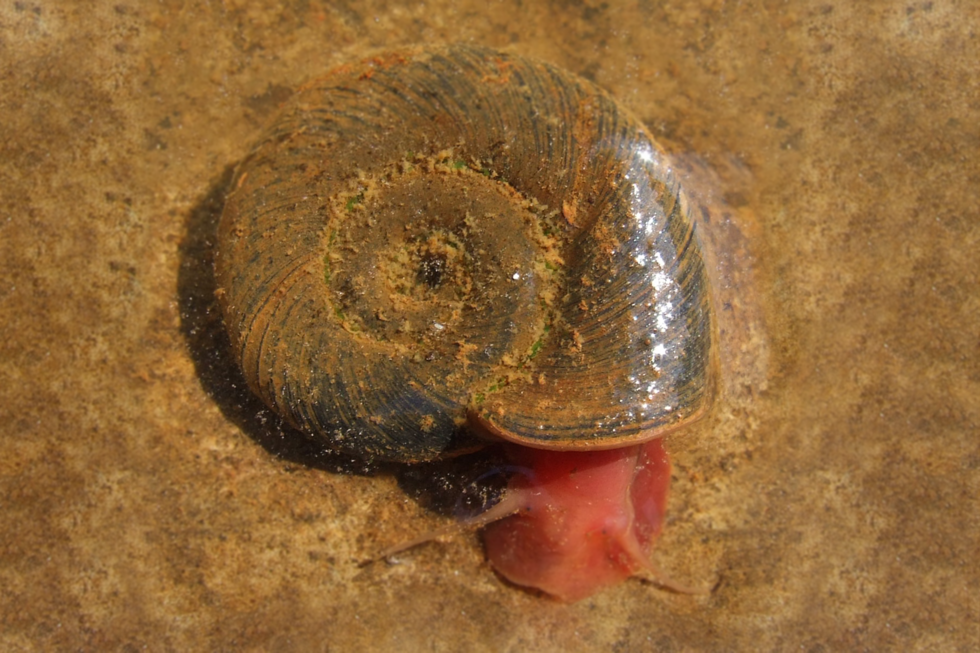
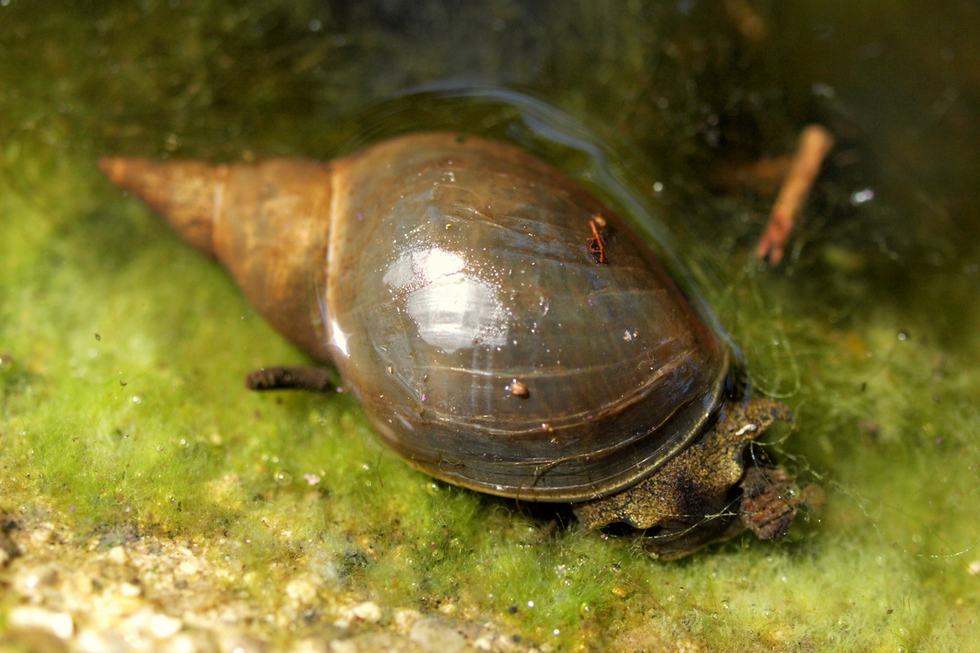
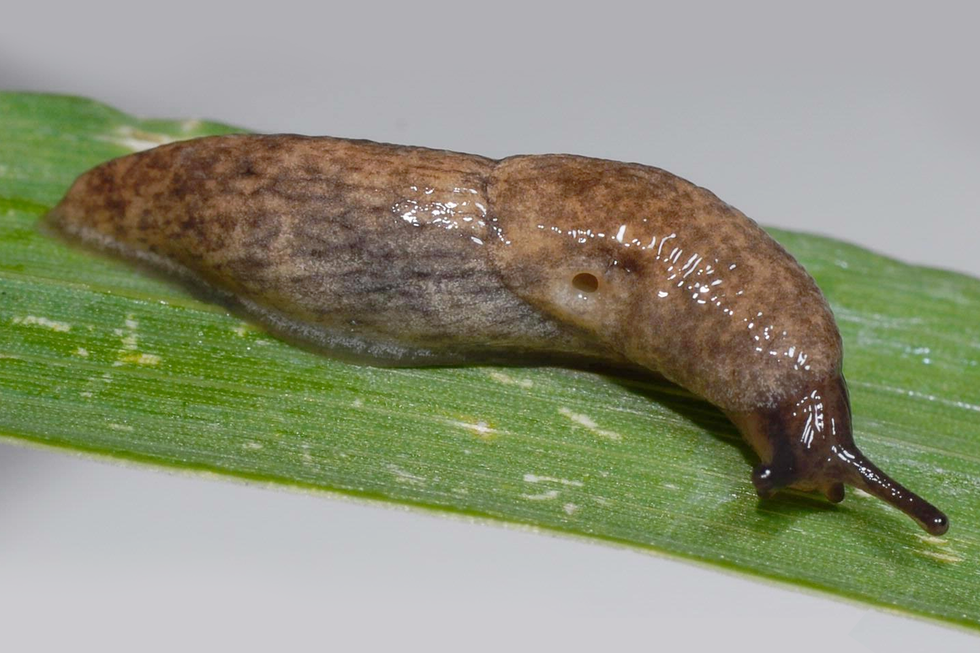
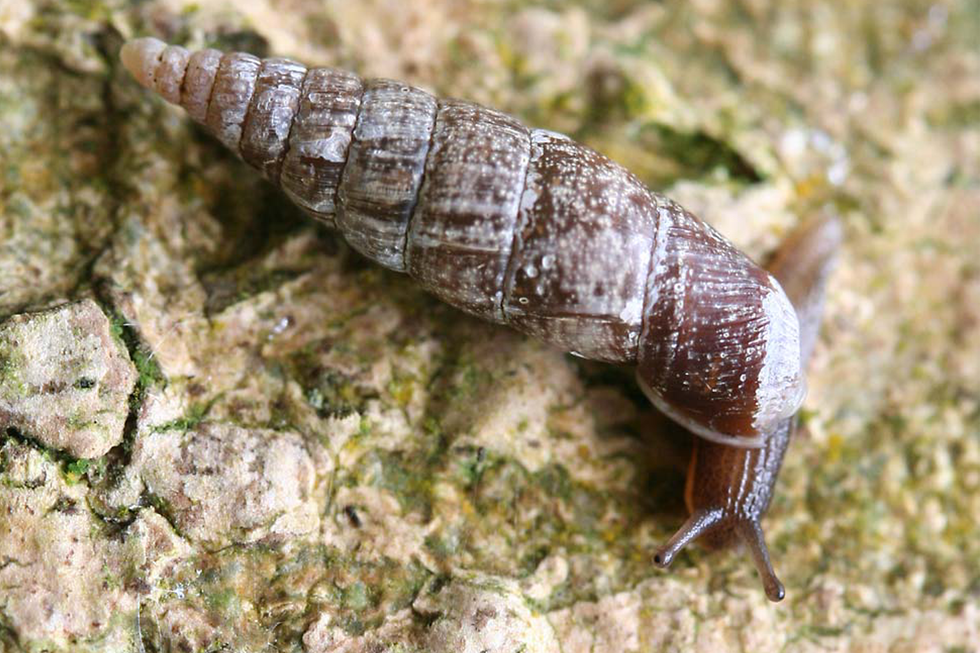
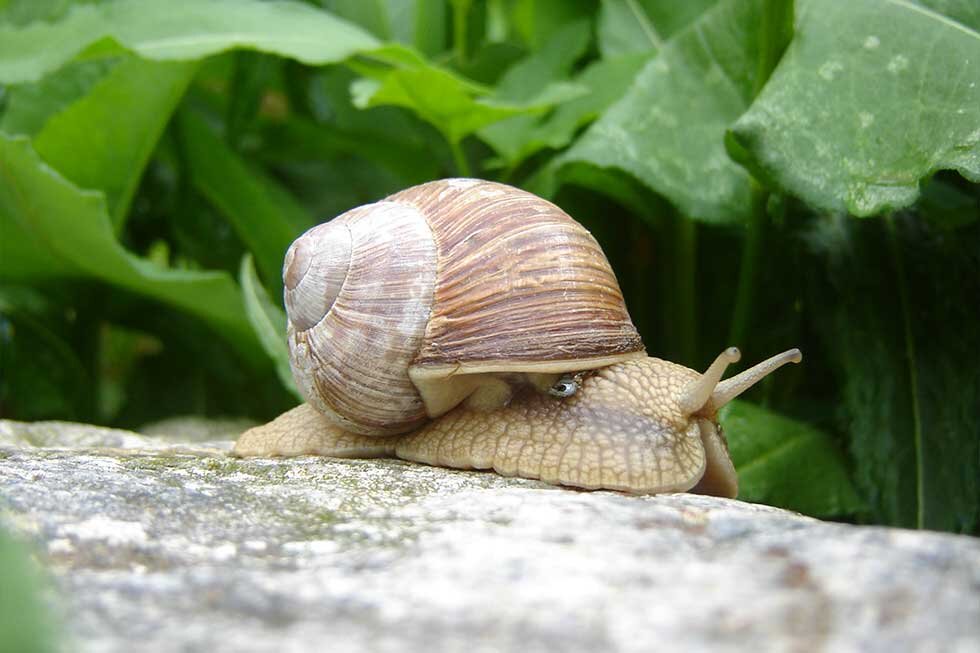
The shape, size and colour of the shell are the features that allow for identification of representatives of particular species of molluscs. Compare the shell structure of 2 different species of terrestrial gastropods. Conduct the observations on the basis of specimens of shells or gallery 1. Create a table and write the comparison results in it.

Gastropods
Gastropods are the most numerous group of molluscs. Their body consists of a clearly distinguished head, visceral sac and foot. It is usually covered with a spirally wound shell. On the head there are 1 or 2 pairs of tentacles with eyes mounted on them.
In the mouth of snails, on the tongue, an organ is placed, called a radularadula, consisting of several rows of hard, sharp teeth. The radula can be extended out and used to scrape food from the surface, and even to break off pieces of plants and drill holes in the shells of other molluscs.
Among the gastropods, there are algae eaters, herbivores, carnivores, saprophytes and parasites. Most terrestrial gastropods feed on plants. Slugs, e.g. arions, are particularly fond of fungi (both edible and poisonous). Most predatory gastropods occur among marine species. Some of them hunt for other gastropods and coelenterata, some feed on carrion. There are also poisonous species which hold the prey with radula teeth or a foot, and then paralyze it with venom.
The foot allows for movement of gastropods. Its underside secretes mucus, which makes it easier to move, reducing the friction of the foot against the ground. When a gastropod feels threatened, it pulls its head and foot into the shell. In autumn, before falling into a state of numbness, terrestrial gastropods hide in a shell, and they close its opening with a limestone lid. In this way, they protect themselves against predators and drying out. The gastropod's shell grows with it, is its exoskeleton and provides muscle support. At the same time, it has protective functions.
Determining how gastropods move.
Roman snail (Helix pomatia),
a glass plate with rounded edges,
a leaf of lettuce,
a pipette with a little vinegar.
Place the snail on the glass plate and observe from the bottom how it moves. Note the muscle movements of the foot. Observe the trail it leaves.
Place the lettuce leaf next to the snail. Observe whether the snail changes its direction.
At a distance of 3 cm from the snail, draw a vinegar line that intersects the direction of its movement. Make sure not to moisten the snail with vinegar. Observe the direction of the animal's movement.
Observe and list sense organs of the snail.
Observe the snail’s reaction to threat.
After finishing the observation place the snail in the habitat from which it has been taken.
The snail moves, using the foot, and the organ of smell, touch and sight determine the direction of movement. It crawls on the surface, and the mucus that covers it helps reduce friction. In case of a threat, the muscles attached to the inside of the shell pull the foot and head into the shell.
Bivalves
All bivalves live in the water and use gills to breathe. They are generally sedentary animals and do not have a distinguished head. Their shell consists of 2 parts, the so‑called valves connected to each other by a hinge usually formed from overlapping teeth or resilifers. Valves can be closed thanks to the contractions of the muscles in the visceral sac.
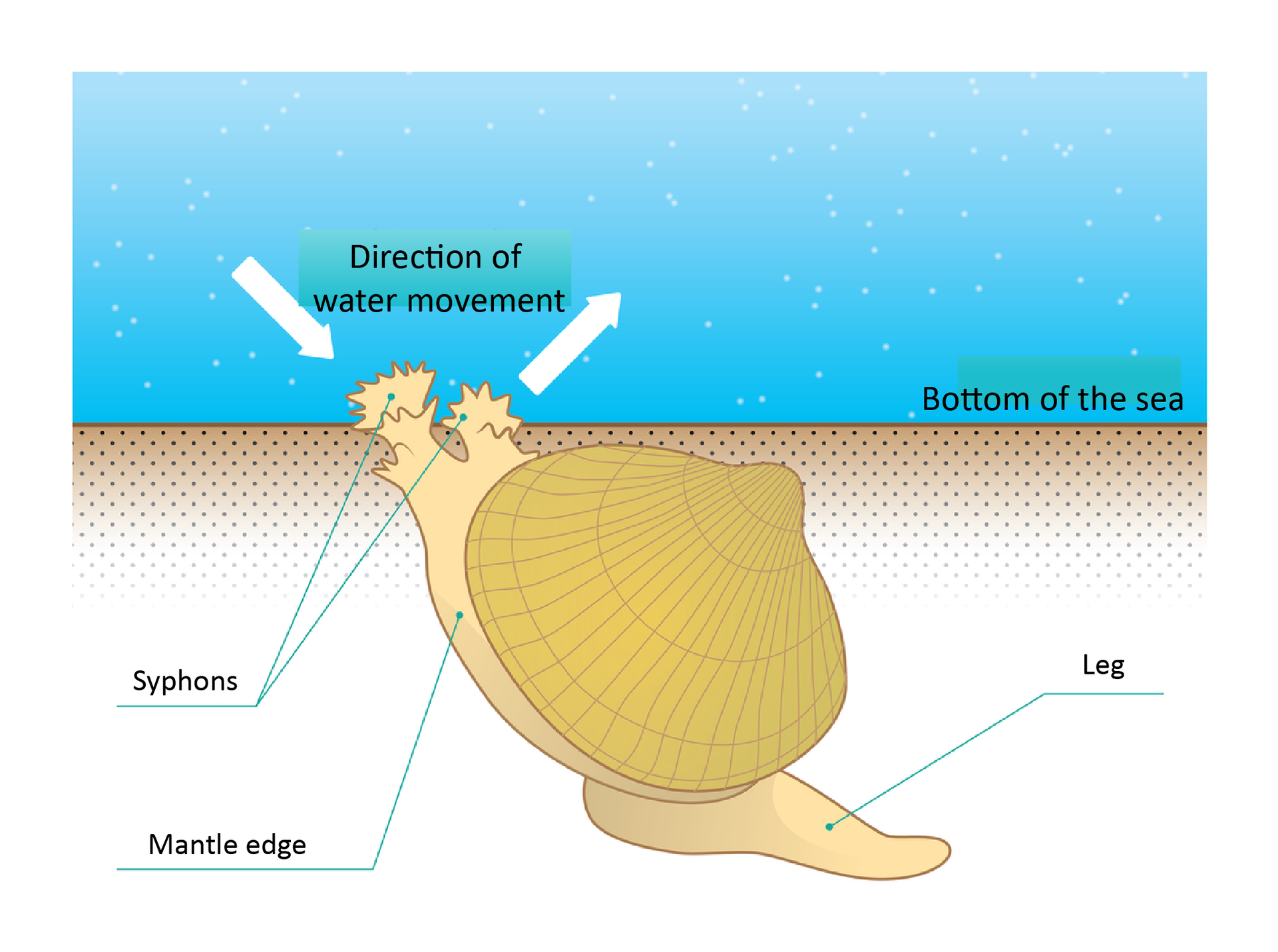
Bivalves are filter feeders, i.e. organisms feeding on organic matter molecules and microorganisms separated from the surrounding water. They suck in water, along with the food and oxygen through incurrent syphon. In the gill cavity, the bivalve separates the organic debris and small organisms and directs them to the mouth. The gills absorb oxygen and release carbon dioxide, and the used water is removed through the excurrent syphon.
Analyse the information included in the illustration. Formulate a conclusion and explain the reason for the observed regularity.
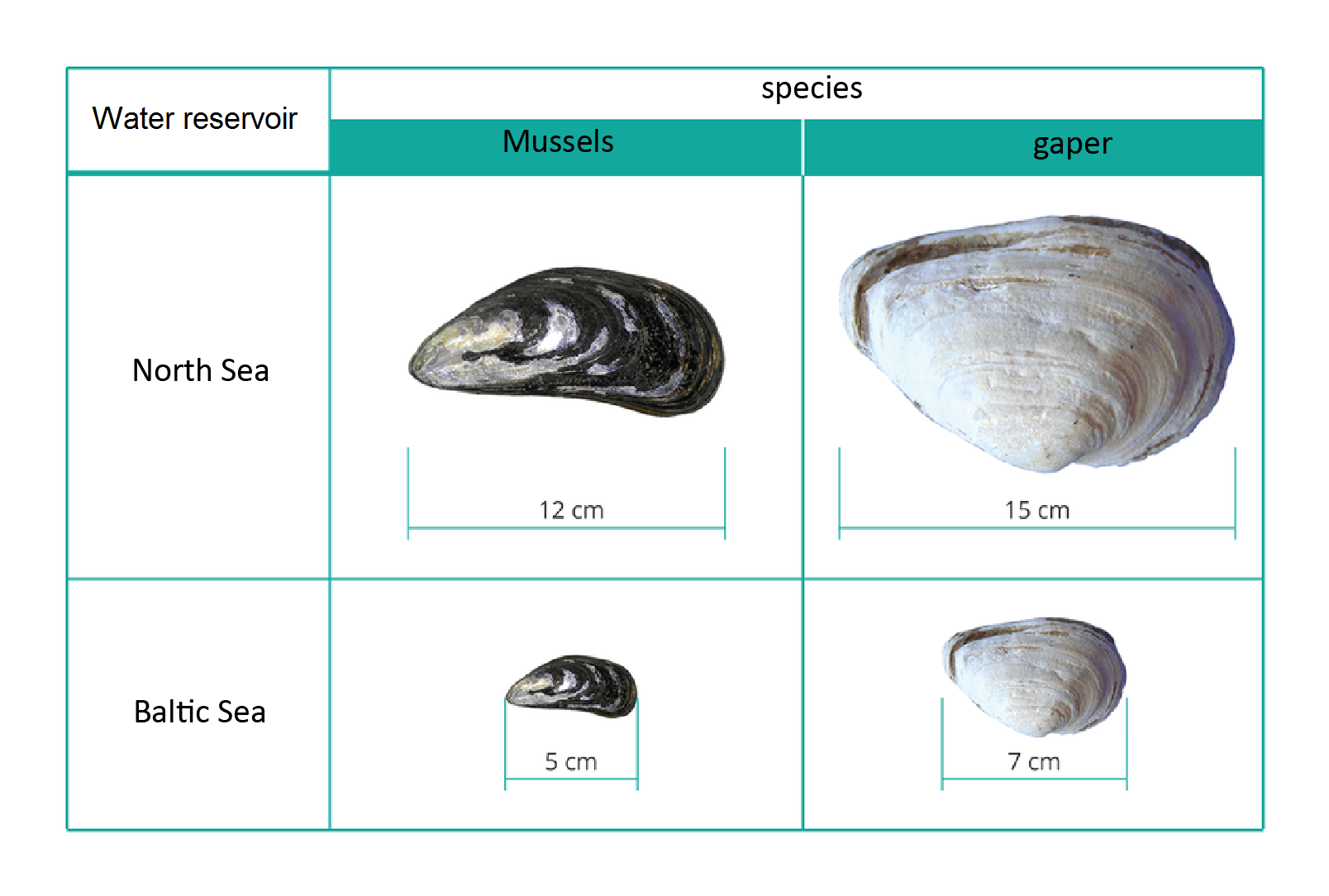
Identifying bivalves on the base of the shell structure.
shells of selected species of bivalves occurring in Poland (blue mussels, Baltic macoma, sand gaper, lagoon cockle);
simplified key for identification of national species of bivalves.
Look at the key for identification of bivalves.
Observe the structure of shell of bivalves and compare their characteristic features with descriptions in the key. Determine specific names.

The structure of the bivalve shell may be helpful in identifying these animals.
Cephalopods
Cephalopods are predatory sea molluscs. They breathe using gills. They float using the force of water jet removed from the mantle cavity. They have a well‑developed head, a pair of large eyes, a mouth with a radula and massive jaws, which in some species (e.g. octopus) form a beak, resembling that of parrots.
The foot of the cephalopods is transformed into 8 or 10 muscular, mobile arms surrounding the mouth, provided with suckers and used to capture the prey. Cuttlefish and squids have 10 arms, 2 of which, often called tentacles, are clearly longer than others. The suckers on the squid’s tentacles have chitin hooks on the edges that facilitate capturing large preys. Some of the octopuses secrete a venom that paralyses the prey almost instantly.

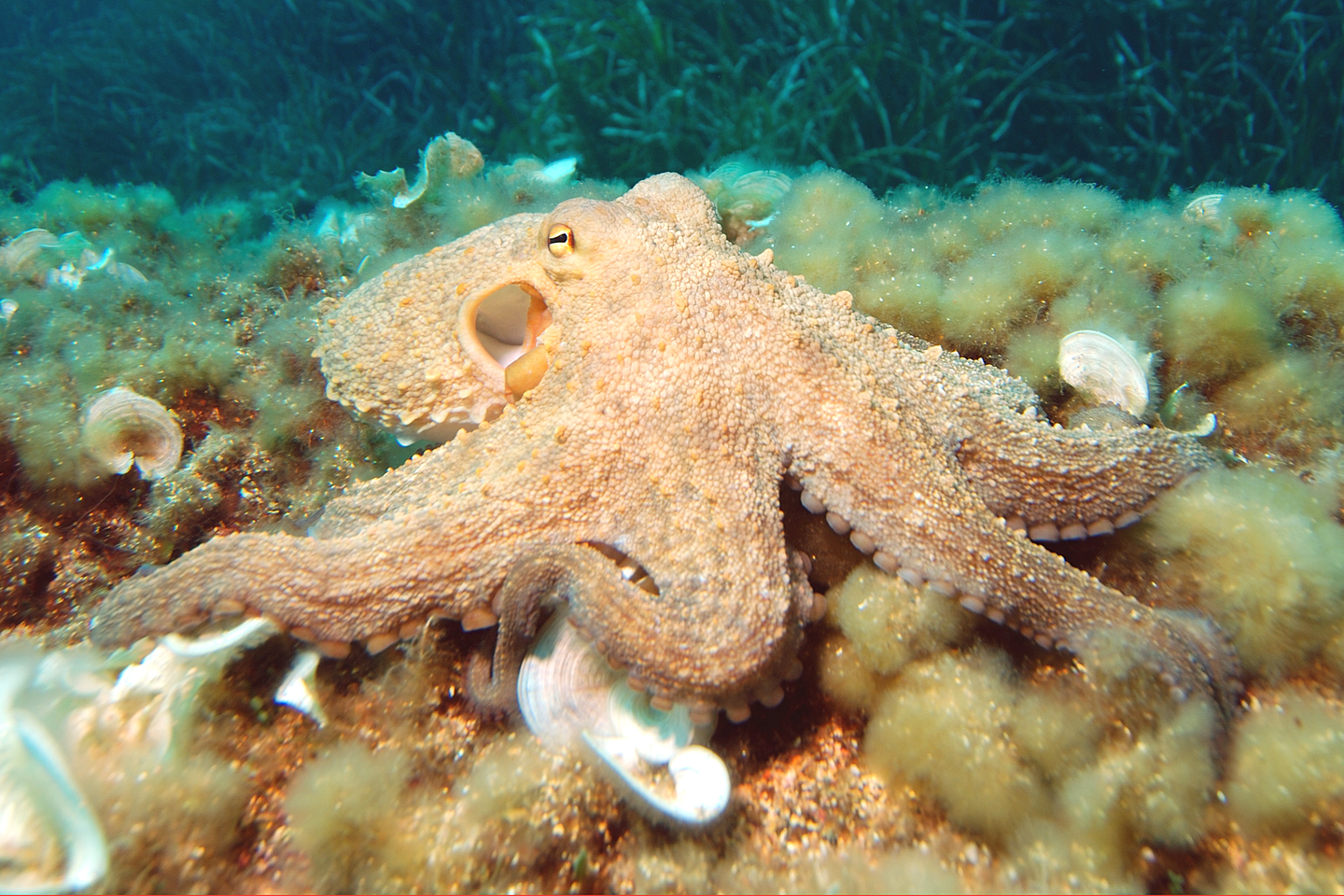
There are fins on the visceral sac of squid, cephalopod with a torpedo shaped body. Explain why the fins do not occur in the octopus.
Significance of molluscs
Molluscs are very important in the aquatic environment. They are a source of food for many animals, mainly fish, birds, mammals, rarely amphibians and reptiles, as well as for invertebrates such as gastropods, crustaceans and starfish. Bivalves contribute to the purification of water by filtering organic matter particles out of it.
Molluscs have been used by humans as a source of food rich in wholesome, easily digestible protein and valuable micronutrients for a long time. They are particularly popular in countries that have direct access to the sea or the ocean. Shells of molluscs, especially pearls produced by bivalves, are valued for their decorative qualities and used for making decorations and jewellery.
Terrestrial gastropods, especially slugs, cause enormous damage to crop production. They also contribute to the rotting of accumulated fruits and vegetables. Predatory sea gastropods, such as Muricidae, are responsible for losses in the breeding of bivalves, mainly of oysters, mussels and pinctadas. Bivalves burrowing in a hard surface can destroy objects immersed in water, e.g. wooden port and hydrotechnical equipment as well as ship hulls.
Some gastropods and bivalves are the hosts of numerous parasites. Give examples of such parasites. Explain how a human can get infected with them.
List the features of molluscs that distinguish them from other animals.
Match descriptions to the organisms.
they have 8 or 10 muscular, mobile arms surrounding the mouth, provided with suckers and used to capture the prey, respiration occurs in lungs, take oxygen from the air, a soft, unsegmented body, usually composed of 3 parts, terrestrial or aquatic, they move using foot, molluscs without a head, two-piece shell
| molluscs | |
| gastropods | |
| terrestrial gastropods | |
| cephalopods | |
| bivalves |
Conclusion
Molluscs live in fresh water, saltwater or on land.
Molluscs are invertebrates that have a soft, unsegmented body, usually consisting of 3 parts: a head, a visceral sac and a foot.
Molluscs, with the exception of land gastropods, breathe with gills that are located in the mantle cavity.
Molluscs reproduce sexually.
Keywords
molluscs, gastropods, bivalves
Glossary
skorupa - wapienny szkielet zewnętrzny pokrywający ciało mięczaków, przytwierdzony do niego za pomocą mięśni; u niektórych grup częściowo lub całkowicie zredukowany
stopa - silnie umięśniona część ciała mięczaków znajdująca się po brzusznej stronie ciała; służy do pełzania, przyczepiania się do podłoża, zagłębiania się w nim lub do drążenia; noga głowonogów przekształcona jest w ramiona lub czułki, które pełnią funkcję chwytną
płaszcz - fałd tkanki okrywający worek trzewiowy mięczaków i wydzielający substancję budującą muszlę
radula - narząd znajdujący się w jamie gębowej mięczaków na powierzchni języka, zbudowany z rzędów chitynowych ząbków; służy do odrywania kawałków pokarmu, jego zeskrobywania i rozdrabniania
worek trzewny - część ciała mięczaków, w której znajdują się narządy wewnętrzne; okrywa go fałd zwany płaszczem