In the 18th century, chemical compounds were divided into mineral compounds, i.e. those obtained from rocks and minerals (today called inorganic compounds), and organic compoundsorganic compoundsorganic compounds, i.e. produced exclusively by living organisms. It was not until the nineteenth century (in 1828) that the German chemist Friedrich Wöhler obtained the organic substance – urea in the laboratory. Urea is one of the metabolic products of humans and animals. Although the division into inorganic and organic chemistry has a historical background, it is still in use today.
Task 1
Before you watch the movie „Examination of the composition of organic substances”, write down the research question and the hypothesis. During the screening, pay attention to what happened to the rice. What does it mean? Write down the observations, conclusions and the summary of the experience.
R1FMpp5suv5Ss
Wykonaj ćwiczenie zgodnie z poleceniem.
Wykonaj ćwiczenie zgodnie z poleceniem.
Analysis of the movie: "Examination of the composition of organic substances”
RtuXk8Y9Lnq1N
Nagranie filmowe eksperymentu- badanie składu substancji organicznych, examination of the composition of organic substances. Będziesz potrzebować: ryż, probówka, palnik. Do probówki wsypujemy trochę ryżu. Probówkę ogrzewamy nad palnikiem. Ryż ciemnieje.
Nagranie filmowe eksperymentu- badanie składu substancji organicznych, examination of the composition of organic substances. Będziesz potrzebować: ryż, probówka, palnik. Do probówki wsypujemy trochę ryżu. Probówkę ogrzewamy nad palnikiem. Ryż ciemnieje.
Nagranie filmowe eksperymentu- badanie składu substancji organicznych, examination of the composition of organic substances. Będziesz potrzebować: ryż, probówka, palnik. Do probówki wsypujemy trochę ryżu. Probówkę ogrzewamy nad palnikiem. Ryż ciemnieje.
Organic compoundsorganic compoundsOrganic compounds are all chemical compounds that include carbon and atoms of other elements, such as hydrogen, oxygen, nitrogen, phosphorus, silicon and sulphur.
Inorganic carbon compounds are, for example, carbon oxides, carbonic acid and its salts, and others (carbides and cyanides). The simplest organic compounds are hydrocarbons.
HydrocarbonshydrocarbonsHydrocarbons are chemical compounds made up of carbon and hydrogen atoms.
Natural hydrocarbon resources
The most abundant natural sources of hydrocarbons are primarily petroleum, natural gas as well as coals. These raw materials originated from plant and animal organisms as a result of transformation (under the influence of appropriate temperature and high pressure) lasting many millions of years.
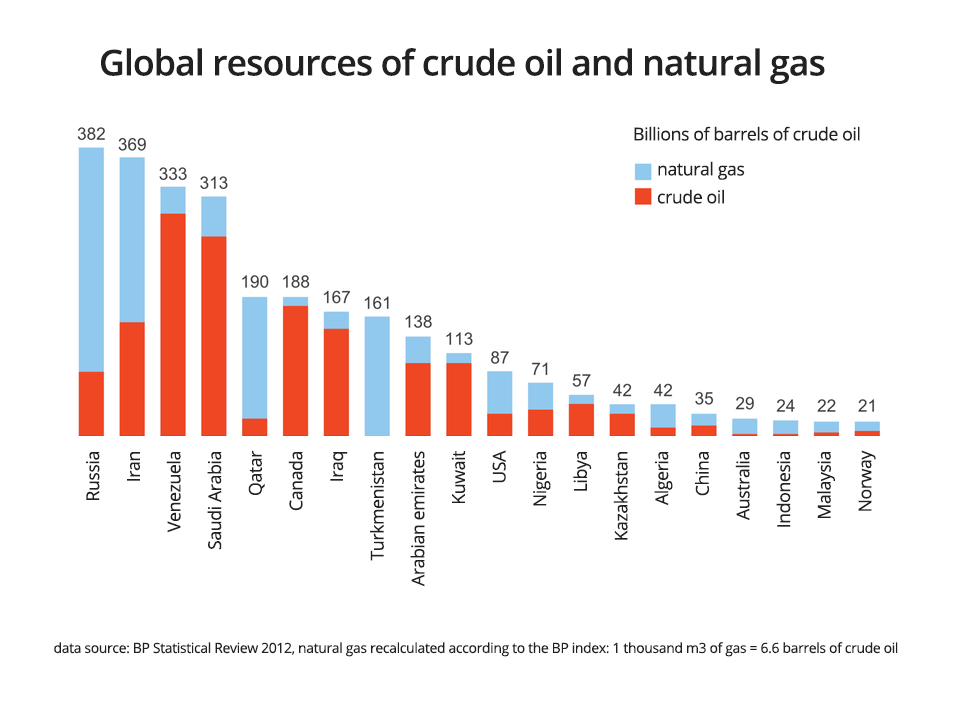
The largest documented reserves of natural gas and crude oil are in Russia (77% of gas and 23% of crude oil in resources) and Iran (60% of gas and 40% of crude oil in resources). Venezuela and Saudi Arabia have the world's largest petroleum deposits with relatively small gas resources.
R17SoK7puXKx2
Wykres słupkowy światowych złóż ropy naftowej i gazu ziemnego. Global resources of crude oil and natural gas. Na jednym słupku kolor czerwony oznacza ropę naftową, niebieski gaz ziemny. Największe złoża gazu ma Rosja, następnie Iran, Katar, Turkmenistan. Najmniejsze: Kuwejt, Kanada, Libia, Kazachstan, Chiny, Malezja, Norwegia. Najwięcej złóż ropy naftowej jest w Wenezueli, Arabii Saudyjskiej, Kanadzie, Iraku. W milionach baryłek suma ropy i gazu - pierwsze miejsce Rosja - trzysta osiemdziesiąt dwa miliony baryłek, Iran - trzysta sześćdziesiąt dziewięć, Wenezuela - trzysta trzydzieści trzy, Arabia Saudyjska - trzysta trzynaście. Najmniej złóż - Norwegia - dwadzieścia jeden milionów baryłek, Malezja - dwadzieścia dwa, Indonezja - dwadzieścia cztery, Australia dwadzieścia dziewięć.
1,000 mIndeks górny 33 of gas = 6.6 barrel of crude oil
Petroleum
Crude oil is a liquid mixture of solid, liquid and gaseous hydrocarbons as well as oxygen, nitrogen and sulphur compounds. Its composition depends on the source of origin. Crude oil mined from the deposit is in the form of a dense liquid, usually with a dark brown colour and a sharp odour.
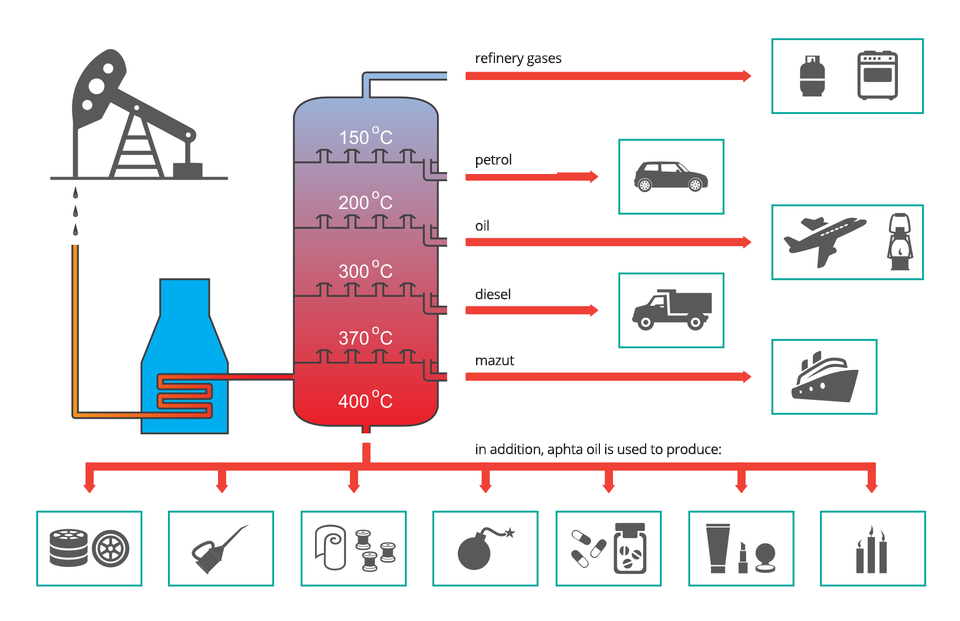
Processing of crude oil involves its distillation. It is a method that uses the difference in the boiling points of its ingredients. As a result of the distillation of the mazut under appropriate conditions, among others, oils, petroleum asphalt, tar, petrolatum, paraffin are obtained.
RnCLUM8GVX7S2
Schemat destylacji ropy naftowej. Pokazano piktogram szybu naftowego, z którego ropa jest przesyłana do rafinerii, gdzie w piecu zostaje podgrzewana i skierowana na kolumnę destylacyjną, w której na kolejnych wysokościach panują różne temperatury pozwalające na zebranie poszczególnych frakcji. W wyniku destylacji wykorzystującej różnicę w temperaturach wrzenia jej składników kolejno otrzymuje się: na samym szczycie schematu - gazy rafineryjne (rafinery gases) – obok piktogramy butli z gazem, kuchenki gazowej. W temperaturze stu pięćdziesięciu stopni benzynę (petrol) – samochód. W temperaturze dwustu stopni olej (oil) – piktogramy samolotu i lampy naftowej. W temperaturze trzystu stopni – diesel, piktogram samochodu ciężarowego. W temperaturze trzystu siedemdziesięciu stopni mazut – obok mazutu piktogram statku. Dodatkowo pod schematem znajdują się piktogramy z olejem, świeczkami, kosmetykami, materiałami wybuchowymi, lekarstwami, oponami. To dodatkowe wykorzystanie ropy naftowej.
For almost half a century, Poland was a world power in the production of crude oil, then known as rock oil. In 1854, the Polish pharmacist and chemist Ignacy Łukasiewicz launched the first petroleum mine in the world in Bóbrka. People from America, Russia and the British Empire came to Podkarpacie to learn how to mine crude oil and how to distil it. In the best year of 1906 over 2 million tons of oil were mined from Polish deposits. Later their performance dropped, and richer deposits were discovered in the world.
RwQ6F4fONeesB
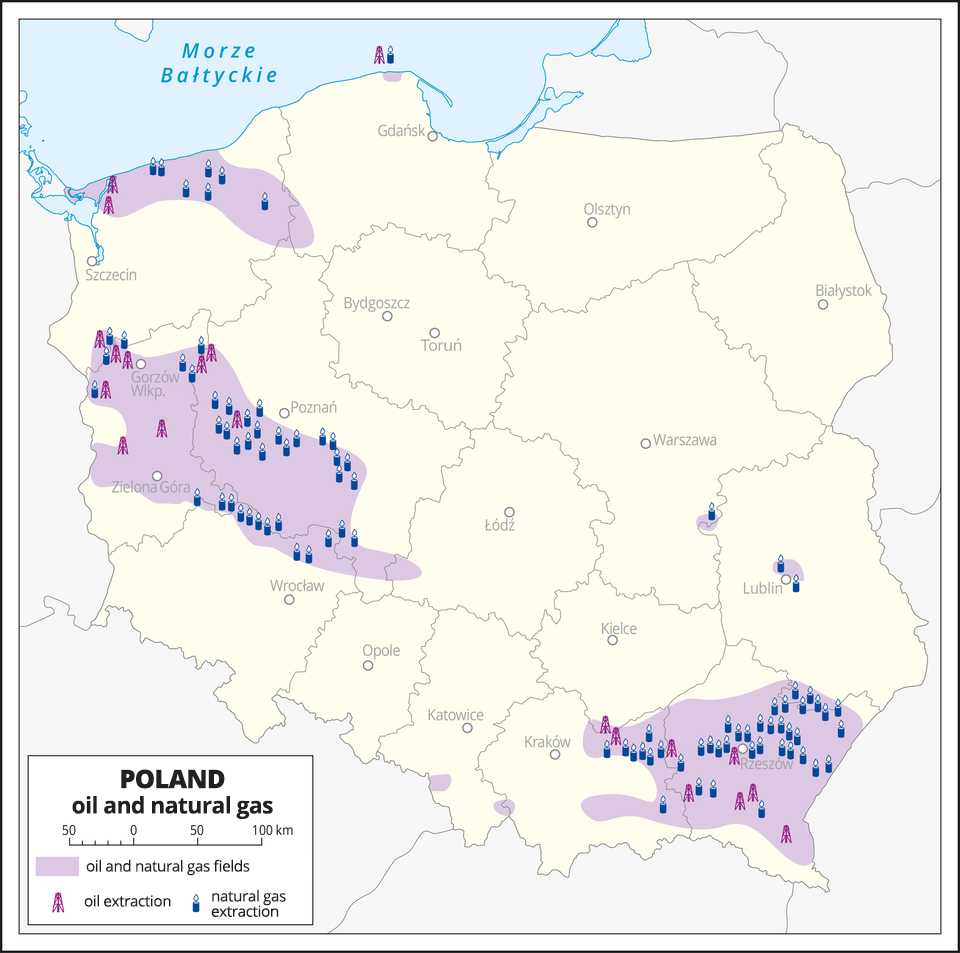
Mapa występowania złóż ropy naftowej i gazu ziemnego - oil and natural gas - w Polsce: niemal cały obszar województwa podkarpackiego, południowo-zachodnia część województwa wielkopolskiego, północna i centralna część województwa lubuskiego oraz północny obszar zachodnio-pomorskiego. Nieliczne wokół Lublina. Zaznaczone kolorem jasnofioletowym.
Natural gas
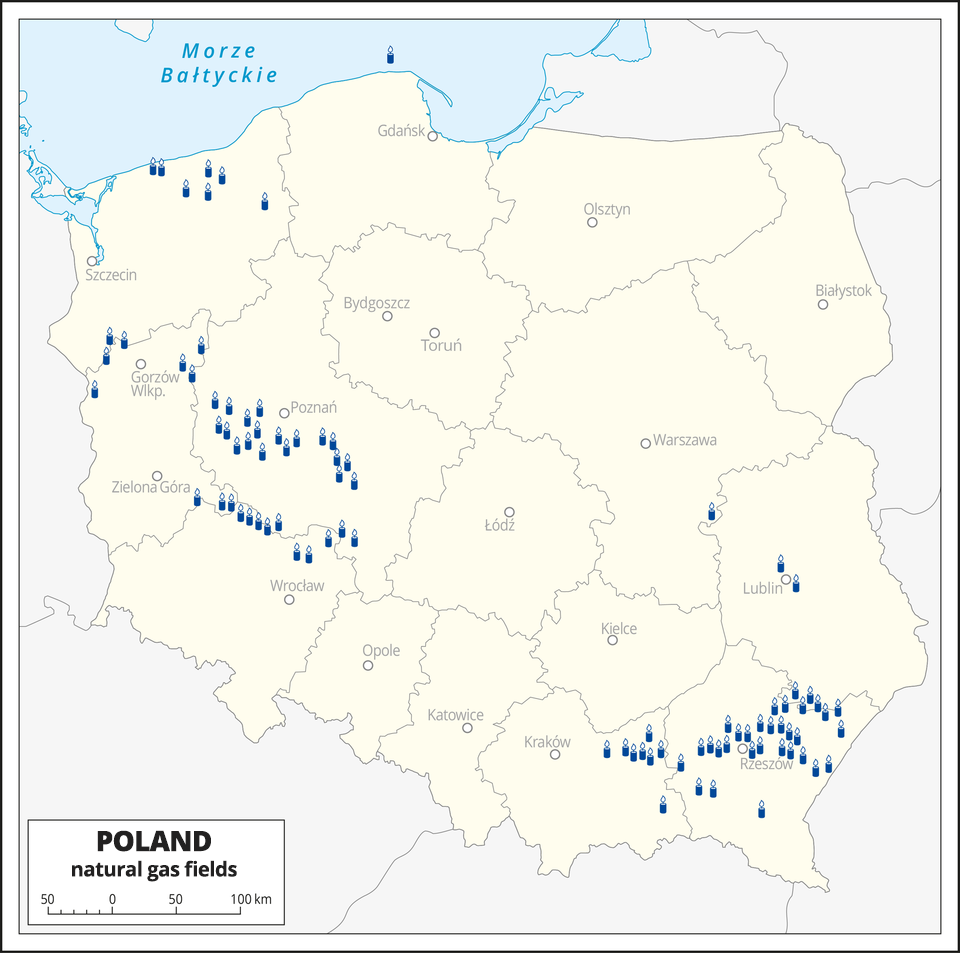
Natural gas can occur together with crude oil or black coal deposits or alone. It is a mixture of gaseous and liquid hydrocarbons as well as carbon dioxide, nitrogen, hydrogen, hydrogen sulphide and noble gases (argon, helium). The content of individual components of natural gas is variable and depends on the place of mining, however its main component is methane, constituting over 90%.
Natural gas is cleaned before being sent to recipients. It is also given an odour (so‑called odorizing) so that it can be felt in the event of a leak, for example in gas stoves.
RrI7rFoB4CpVo
Mapa występowania pól gazu ziemnego - natural gas fields - w Polsce. Najwięcej: zachodnia część województwa wielkopolskiego, północny rejon województwa dolnośląskiego, rejon Gorzowa Wielkopolskiego, północna część województwa zachodnio-pomorskiego. Największe zagęszczenie pól występuje w województwie podkarpackim na północ od Rzeszowa. Nieliczne w rejonie Lublina.
R1FabckJcvmo0
Wyobraź sobie, że masz okazję przeprowadzić wywiad z naukowcem - specjalistą w dziedzinie, której dotyczy abstrakt. Sformułuj pytania, które chciałbyś mu zadać.
Wyobraź sobie, że masz okazję przeprowadzić wywiad z naukowcem - specjalistą w dziedzinie, której dotyczy abstrakt. Sformułuj pytania, które chciałbyś mu zadać.
Coals
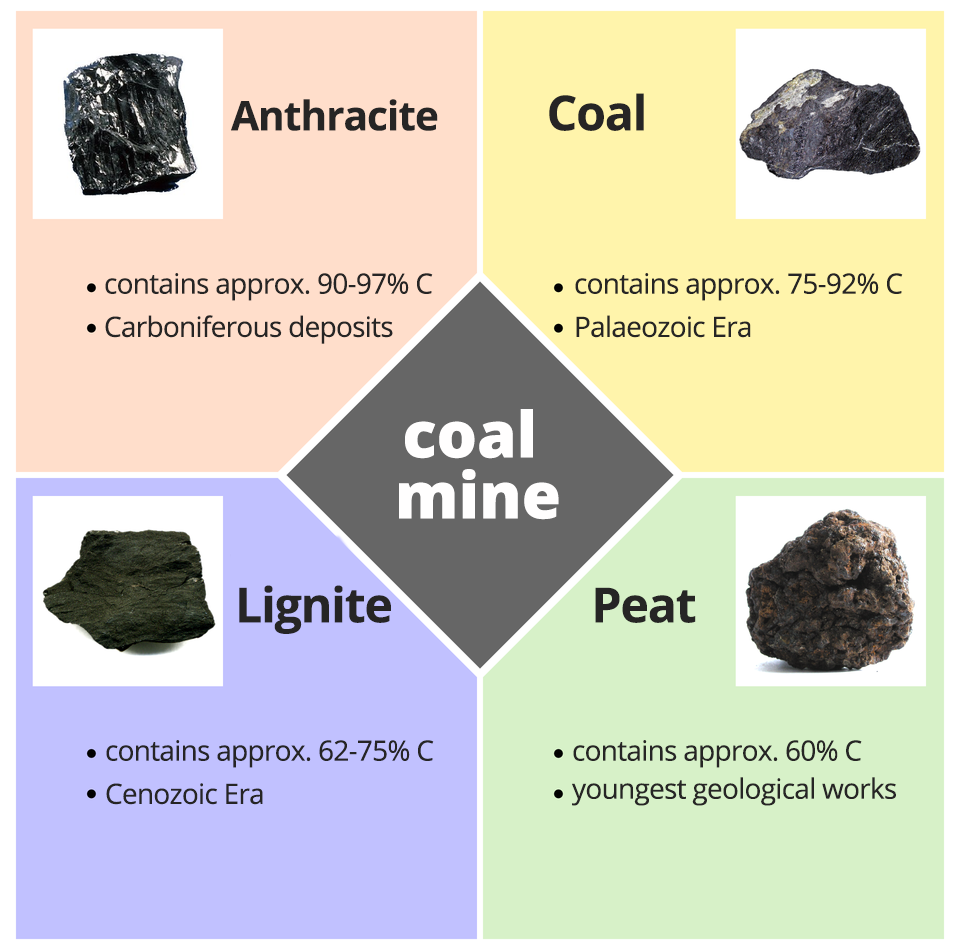
Coals belong to energy resources. Their varieties differ in colour (from light brown to intensely black), hardness and percentage content of the carbon element.
R1Vx7c6GU538y
Ilustracja przedstawia różne odmiany węgli kopalnych - coal mine. Antracyt, Anthracite, czarny, zawiera około dziewięćdziesięciu do dziewięćdziesięciu siedmiu procent węgla. Złoża z karbonu. Anthracite contains approx. 90-97% C. Carboniferous deposits. Węgiel, czarny, zawiera około siedemdziesięciu pięciu do dziewięćdziesięciu dwóch procent węgla. Era paleozoiczna. Coal contains approx. 75-92% C. Palaeozoic Era. Węgiel brunatny, brązowy, zawiera od sześćdziesięciu dwóch do siedemdziesięciu pięciu procent węgla. Era kenozoiczna. Lignite - contains approx. 62-75% C. Cenozoic Era. Torf, brązowy, zawiera około sześćdziesięciu procent węgla. Złoża najmłodsze. Peat contains approx. 60% C. Youngest geological works.
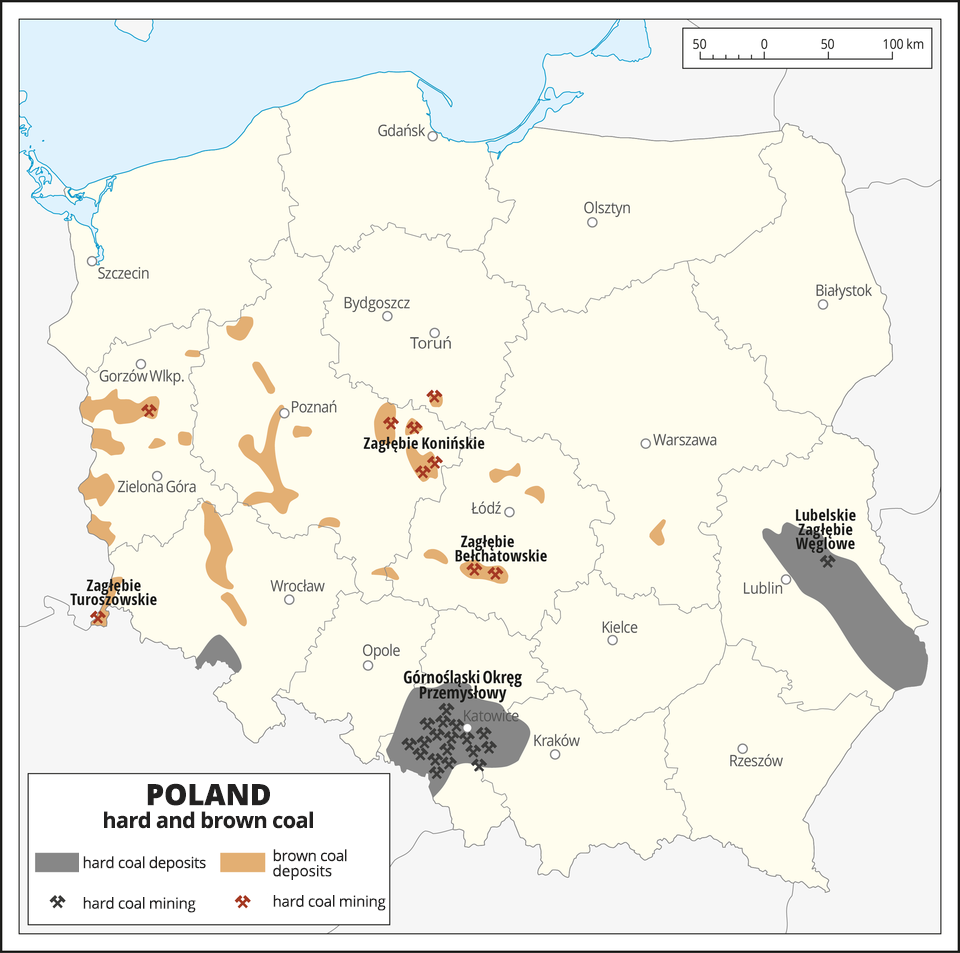
Black coal deposits in Poland are located in three basins: in Upper Silesia, in the Lublin region and in Lower Silesia. In 2000, it was discontinued to mine coal in the coal‑mining area in Lower Silesia. In turn, over 90% of the coal mined in Poland comes from the coal‑mining area in Upper Silesia. In these areas, exploitation of deposits began already in the mid‑seventeenth century.
RGYyrd5eRpVgR
Mapa występowania w Polsce złóż twardego i brązowego węgla, hard and brown coal. Na mapie oznaczone są również kopalnie węgla, hard coal mining. Hard coal deposits występują w Lubelskim Zagłębiu Węglowym na wschodzie Polski, w Górnośląskim Okręgu Przemysłowym na południu Polski. Brown coal deposits występują na obszarach wokół miast Gorzów Wielkopolski i Zielona Góra, na zachodzie Polski. Koło Poznania, w Zagłębiu Konińskim oraz Zagłębiu Bełchatowskim. Na mapie oznaczone są również kopalnie węgla, hard coal mining.
ROYuifutDh0lw
Wysłuchaj nagrania abstraktu, wyodrębnij jego części i nadaj im tytuły.
Wysłuchaj nagrania abstraktu, wyodrębnij jego części i nadaj im tytuły.
R1S3Wn6Pr1C40
Exercise 1
Black coal contains: Możliwe odpowiedzi: 1. ninety-ninety seven percent of elemental carbon, 2. seventy five percent of elemental carbon, 3. sixty two- seventy five percent of elemental carbon, 4. approx. sixty percent of elemental carbon
Black coal contains: Możliwe odpowiedzi: 1. ninety-ninety seven percent of elemental carbon, 2. seventy five percent of elemental carbon, 3. sixty two- seventy five percent of elemental carbon, 4. approx. sixty percent of elemental carbon
R1T8AvVe1BiQK
Exercise 2
During the rectification of crude oil at a temperature of approx. two hundred degrees Celsius, we obtain: Możliwe odpowiedzi: 1. diesel, 2. gasoline, 3. petroleum, 4. mazut
During the rectification of crude oil at a temperature of approx. two hundred degrees Celsius, we obtain: Możliwe odpowiedzi: 1. diesel, 2. gasoline, 3. petroleum, 4. mazut
R1QWPVlCMk6qR
Exercise 3
Diesel engines are fueled by: Możliwe odpowiedzi: 1. diesel, 2. gasoline, 3. kerosene, 4. refinery gas
Diesel engines are fueled by: Możliwe odpowiedzi: 1. diesel, 2. gasoline, 3. kerosene, 4. refinery gas
R1VvwvdEPZ05C
Exercise 4
The main component constituting over ninety percent of natural gas is always: Możliwe odpowiedzi: 1. propane, 2. butane, 3. ethane, 4. methane
The main component constituting over ninety percent of natural gas is always: Możliwe odpowiedzi: 1. propane, 2. butane, 3. ethane, 4. methane
R1OMbIo3cgoUL
Exercise 5
Of the substances listed below, the lowest boiling point has: Możliwe odpowiedzi: 1. diesel, 2. refinery gas, 3. petrol, 4. petroleum
Of the substances listed below, the lowest boiling point has: Możliwe odpowiedzi: 1. diesel, 2. refinery gas, 3. petrol, 4. petroleum
Summary
Organic compounds are charring at elevated temperatures.
Natural sources of hydrocarbons are natural gas, crude oil and coal.
The petroleum components, e.g. gasoline, kerosene, and diesel oil, are isolated using a distillation process.
Ri1pSUghNRIGe1
Grafika przedstawiająca tablicę szkolną, na której znajdują się zdania do dokończenia. Finish selected sentences. 1 It was easy for me (uzupełnij). 2 It was difficult for me (uzupełnij). 3 Today I learned (uzupełnij). 4 I understood that (uzupełnij). 5 It surprised me (uzupełnij).
Grafika przedstawiająca tablicę szkolną, na której znajdują się zdania do dokończenia. Finish selected sentences. 1 It was easy for me (uzupełnij). 2 It was difficult for me (uzupełnij). 3 Today I learned (uzupełnij). 4 I understood that (uzupełnij). 5 It surprised me (uzupełnij).
Source: GroMar Sp. z o.o., licencja: CC BY-SA 3.0.
Homework
Task 2.1
Look for information indicating the type of hazard that this gas may create in the safety data sheet of methane.
związki organiczne – związki chemiczne węgla z innymi pierwiastkami, z wyjątkiem związków zaliczanych do nieorganicznych (m.in. tlenki węgla, kwas węglowy i jego sole)