On Robinson's desert island
you will recognise the type of narration and define its function in the text
you will indicate the stylistic means used in the prose text, and define their function
you will characterise the features of a travel and adventure novel
you will explain what a robinsonaderobinsonade is
A deserted island... Do you imagine staying in such a place? Working in groups, create a map of your associations. Compare the results of your work.
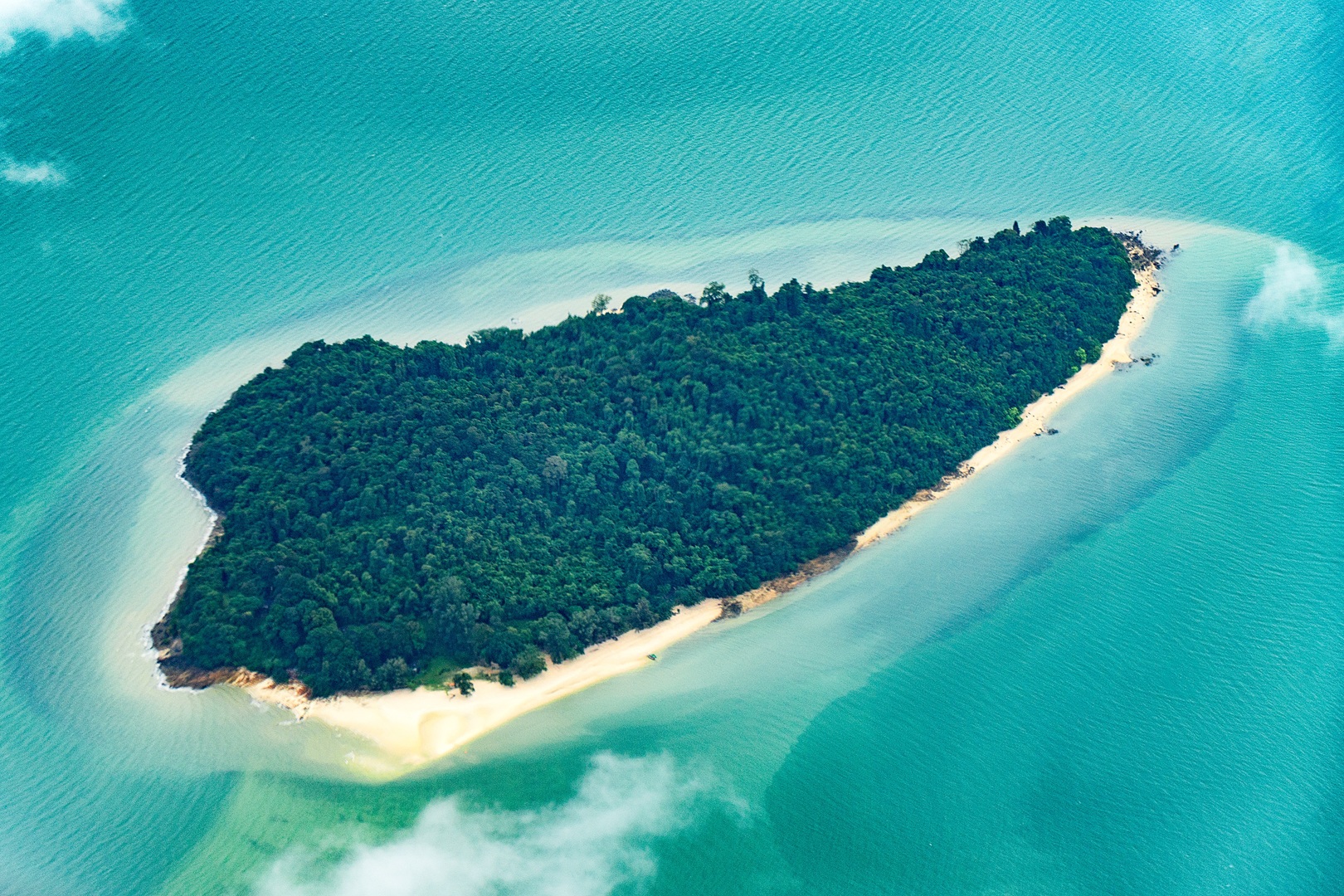
Many people and many characters of works of art were on the deserted islanddeserted island. For some, it is a dream come true. For others – a terrible necessity resulting from the catastrophe of a ship or an aircraft. The most famous inhabitant of the desert island is Robinson Crusoe.
Check out the following information before reading parts of the novel with Robinson Crusoe as its protagonist.
Look at the following information before reading parts of the novel with Robinson Crusoe as its protagonist.
Interest in travel and adventure literature
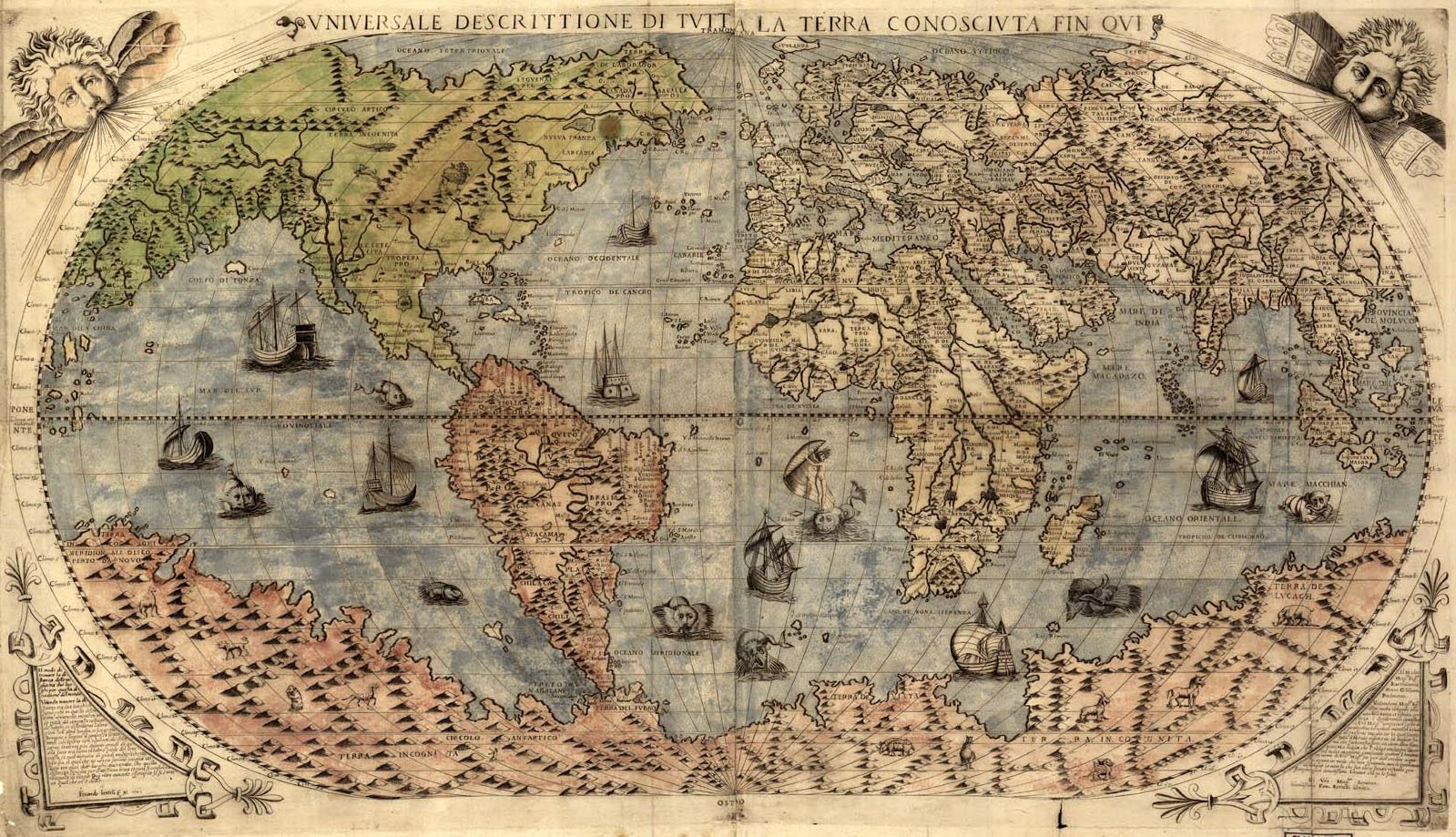
In the 18th century Europeans began to leave the Old Continent more and more often. They settled in America and Australia. It was then that travel and adventure literature began to be particularly popular.
Gulliver's Travels (Podróże Guliwera)
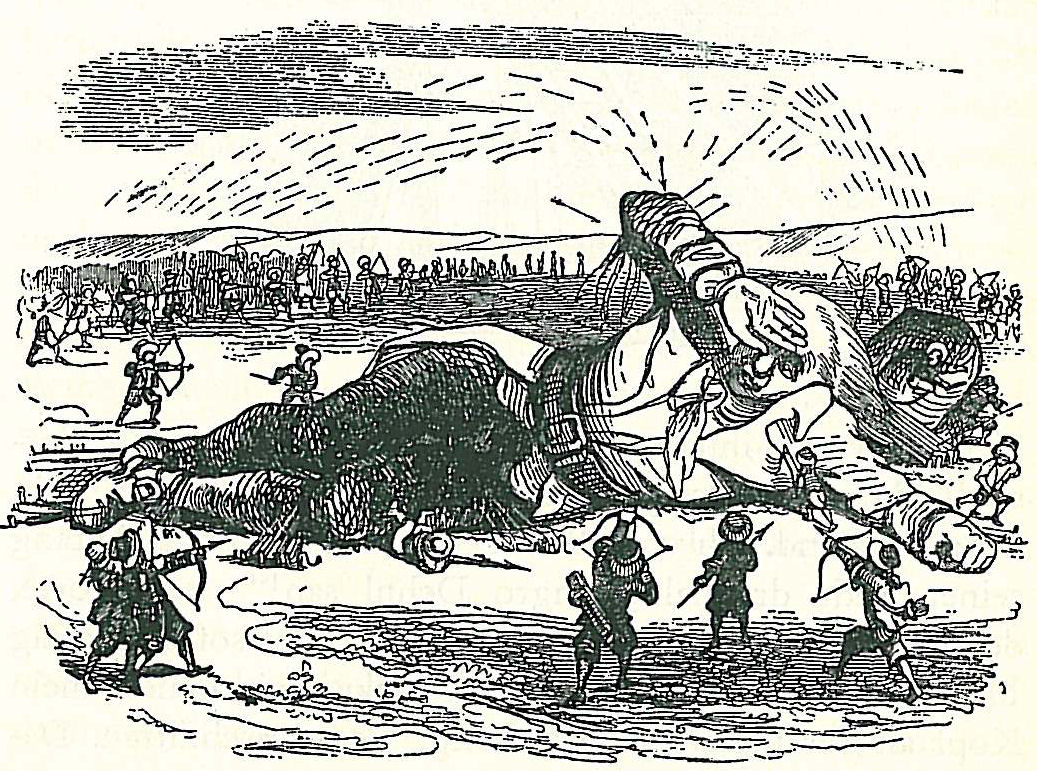
The most important works depicting the journeys of European residents include Gulliver's Travels by Jonathan Swift. The English writer created a work in which he showed the title character in fantastic places, e.g. in the country of the Lilliputians. However, it was not a novel focusing on unusual landscapes or fascinating customs of inhabitants of distant worlds. First of all, Swift wanted to show the Europeans of that time in a distorted mirror. He exposed their tendency to war, the artificiality of their behavior, hypocrisy and lack of sympathy.
A completely different goal was pursued by another English writer – Daniel Defoe, the author of the famous The Life and Adventures of Robinson Crusoe (Przypadki Robinsona Crusoe).
Read an excerpt from Daniel Defoe's novel and follow the instructions.
Robinson Crusoe. Jego życia losy, doświadczenia i przypadkiŻeglowaliśmy ku północy wzdłuż wybrzeży Brazylii, potem zaś, osiągnąwszy dziesiąty stopień północnej szerokości, mieliśmy skierować się wprost ku Afryce. Pogoda była piękna, ale upał panował wielki. Dotarłszy do przylądka San Augustino, skierowaliśmy okręt na pełne morze i ląd znikł nam niebawem z oczu. Po dwunastu dniach minęliśmy równik i znaleźliśmy się mniej więcej na siódmym stopniu szerokości północnej, gdy powiało straszliwe tornado, czyli trąba powietrzna, i odrzuciło nas daleko z drogi obranej. […] Zaledwie jednak upłynęliśmy półtorej mili morskiej, wzniosła się poza nami ogromna jak góra ściana wody i zaczęła nas ścigać. Uciekaliśmy niby jagnię przed lwem, ale potwór dosięgnął nas i nim zdołaliśmy zebrać zmysły, łódź została przewrócona, a ja uczułem, że zapadam w niezmierną głębię.
Byłem wyśmienitym pływakiem, ale cóż mi to mogło pomóc w tym razie. Wir porwał mnie na dół, potem zgoła bez wysiłku z mej strony pchnął ku lądowi. Fala odpłynęła, ja zaś zostałem na piasku. Na poły oszalały posiadałem jednak jeszcze tyle przytomności, żem zauważył, iż ląd był bliższy, niż sądziłem. […] Odetchnąłem głęboko i nabrałem trochę otuchy. Nowy bałwan zaniósł mnie na ląd, uczułem ponownie ziemię pod nogami, znowu jak przedtem zacząłem uciekać i znowu przegoniła mnie fala, zagarniając ze sobą. Wychyliwszy się na powierzchnię, spostrzegłem, że mnie prąd niesie z szaloną szybkością ku zębatej skale, sterczącej czarno spośród śnieżnobiałej piany. Pomyślałem jeszcze, że tu będzie mój grób, westchnąłem do Boga… potem zaś otrzymałem straszliwy cios, tak że straciłem przytomność.Source: Daniel Defoe, Robinson Crusoe. Jego życia losy, doświadczenia i przypadki.
Write down the information concerning the geographical location from the above fragment, provide the names.
Explain why the character describes his journey in great detail. What kind of genre does this story resemble?
Match the types of narration with the right quotations and characteristics for each type of narration.
subjectivism, Narrator is an observer of the events., Knowledge about events can be unlimited., objectivism, <em>Alice was not a bit hurt, and she jumped up on to her feet in a moment: she looked up, but it was all dark overhead; before her was another long passage, and the White Rabbit was still in sight, hurrying down it.</em> (Lewis Carroll, <em>Alice in Wonderland</em>), <em>When I found myself on my feet, I looked about me, and must confess I never beheld a more entertaining prospect. The country around appeared like a continued garden, and the enclosed fields, which were generally forty feet square, resembled so many beds of flowers.</em> (Jonathan Swift, <em>Gulliver's Tales</em>), Using pronouns: I, me, my, etc., Limited knowledge of events., Narrator participates in the events.
| First-person narrative | |
|---|---|
| Characteristics of a first-person narrative | |
| Third-person narrative | |
| Characteristics of a third-person narrative |
What type of narration appears in the fragment by Robinson Crusoe? Support your answer with examples.
Explain how the author builds tension in the description of the shipwreck.
Write down from the text examples of various stylistic means: epithets, comparisons, metaphors. Explain their function.
Robinson Crusoe finally reached the island where he will live for more than 28 years. One of the first reactions was a desire to know the place where he was thrown by fate.
Robinson Crusoe. Jego życia losy, doświadczenia i przypadkiTrzeba było teraz zbadać okolicę, celem znalezienia bezpiecznego miejsca dla siebie i swych ruchomości. Nie wiedziałem, gdzie jestem, na wyspie czy lądzie stałym, nie wiedziałem też, czy mieszkają tu ludzie i czy mam się obawiać dzikich zwierząt. W odległości niespełna mili angielskiej leżało strome wzgórze, poza nim zaś szereg innych, w kierunku północnym. Uzbrojony w strzelbę, pistolet i zabrawszy róg z prochem, wszedłem nie bez trudności na szczyt. Stąd jednym spojrzeniem ogarnąłem swe położenie. Byłem na wyspie pośród pełnego morza! Kędyś w dali, spostrzegłem kilka skał, zaś w kierunku zachodnim, jak mi się wydało dwie jeszcze małe wyspy. I na tym koniec.
Wedle wszelkiego prawdopodobieństwa wyspa była bezludna, a także nie dostrzegłem zwierząt drapieżnych, tylko ogromne stada nieznanego mi zgoła ptactwa. Wracając, zastrzeliłem wielkiego ptaka, siedzącego na drzewie u skraju lasu. Mój strzał był pewnie pierwszym, jaki od stworzenia świata padł na tej wyspie. Na jego odgłos podniosły się wokół z lasów istne chmary ptaków, wrzeszczących przeraźliwie. Zastrzelony przeze mnie musiał to być, sądząc po szponach i zakrzywionym dziobie, jakiś jastrząb nieznanego mi gatunku, a mięso jego cuchnęło brzydko i nie było jadalne. […] Dnia piętnastego lipca podjąłem dalszą wycieczkę. Idąc w górę biegu strumienia, stwierdziłem, że przypływ morza sięga najwyżej na dwie mile angielskie w głąb lądu. Odkryłem kilka uroczych dolin i bujnych łąk, na których rósł tytoń, aloesy i dzika trzcina cukrowa. Dalej w głębi znalazłem melony wijące się po ziemi, a w końcu, ku wielkiemu zdumieniu, także winorośl, zwieszoną po pniach drzew, pełną soczystych gron. Spożyłem z rozkoszą znaczną ich ilość, przyszło mi jednak zaraz na myśl, że owoce te wysuszone oddadzą mi, jako rodzynki, większą jeszcze przysługę, gdyż będę mógł zgromadzić znaczny ich zapas. Odległość od domu była tak znaczna, że spędziłem noc na drzewie, gdziem spał wyśmienicie. Następnego dnia ruszyłem dalej. Dążąc ciągle ku północy, dotarłem do przełęczy gór, poza którą teren opadał w kierunku zachodnim, zaś od wschodu płynął tuż przy mnie mały strumyk. Było tu cudnie, jak w najpiękniejszym ogrodzie i mimo uczucia pustki i opuszczenia przejęła mnie duma. Wszakże byłem nieograniczonym panem i królem tej wspaniałej wyspy! Znalazłem tu palmy kokosowe oraz mnóstwo drzew pomarańczowych i cytrynowych. Owoce nie dojrzały jeszcze co prawda, ale sok zielonych cytryn zaprawił wodę strumienia orzeźwiającym smakiem. Miałem tedy znowu przed sobą mnóstwo roboty, musiałem gromadzić zapasy winogron, pomarańcz i cytryn i przenosić je do domu. Odkrycie tych owoców było mi tym bardziej pożądane, że nadciągała pora deszczowa.Source: Daniel Defoe, Robinson Crusoe. Jego życia losy, doświadczenia i przypadki.
Look at the quotations from the above passage. What do you think were the emotions Robinson Crusoe could have experienced? Name them. Compare your answers with those of your colleagues.
| Quotation | Answer |
|---|---|
| Where I was, I yet knew not; whether on the continent or on an island; whether inhabited or not inhabited; whether in danger of wild beasts or not. | |
| I saw my fate, to my great affliction—viz. that I was in an island environed every way with the sea... | |
| As for the creature I killed, I took it to be a kind of hawk, its colour and beak resembling it, but it had no talons or claws more than common. Its flesh was carrion, and fit for nothing. | |
| I saw here abundance of cocoa trees, orange, and lemon, and citron trees; but all wild, and very few bearing any fruit, at least not then. However, the green limes that I gathered were not only pleasant to eat, but very wholesome; and I mixed their juice afterwards with water, which made it very wholesome, and very cool and refreshing. | |
| I descended a little on the side of that delicious vale, surveying it with a secret kind of pleasure, though mixed with my other afflicting thoughts, to think that this was all my own; that I was king and lord of all this country indefensibly, and had a right of possession... |
Characterise the world of nature described in the above fragment.
Write down which characteristics of Robinson are shown in the quoted passage of the novel.
Imagine being a reporter to interview a survivor who returns home after spending several years on a deserted island. Write down the questions you would like to ask him.
Keywords
robinsonade, deserted island, castaway, Defoe
Glossary
rozbitek
bezludna wyspa
robinsonada