Origins of Poland– revision lesson
to characterize the most important achievements of the first Piasts;
how and when Cracow was founded;
to characterize the most important events and figures from the medieval history of Poland;
to understand the importance of royal baptism and royal coronation for the existence of a strong state.
There are legends about the creation of the Polish state, but historians assume that its origins date back to the reign of Mieszko I – the prince of Polans. His alliance with the Czech ruler, sealed by his marriage to Princess Dobrawa, helped him accept baptism in 966 and allowed to create a church province independent of the Holy Roman Empire.
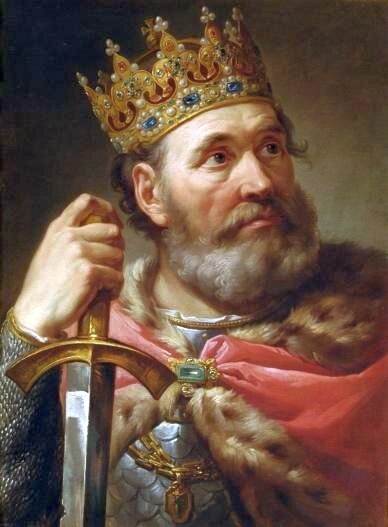
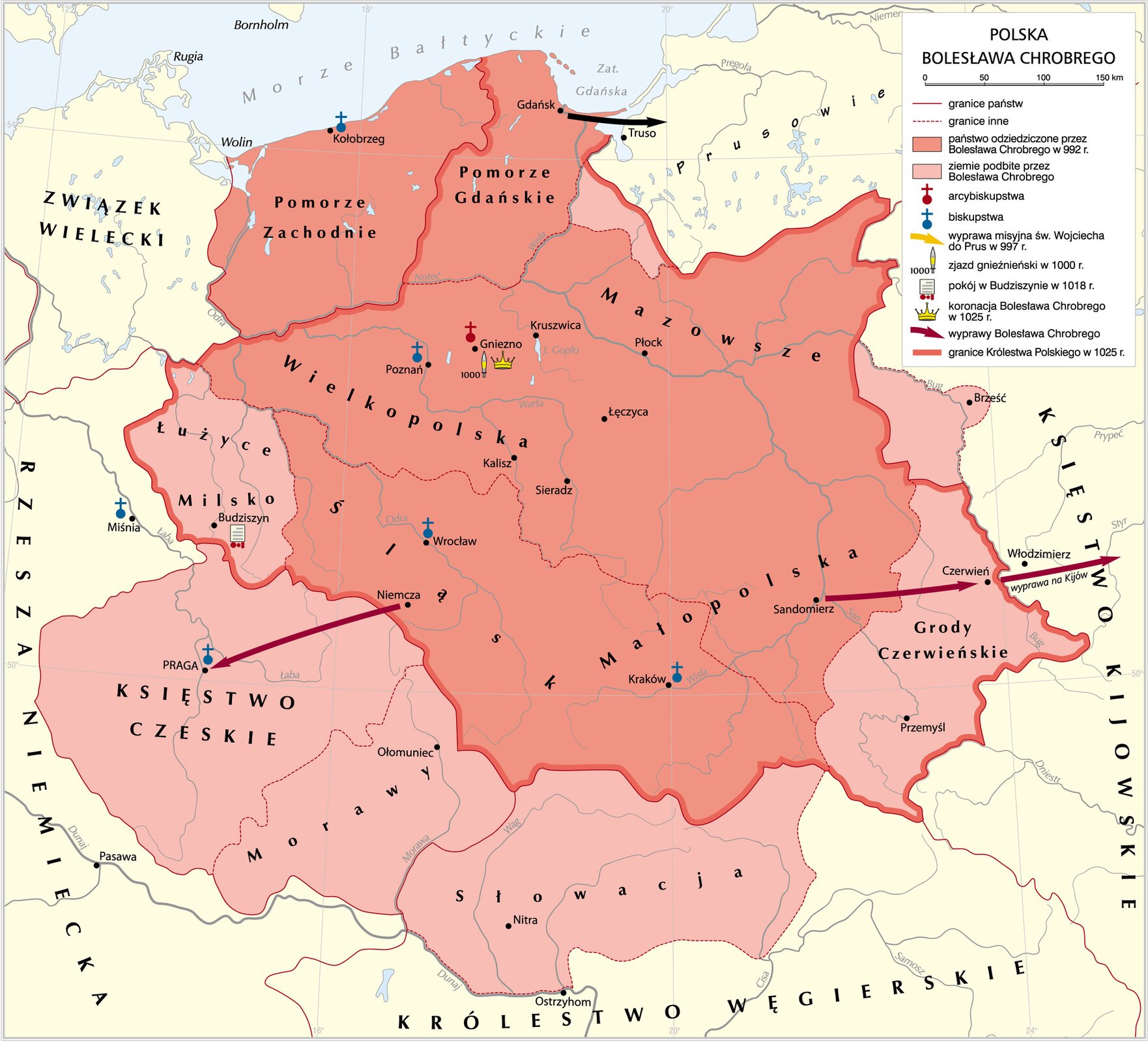
Not only did this event increase the prince’s authority, but also made Mieszko I an equal partner among other Christian rulers. Moreover, it included Poland in the circles of Latin civilization. Bolesław I the Brave, who assumed power in 992, continued his father’s policy. He strengthened ties with Emperor Otto III, to which the martyr death of Bishop Adalbert in 997 also contributed. The ceremonial bringing‑in of his remains and burial in the Gniezno cathedral made Poland gain relics of a saint popular in Europe and made the young Christian state credible on the international arena.
In 1000, the tomb of St. Adalbert was visited by the emperor himself, thus manifesting his alliance with Bolesław I the Brave and announcing the creation of an independent archbishopric in Gniezno. Unfortunately, the premature death of the emperor and the change of power in the Reich caused the outbreak of Polish‑German wars lasting many years. They ended in the success of Bolesław I the Brave, much like his activities on the Russian lands. His strong position was confirmed by his coronation as the first king of Poland in 1025.
After his death, Mieszko II took power. Unfortunately, the period of his reign brought a collapse in Poland’s position and the ruler’s authority. As a result of rebellions and riots, not only did he lose his royal crown, but also, after his unexpected death in 1034, the country plunged into chaos. In the aftermath, the Piast monarchy collapsed, the subjects rioted, and the neighbors plundered. Poland practically ceased to exist. It was rebuilt by Mieszko II’s son, Casimir, named the Restorer. Having gained the emperor’s military support, he took over Greater Poland and Lesser Poland, and moved the capital to Cracow. He restored and reformed the state organization and carried out a friendly policy with the neighbors. He was succeeded in 1058 by Bolesław II the Generous. He pursued an active foreign policy, which resulted in his regaining the royal crown in 1076.
Unfortunately, excessive ambitions led to a conflict with the elite, which resulted in the murder of the Cracow Bishop Stanislaus of Szczepanów in 1079. This caused a rebellion among the subjects and, as a result, an escape of the ruler abroad. Power was taken over by his younger brother, Władysław I Herman. He did not have enough authority, and his power was weak and based on the magnates. This led to riots of some subjects, supported by the sons of Władysław I Herman – Zbigniew and Bolesław. The death of the duke in 1102 led to a short‑lived conflict between the brothers, ultimately won by Bolesław (Bolesław III Wrymouth).
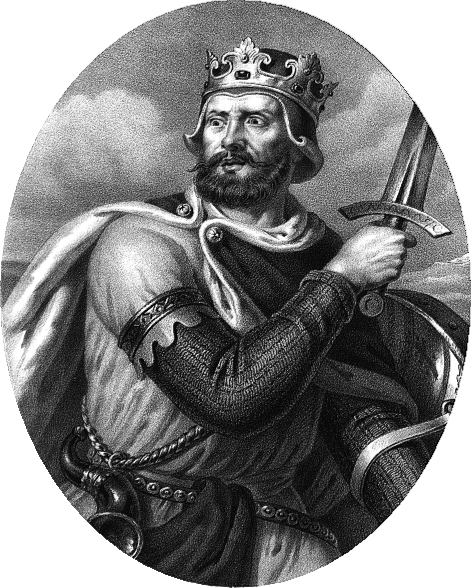
He began to recover the former Piast lands and strengthen the state after his father’s weak reign. In 1138, in order to avoid conflicts and struggles for power between his sons, he divided his country into districtsdistricts, appointing his oldest son – Władysław – as his first successor. This initiated the period of the so‑called districtdistrict disintegration – Poland broke up into many independent duchies, and the constant conflicts increasingly weakened the principle of the principate, while strengthening individual districtdistrict dukes and the magnates who supported them. The Piasts often fought among themselves for supremacy. As time went by, this led to there being several pretenders who claimed leadership.
In 1226, the Teutonic OrderTeutonic Order appeared in Poland, brought in by Konrad I of Masovia to protect his lands. They conquered the lands of the pagan Prussians and founded their own state which, over time, began to threaten Poland. At the end of the 13th century, after a break of more than 200 years, a royal coronation was successfully conducted on Przemysł II, Duke of Greater Poland and Pomerania. Unfortunately, his rule lasted less than a year, as he was murdered in 1296. Temporarily, even Czech rulers from the Přemyslid dynasty became kings of Poland – Wenceslaus II and Wenceslaus III. The death of the latter created a convenient situation for Duke Władysław I the Elbow‑high, of the Kuyavian line of the Piast dynasty, to take power. He united Greater Poland with Lesser Poland, and was crowned in Cracow as the king of Poland in 1320. However, Silesia (annexed to Bohemia), Pomerelia (seized by the Teutonic OrderTeutonic Order), and Masovia (an independent duchy ruled by a side‑line of the Piast dynasty) remained outside the borders of the kingdom. The coronation of Władysław I the Elbow‑high, and the transfer of power to his son, ended the nearly 200‑year‑long period of the districtdistrict disintegration of Poland.
Learn about the most important events in the early history of Poland.
The decision to found Cracow had already been made in 1244, however, it was not until 1257 that the charter was granted by Bolesław V the Chaste. Read the text and do the exercise.
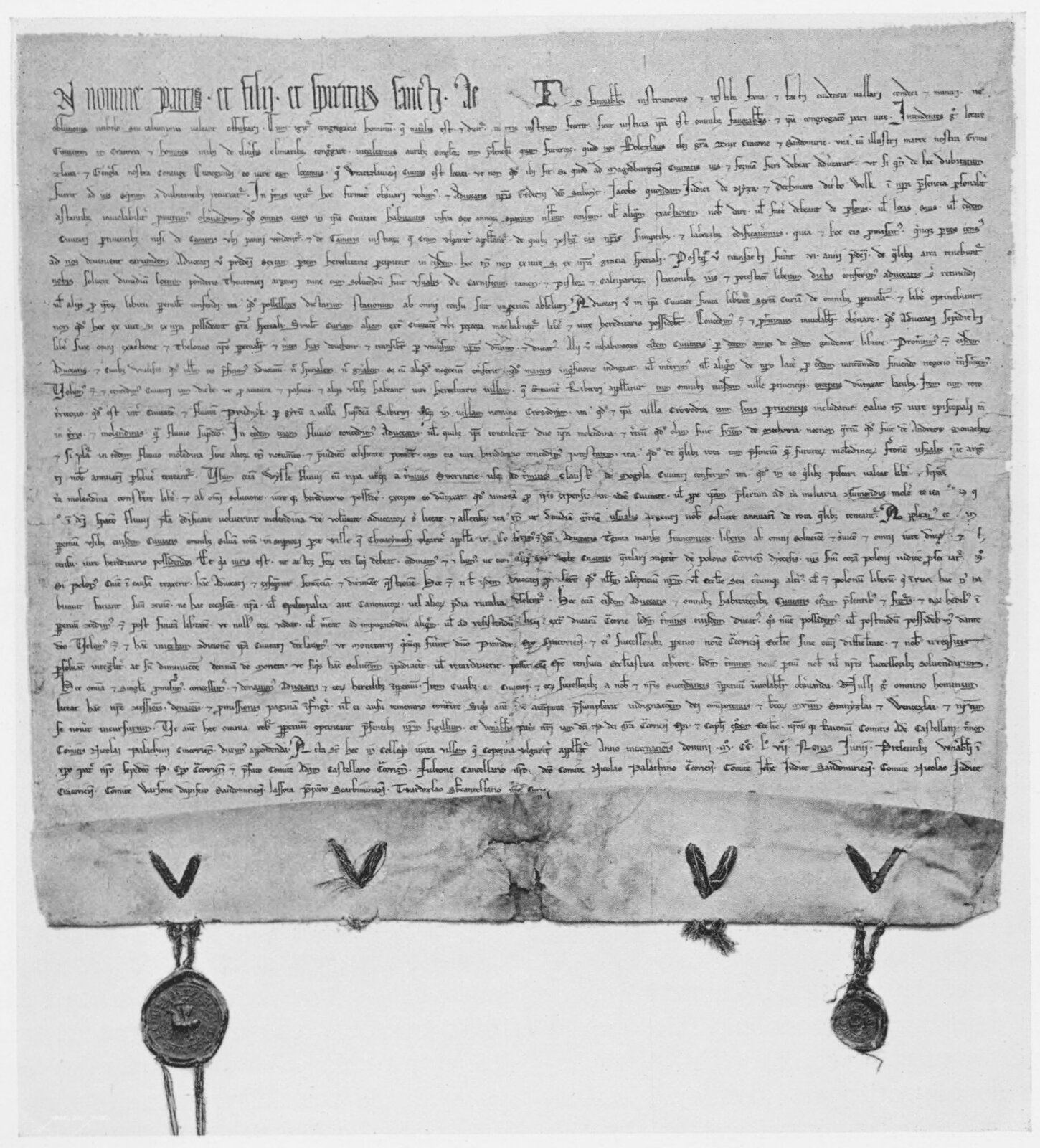
Zaznacz w tekście, jakie przywileje nadano wójtom, a jakie mieszkańcom miasta.
przywilej wójtów przywilej mieszczan
„W imię Ojca i Syna i Ducha Św. Amen.
[…] Zamierzając tedy założyć miasto w Krakowie i zgromadzić tamże ludzi z różnych klimatów, kładziemy to w uszy wszystkim, tak obecnym, jak przyszłym, że my Bolesław, z łaski Bożej książę Krakowa i Sandomierza, […] zakładamy je na tym prawie, na jakim założone zostało miasto Wrocław, z tym jednak, by trzymano się nie tego, co się dzieje we Wrocławiu, lecz co się dziać powinno w myśl prawa i form miasta Magdeburga. A jeśliby jaka wątpliwość co do tego powstała, wątpiący winni się uciec do prawa pisanego.
Przede wszystkim […] wójtom naszym […] obiecujemy trwale przestrzegać [...], że wszyscy mieszczanie mieszkający w tym mieście nie mają nam dawać ani czynić żadnego czynszu, ani jakiejkolwiek daniny z osób swoich lub mieszkań, własnych lub należących do miast, przez przeciąg lat sześciu prócz [czynszów] ze sklepów, gdzie się sukno sprzedaje i ze sklepów przekupniów, które potocznie zwą się kramy, […] pięć części czynszu nam przypadnie, zaś szóstą część dziedzicznie pobierać będą pomienieni wójtowie […]. Gdy zaś minie owe sześć lat, to z każdego siedliska obowiązani będą płacić nam 1/2 łuta wedle wagi niemieckiej srebra używanego wówczas, gdy przypadnie termin płacenia. [...]
[...] Również nadajemy miastu prawo używania rzeki Wisły z obu brzegami od granic Zwierzyńca aż do granic klasztoru w Mogile w ten sposób, że w niej będzie wolno swobodnie łowić ryby, a pomienieni wójtowie będą mogli zbudować trzy młyny i dzierżyć je prawem dziedzicznym od wszelkiej opłaty; z tym tylko zastrzeżeniem, że będą nam obowiązani w tymże mieście lub jego pobliżu mleć zboże na nasze potrzeby. [...] Jeżeliby zaś ktoś na przestrzeni tej rzeki chciał więcej zbudować młynów, niech mu to będzie wolno za przyzwoleniem i zgodą wójtów pod tym jednak warunkiem, że będzie obowiązany rocznie nam płacić pół grzywny używalnego srebra od każdego koła. Oddajemy również na wieki na użytek tegoż miasta cały las w górnej części Wisły, […]. Nadajemy również wspomnianym wójtom 30 łanów frankońskich wolnych od wszelkiego podatku i służby i od wszelkiego prawa książęcego, i od jakiegokolwiek czynszu w dziedziczne posiadanie.”
Based on the knowledge from previous lessons, answer the following questions.
Mieszko I had the titles of...
- count and starosta
- king and count
- prince, margrave, and komes
There were the following groups of Slavs:
- eastern, western, and southern
- northern, eastern, and central
- eastern, southern, and northern
After the death of Bolesław III Wrymouth, Casimir II the Just inherited:
- Poznań
- nothing because he was under-age
- Cracow
Keywords
Christianization, dethronement, will, succession, Teutonic Order
Glossary
Chrystianizacja – proces przyjmowania symboli i wiary chrześcijańskiej oraz zastępowanie nią wierzeń pogańskich.
Margrabia – inaczej graf, stał na czele i zarządzał marchią. W stosunku do Mieszka I jedno z określeń na tytuł księcia.
Beneficjum – czasowe lub dożywotnie prawo czerpania dochodów z gruntu nadane przez władcę (lub seniora) w zamian za służbę wojskową i poparcie.
Palatyn – nazywany też komesem, a w Polsce wojewodą. W średniowieczu był zarządcą królewskiego dworu i zastępował władcę przy wydawaniu sadów.
Detronizacja – pozbawienie siłą lub traktatem panującego władcy tronu. Najczęściej związana jest z przejęciem władzy przez inną osobę lub grupę osób, zamachem stanu.
Testament – dokument, akt prawny, w którym spadkobierca rozporządza swoim majątkiem na wypadek swojej śmierci.
Sukcesja – zasada przekazywania, dziedziczenia władzy monarszej następcy w przypadku śmierci, abdykacji lub innych okolicznościach.
Dzielnica – część Polski we władaniu księcia, która powstała po podziale kraju dokonanym przez Bolesława Krzywoustego.
Seniorat – zasada ustanowiona testamentem Bolesława Krzywoustego na mocy której władza w państwie miała należeć do najstarszego z Piastów (seniora). A po jego śmierci każdorazowo do kolejnego najstarszego męskiego przedstawiciela rodu.
Princeps – dosłownie ten, który jest pierwszy, w średniowiecznej Polsce tytuł, który przysługiwał księciu zwierzchniemu, seniorowi, który sprawował władzę nad pozostałymi książętami. Zasada pryncypatu została wprowadzona postanowieniami testamentu Bolesława Krzywoustego w 1138 r.
Krzyżacy – zakon rycerski, sprowadzony na Mazowsze przez Konrada Mazowieckiego w 1226 r., jego pełna nazwa brzmi: Zakon Szpitala Najświętszej Marii Panny Domu Niemieckiego w Jerozolimie.