a) Gases take the shape of the vessel in which they are in and fill its entire volume. The gases are compressible as opposed to solids and liquids. b) Unlike solids and liquids, the gases are compressible. They spontaneously increase their volume, if they can. Reducing their volume requires an external forceexternal forceexternal force. Reducing gas volume leading to pressure increase is called gas compression. Increasing the gas volume leading to pressure reduction is called gas expansion. c) Air is the gas atmosphere of the Earth and it is the most widespread gas in nature. d) The air (when it contains no water vapour) is a mixture of nitrogen (78%), oxygen (21%), and other gases such as carbon dioxide and noble gases, which constitute only 1%. Water vapour occurs in humid air and can constitute up to several percent of the atmosphere composition near the Earth's surface.
R11Inhp6GfUeK
Ilustracja interaktywna podpisana "Air composition" przedstawia po lewej stronie tabelę. W pierwszej kolumnie od góry: name of component; nitrogen; oxygen; argon; carbon dioxide; hydrogen xenon, ozone; water vapour; other components. W drugiej kolumnie od góry: volume share [%]: 78,08%; 20,95%; 0,93%; 0,03%; 0,00005; 0-0,28; trace amounts. Po prawej stronie ilustracji interaktywnej znajduje się wykres kołowy: Nitrogen 78% - oznaczony numerem 1, Oxygen 21% - oznaczony numerem 2, Argon 0,93% i other, including CO z indeksem dolnym 2 - oznaczony numerem 3. Na ilustracji widoczne są numery, a na nich podpisy. 1. there is mostly nitrogen in the air, our atmosphere is not oxygen but rather nitrogen {audio}, 2. oxygen in the air is 4 times less than nitrogen, but without oxygen there would be no life on Earth {audio}, 3. the amount of carbon dioxide in the air, take care not to increase it {audio}.
Ilustracja interaktywna podpisana "Air composition" przedstawia po lewej stronie tabelę. W pierwszej kolumnie od góry: name of component; nitrogen; oxygen; argon; carbon dioxide; hydrogen xenon, ozone; water vapour; other components. W drugiej kolumnie od góry: volume share [%]: 78,08%; 20,95%; 0,93%; 0,03%; 0,00005; 0-0,28; trace amounts. Po prawej stronie ilustracji interaktywnej znajduje się wykres kołowy: Nitrogen 78% - oznaczony numerem 1, Oxygen 21% - oznaczony numerem 2, Argon 0,93% i other, including CO z indeksem dolnym 2 - oznaczony numerem 3. Na ilustracji widoczne są numery, a na nich podpisy. 1. there is mostly nitrogen in the air, our atmosphere is not oxygen but rather nitrogen {audio}, 2. oxygen in the air is 4 times less than nitrogen, but without oxygen there would be no life on Earth {audio}, 3. the amount of carbon dioxide in the air, take care not to increase it {audio}.
a) two identical glasses, b) a jar with a capacity of about 1 litre with a wide opening (or metal can), such that a glass can be inserted inside, c) fridge.
1. Pour water at room temperatureroom temperatureroom temperature into each glass to of its volume. 2. Put one of the glasses into the jar and close the lid. 3. A jar with a glass and a second glass of water put in the fridge. 4. After 30 minutes, check the temperature of the water in both glasses with a thermometer.
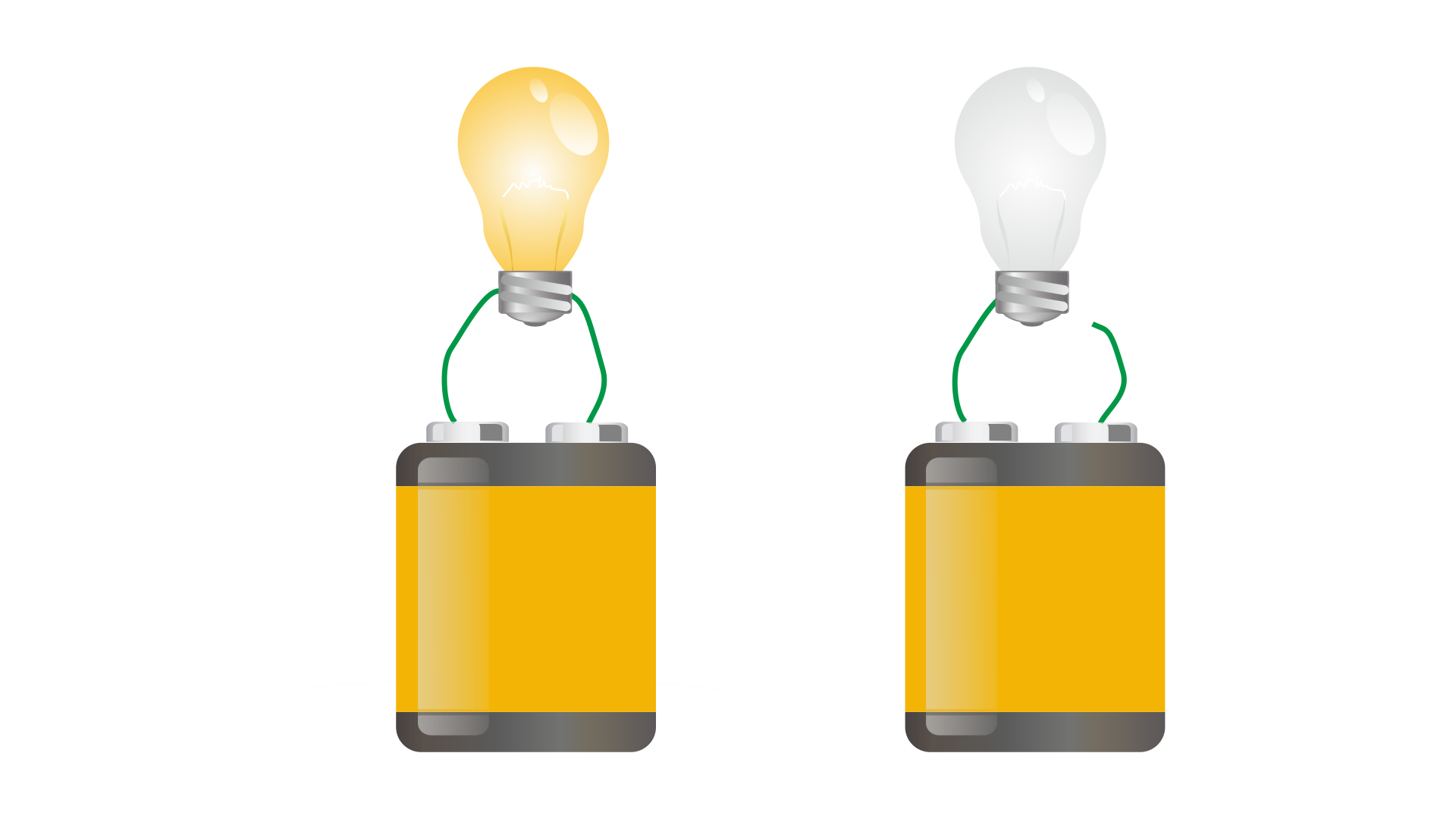
1. Build an electrical circuit according to the wiring diagram below.
RbjFjNNCuQFP3
Rysunek przedstawiający schemat obwodu elektrycznego wykorzystany do badania przewodnictwa elektrycznego powietrza. Po lewej bateria podłączona dwoma przewodami do żarówki świecącej - obwód zamknięty, po prawej bateria podłączona jednym z dwóch przewodów żarówki - obwód otwarty.
Electrical circuit diagram used to investigate electrical conduction of the air (left - closed circuit, right - open circuit)
The bulb is on when the circuit is closed. Even if the cable is close to the bulb holder, but is not touching it, the electric current in the circuit is not flowing.
Conclusion
The air layer separating the wire from the bulb holder is not a good conductor of electric current.
Both air and other gases do not conduct electric current under normal conditions.
Under certain conditions, gases may be electrical conductors. This happens, for example, during atmospheric discharges.
Wersja alternatywna ćwiczenia: Determine which sentences are true. Możliwe odpowiedzi: 1. Gases are bad thermal conductors., 2. Gases are bad electrical conductors., 3. Gases never conduct electric current., 4. Gases can insulate well against „loss” of heat and be electrical insulators.
Wersja alternatywna ćwiczenia: Determine which sentences are true. Możliwe odpowiedzi: 1. Gases are bad thermal conductors., 2. Gases are bad electrical conductors., 3. Gases never conduct electric current., 4. Gases can insulate well against „loss” of heat and be electrical insulators.
Determine which sentences are true.
Gases are bad thermal conductors.
Gases are bad electrical conductors.
Gases never conduct electric current.
Gases can insulate well against „loss” of heat and be electrical insulators.
Make a note about the electrical conductivity of the air.
RT3lBgeejbUgz
Na pokazie slajdów można zobaczyć, w jakich warunkach może dochodzić do przepływu prądu w powietrzu, które uznawane jest za izolator. Instrukcja obsługi z poziomu klawiatury: 1. Uruchomienie aplikacji - ENTER, 2. Na każdym ze slajdów czytany jest automatycznie tekst alternatywny po polsku, 3. Przy pierwszym uruchomieniu na pierwszym slajdzie, czytanie tekstu po angielsku - TAB, 4. Przejście między slajdami: do następnego slajdu - TAB, do poprzedniego slajdu - TAB + SHIFT, 5. Przejście do czytania napisu po angielsku - strzałka w górę + strzałka w dół (czyta tekst po angielsku widoczny na slajdzie).
Na pokazie slajdów można zobaczyć, w jakich warunkach może dochodzić do przepływu prądu w powietrzu, które uznawane jest za izolator. Instrukcja obsługi z poziomu klawiatury: 1. Uruchomienie aplikacji - ENTER, 2. Na każdym ze slajdów czytany jest automatycznie tekst alternatywny po polsku, 3. Przy pierwszym uruchomieniu na pierwszym slajdzie, czytanie tekstu po angielsku - TAB, 4. Przejście między slajdami: do następnego slajdu - TAB, do poprzedniego slajdu - TAB + SHIFT, 5. Przejście do czytania napisu po angielsku - strzałka w górę + strzałka w dół (czyta tekst po angielsku widoczny na slajdzie).
Under certain conditions, gases may be electrical conductors. This happens, for example, during atmospheric discharges.
Exercises
R1G65lahhaShu
Exercise 3
Wersja alternatywna ćwiczenia: Determine which sentences are true. Możliwe odpowiedzi: 1. Gases are bad electrical conductors., 2. The ionized air is electrically conductive., 3. Gases with increasing temperature become thermal conductors., 4. Air in the water propagates due to diffusion., 5. In winter, it is better to wear tight shoes because they are closer to the body.
Wersja alternatywna ćwiczenia: Determine which sentences are true. Możliwe odpowiedzi: 1. Gases are bad electrical conductors., 2. The ionized air is electrically conductive., 3. Gases with increasing temperature become thermal conductors., 4. Air in the water propagates due to diffusion., 5. In winter, it is better to wear tight shoes because they are closer to the body.
Determine which sentences are true.
Gases are bad electrical conductors.
The ionized air is electrically conductive.
Gases with increasing temperature become thermal conductors.
Air in the water propagates due to diffusion.
In winter, it is better to wear tight shoes because they are closer to the body.
zadanie
Source: GroMar, licencja: CC BY 3.0.
Exercise 4
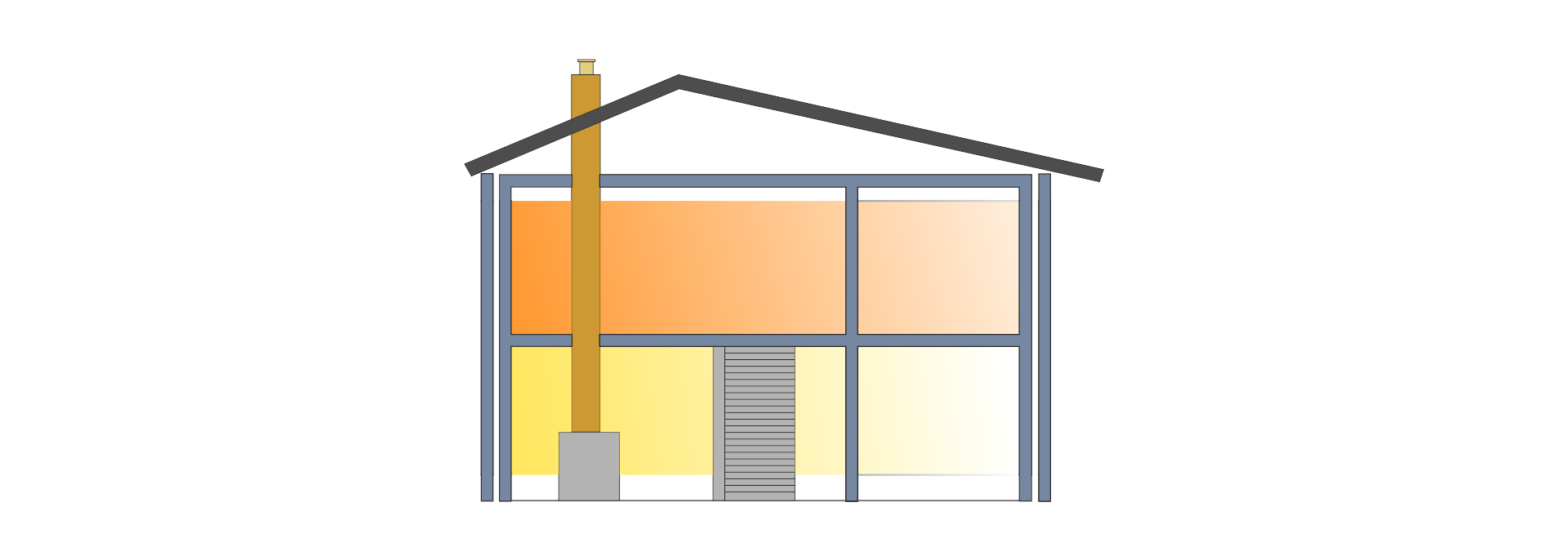
Look at the drawing.
Rty18nnvDay7e1
Rysunek przekroju pionowego domu: podwójne ściany zewnętrze, między którymi jest przestrzeń pusta, dach, komin, schody, ściana wewnętrzna.
Source: GroMar, licencja: CC BY 3.0.
In the mountains, houses often have two walls separated by an air gap. Explain why.
The space between the walls fills the air. It is thermal insulation.
Exercise 5
Write in English what can be the reason for the flow of electric current in glass tubes filled with gas, so‑called neon tube?
Neon tubes must have charged particles that will cause electric current to flow in the gas. Repeated electrical discharges in the neon tube will constantly provide new particles, which can conduct electric current.
RZUBfhSsLZZiE
Exercise 6
Wersja alternatywna ćwiczenia: Indicate which pairs of expressions or words are translated correctly. Możliwe odpowiedzi: 1. izolator ciepła - heat insulator, 2. izolator prądu elektrycznego - electric current insulator, 3. wyładowanie atmosferyczne - atmospheric discharge, 4. przewód elektryczny - electric wire, 5. przewodnictwo prądu elektrycznego - thermal conduction, 6. przewodnictwo cieplne - electrical conduction
Wersja alternatywna ćwiczenia: Indicate which pairs of expressions or words are translated correctly. Możliwe odpowiedzi: 1. izolator ciepła - heat insulator, 2. izolator prądu elektrycznego - electric current insulator, 3. wyładowanie atmosferyczne - atmospheric discharge, 4. przewód elektryczny - electric wire, 5. przewodnictwo prądu elektrycznego - thermal conduction, 6. przewodnictwo cieplne - electrical conduction
Indicate which pairs of expressions or words are translated correctly.
izolator ciepła - heat insulator
izolator prądu elektrycznego - electric current insulator
Interaktywna gra, polegająca na łączeniu wyrazów w pary w ciągu jednej minuty. Czas zaczyna upływać wraz z rozpoczęciem gry. Jeden ruch to odkrywanie najpierw jednej potem drugiej karty z wyrazem. Każdy wyraz jest odczytywany. Kolejny ruch to odkrywanie trzeciej i czwartej karty. W ten sposób odsłuchasz wszystkie wyrazy. Nawigacja z poziomu klawiatury za pomocą strzałek, odsłuchiwanie wyrazów enterem lub spacją. Znajdź wszystkie pary wyrazów.
Interaktywna gra, polegająca na łączeniu wyrazów w pary w ciągu jednej minuty. Czas zaczyna upływać wraz z rozpoczęciem gry. Jeden ruch to odkrywanie najpierw jednej potem drugiej karty z wyrazem. Każdy wyraz jest odczytywany. Kolejny ruch to odkrywanie trzeciej i czwartej karty. W ten sposób odsłuchasz wszystkie wyrazy. Nawigacja z poziomu klawiatury za pomocą strzałek, odsłuchiwanie wyrazów enterem lub spacją. Znajdź wszystkie pary wyrazów.
Match Polish terms with their English equivalents.
heat insulator
izolator ciepła
izolator prądu elektrycznego
atmospheric discharge
electric current insulator
thermal conduction
electrical conduction
przewodnictwo prądu elektrycznego
wyładowanie atmosferyczne
przewodnictwo cieplne
Source: Zespół autorski Politechniki Łódzkiej, licencja: CC BY 3.0.