Place of occurrence and structure of fungi, life functions of fungi, the importance of fungi
fungi are a group of heterotrophic organisms, making up one of the five kingdoms;
there are edible, inedible and poisonous species of fungi.
indicate where and in what conditions fungi live;
differentiate between fungi: yeast, mold and mushrooms, including edible and poisonous ones;
present the importance of fungi.
Places of occurrence and structure of fungi
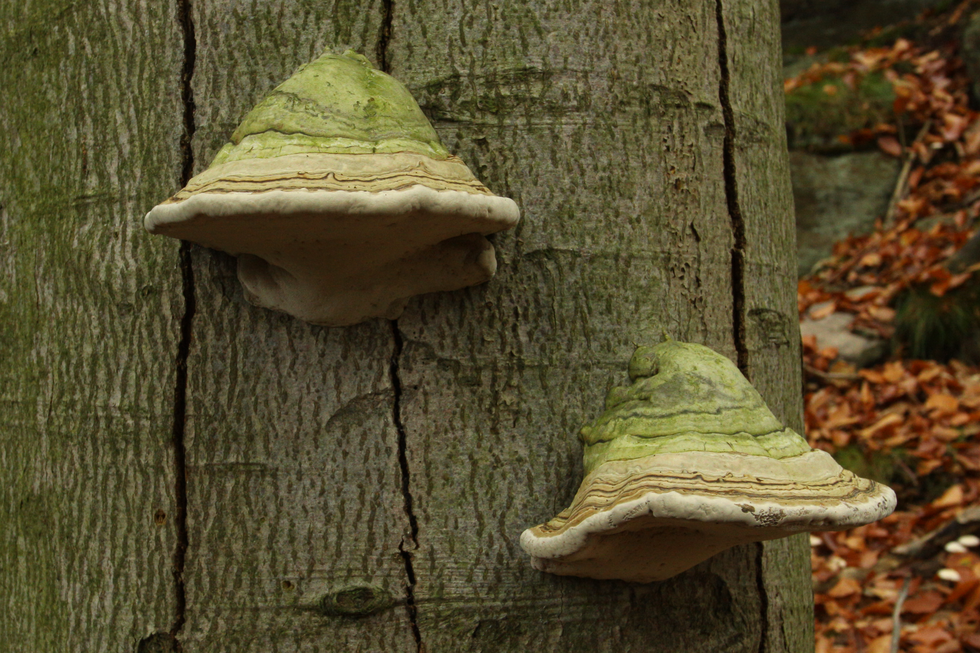
Fungi inhabit many environments on the Earth. They are most common on land, in moist and warm places, anywhere where organic matter can be found. In forests they are components of duff, they grow on fallen tree trunks and on the roots of living trees. Sometimes they cover the leaves of plants with white or brown stains. We can also come across them on rocks, walls and sometimes on the walls of buildings with excess moisture. Some infect other organisms and parasitize them, causing diseases. Others adapted to living in water.
The spores of fungi are suspended in the air, the make up dust and settle on all surfaces. Moisture, presence of nutrients (dead or living organic matter) and appropriate temperature (5‑40°C) are the conditions in which spores germinate.
Fungi are heterotrophic organisms belonging to thallophytes – organisms that do not have neither tissues nor organs.
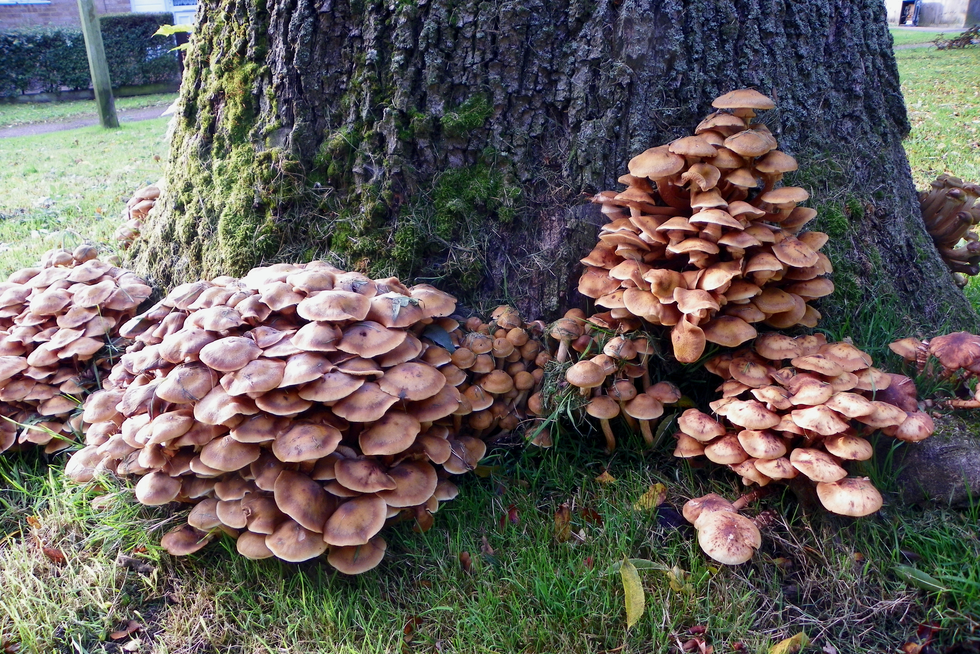
The unicellular yeast are the fungi of the simplest structure. However mostly they are multicellular organisms with bodies built of thin, thread‑like hyphaehyphae making up the myceliummycelium. Loosely arranged, branching hyphae grow through the substrate forming a thick web, which in the case of honey fungus can cover even up to a few square km and weigh up to a few tons. The cell walls of fungi contain chitin - the substance also present in the exoskeleton of insects.
Mushrooms, such as e.g. the common mushroom, king bolete, fly agaric toadstool form sporocarpssporocarps made up of tightly weaved and densely packed hyphae. Sporocarps are most frequently composed of a stem and a cap topping it. They may take different shapes and colours. It is where the spores are formed, which enable the reproduction of fungi. Molds: mucor, penicillum and aspergillus are characterized by a loose mycelium which does not produce sporocarps.
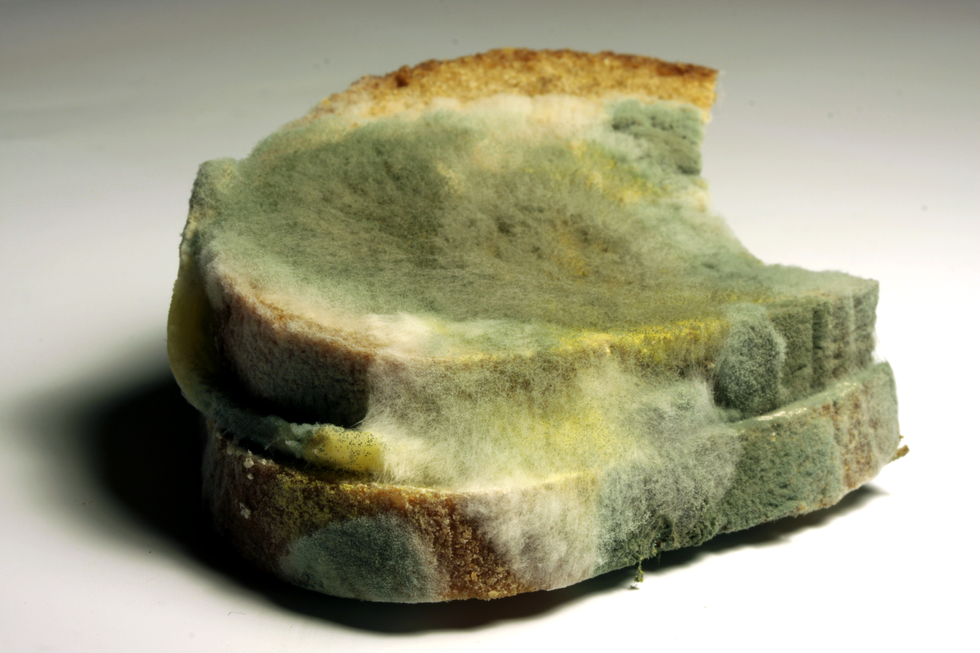
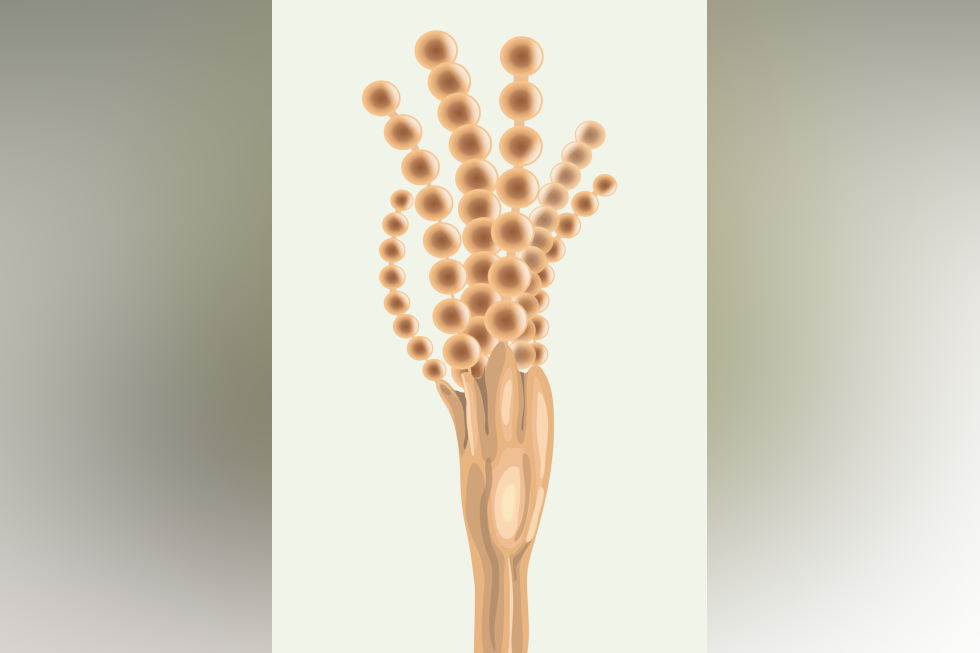
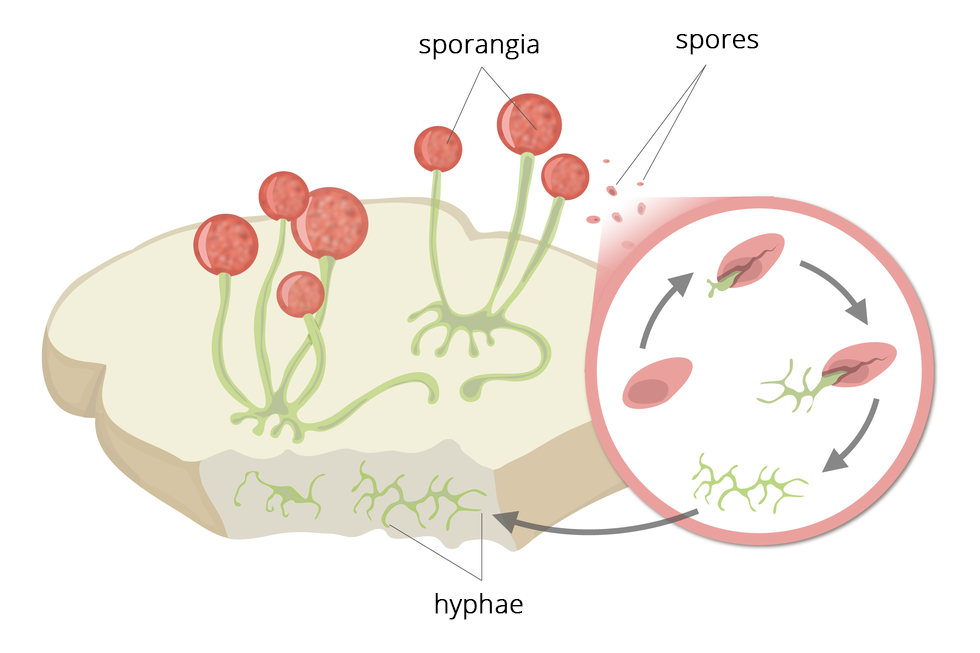
Describing the common mushroom's adaptation for the production of spores or present the importance of fungi.
young and ripe sporocarps of common mushroom,
paper tray,
magnifying glass.
Look at the ripe sporocarp of the common mushroom, differentiate the stem, cap, gills and ring.
Look at the gills using a magnifying glass.
Compare the colour and look of the surface of gills in the ripe and young sporocarp.
Look at the bottom cover of the young common mushroom's cap and its remains in the ripe specimen.
Draw the common mushroom's sporocarp and include descriptions.
Put the cap of a ripe common mushroom on a tray and leave in a warm place for a few days.
After a few days lift the cap and observe what can be found underneath.
Thanks to the gills the bottom part of the cap has a large surface and produces significant amount of spores.
Life processes of fungi
Fungi are heterotrophic organisms. Most of them are saprobionts feeding on dead organic matter which comes from rotten tree trunks, fallen leaves, remains of animals or food products. Fungi break down their food by secreting digestive enzymes into the environment. They absorb the thus created simple organic substances into their cells. The method of obtaining nutritious substances present in fungi is called extracellular digestion.
Parasitic fungi develop at the cost of other organisms. The parasitic hyphae grow into the carrier's body and draw nutrients directly from their cells. Fungi use the nutrients absorbed to produce energy in the process of cellular respiration. Most fungi use aerobic respiration, only some, e.g. yeast, use the process of alcoholic fermentation.
Fungi use sexual and asexual reproduction. In single cell yeast during budding a protrusion appears on the cell wall of the mother cell, which gradually grows in size to create a new cell. It does not usually separate from the mother cell, thus creating colonies which can break down into single cells. Multicellular fungi (be it mold or the sticky bun) reproduce using the fragmentation of the mycelium. Hyphae torn away from the mother mycelium and transferred by people or animals become the beginning of a new mycelium. Most fungi produce thousands of spores which are caught up by the wind and reach distant places enabling the population of new regions.
Recognition of the budding cells of yeast or differentiate between fungi: yeast, mold and mushrooms, including edible and poisonous ones.
pressed yeast used for baking cakes,
water,
grape sugar (glucose),
beaker or jar,
food wrap,
Lugol's solution,
microscopy instruments,
microscope.
Prepare material for observation. To do that: fill half the beaker with water and dissolve one teaspoon of glucose in the water; add a teaspoon of yeast; cover the beaker with food wrap and set aside for 25 minutes in a warm place (at 20‑25°C).
Observe under the microscope:
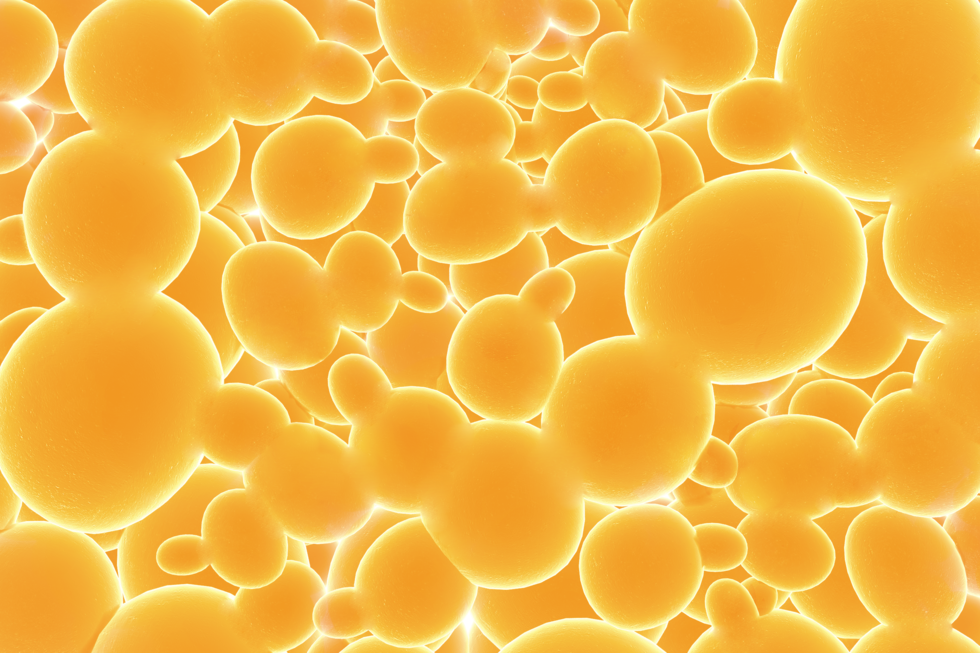
If your observations are made shortly after the preparation of the solution, the number of budding cells will be small.
The importance of fungi
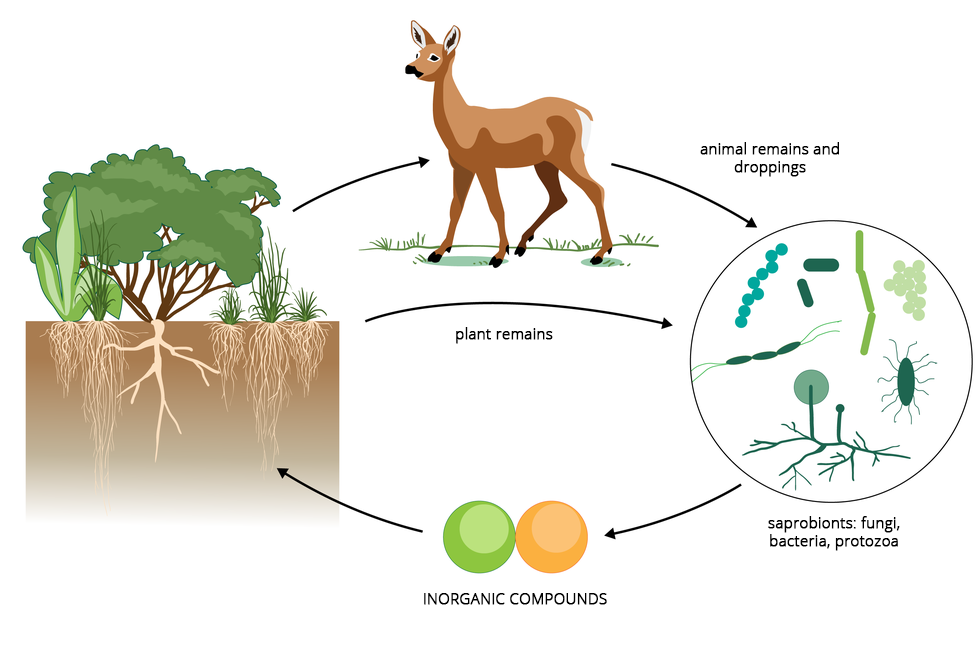
Fungi play a very important role as a component of multiple environments. As saprobionts, like bacteria, they decompose dead organic matter, purify the environment of animal refuse and remains of other organisms. Thanks to that they enrich the soil with the elements obtained from the decomposing organisms, which are later absorbed by plants and built into their organs. That way fungi contribute to the formation of soil and ensure the circulation of matterthe circulation of matter in nature.
Yeasts conduct the process of fermentation, therefore they are found in numerous household applications and food industry. They are used for baking cakes and bread as well as in the production of wine and beer. Moldy cheese in turn is made using specially selected molds.
In pharmaceutical industry fungi are used for producing antibiotics - substances with bactericidal properties. The first antibiotic – penicillin – was obtained from the mycelium of penicillum. It was discovered by a Scottish doctor, Alexander Fleming.
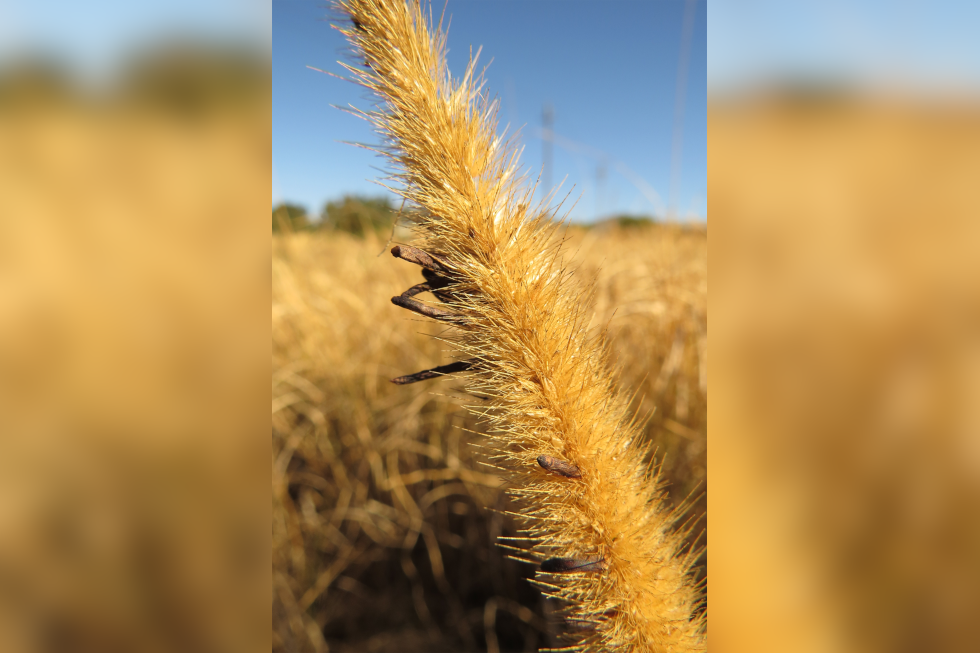
Parasitic fungi cause nuisance diseases of plants. They contribute to lowered crops and the weakening of stand. Animal (also human) parasitic fungi cause diseases called mycosismycosis. You can contract foot mycosis e.g. in a swimming pool or public bathrooms which are not properly sanitized. Therefore it is recommended to use protective footwear in such places. One should not use the same towels and nail care products as persons infected with mycosis, either.
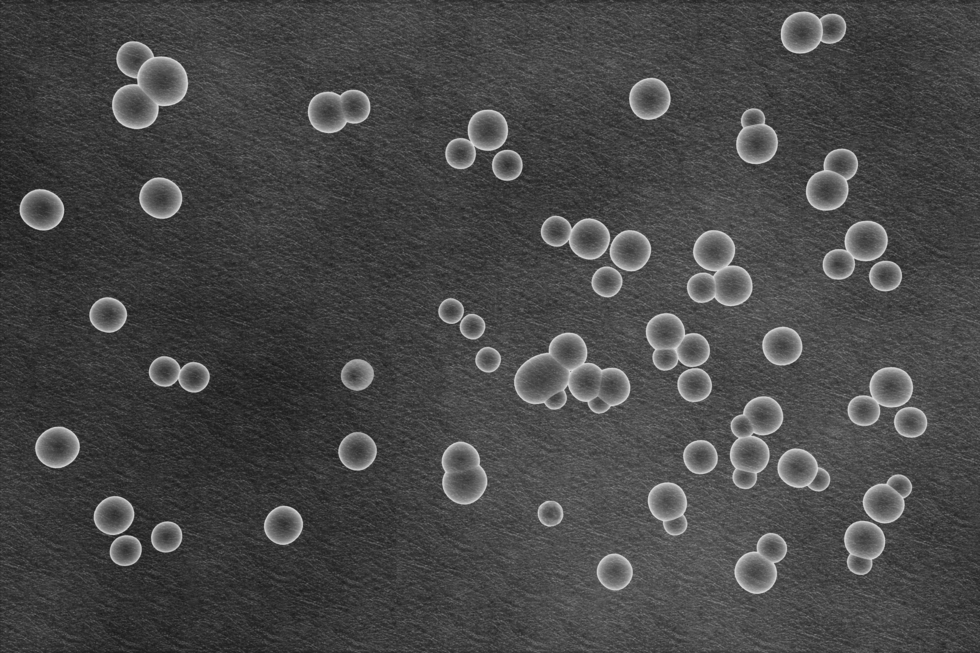
Molds are the frequent cause of rotting of leather, wool or cotton, as well as books, if they are not stored in appropriate conditions, as well as food spoilage. Molds secrete poisonous substances, the so‑called alpha‑toxins.
Food products on which mold appears is fit for consumption. Removing mold from your favorite jam or cutting a piece of moldy bread does not make them edible. The remaining, seemingly untouched part contains harmful substances secreted by the fungus. Therefore moldy food must be unconditionally thrown away.
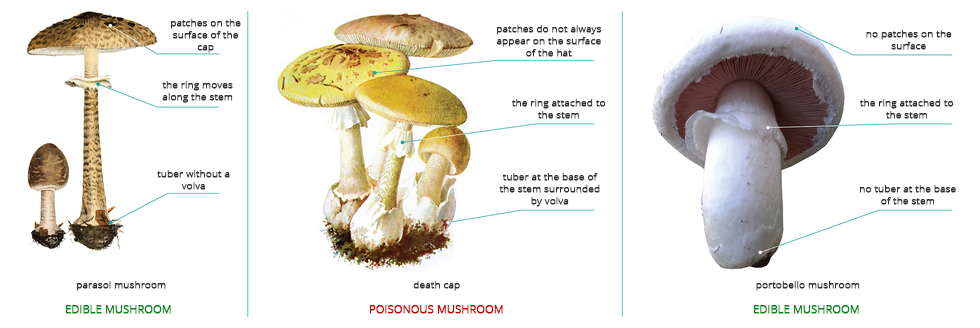
Sporocarps of fungi have been used in cuisine for centuries. Chitin contained in the fungus cell walls makes them hard to digest, however their flavor and nutritious value (amino acids, vitamin A, B1, B2, PP) decide that they are a popular ingredient of dishes. Edible mushrooms are collected in forests (king bolete, sticky bun, birch bolete, chanterelle) or mass grown (common mushroom, oyster mushroom). Poland supplies 25% of common mushroom and forest mushrooms for the EU market. Some forest mushrooms cause food poisoning. Their toxins irreversibly damage liver cells, frequently leading to death. One of the most dangerous mushrooms is the death cap (Ammanita phalloides), mistaken for a common mushroom or parasol mushroom.
Rules of mushroom picking
Mushrooms may only be picked outside the protected areas.
Mushrooms should not be picked from places located near roads and polluted areas.
Only well known mushrooms should be picked.
It is safest to pick mushrooms with tubes under the cap, as there are no lethally poisonous mushrooms among them.
Sporocarps with a full and hard stem should be turned around and lifted off the substrate, others should be cut clear near the ground.
The place where the mushroom grew should be covered with duff and lightly pressed to prevent the drying of exposed mycelium.
You should not pick too young, poorly developed sporocarps, which are hard to recognize.
You should not pick old, wilted mushrooms. Spores will be dispersed from them, and a new mycelium will be formed.
Inedible and poisonous mushrooms are animal food, therefore you should not damage them.
You should store picked mushrooms in airy baskets, not in plastic bags and buckets.
Particular species of mushrooms coexist with specific species of plants. Therefore king boletes can be found under oak trees, sticky buns under larch trees, birch boletes among birch trees and false saffron milkcap under spruce. These species live in symbiosis with the roots of specific trees and therefore are called mycorrhizaedmycorrhizaed fungi. Their hyphae entwine the roods and use the organic substances secreted by plants. The fungi are the sources of mineral salts, some vitamins and water for the trees.
The first discovered antibiotic produced by the mycelium of the was...?
- penicillin
- aflatoxin
- patulin
- streptomycin
Summary
Fungi are organisms whose bodies, called mycelium are made of thread‑like hyphae.
All fungi are heterotrophic.
Fungi multiply by sexual and asexual reproduction through the fragmentation of the mycelium and spores.
While picking mushrooms it is recommended not to pick mushrooms with gills, as those include lethally poisonous species.
Keywords
fungi, mycelium, hyphae
Glossary
grzybica – choroba wywoływana przez grzyby pasożytnicze
grzybnia – splot nitkowatych strzępek tworzących plechę grzyba
mikoryza – związek pomiędzy grzybami i korzeniami drzew przynoszący korzyść obu partnerom
obieg materii w przyrodzie – stały przepływ pierwiastków pomiędzy środowiskiem, roślinami, konsumentami i saprobiontami
owocnik –zbita część grzybni, na której powstają zarodniki; składa się zwykle z trzonu i kapelusza
strzępki – jedno- i wielokomórkowe nitki budujące ciało grzyba