bg‑azure

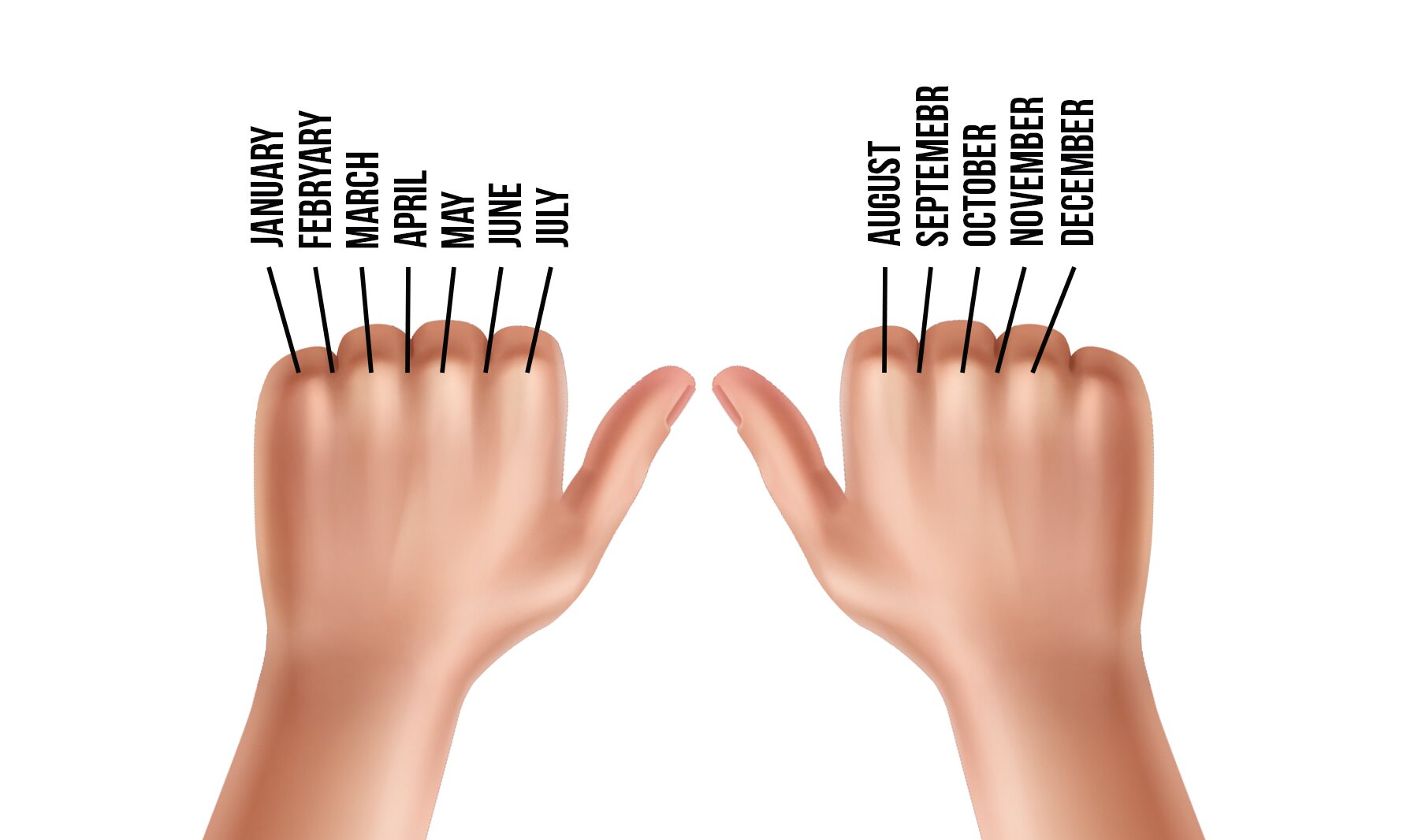
The picture shows the knuckle mnemonic for remembering the number of days in the month. Have you ever tried it? In this section, you are going to learn some more mnemonic devices. Analyse the presentation that follows and think if any of the described mnemonics can be useful for you.

Grafika przestawia metodę pozwalającą zapamiętać, ile dni mają poszczególne miesiące. Sposób ten polega na naprzemiennym przyporządkowaniu miesięcy do kostek dłoni i zagłębień między nimi. W tej sekcji dowiesz się więcej o mnemotechnikach. Przeanalizuj prezentację i zastanów się, czy któreś z opisanych technik mogą być dla ciebie użyteczne.
R1Iy6lxGi0e1i
Do you use mnemonics?
Czy używasz mnemoniki?
Źródło: dostępny w internecie: freepik.com [dostęp 22.12.2021], domena publiczna.
Exercise 1
R4hU3KKnf2GFX
Drag and drop elements to put them in the correct order. 1. learning, 2. technique, 3. memory, 4. that, 5. is, 6. any, 7. aids, 8. human, 9. A mnemonic, 10. our, 11. device1. learning, 2. technique, 3. memory, 4. that, 5. is, 6. any, 7. aids, 8. human, 9. A mnemonic, 10. our, 11. device1. learning, 2. technique, 3. memory, 4. that, 5. is, 6. any, 7. aids, 8. human, 9. A mnemonic, 10. our, 11. device1. learning, 2. technique, 3. memory, 4. that, 5. is, 6. any, 7. aids, 8. human, 9. A mnemonic, 10. our, 11. device1. learning, 2. technique, 3. memory, 4. that, 5. is, 6. any, 7. aids, 8. human, 9. A mnemonic, 10. our, 11. device1. learning, 2. technique, 3. memory, 4. that, 5. is, 6. any, 7. aids, 8. human, 9. A mnemonic, 10. our, 11. device1. learning, 2. technique, 3. memory, 4. that, 5. is, 6. any, 7. aids, 8. human, 9. A mnemonic, 10. our, 11. device1. learning, 2. technique, 3. memory, 4. that, 5. is, 6. any, 7. aids, 8. human, 9. A mnemonic, 10. our, 11. device1. learning, 2. technique, 3. memory, 4. that, 5. is, 6. any, 7. aids, 8. human, 9. A mnemonic, 10. our, 11. device1. learning, 2. technique, 3. memory, 4. that, 5. is, 6. any, 7. aids, 8. human, 9. A mnemonic, 10. our, 11. device1. learning, 2. technique, 3. memory, 4. that, 5. is, 6. any, 7. aids, 8. human, 9. A mnemonic, 10. our, 11. device
Źródło: GroMar Sp. z o.o., licencja: CC BY-SA 3.0.

Study the presentation and do the exercises below.
RjSwbGpPJIayR

Mnemonics

R1Ih4C0saWyLg
Źródło: dostępny w internecie: https://freepik.com/ [dostęp 29.05.2023], domena publiczna.
TRANSCRIPTazurewhite
R1LF59gdVxgXh

Acronym Magic

R1W9QRNJqLjUN
Źródło: dostępny w internecie: https://freepik.com/ [dostęp 29.05.2023], domena publiczna.
TRANSCRIPTazurewhite
R1SQvBvIqsZFu

Story Linking

RSCzzLupjfuf1
Źródło: dostępny w internecie: https://freepik.com/ [dostęp 29.05.2023], domena publiczna.
TRANSCRIPTazurewhite
R101R7T06d1mQ

Visual Associations

R1eGh5jNiN87W
Źródło: dostępny w internecie: https://freepik.com/ [dostęp 29.05.2023], domena publiczna.
TRANSCRIPTazurewhite
R1BoFOrkOSORA

Rhyme Time

RrbhustjAGEUU
Źródło: dostępny w internecie: https://freepik.com/ [dostęp 29.05.2023], domena publiczna.
TRANSCRIPTazurewhite
RwNnqjCVwD9G3

Music Mastery

R15WFxc0bPvN4
Źródło: dostępny w internecie: https://freepik.com/ [dostęp 29.05.2023], domena publiczna.
TRANSCRIPTazurewhite
R12333Pq08SLF

Method of Loci

R1YpFw6mGBjKg
Źródło: dostępny w internecie: https://freepik.com/ [dostęp 29.05.2023], domena publiczna.
TRANSCRIPTazurewhite
R1cFuWsQRp0oA

Colour Coding

RbMnE0Ad0szz5
Źródło: GroMar Sp. z o.o., licencja: CC BY-SA 3.0.
TRANSCRIPTazurewhite
RTCFTosQB9O8z

Mind Maps

RDstdRWAe0vau
Źródło: dostępny w internecie: freepik.com [dostęp 29.05.2023], domena publiczna.
TRANSCRIPTazurewhite
R7O8GvXSfsQxD

The 7‑3‑2‑1 Method

R5ifHvSrMGV2P
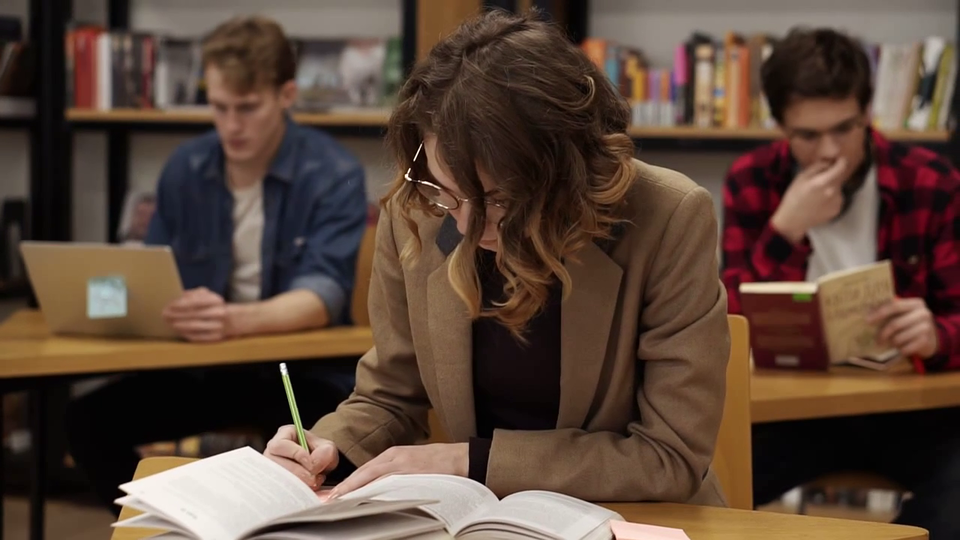
Krótki filmik przedstawia trzy osoby siedzące przy biurkach w pomieszczeniu. Na pierwszym planie widać młodą kobietę z ciemnymi, lekko kręconymi włosami do ramion, w okularach, ubraną w karmelową marynarkę. Kobieta w prawej ręce trzyma ołówek, który coś zapisuje. Podnosi i pochyla głowę. Przed nią na biurku leżą otwarte książki. Za nią widoczni są dwaj młodzi mężczyźni. Chłopak po prawej ma krótkie, jasne włosy i ubrany jest w dżinsową koszule. Pracuje na stojącym przed nim laptopie. Mężczyzna po prawej ma krótkie, ciemne włosy, okulary i ubrany jest w koszulę w kratę. W rękach trzyma książkę, nad którą się pochyla. W tle widoczne są regały wypełnione książkami.
TRANSCRIPTazurewhite
Lektor volume
Music volume
Exercise 2
Rya1gYaEuoMjb
Study the presentation above and mark the sentences as true or false.
  1. When you use mnemonics, new knowledge is built on what has already been known or learnt.
    TRUEFALSE

  2. In spatial grouping, students draw pictures which represent the meaning of the words they want to remember.
    TRUEFALSE

  3. The use of visual mnemonics boosts students’ interest in the topic.
    TRUEFALSE

  4. If you use storytelling to remember new words, first you write a story, then you try to retell it to see how much you managed to remember.
    TRUEFALSE

  5. Mind mapping enhances students’ creativity.
    TRUEFALSE

  6. When you use acronyms, you make a sentence from the words you want to remember.
    TRUEFALSE
Źródło: GroMar Sp. z o.o., licencja: CC BY-SA 3.0.
Exercise 3
R1OOPipukFyXF
Study the presentation and choose the correct words/expressions to complete the sentences below. 1. Words created from the first letters of a series of words are called acronymsaids and they are great mnemonics.

2. Creating rhymesassociations between familiar places and new pieces of information is called the method of loci.

3. Your mind maps should be visually appealingdoable so that you remember the information arranged in them better.

4. Even your daily beatcommute to school can become a useful mnemonic device if you know how to use that time.

5. For many people colourful visuals are more memorablefamiliar than the black and white ones.

6. You are more likely to remember things in the long runin catchy tunes when you repeat them a couple of times with breaks of different length between revisions.
Źródło: GroMar Sp. z o.o., licencja: CC BY-SA 3.0.
Exercise 4

Answer the question below. Write 3‑4 sentences.

Which mnemonic techniques would you find most useful? Why?

R1O2gPakb3605
Źródło: GroMar Sp. z o.o., licencja: CC BY-SA 3.0.