Przeczytaj
The picture below shows a group of girls staring at their phones, probably during a school break. Read the text to learn why headteachers often want to prohibit the use of phones at school.
Na poniższym zdjęciu widać grupę dziewcząt, prawdopodobnie podczas przerwy między lekcjami. Wpatrują się w ekrany swoich smartfonów. Przeczytaj tekst, aby dowiedzieć się, dlaczego dyrektorzy szkół często chcą zabronić używania telefonów na terenie placówek edukacyjnych.
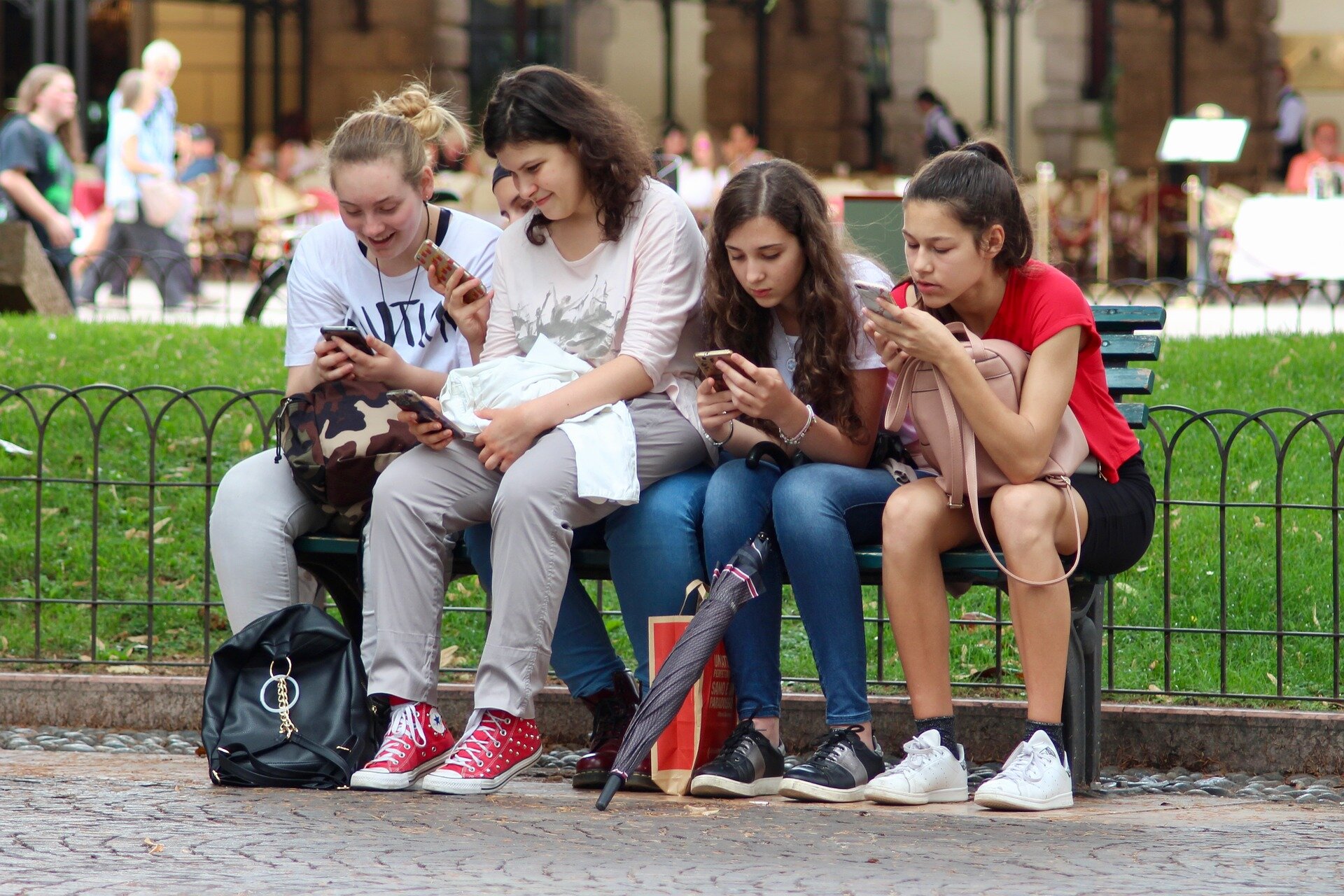
Read the text to learn more about the arguments against allowing pupils to use mobile phones at school. What do you think about it?
Ban the smartphones! No doubt about it.In this modern day and age, smartphones have become an essentialessential part of life. Most children today own one and they are extremely competentcompetent at using it. Although children are deeply attached to their smartphones, almost as if there was a kind of umbilical cordumbilical cord between them and their devices, the big question that is currently a hot debate is: “Should smartphones be bannedbanned in schools?”
First, let's look at the growing argument that is in favour of a total ban on phones in school. In the UK, Education Secretary Gavin Williamson has recently said, “No parent wants to send their child to a school where poor behaviour is riferife. Mobile phones are not just distracting, but when misusedmisused or overusedoverused, they can have an alarmingly damaging effect on a pupil's mental health and well‑beingwell‑being. I want to put an end toput an end to this, making the school day mobile‑free.” For some time now, mobile phones have become something that is very difficult to control and is driving many teachers todriving many teachers to distractiondistraction when trying to fosterfoster a learning environment in their classroom. Phones are constantly ringing or pingingpinging during the lessons, and pupils are obsessed with checking their phones on a regular basis. Generally, when they feel bored, they turn to their phones as a distraction. Head teacher Katharine Birbalsingh also said, “We think mobile phones are extremely distracting for children and the devices interrupt their concentration and their ability to think.”
There is also a strong belief that mobile phones in schools can act as a “breeding groundbreeding ground” for cyber‑bullying through the inappropriateinappropriate use of social media sites and online videos. It is far too easy today for bullies to attack other students while hiding behind a phone.
What is more, according to a recent study by the London School of Economics, banning phones had the effect of giving pupils the equivalentequivalent of an additionaladditional hour a week in school or an extra week's education over the course of an academic year. Other researchersresearchers looked at schools in four English cities that had banned phones and found test scores increased by more than 6%.
Mobile phones are not just having an effect inside but also outside the classroom as the use of them distracts pupils from healthy exercise and good old‑fashionedold‑fashioned play. During breaks and lunch times, it is common to find many students huddledhuddled together staring blanklyblankly into their screens. In France, there is now a law to prevent children from using their phones inside the grounds, and the UK would like to follow suitfollow suit.
While schools are looking for solutions to the excessive use of phones by young people, it seems that there is no escape from them and the place for them in the modern education system should be found.
Źródło: Dorota Giżyńska, licencja: CC BY-SA 3.0.
a) Mobile phones are distracting for pupils.
b) Students are addicted to their phones.
c) Pupils are very good at using them.
2. According to Gavin Williamson, the biggest threat that mobile phones pose is that
a) they distract students from learning.
b) they cause bad behaviour.
c) they can lead to psychological problems.
3. What does the author mean by “breeding ground”?
a) a place where negative behaviours develop.
b) pupils get bored.
c) students find it difficult to think during lessons.
4. Studies show that banning mobiles has led to
a) increased test scores by less than 5%
b) better school results.
c) more free time for pupils.
5. Great Britain wants to
a) ban phones only inside the classroom.
b) let pupils use phones only during breaks.
c) introduce regulations similar to the ones in France.
Słownik
/ əˈdɪʃn̩əl /
dodatkowy/dodatkowa (more than was first mentioned or is usual)
/ bænd /
zakazany/zakazana (officially forbidden)
/ ˈblæŋkli /
obojętnie, beznamiętnie (without expression or understanding)
/ ˈbriːdɪŋ ɡraʊnd /
pożywka (an area where birds, fish, or other animals habitually breed)
/ kɔːl ə speɪd ə speɪd /
nazywać rzeczy po imieniu (idiom) (to say exactly what you think without trying to hide your opinion)
/ kɔːl ˈɪt ə ˈdeɪ /
zakończyć pracę na dzisiaj (to decide or agree to stop doing something)
/ kɔːl ˈsʌmbədi ˈneɪmz /
obrzucać wyzwiskami (to use offensive words about somebody)
/ kɔːl ˈsəmˌbɑːdi blʌf /
zmusić kogoś do pokazania kart (idiom), zmusić kogoś do powiedzenia prawdy (to tell somebody to do what they are threatening to do, because you believe that they will not be cruel or brave enough to do it)
/ kɔːl ðə ʃɒts /
wydawać rozkazy, dyktować warunki (to be the person who controls a situation)
/ ˈkɒmpɪtənt /
kompetentny/kompetentna (having enough skill or knowledge to do something well or to the necessary standard)
/ dɪˈstrækʃn̩ /
rozproszenie uwagi (a thing that takes your attention away from what you are doing or thinking about)
/ ˈdraɪvɪŋ ˌmeni ˈtiːtʃəz tuː / / ˈdraɪv ˈsʌmbədi tu: /
doprowadzając nauczycieli/nauczycielki do [doprowadzić kogoś do] (to motivate, compel, or impel one to do something)
/ ɪˈkwɪvələnt /
równoznaczny/równoznaczna, taki sam/taka sama (a thing, amount, word, etc. that is equal in value, meaning or purpose to something else)
/ ɪˈsenʃl̩ /
niezbędny/niezbędna (completely necessary; extremely important in a particular situation or for a particular activity)
/ ˌfɒləʊ suːt /
naśladować (to conform to another’s actions)
/ ˈfɒstə /
wspierać, rozwijać (to encourage something to develop)
/ ˈhʌdl̩d / / ˈhʌdl̩ /
zgromadzeni/zgromadzone [gromadzić się] (to gather closely together, usually because of cold or fear)
/ ɪn ˈfeɪvər ɒv /
na korzyść czegoś (supporting or agreeing with sth/sb)
/ ˌɪnəˈprəʊprɪət /
niestosowny/niestosowna (not suitable or appropriate in a particular situation)
/ ˌmɪsˈjuːzd /
użytkowany/użytkowana niezgodnie z przeznaczeniem (used in a wrong way)
/ əʊl ˈfæʃn̩d /
staromodny/staromodna (not modern; no longer fashionable)
/ ˌəʊvəˈjuːzd /
nadużywany/nadużywana (used too often)
/ ˈpɪŋɪŋ / / pɪŋ /
wysyłający/wysyłająca wiadomość [wysłać wiadomość] (to send an email or a text message to somebody)
/ ˈpʊt ən end tuː /
położyć czemuś kres (to finish something)
/ rɪˈsɜːtʃəz / / rɪˈsɜːtʃ /
badacze/badaczki [badacz/badaczka] (a person who studies something carefully and tries to discover new facts about it)
/ raɪf /
powszechny/powszechna (szczególnie coś nieprzyjemnego) (full of something bad or unpleasant)
/ ʌmˈbɪlɪkl̩ kɔːd /
pępowina (a long piece of tissue that connects a baby to its mother before it is born and is cut at the moment of birth)
/ wel ˈbiːɪŋ /
dobrostan (general health and happiness)
Źródło: GroMar Sp. z o.o., licencja: CC BY‑SA 3.0