Przeczytaj
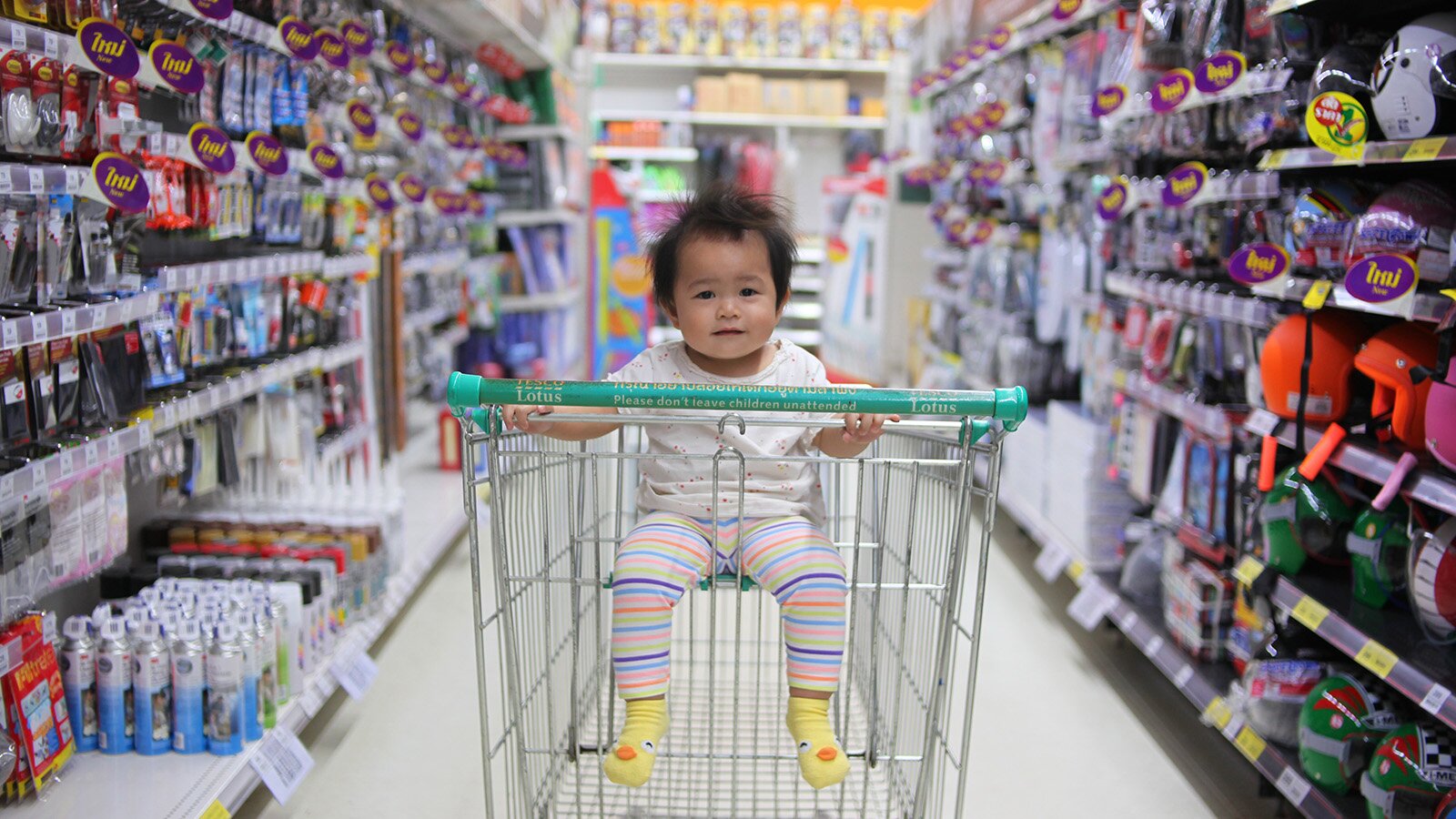
The picture below shows a baby who is sitting in a shopping cart and seems to be pretty happy about it. This proves that we are accustomed to such places as supermarkets from an early age. Can you remember your first visit to a big shopping centre? Do you take pleasure in shopping?
Na poniższej fotografii widzisz dziecko, które siedzi w wózku sklepowym i wydaje się być zadowolone. To dowodzi, że już od wczesnego dzieciństwa jesteśmy przyzwyczajeni do takich miejsc, jak supermarkety. Czy pamiętasz swoją pierwszą wizytę w supermarkecie? Czy robienie zakupów sprawia ci przyjemność?
Read the text about the first experience as a shop assistant in the supermarket and do the exercises below.
My First Day in the Supermarket(1)…..
A week ago I spent my very first day in the supermarket. I can hear you say: “Seriously? How is that possible?” Let me explain. I’m not an alien from another planet or a stranger from a remote, deep forest. My name is Bartek, aged 17, and I am familiar with shops, malls and markets but as a person who buys, not as someone who sells and helps customers! It was my first day at work and believe me, it was a real roller coasterroller coaster.
(2)…….
First of all, I haven’t had a clue that aislesaisles are like a chart – a 3D map for shop assistants. If you know them well, there is no trouble finding pineapple juice, fizzy strawberry drink or other beveragesbeverages. You have no problems helping customers find canned goodscanned goods such as sun‑dried tomatoes or tuna, or packaged goodspackaged goods like salty sticks or crisps. You may even feel as if you were in a computer game when you help an annoyed lady with a shopping trolleyshopping trolley localise the frozen foods section as she desperately needs her favourite pizza for supper. You might feel like a hero once you point to French cheese in a deli sectiondeli section, so that a young mum can calm her crying child down. I’m telling you, working in a supermarket is an adventure.
(3)……
You also need to stay strong and resistantresistant as it is hard to pass by baked goodsbaked goods without buying some of those fresh rolls and chocolate cupcakes, or not to drink strawberry milk and delicious yoghurt you can find in the dairy section. You should remember not to go shopping when you are hungry because if you are – you feel like eating literally everything. I mean, such places are tempting us to fill our shopping trolley with all the goods available! So, be solidsolid and try not to.
(4)……
The worst place in the whole supermarket is the checkout areacheckout area. Why? Most of the customers, waiting impatiently in queuesqueues, are surprised with the number of items they put on the conveyor beltconveyor belt. This is the time when the customers are nervously looking for couponscoupons hoping to get even the smallest discountdiscount and telling the cashiercashier how disappointed they are with the lack of special offersspecial offers. They are really tense observing the cashier’s hand holding the scannerscanner. They sometimes even force cashiers to check the barcode twice and then express their frustration easily at the checkout countercheckout counter when it comes to paying for the goods… Those shoppers usually inform everyone around that the prices in the shop are a rip‑offrip‑off. The cashiers call them “ drama queens”.
(5)……
There is another type of a customer, though. These are shoppers who probably treat shopping as a painful dutypainful duty, so they take the items from their list only, choose the self‑service checkoutself‑service checkout, pay quickly without saying a word and leave the shop as fast as they can.
Well, this is just my observation as a packerpacker with one‑week experience. Maybe I don’t know much about shops and sales but I am sure of one thing: we can make our lives easier. So, next time you decide to go shopping, try to give a smile to me, cashiers and other supermarket workers and we will do everything to satisfy you.
Źródło: Ewelina Ramontowska, licencja: CC BY-SA 3.0.
a) funny at times as he compares it to a roller coaster.
b) rather hard as he compares it to a roller coaster.
c) terrifying and hard as he compares it to a roller coaster.
d) exhausting and unpleasant as he compares it to a roller coaster.
2. Bartek claims that if you know the aisles well,
a) you will never get lost.
b) you will be helpful for customers.
c) you don’t worry about customers.
d) you can calm children down.
3. According to Bartek, a shop assistant may feel like a hero because he/she
a) can help customers find a product they need.
b) knows where particular products are.
c) can localise a section the customer is looking for.
d) can look at the shop aisles as if it was a map.
4. Bartek explains that it is hard to be in a supermarket and
a) buy only fresh, delicious goods.
b) not to purchase all those fresh, delicious goods.
c) smell some of those fresh, delicious proposed products.
d) eat all of those fresh, delicious freshly baked goods.
5. A checkout area is the worst place in the supermarket because
a) the customers realise they haven’t got coupons.
b) the customers express their disappointment with the quality of goods.
c) the customers are often unpleasant to the cashiers.
d) the cashiers often argue with customers.
6. Bartek mentions two types of customers:
a) drama queens and shopping lovers.
b) fast shoppers and shopping lovers.
c) silent shopping lovers and drama queens.
d) drama queens and fast, silent shoppers.
7. In the last paragraph Bartek recommends
a) being resistant to goods at the shop.
b) being economical at the shop.
c) being patient and silent.
d) being nice to the shop workers.
Słownik
/ aɪlz/ / aɪl /
przejścia, przejście między półkami, działami w sklepie (a passage between rows of shelves in a supermarket)
/ beɪkt ɡʊdz / / beɪkt ɡʊ /
wypieki [wypiek] (bread, cakes, pastries, and similar items of food that are prepared/baked in an oven)
/ ˈbevərɪdʒɪz / / ˈbevərɪdʒ /
napoje [napój] (any type of drink except water)
/ kænd ɡʊdz / / kænd ɡʊ /
konserwy [konserwa] (food preserved by canning)
/ kæʃ tɪl /
kasa (fiskalna) (a machine used in shops, restaurants, etc. for keeping money in and giving change)
/ kæˈʃɪə /
kasjer/kasjerka (a person whose job is to receive money and give change in a shop)
/ ˈtʃekaʊt ˈeəriə /
kasa (a point at which goods are paid for in a supermarket or similar store)
/ ˈtʃekaʊt ˈkaʊntə /
stanowisko kasowe (a place in a store where customers go to pay for the goods they want to buy)
/ kəmˈpleɪnt / / kəmˈpleɪn /
skarga, zażalenie [skarżyć się, narzekać] (a statement which somebody makes saying that they are not satisfied) [( to say that you are not satisfied)]
/ kənˈveɪə belt /
taśma transportowa przy kasie (a moving band used for transporting goods to a cashier)
/ ˈkuːpɒnz / / ˈkuːpɒn /
kupony zniżkowe [kupon zniżkowy] (a small piece of printed paper that you can exchange for something or that gives you the right to buy something at a cheaper price)
/ ˈdeəri ˈprɒdʌkts / / ˈdeəri ˈprɒdʌkt /
nabiał, produkty mleczne [produkt mleczny] (milk, cheese and other milk products)
/ dɪˈsaɪfəd / / dɪˈsaɪfə /
odszyfrowany [odszyfrować]
/ ˈdeli ˈsekʃn̩ /
dział delikatesów, garmażeria (a place in a shop where cooked meats and cheeses and special foods are sold)
/ ˈdɪskaʊnt /
rabat, zniżka (an amount of money that is taken off the usual cost of something)
/ ɪkˈspaɪə /
wygasnąć (np. o terminie przydatności) (to reach a date when a product can no longer be used)
/ ɪkˈspres ˈtʃekaʊt laɪn /
ekspresowe, szybkie kasy, np. dla osób, które mają nie więcej niż 10 produktów (lanes designed to make your shopping trip a little faster by expediting the wait when you have 10 items or fewer)
/ ˈfrəʊzən fuːdz / / ˈfrəʊzən fuːd /
mrożonki [mrożonka] (food that has been subjected to rapid freezing and is kept frozen until used)
/ ˈɡrosərz /
sklep spożywczy (a shop that sells food and other things used in the home)
/ ˈpækɪdʒd ɡʊdz / / ˈpækɪdʒd ɡʊ /
towary zapakowane [towar zapakowany] (consumer goods that are sold in packages)
/ ˈpækə /
osoba pakująca towar przy kasie (a person employed to pack things into bags at shop)
/ ˈpɜːtʃəs /
zakup (the items which were bought)
/ ˈpɜːtʃəs /
kupować (to buy)
/ kjuːz / / kjuː /
kolejki [kolejka] (a line of people waiting in front of a cash desk)
/ rɪˈzɪstənt /
odporny/odporna
/ ˈrɪp ɒf /
zdzierstwo (when you pay far too much for an item)
/ ˈrəʊlə ˈkəʊstə /
tu: huśtawka nastrojów
/ ˈskænə /
czytnik, skaner (a device for examining barcodes)
/ self ˈsɜːvɪs ˈtʃekaʊt /
kasa samoobsługowa (a checkout where customers scan, pack and pay for their goods by himself/herself)
/ ˈʃɒpɪŋ ˈbɑːskɪt /
koszyk na zakupy (a container for shopping)
/ ˈʃɒpɪŋ ˈtrɒli /
wózek sklepowy (a large basket on wheels into which you put the things that you want to buy)
/ ˈsɒlɪd /
solidny
/ ˈpeɪnfəl ˈdjuːti /
przykry obowiązek (a chore which must be done no matter if we feel like doing it or not)
/ ˈspeʃl̩ ˈɒfəz / / ˈspeʃl̩ ˈɒfə /
promocje [promocja] (a product that is sold at less than its usual price)
Źródło: GroMar Sp. z o.o., licencja: CC BY‑SA 3.0