Przeczytaj
We all know the Olympic Games. It is an event where athletes compete and try to beat world records. However, not many people know that when the Olympic Games finish another great event starts. It is the Paralympic Games. Do you know anything about this event? Read the text about the Winter Paralympic Games and learn more about the sports the athletes do.
Wszyscy znamy igrzyska olimpijskie. Jest to impreza, na której sportowcy rywalizują ze sobą i starają się pobić rekordy świata. Niewiele osób jednak wie, że po zakończeniu igrzysk olimpijskich rozpoczyna się inna wielka impreza. Są to igrzyska paraolimpijskie. Czy wiesz coś o tym wydarzeniu? Przeczytaj tekst o Zimowych Igrzyskach Paraolimpijskich i dowiedz się więcej o sportach, które uprawiają sportowcy.
Match the following sports with their translations.
Połącz poniższe sporty z ich tłumaczeniami.
Match the English words and phrases with the correct pictures.
Połącz wyrazy i wyrażenia w języku angielskim z odpowiednimi obrazkami.
Read the text about the Winter Paralympic Games. Then do the exercises below.
Przeczytaj tekst o Zimowych Igrzyskach Paraolimpijskich. Następnie wykonaj zadania.
Two Kinds of GamesWinter Paralympic Games
There are many winter sports that athletesathletes can do during the Olympic Games and Paralympic Games. Paralympic games are for disabled people. Sports in both Games are usually the same, but sometimes they use different equipmentequipment. Here are five very popular winter sports in both games.
Curling
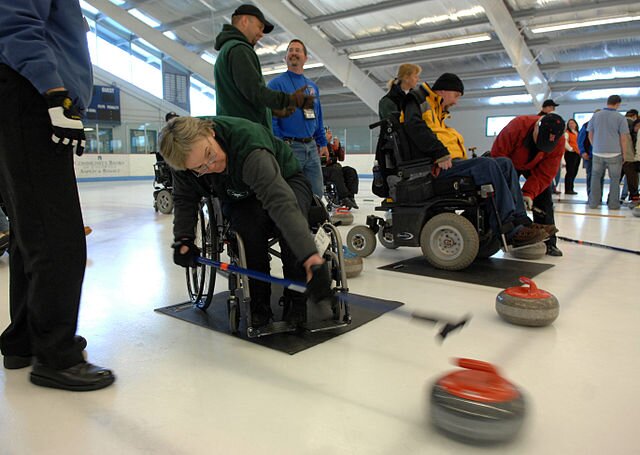
Curling is a team sport and you play it on ice. There are four athletes in each team. They need to slideslide a stonestone to a targettarget. We call it a house. One player slides the stone and at the same time the other players sweepsweep the ice with special broomsbrooms or brushesbrushes to stop it. In paralympic curling, disableddisabled players sit in wheelchairswheelchairs and they have a special stickstick. It helps them curl the stone.
Alpine skiingAlpine skiing and cross‑country skiingcross‑country skiing
Good skisskis, polespoles and gogglesgoggles are what Alpine and cross‑country skiersskiers need. There are six different disciplines that athletes can take part in. However, in the Paralympic Games there are 3 categories which depend on the disabilitiesdisabilities. Skiers can use one or two skis and poles. Those in wheelchairs use special skis on which they can sit. Those who have problems with their sight can work with a guideguide. It’s a person who tells them what to do over the radio.
Snowboarding
You need a snowboard and a pair of goggles for this sport. There are 11 snowboarding events in the Winter Olympic Games. Para snowboarders can competecompete in 3 disciplines. The main difference is the equipment they use. The snowboardsnowboard is usually thinnerthinner and a little bit harder than a traditional one.
BiathlonBiathlon
Biathlon is cross‑country skiing and shooting a riflerifle. Skiers stop to shoot at a target and then continue skiing. When they miss the target, they get a penaltypenalty. Athletes in both games need the same equipment, which are skis, poles, and a rifle. Those who have problems with their sightsight may work with a guideguide who gives them directions.
Ice hockey
To play ice hockey athletes need a pair of skates, a helmet and a stick. The rules for both ice hockey games are the same. There are differences with the equipment. Players don’t use ice skates but they use a special kind of sledgessledges. They also use two sticks. The puckpuck is the same for both types of hockey.
Źródło: Dorota Giżyńska, licencja: CC BY-SA 3.0.
Read the text and choose the sentence that best summarises what the text is about.
Przeczytaj tekst i wybierz zdanie, które najlepiej podsumowuje jego treść.
Read the text again and fill in the missing words in Polish.
Ponownie przeczytaj tekst i uzupełnij poniższą wiadomość polskimi wyrazami/wyrażeniami.
Read the text again and decide if the following sentences are true or false.
Po przeczytaniu tekstu zdecyduj, czy podane zdania są prawdziwe, czy fałszywe.
Read the text again and drag the words to fill in the gaps.
Przeczytaj tekst kolejny raz i uzupełnij luki w zdaniach właściwymi wyrazami.
2. Some para athletes need only one ski and one 1. pole, 2. target, 3. rifle, 4. puck, 5. sweep in alpine skiing.
3. Skiers in biathlon have a 1. pole, 2. target, 3. rifle, 4. puck, 5. sweep to shoot.
4. If they miss the 1. pole, 2. target, 3. rifle, 4. puck, 5. sweep, they get a penalty.
5. You hit the 1. pole, 2. target, 3. rifle, 4. puck, 5. sweep with a stick in ice hockey.
Słownik
/ ˈælpaɪn ˈskiːɪŋ /
narciarstwo alpejskie
/ ˈæthetaliːts // ˈæthetaliːt /
sportowcy [sportowiec/sportowczyni]
/ bʌɪˈæthetalən /
biatlon (zimowa dyscyplina sportu, łącząca biegi narciarskie ze strzelectwem)
/ bruːmz / / bruːm /
miotły [miotła]
/ ˈbrʌʃɪz / / brʌʃ /
szczotki [szczotka]
/ kəmˈpiːt /
rywalizować
/ krɒs -ˈkʌntri ˈskiːɪŋ /
narciarstwo biegowe
/ kɜːl /
podkręcać
/ ˈkɜːlɪŋ /
curling (gra, w której używa się granitowych kamieni przesuwanych na tafli lodu)
/ dɪsˈeɪbl̩d /
niepełnosprawny/niepełnosprawna
/ ˌdɪsəˈbɪlɪtɪz / / ˌdɪsəˈbɪlɪti /
niepełnosprawności [niepełnosprawność]
/ əˈkwɪpmənt /
uprawiać sport
/ ˈɡɒɡl̩z /
gogle (okulary ochronne, których używamy podczas narciarstwa oraz snowboardu)
/ ɡaɪd /
przewodnik/przewodniczka
/ ˈpærə ˈæthetaliːts / / ˈpærə ˈæthetaliːt /
parasportowcy [parasportowiec/parasportowczyni] (sportowiec, który ma niepełnosprawność lub dysfunkcję, która kwalifikuje go do rywalizacji w sporcie paraolimpijskim)
/ ˈpenlti /
kara
/ pəʊlz / / pəʊl /
kijki [kijek]
/ pʌk /
krążek do hokeja
/ ˈraɪfəl /
karabinek
/ saɪt /
wzrok
/ ˈskiːəz / / ˈskiːə /
narciarze/narciarki [narciarz/narciarka]
/ skiːz / / skiː /
narty [narta]
/ ˈsledʒɪz / / sledʒ /
sanki, sanie
/ slaɪd /
ślizgać się, przesunąć (po lodzie)
/ ˈsnəʊbɔːd /
deska snowboardowa
/ stɪk /
kij
/ stəʊn /
kamień
/ swiːp /
zamiatać
/ ˈtɑːɡɪt /
tarcza, cel
/ ˈthetaɪnə / / thetaɪn /
cieńszy/cieńsza/cieńsze [cienki/cienka/cienkie]
/ ˈwiːl̩tʃeəz / / ˈwiːl̩tʃeə /
wózki inwalidzkie [wózek inwalidzki]
Źródło: GroMar Sp. z o.o., licencja: CC BY‑SA 3.0