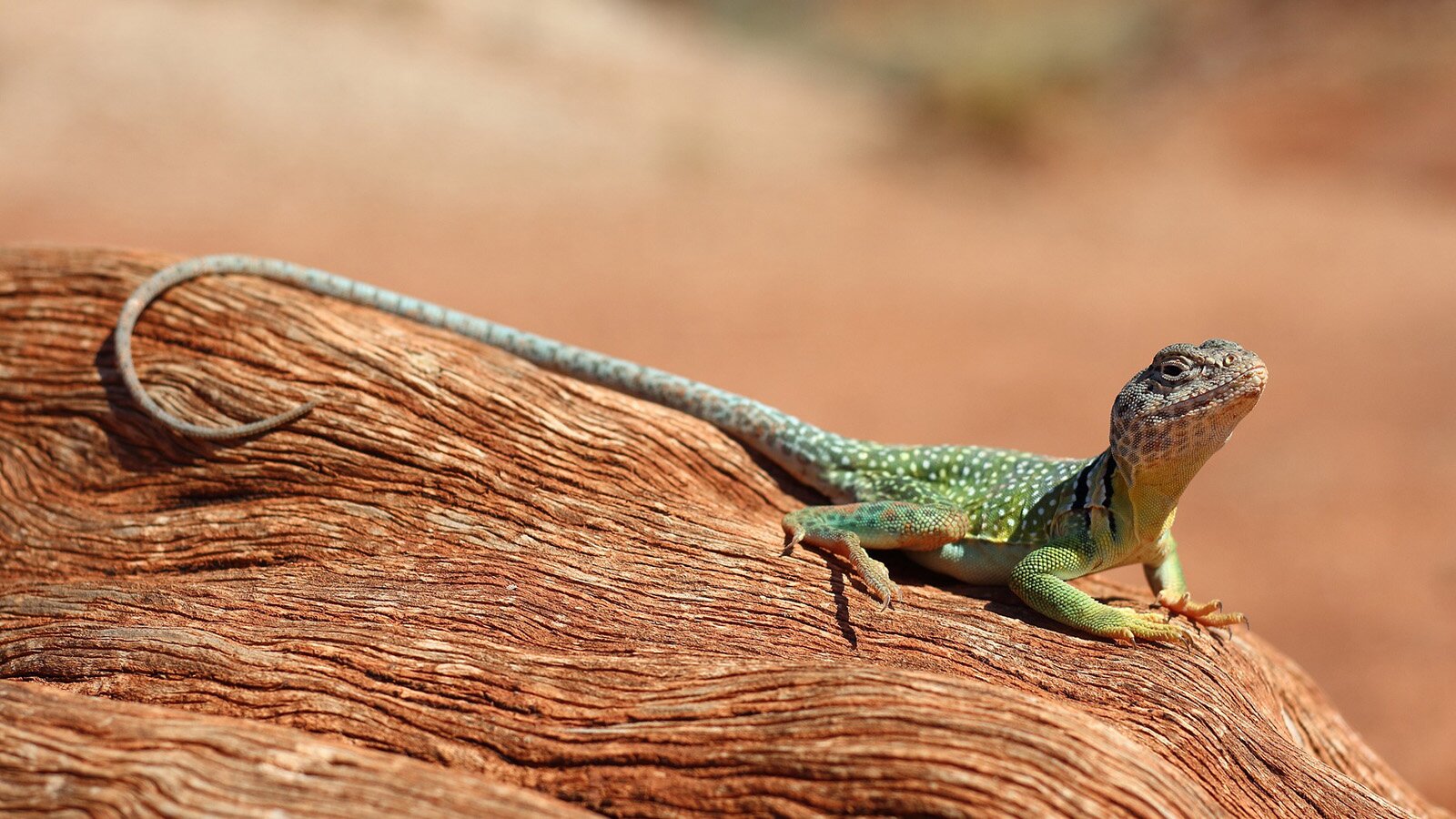
The picture below shows a lizard in its natural environment. How is it possible that it can survive in the world with bigger and more dangerous animals? How has it adapted to hot temperatures and the lack of water? Study the text to find answers to these questions and learn more about other animal adaptations.
Poniższe zdjęcie przedstawia jaszczurkę w jej naturalnym środowisku. Jak to możliwe, że jest ona w stanie przetrwać w świecie, w którym żyją większe i bardziej niebezpieczne zwierzęta? Jak przystosowała się do życia w wysokich temperaturach i przy niedostatku wody? Przeczytaj tekst, aby poznać odpowiedzi na te pytania i dowiedzieć się więcej o innych sposobach przystosowania zwierząt do środowiska, w którym żyją.
R1G8p6Q4WKRYu
Zdjęcie przedstawia jaszczurkę leżącą na konarze.
How do lizards survive in their environment?
Jak jaszczurki są w stanie przetrwać w otaczającym je środowisku?
Źródło: dostępny w internecie: https://pixabay.com/ [dostęp 3.02.2022], domena publiczna.
1
Exercise1
Match the names of the animals with their translations.
Źródło: GroMar Sp. z o.o., licencja: CC BY-SA 3.0.
1
Exercise1
Match the English words to the correct pictures.
Połącz wyrazy w języku angielskim z odpowiednimi ilustracjami.
R1aBgUrZZnOmp
Źródło: dostępny w internecie: https://pixabay.com/ [dostęp 3.02.2022], domena publiczna.
Study the text to learn about an ecosystem and what makes it possible for animals to live in different habitats.
Przeczytaj tekst, aby dowiedzieć się, czym jest ekosystem i co sprawia, że zwierzęta mogą żyć w różnych środowiskach.
Amazing Animal Adaptations
Dorota Giżyńska Amazing Animal Adaptations
All ecosystemsecosystems [ecosystem]ecosystems consist of livinglivingliving organisms and nonlivingnonlivingnonliving components which interact withinteract with interact with each other in a specific area. The nonliving components include weather, soil, temperature, rocks and water. The conditions of an ecosystem determinedeterminedetermine what kind of living organisms, such as plants and animals, will survive in it. All living organisms have adapted to the environments they live in. For example, animals can adapt by developingdeveloping [develop]developingfinsfins [fin]fins to swim in the water or by growing thicker furfurfur to survive the cold. But there can also be other adaptationsadaptations [adaptation]adaptations, such as migrationmigrationmigration. It happens when animals find a different place to live because there isn’t enough food or due todue todue todiseasesdiseases [disease]diseases, people’s activity or natural disastersnatural disasters [natural disaster]natural disasters which have led toled to [lead to]led to an imbalanceimbalanceimbalance in the ecosystem.
Animals which live in forests, like bearsbears [bear]bears, squirrelssquirrels [squirrel]squirrels, deerdeer deer or beaversbeavers [beaver]beavers, have adapted in many ways to the changing conditions in different types of this environment. Bears and squirrels hibernate if it gets cold in the winter. Wolveswolves [wolf]Wolves grow thicker fur to help them survive the cold months. Rabbitsrabbits [rabbit]Rabbits change the colour of their fur to camouflagecamouflage (verb)camouflage themselves against predatorspredators [predator]predators. When hedgehogshedgehogs [hedgehog]hedgehogs are in danger or asleep, they curl into a ball and point their sharp spines up straight. In this way, they don’t fall preyfall preyfall prey to more dangerous animals. A wild boarwild boarwild boar’s strong snoutsnouts [snout]snout helps them forage forforage forforage for food and they will eat anything they find in the forest: wormsworms [worm]worms, bird eggs or acornsacorns [acorn]acorns.
Desert animals need to survive high temperatures and lack oflack oflack of water. Some animals like snakes, foxes and rodentsrodents [rodent]rodents sleep during the day and when the temperatures dropdrop (verb)drop, they hunt for food. Others, like kangaroo ratskangaroo rats [kangaroo rat]kangaroo rats, produce their own water by digestingdigestingdigesting dry seedsseeds [seed]seeds. Some lizardslizards [lizard]lizards can even keep water in their tailstails [tail]tails.
Jungle animals, like slothssloths [sloth]sloths, move very slowly not because they are lazy but to preserve energy. Poison dart frogspoison dart frogs [poison dart frog]Poison dart frogs change into bright colours to warn predators: Stay away from me or you will be poisonedpoisonedpoisoned!
Mountain animals, like a mountain goatmountain goats [mountain goat]mountain goat, have hoofshoofs [hoof]hoofs for walking up rocky slopes. Yaksyaks [yak]Yaks have more red blood cellsblood cells [blood cell]blood cells to make it easier to breathe at higher altitudesaltitudes [altitude]altitudes.
Animals living in water such as fish have gillsgills [gill]gills to breathe and fins to swim. Turtlesturtles [turtle]Turtles have modified flippersflippers [flipper]flippers so they can swim and dive. They also use their roughroughrough and hard shellsshells [shell]shells for protection. River ottersotters [otter]otters have an oilyoilyoilylayerlayerlayer of coat to keep them warm and dry. Beavers use their strong, long and ever‑growingever‑growingever‑growing teeth to cut trees to create damsdams [dam]dams to build their densdens [den]dens. Frogs and crocodiles lay eggslay eggslay eggs in water and later move to the ground to live.
Ocean animals had to adapt to salty water, cold temperatures and the lack of light. Wandering albatrosseswandering albatrosses [wandering albatross]Wandering albatrosses drink salty water because they live far away from any sourcessources [source]sources of fresh waterfresh waterfresh water. They have special salt glandsglands [gland]glands, located behind their eyes, which help to get rid ofget rid ofget rid of salt through their beaksbeaks [beak]beaks. Whaleswhales [whale]Whales or sealsseals [seal]seals are equipped withequipped withequipped with a thick layer of fat which acts like insulationinsulationinsulation and keeps them warm when they dive into the cold depthsdepths [depth]depths of the ocean. It can also store energy when food is scarcefood is scarcefood is scarce. But how do deep‑ocean animals survive in complete darkness? Well, they produce their own light using a chemical reaction in their bodies. This light helps them fight predators or find partners.
1 Źródło: Dorota Giżyńska , licencja: CC BY-SA 3.0.
Exercise2
Match the words with their definitions.
Połącz wyrazy z definicjami.
RgXVlTWvSQ2OF
glands Możliwe odpowiedzi: 1. protection against heat, cold or electricity, 2. a way of hiding using elements of the natural environment, 3. plants, animals and their environment in one area, 4. a process of changing something, or of being changed, 5. body organs producing substances for the body to use, 6. events in nature which can cause a lot of damage, 7. changing food into substances that your body can use camouflage Możliwe odpowiedzi: 1. protection against heat, cold or electricity, 2. a way of hiding using elements of the natural environment, 3. plants, animals and their environment in one area, 4. a process of changing something, or of being changed, 5. body organs producing substances for the body to use, 6. events in nature which can cause a lot of damage, 7. changing food into substances that your body can use adaptation Możliwe odpowiedzi: 1. protection against heat, cold or electricity, 2. a way of hiding using elements of the natural environment, 3. plants, animals and their environment in one area, 4. a process of changing something, or of being changed, 5. body organs producing substances for the body to use, 6. events in nature which can cause a lot of damage, 7. changing food into substances that your body can use digesting Możliwe odpowiedzi: 1. protection against heat, cold or electricity, 2. a way of hiding using elements of the natural environment, 3. plants, animals and their environment in one area, 4. a process of changing something, or of being changed, 5. body organs producing substances for the body to use, 6. events in nature which can cause a lot of damage, 7. changing food into substances that your body can use natural disasters Możliwe odpowiedzi: 1. protection against heat, cold or electricity, 2. a way of hiding using elements of the natural environment, 3. plants, animals and their environment in one area, 4. a process of changing something, or of being changed, 5. body organs producing substances for the body to use, 6. events in nature which can cause a lot of damage, 7. changing food into substances that your body can use insulation Możliwe odpowiedzi: 1. protection against heat, cold or electricity, 2. a way of hiding using elements of the natural environment, 3. plants, animals and their environment in one area, 4. a process of changing something, or of being changed, 5. body organs producing substances for the body to use, 6. events in nature which can cause a lot of damage, 7. changing food into substances that your body can use ecosystem Możliwe odpowiedzi: 1. protection against heat, cold or electricity, 2. a way of hiding using elements of the natural environment, 3. plants, animals and their environment in one area, 4. a process of changing something, or of being changed, 5. body organs producing substances for the body to use, 6. events in nature which can cause a lot of damage, 7. changing food into substances that your body can use
glands Możliwe odpowiedzi: 1. protection against heat, cold or electricity, 2. a way of hiding using elements of the natural environment, 3. plants, animals and their environment in one area, 4. a process of changing something, or of being changed, 5. body organs producing substances for the body to use, 6. events in nature which can cause a lot of damage, 7. changing food into substances that your body can use camouflage Możliwe odpowiedzi: 1. protection against heat, cold or electricity, 2. a way of hiding using elements of the natural environment, 3. plants, animals and their environment in one area, 4. a process of changing something, or of being changed, 5. body organs producing substances for the body to use, 6. events in nature which can cause a lot of damage, 7. changing food into substances that your body can use adaptation Możliwe odpowiedzi: 1. protection against heat, cold or electricity, 2. a way of hiding using elements of the natural environment, 3. plants, animals and their environment in one area, 4. a process of changing something, or of being changed, 5. body organs producing substances for the body to use, 6. events in nature which can cause a lot of damage, 7. changing food into substances that your body can use digesting Możliwe odpowiedzi: 1. protection against heat, cold or electricity, 2. a way of hiding using elements of the natural environment, 3. plants, animals and their environment in one area, 4. a process of changing something, or of being changed, 5. body organs producing substances for the body to use, 6. events in nature which can cause a lot of damage, 7. changing food into substances that your body can use natural disasters Możliwe odpowiedzi: 1. protection against heat, cold or electricity, 2. a way of hiding using elements of the natural environment, 3. plants, animals and their environment in one area, 4. a process of changing something, or of being changed, 5. body organs producing substances for the body to use, 6. events in nature which can cause a lot of damage, 7. changing food into substances that your body can use insulation Możliwe odpowiedzi: 1. protection against heat, cold or electricity, 2. a way of hiding using elements of the natural environment, 3. plants, animals and their environment in one area, 4. a process of changing something, or of being changed, 5. body organs producing substances for the body to use, 6. events in nature which can cause a lot of damage, 7. changing food into substances that your body can use ecosystem Możliwe odpowiedzi: 1. protection against heat, cold or electricity, 2. a way of hiding using elements of the natural environment, 3. plants, animals and their environment in one area, 4. a process of changing something, or of being changed, 5. body organs producing substances for the body to use, 6. events in nature which can cause a lot of damage, 7. changing food into substances that your body can use
Źródło: GroMar Sp. z o.o., licencja: CC BY-SA 3.0.
Exercise3
Study the text again and choose the correct answers. More than one answer may be correct in each point.
Przeczytaj tekst jeszcze raz, a następnie wybierz poprawne odpowiedzi. W każdym punkcie może być więcej niż jedna prawidłowa odpowiedź.
R1DEJ0C1fDJcI
1. Adaptations can take place because of Możliwe odpowiedzi: 1. lack of food., 2. hibernation., 3. human activity.
Źródło: GroMar Sp. z o.o., licencja: CC BY-SA 3.0.
R2yI2dCUmTttA
2. Hedgehogs Możliwe odpowiedzi: 1. have sharp spines., 2. turn into a ball., 3. camouflage.
Źródło: GroMar Sp. z o.o., licencja: CC BY-SA 3.0.
R1M9ZN5Q9Nklb
3. Desert animals Możliwe odpowiedzi: 1. make their own water., 2. move slowly because of high temperatures., 3. can store water in their bodies.
Źródło: GroMar Sp. z o.o., licencja: CC BY-SA 3.0.
Ra09m3gvjsJnt
4. Beavers’ teeth Możliwe odpowiedzi: 1. are long., 2. grow constantly., 3. have a layer of coat.
Źródło: GroMar Sp. z o.o., licencja: CC BY-SA 3.0.
R28wqXTe2UMX1
5. Ocean animals Możliwe odpowiedzi: 1. don’t drink salty water., 2. have a thick layer of fat to keep them warm., 3. make their own light.
Źródło: GroMar Sp. z o.o., licencja: CC BY-SA 3.0.
Exercise4
Study the text again and complete the sentences with the information from the text. You can use a maximum of three words.
Przeczytaj tekst jeszcze raz i uzupełnij luki zaczerpniętymi z niego informacjami. Możesz użyć maksymalnie trzech wyrazów w każdej luce.
Rnuu5cbcAej4w
1. Animals adapt to the Tu uzupełnij by developing special parts of their bodies. 2. In the winter, when it Tu uzupełnij, some animals hibernate. 3. Desert animals have to live in high temperatures without Tu uzupełnij. 4. Yaks can breathe at higher altitudes thanks to producing more Tu uzupełnij. 5. Frogs and crocodiles live on the ground but they Tu uzupełnij in water. 6. A thick layer of fat helps whales and seals store energy when they don’t have enough Tu uzupełnij.
1. Animals adapt to the Tu uzupełnij by developing special parts of their bodies. 2. In the winter, when it Tu uzupełnij, some animals hibernate. 3. Desert animals have to live in high temperatures without Tu uzupełnij. 4. Yaks can breathe at higher altitudes thanks to producing more Tu uzupełnij. 5. Frogs and crocodiles live on the ground but they Tu uzupełnij in water. 6. A thick layer of fat helps whales and seals store energy when they don’t have enough Tu uzupełnij.
Źródło: GroMar Sp. z o.o., licencja: CC BY-SA 3.0.
Exercise5
Study the text again and drag the words below to fill in the gaps.
Przeczytaj tekst jeszcze raz i przeciągnij wyrazy w odpowiednie luki.
R7DFQppiZNF6O
1. Fish have fins to swim and 1. snouts, 2. beaks, 3. Sloths, 4. hibernate, 5. gills, 6. predators, 7. imbalance to breathe in water.
2. Migration helps animals to survive in case of 1. snouts, 2. beaks, 3. Sloths, 4. hibernate, 5. gills, 6. predators, 7. imbalance in the ecosystem.
3. Camouflage is a process of changing colour to protect against 1. snouts, 2. beaks, 3. Sloths, 4. hibernate, 5. gills, 6. predators, 7. imbalance.
4. Wild boars have strong 1. snouts, 2. beaks, 3. Sloths, 4. hibernate, 5. gills, 6. predators, 7. imbalance which help them find food.
5. 1. snouts, 2. beaks, 3. Sloths, 4. hibernate, 5. gills, 6. predators, 7. imbalance are not lazy, they don’t move very fast to preserve energy.
6. Bears and squirrels 1. snouts, 2. beaks, 3. Sloths, 4. hibernate, 5. gills, 6. predators, 7. imbalance if it gets cold in the winter.
7. Wandering albatrosses get rid of salty water through their 1. snouts, 2. beaks, 3. Sloths, 4. hibernate, 5. gills, 6. predators, 7. imbalance.
1. Fish have fins to swim and 1. snouts, 2. beaks, 3. Sloths, 4. hibernate, 5. gills, 6. predators, 7. imbalance to breathe in water.
2. Migration helps animals to survive in case of 1. snouts, 2. beaks, 3. Sloths, 4. hibernate, 5. gills, 6. predators, 7. imbalance in the ecosystem.
3. Camouflage is a process of changing colour to protect against 1. snouts, 2. beaks, 3. Sloths, 4. hibernate, 5. gills, 6. predators, 7. imbalance.
4. Wild boars have strong 1. snouts, 2. beaks, 3. Sloths, 4. hibernate, 5. gills, 6. predators, 7. imbalance which help them find food.
5. 1. snouts, 2. beaks, 3. Sloths, 4. hibernate, 5. gills, 6. predators, 7. imbalance are not lazy, they don’t move very fast to preserve energy.
6. Bears and squirrels 1. snouts, 2. beaks, 3. Sloths, 4. hibernate, 5. gills, 6. predators, 7. imbalance if it gets cold in the winter.
7. Wandering albatrosses get rid of salty water through their 1. snouts, 2. beaks, 3. Sloths, 4. hibernate, 5. gills, 6. predators, 7. imbalance.
Źródło: GroMar Sp. z o.o., licencja: CC BY-SA 3.0.
Exercise6
Finish the sentences.
Dokończ zdania.
The most surprising information in the text was…
I already knew that…
I would like to learn more about…
RgBV815TEElR7
(Uzupełnij).
Źródło: GroMar Sp. z o.o., licencja: CC BY-SA 3.0.
The most surprising information in the text was…
I already knew that…
I would like to learn more about…
The most surprising information in the text was that some animals sleep during the day/some animals produce their own light/animals adapt to the environment in different ways.
I already knew that sloths were not lazy/animals camouflage.
I would like to learn more about beavers and their teeth/kangaroo rats and how it is possible that they produce water.