Do you like running? Jack’s parents love running. They run marathons. Do you know anything about long‑distance races? Read to find out.
Czy lubisz biegać? Rodzice Jacka uwielbiają. Biegają w maratonach. Czy wiesz coś na temat wyścigów długodystansowych? Przeczytaj tekst, żeby się przekonać.
R6k40hl8DRUBl
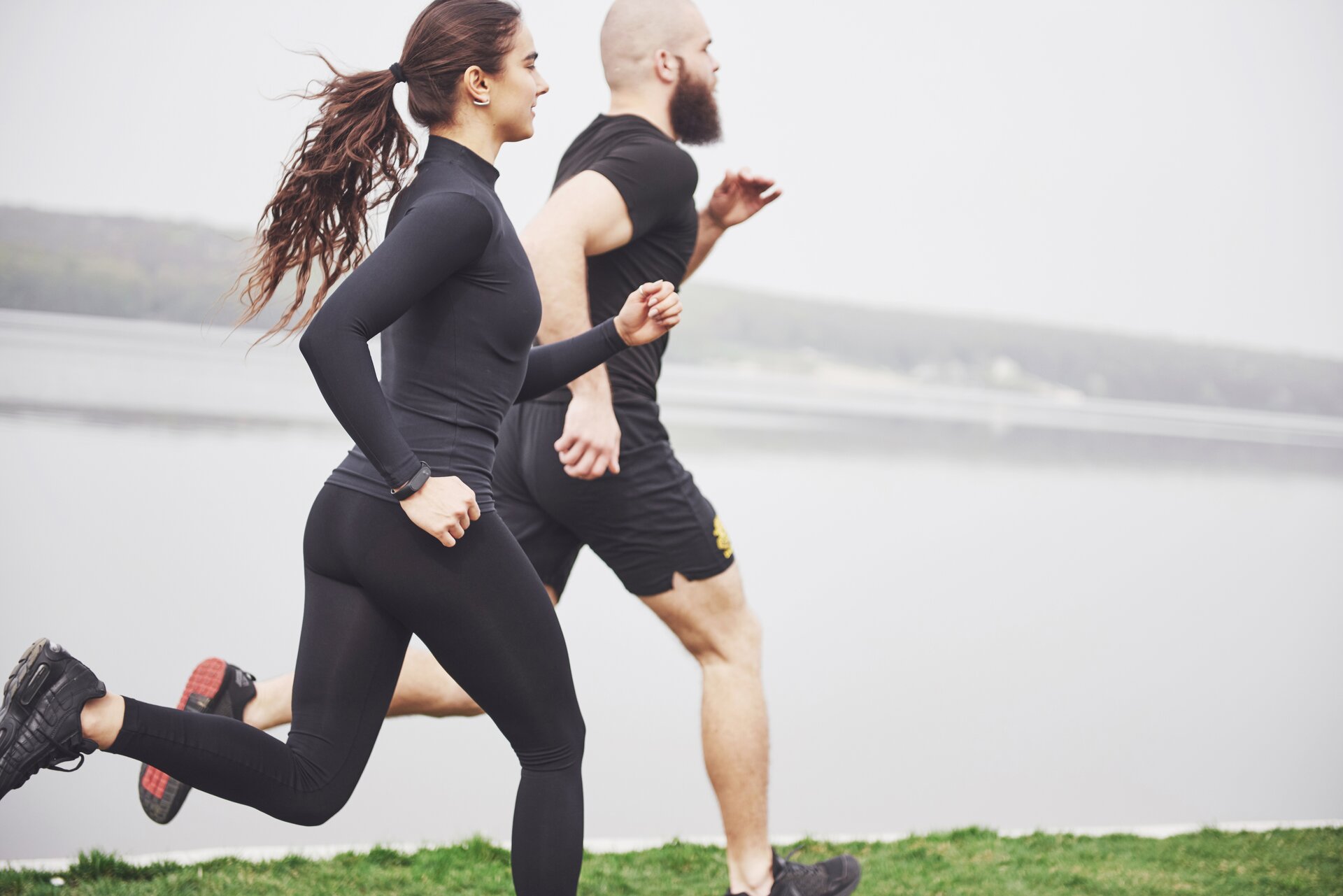
Ilustracja przedstawia kobietę i mężczyznę biegnących w strojach sportowych. Za nimi widzimy duży akwen wodny.
My parents love running
Moi rodzice uwielbiają biegać
Źródło: GroMar Sp. z o.o., licencja: CC BY-SA 3.0.
Exercise1
Study the text. Then drag the following words and drop them in the correct places. Przeanalizuj tekst.
Przestudiuj tekst. Następnie przeciągnij poniższe słowa i upuść je w odpowiednich miejscach.
RfGQb62WKE9Lg
Źródło: GroMar Sp. z o.o., licencja: CC BY-SA 3.0.
Exercise1
Look at the picture and read the text. Drag and drop the missing words. Watch out. There are two extra words.
Popatrz na ilustrację i przeczytaj tekst. Wstaw brakujące wyrazy. Dwa wyrazy są podane dodatkowo.
R1Bom6btMLkjo
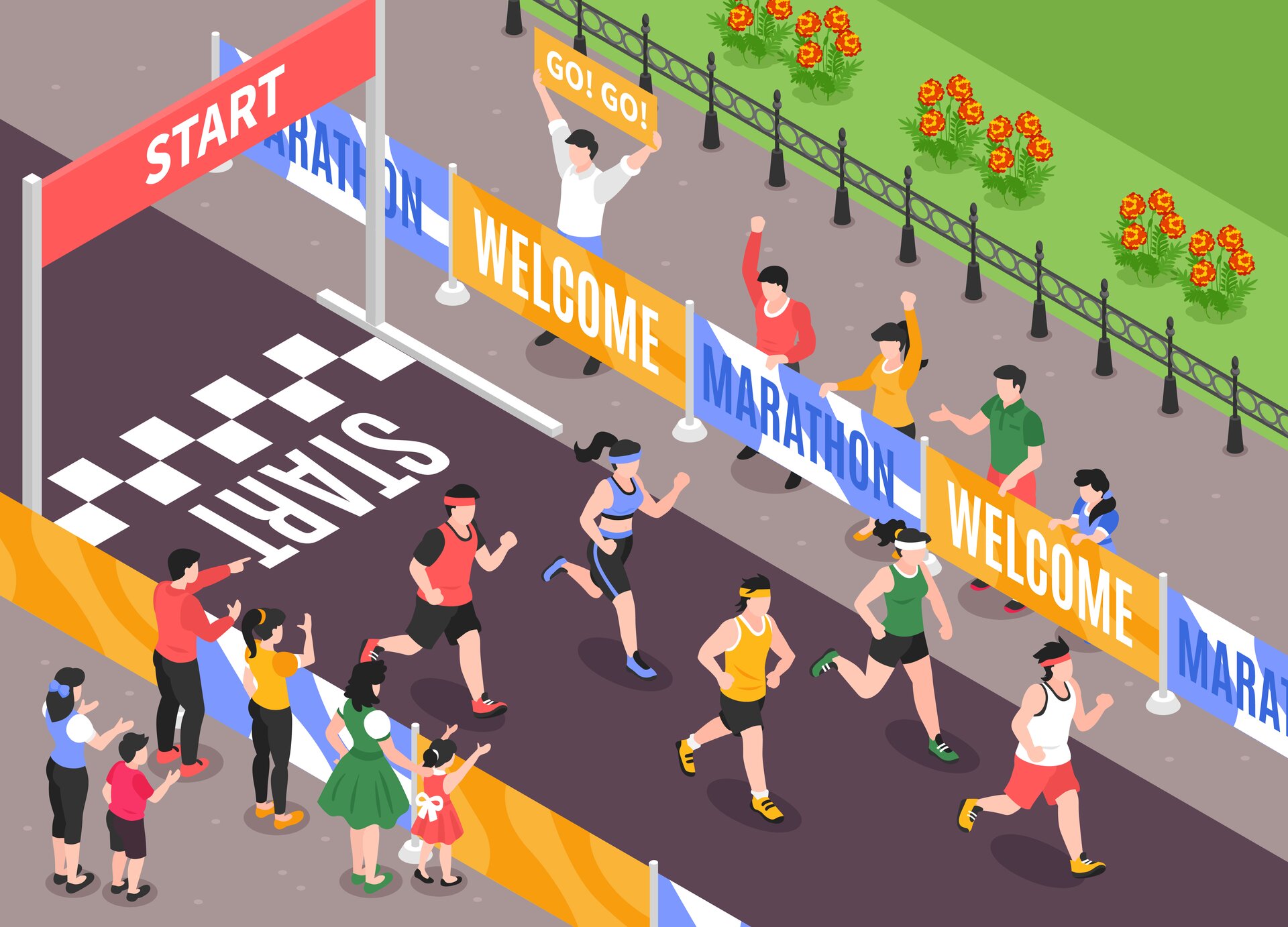
Ilustracja przedstawia osoby biorące udział w maratonie, które przekroczyły linię startu.
Źródło: dostępny w internecie: https://www.freepik.com/ [dostęp 28.04.2023], domena publiczna.
RvYjYIpQf6k7R
Źródło: GroMar Sp. z o.o., licencja: CC BY-SA 3.0.
Read the text about marathons. Then do the exercises below.
Przeczytaj tekst o maratonach. Następnie wykonaj zadania.
My Parents Love Marathons
ElaBorowiecMy Parents Love Marathons
Hi, my name is Jack. I want to tell you about my parents’ hobby. They like running. They run marathonsmarathons [marathon]marathons in cities all over the world.all over the worldall over the world.
What are marathons? These are long‑distance raceslong‑distance races [long‑distance race]long‑distance races which are exactly 42,195 kilometres long. Do you know why? There is an interesting legendlegendlegend. There was a Battle of MarathonBattle of MarathonBattle of Marathon in Ancient GreeceAncient GreeceAncient Greece. When the Greek armyGreek armyGreek army won, a messengermessengermessenger ran to Athens to tell everybody about it. His name was Philippides and he ran the distancedistancedistance of 42,195 km.
ModernmodernModern marathon races started in 1896. That year seventeen marathon runners took part intook part in [take part in]took part in the Olympic Games in Athens, Greece for the first time. Only men used to run this distance, but today women run too.
My parents traintrain (verb)train a lot for a marathon. They must run over 42 km so they must be fitfitfit, strongstrongstrong and know their body well. It is important to run not too fast and not too slow.
My parents run marathons because running helps them. They both work as doctors and they make important decisionsmake important decisions [make an important decision]make important decisions every day. Marathons help them relax. My parents say that they are winnerswinners [winner]winners every time they cross the finish linefinish linefinish line. They don’t race to competecompetecompete with others. They run for their own satisfactionsatisfactionsatisfaction.
And what about me? Well, I’m only thirteen years old. I didn’t use to run at all but I started last month. And guess what? Next year I want to train for my first half‑marathonhalf‑marathonhalf‑marathon. Wish me luck!Wish me luck!Wish me luck!
1 Źródło: ElaBorowiec, licencja: CC BY-SA 3.0.
Exercise2
Match the words with their translations.
Połącz wyrazy z ich tłumaczeniami.
R1UzdIHHGSFE5
meta Możliwe odpowiedzi: 1. race, 2. bib number, 3. finish line, 4. winner, 5. trophy puchar Możliwe odpowiedzi: 1. race, 2. bib number, 3. finish line, 4. winner, 5. trophy Numer startowy Możliwe odpowiedzi: 1. race, 2. bib number, 3. finish line, 4. winner, 5. trophy Zwycięzca biegu Możliwe odpowiedzi: 1. race, 2. bib number, 3. finish line, 4. winner, 5. trophy wyścig biegaczy Możliwe odpowiedzi: 1. race, 2. bib number, 3. finish line, 4. winner, 5. trophy
meta Możliwe odpowiedzi: 1. race, 2. bib number, 3. finish line, 4. winner, 5. trophy puchar Możliwe odpowiedzi: 1. race, 2. bib number, 3. finish line, 4. winner, 5. trophy Numer startowy Możliwe odpowiedzi: 1. race, 2. bib number, 3. finish line, 4. winner, 5. trophy Zwycięzca biegu Możliwe odpowiedzi: 1. race, 2. bib number, 3. finish line, 4. winner, 5. trophy wyścig biegaczy Możliwe odpowiedzi: 1. race, 2. bib number, 3. finish line, 4. winner, 5. trophy
Źródło: GroMar Sp. z o.o., licencja: CC BY-SA 3.0.
Exercise2
Match the words to the pictures.
Dopasuj wyrazy do zdjęć.
R1CV7fymPbX52
Źródło: GroMar Sp. z o.o., licencja: CC BY-SA 3.0.
Exercise3
Read the sentences and decide if they are true or false.
Przeczytaj zdania i zdecyduj, czy są one prawdziwe, czy fałszywe.
R19zAe5crwHHr
Źródło: GroMar Sp. z o.o., licencja: CC BY-SA 3.0.
Exercise4
Read the text again. Then write the missing words in Polish to complete the gaps in the text below.
Przeczytaj tekst ponownie, a następnie uzupełnij polskimi wyrazami luki w poniższym e‑mailu.
RyXwYc1n2cHo3
Źródło: GroMar Sp. z o.o., licencja: CC BY-SA 3.0.
GRAMATYKA
Konstrukcjaused to
Konstrukcjęused tostosujemy, gdy mówimy o czynnościach wykonywanych w przeszłości, ale takich, których już nie wykonujemy. Zdania tego typu opisują dawne zwyczaje, przyzwyczajenia i inne aktywności, które porzuciliśmy.
a) Zdania twierdzące
Poused tostawiamy czasownik w formie podstawowej.
Przykłady:
They used to run in the parks. – Oni biegali kiedyś w parkach.
Only men used to run this distance, but today women run too. – Kiedyś tylko mężczyźni biegali na tym dystansie, ale dziś robią to także kobiety.
b) Zdania przeczące
Forma przecząca todidn’t use to.
Przykład:
I didn’t use to run at all but I started last month. – Nigdy wcześniej nie biegałem/nie biegałam, ale zacząłem/zaczęłam to robić w ubiegłym miesiącu.
Exercise5
Study the situations and choose the correct sentence.
Zapoznaj się z sytuacjami i wybierz poprawne zdanie.
R6qKwY0Nz5knT
1. When I was younger I liked running. Now I don’t like it.
Źródło: GroMar Sp. z o.o., licencja: CC BY-SA 3.0.
RIWwO0Giqbxau
2. When I was younger I ran a lot. Now I only swim.
Źródło: GroMar Sp. z o.o., licencja: CC BY-SA 3.0.
Rm5ES3pMKbOHN
3. When I was younger I didn’t train running. Now I train every day.
Źródło: GroMar Sp. z o.o., licencja: CC BY-SA 3.0.
R1RdwTlEegpat
4. When I was younger I didn’t take part in half-marathons. Now I take part twice a year.
Źródło: GroMar Sp. z o.o., licencja: CC BY-SA 4.0.