Przeczytaj
How much do you know about a trip to Mars? Do you think it’s possible in the near future? Read the text in this section to find out.
Ile wiesz o podróżowaniu na Marsa? Czy uważasz, że taka podróż jest możliwa w bliskiej przyszłości? Przeczytaj tekst w tej sekcji, żeby dowiedzieć się więcej.
Match words and phrases with their definitions.
Połącz wyrazy i wyrażenia z ich definicjami.
Read the text about the possibility of travelling to Mars in the near future. Then, do the tasks below.
Przeczytaj tekst o tym, czy podróż na Marsa jest możliwa w nieodległej przyszłości. Następnie wykonaj zamieszczone poniżej zadania.
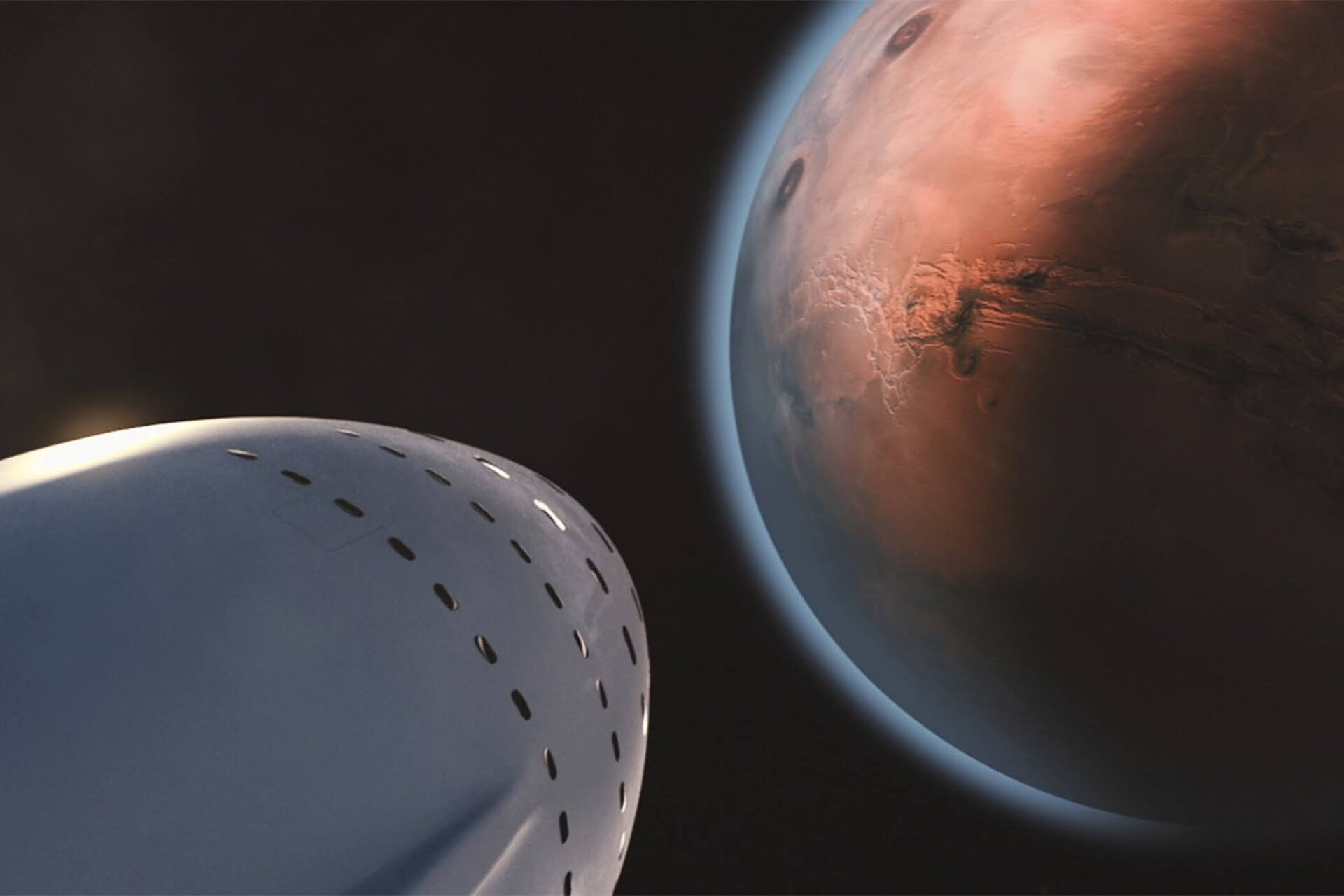
A Trip to Mars: a Dream or Reality?People have wanted to travel to MarsMars for decades. After all, the red planetred planet is not only relativelyrelatively close but also the most Earth‑likeEarth‑like out of the solar systemsolar system’s worldsworlds. When we look at pictures of Mars, it seems like a large, red desert. We have deserts at home and we’re explorersexplorers so we can imagine colonisingcolonising the planet. How close is that dream to reality?
Unfortunately, the red planet isn’t as hospitablehospitable as we may think. The atmosphere is unbreathableunbreathable and the gravitygravity is only a third of the one we experience. It’s not the best place to live, but it’s possible so various organisations are trying to make it happen. Most often, they don’t have realisticrealistic plans. The publicThe public receives a lot of promises. “By 2024, people will have reached Mars,” they hear. “We will have colonised the red planet by 2030.” NASANASA, the famous American space agencyspace agency, is more reservedreserved.
The biggest problem with Mars missions is getting to the planet. An even bigger issue is returning from the trip. So far, humans have only sent probesprobes and buggiesbuggies to the red planet’s surfacesurface. A lot of them don’t ever reachreach Mars. Those that do never return. NASA understands that. As of today, the agency proposes a decades‑longdecades‑long plan to reach Mars. First, it wants to have long‑durationlong‑duration human missionshuman missions orbitingorbiting the MoonMoon, then orbiting Mars. All of that, while the agency continues research into landing onlanding on and colonising the red planet. Humans will not have landed on Mars by 2024. They most definitely will not have colonised the planet by 2030. But, by the 2030s, they might get close enough to landing on the elusiveelusive red planet’s surface.
Źródło: Zuzanna Kościuk, dostępny w internecie: How long would a trip to Mars take?, https://image.gsfc.nasa.gov/poetry/venus/q2811.html [dostęp 3.04.2022], Will it be safe for humans to fly to Mars?, https://newsroom.ucla.edu/releases/safe-for-humans-fly-to-mars [dostęp 3.04.2022], Martin Redfern, Will we ever set foot on Mars?, https://www.bbcearth.com/news/will-we-ever-set-foot-on-mars [dostęp 3.04.2022], Moon to Mars Overview, https://www.nasa.gov/topics/moon-to-mars/overview [dostęp 3.04.2022], licencja: CC BY-SA 3.0.
Read the text and decide if the following sentences are true or false.
Przeczytaj tekst, a następnie zdecyduj, czy podane zdania są prawdziwe, czy fałszywe.
Search for the information in the text and drag the words to fill in the gaps.
Odszukaj w tekście potrzebne informacje, a następnie przeciągnij wyrazy w odpowiednie luki.
- We have deserts at home and we’re 1. solar, 2. colonising, 3. NASA, 4. orbiting, 5. landing, 6. surface, 7. agency, 8. probes, 9. explorers, 10. relatively, so we can imagine 1. solar, 2. colonising, 3. NASA, 4. orbiting, 5. landing, 6. surface, 7. agency, 8. probes, 9. explorers, 10. relatively the planet.
- Mars is not only 1. solar, 2. colonising, 3. NASA, 4. orbiting, 5. landing, 6. surface, 7. agency, 8. probes, 9. explorers, 10. relatively close, but also the most Earth-like out of the 1. solar, 2. colonising, 3. NASA, 4. orbiting, 5. landing, 6. surface, 7. agency, 8. probes, 9. explorers, 10. relatively system’s worlds.
- So far, humans have only sent 1. solar, 2. colonising, 3. NASA, 4. orbiting, 5. landing, 6. surface, 7. agency, 8. probes, 9. explorers, 10. relatively and buggies to the red planet’s 1. solar, 2. colonising, 3. NASA, 4. orbiting, 5. landing, 6. surface, 7. agency, 8. probes, 9. explorers, 10. relatively.
- First, 1. solar, 2. colonising, 3. NASA, 4. orbiting, 5. landing, 6. surface, 7. agency, 8. probes, 9. explorers, 10. relatively wants to have long-duration human missions 1. solar, 2. colonising, 3. NASA, 4. orbiting, 5. landing, 6. surface, 7. agency, 8. probes, 9. explorers, 10. relatively the Moon.
- The American 1. solar, 2. colonising, 3. NASA, 4. orbiting, 5. landing, 6. surface, 7. agency, 8. probes, 9. explorers, 10. relatively continues research into 1. solar, 2. colonising, 3. NASA, 4. orbiting, 5. landing, 6. surface, 7. agency, 8. probes, 9. explorers, 10. relatively on and colonising the red planet.
Give one‑sentence answers to questions below.
Odpowiedz jednym zdaniem na poniższe pytania.
What do you know about Mars?
What is NASA’s plan?
Do all of the probes reach Mars’s surface?
Solve the puzzles and then answer the questions based on information from the text.
Ułóż puzzle, a następnie odpowiedz na pytania, bazując na informacjach z tekstu.
Write the right forms of Future Perfect Simple to fill in the sentences.
Wpisz odpowiednie formy czasu Future Perfect Simple, aby uzupełnić zdania.
- WILL/HAVE/LEAVE
- We Tu uzupełnij Earth for Mars by 2025.
- WILL NOT/HAVE/REACH
- She Tu uzupełnij the surface by tomorrow.
- WILL HAVE/PLANETS/ALIGN
- Tu uzupełnij by next month?
- WILL NOT/HAVE/TRAVEL
- We Tu uzupełnij to Mars before getting supplies.
- WILL/HAVE/BUILD
- The scientists Tu uzupełnij the spacecraft shielding by 2030.
- WILL HAVE/HE/LEAVE
- Tu uzupełnij the orbit by now?
Słownik
/ ˈbʌɡɪz / / ˈbʌɡi /
łaziki [łazik]
/ ˈkɒlənaɪzɪŋ / / ˈkɒlənaiz /
kolonizując [kolonizować]
/ ˈdekeɪdz ˈlɒŋ /
trwające dekady (dziesiątki lat)
/ ˈɜ:theta ˈlaɪk /
przypominające ziemię (o innych planetach)
/ ɪˈluːsɪv /
nieuchwytne, trudne do zdefiniowania
/ ɪkˈsplɔːrəz / / ɪkˈsplɔːrə /
odkrywcy [odkrywca/odkrywczyni]
/ ˈɡrævɪti /
grawitacja
/ hɒˈspɪtəbl̩ /
sprzyjające, przyjazne (np. o środowisku)
/ ˈhjuːmən ˈmɪʃn̩z / / ˈhjuːmən ˈmɪʃn̩ /
misje załogowe [misja załogowa]
/ ˈlændɪŋ ɒn /
lądowanie na
/ lɒŋ djʊˈreɪʃn̩ /
trwające przez długi czas
/ mɑːz /
Mars (planeta)
/ muːn /
Księżyc
/ ˈnɑːsə /
Narodowa Agencja Aeronautyki i Przestrzeni Kosmicznej (instytucja działająca w USA)
/ ˈɔːbɪtɪŋ / / ˈɔːbɪt /
orbitując [orbitować]
/ prəʊbz / / prəʊb /
sondy kosmiczne [sonda kosmiczna]
/ ðə ˈpʌblɪk /
ludzie, społeczeństwo, opinia publiczna
/ ˌrɪəˈlɪstɪk /
realistyczne
/ riːtʃ /
dosięgnąć
/ ˈred ˈplænɪt /
Czerwona Planeta (inna nazwa Marsa)
/ ˈrelətɪvli /
stosunkowo
/ rɪˈzɜːvd /
powściągliwy/powściągliwa
/ ˌsəʊlə ˈsɪstəm /
układ słoneczny
/ speɪs ˈeɪdʒənsi /
agencja kosmiczna
/ ˈsɜːfɪs /
powierzchnia
/ ʌnˈbriːðəbl /
nienadająca się do oddychania (o atmosferze)
/ wɜːldz / / wɜːld /
światy [świat]
Źródło: GroMar Sp. z o.o., licencja: CC BY‑SA 3.0