Przeczytaj
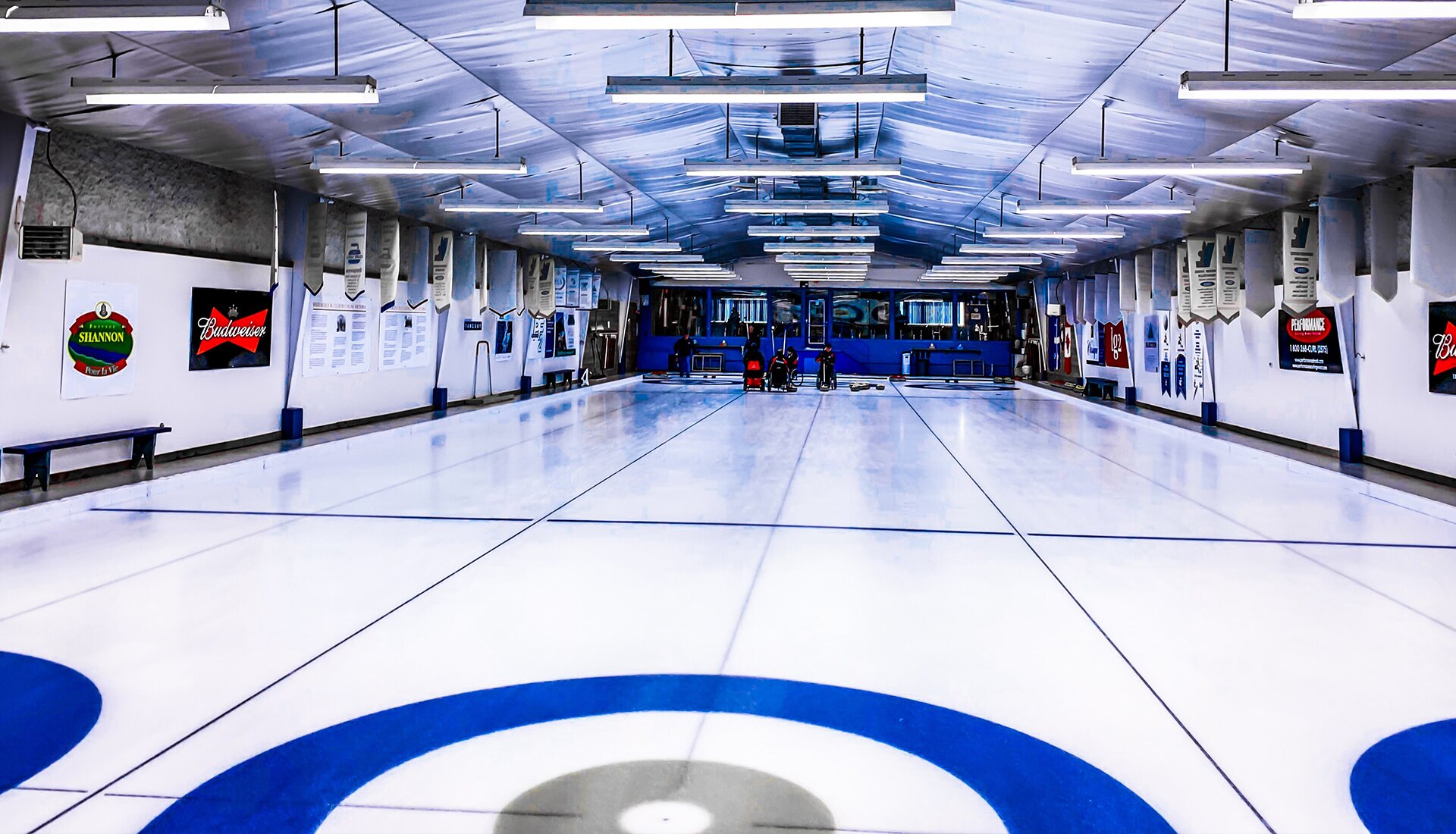
Study the sports hall in the picture. It seems to be long and well‑lit with huge circles drawn on the floor. Do you know what they are for? Do you know what equipment curling players use? Have you ever seen a curling match? Does it seem difficult to you? In this part of the material you are going to find out how many players make a team and what the rules of curling are.
Przyjrzyj się pokazanej na zdjęciu hali sportowej. Jest długa, dobrze oświetlona, a na podłodze namalowane są duże okręgi. Czy wiesz, do czego służą zaznaczone pola? Jakiego sprzętu używają zawodnicy uprawiający curling? Czy widziałeś/widziałaś kiedyś mecz tej dyscypliny? Czy sport ten wydaje ci się trudny? W tej części materiału dowiesz się, z ilu członków składa się drużyna curlingowa i jakie są zasady tego sportu.
Drag the names of sport equipment/accessories related to curling and match them with their translation.
Match the names of sport equipment/accessories related to curling with the correct pictures.
Study the text about curling and do the exercises below.
Curly Curling?
There is something to be explained about curling, the sport of skill and great tradition. Here are 5 people describing this Olympic discipline.
Tom, 17, curling amateur
I’ve been playing curling for four years now and I love it! The game involves sliding downsliding down a stone on the frozen curling sheetcurling sheet towards a bullseyebullseye while two other players armed with brooms (brushes)armed with brooms (brushes) energetically sweep the ice. That really looks a bit funny. The thing that I treasure most is the code of honourcode of honour, which each participant should take seriously. Some people call it the spirit of curling. The point of it is to treat the opponent in a friendly waytreat the opponent in a friendly way. That way we competecompete in a warm atmosphere with no negative pressurewith no negative pressure. If we win the game, we take the rivals out to spend some time together. Players cannot disturb the opponents and should report their own faultsreport their own faults! A devoted curler would rather lose than cheat!
Anna, 19, fan of curling
Do you know that this sport was originally played on frozen ponds and lochs in 16th century Scotland? Actually, the first recorded match took place around 1541 with a challenge between a monk and a relative. The popularity of this sport spread quickly to North America. The first Canadian curling club opened in Montreal in 1807, and the first American one in 1828. Nowadays people all over the world seem to enjoy this game. I found it truly mesmerisingmesmerising to watch a sliding stonea sliding stone (rockrock is another name for it).
Patricia, 27, coach
Curling is often wrongly regarded as a difficult game and many people say that it’s hard to understand its rules. Actually, the rules are not as complicated as they may seem. Curling is played on a frozen rectangular sheet. There are four concentric circlesconcentric circles, called the househouse. The house is the scoring areascoring area. There are two teams, each of which consists of four players. They are given 8 stones to slide. The team with the most stones to the curling bullseye, the buttonbutton, is given points. The closer the button, the more points the team is awarded. After all 16 stones are thrown, the points are summarised. The match consists of 10 endsends. In each end, the four players on both teams take it in turns to throw stones. The leadlead throws first, next the secondsecond, then the thirdthird, called vice‑skipvice‑skip and then finally, the skipskip. If no stones remain in the house after an end, no points are awarded. The team with the most points after 10 ends wins the match.
Julia, 22, professional curling player
Curling is about simplicity. There are four players in the team, each has a different role. I play as the skip, who is believed to be the most important player on the team. I do not not only throw the last stone in an end, which often determines the scoring, but I also direct the overall strategy. By the way, all players are sweepers! When a curlercurler releases the stone, the teammates start sweeping the ice in front of it energetically. That looks easy but in fact it requires a lot of effort! SweepingSweeping is a very important part of the game. It warms the ice and reduces frictionreduces friction, which allows the stone to slide farther and straighter.
Sam, 28, parent
Both of my kids have been attending curling lessons for a couple of years now, and I believe that it gives them more than physical activity. I only bought them brushes and gripper shoesgripper shoes. Curling develops concentration and staminadevelops concentration and stamina. You need to keep certain body positions for a while to make sure the stone slides steadily and directly to the house. What’s more, all muscles work, involving hands and legs. It is said that curling is like playing chess, you need to have a strategy to score the points and win. Logical thinking is in great demand.
Źródło: Anna Faszcza, licencja: CC BY-SA 3.0.
A. Sam
B. Julia
C. Tom
2. This person mentions that curling requires reasoning.
A. Patricia
B. Anna
C. Sam
3. This person explains what the well–respected set of rules of the game is.
A. Tom
B. Sam
C. Julia
4. This person explains physical laws in curling.
A. Sam
B. Tom
C. Julia
5. This person rejects the commonly held view of the game.
A. Particia
B. Anna
C. Julia
6. This person names what part of curling is hypnotising to him/her.
A. Patricia
B. Anna
C. Tom
Based on the knowledge from the text, answer the questions below.
Why is the code of honour exceptional to curling? Write 2‑3 sentences
Describe two advantages of doing curling. Write 5‑6 sentences.
Słownik
/ ə ˈslaɪdɪŋ stəʊn / / rɒk /
przesuwający się kamieńy curlingowy (a moving stone/rock on ice)
/ ɑːmd wɪð bruːmz / / ˈbrʌʃɪz / / ɑːmd wɪð ə bruːm / / brʌʃ /
uzbrojeni/uzbrojone w szczotki do curlingu [uzbrojony/uzbrojona w szczotkę do curlingu] (equipped with a broom/brush while sweeping to make the stone move farther)
/ ˈbuːlzaɪ /
środek koła/tarczy (the centre of the house (the target of the stone); the area where the points can be scored)
/ ˈbʌtn̩ /
inna nazwa dla bullseye, środek koła (the centre of the house (the target of the stone); the area where the points can be scored)
/ kəʊd əv ˈɒnə /
kodeks honorowy (philosophical creed known as the spirit of curling)
/ kəmˈpiːt /
rywalizować (to take part in a contest)
/ kənˈsentrɪk ˈsɜːkl̩z /
koncentryczne koła (circles that create the sheet of ice to play curling)
/ ˈkɜːlə /
zawodnik/zawodniczka curlingu (a player of curling)
/ ˈkɜ:lɪŋ ʃiːt /
tafla lodu do gry w curling (an area where curling is played)
/ dɪˈveləps ˌkɒnsənˈtreɪʃn̩ ənd ˈstæmɪnə / / dɪˈveləp ˌkɒnsənˈtreɪʃn̩ ənd ˈstæmɪnə /
rozwija koncentrację i wytrzymałość [rozwijać koncentrację i wytrzymałość] (to grow focus and physical effort)
/ endz / / end /
tu: rundy [runda] (a round in curling that lasts about 15 minutes)
/ ˈgrɪpər ʃuːz / / ˈgrɪpər ʃuː /
buty do gry w curling (special shoes for playing curling)
/ ˈhaʊs /
tu: cel, do którego kierowany jest kamień (the target of a stone)
/ liːd /
zawodnik otwierający/zawodniczka otwierająca (a player who throws the stone as the first one)
/ ˈmezməraɪzɪŋ / / ˈmezməraɪz /
hipnotyzujący/hipnotyzująca [hipnotyzować] (to hypnotise, to have someone's attention completely)
/ rɪˈdjuːsɪz ˈfrɪkʃn̩ / / rɪˈdjuːs ˈfrɪkʃn̩ /
zmniejsza tarcie [zmniejszać tarcie] (to make the force that works against the object smaller)
/ rɪˈpɔːt ðeər əʊn fɔːlts / / rɪˈpɔːt wʌnz əʊn fɔːlt /
zgłaszać własne przewinienia [zgłaszać własne przewinienie] (to inform about your own mistakes)
/ rɒk /
tu: kamień curlingowy (a piece of natural mineral material for play curling)
/ ˈskɔːrɪŋ ˈeəriə /
obszar na tafli, który jest punktowany w przypadku, kiedy kamień się na nim zatrzyma (an area where points can be scored)
/ ˈslaɪdɪŋ daʊn / / slaɪd daʊn /
ślizganie [ślizgać] (to move smoothly on ice)
/ ˈswiːpɪŋ / / swiːp /
szczotkowanie [szczotkować] (to use a broom to brush the ice in front of a moving stone)
/ ˈsekənd /
drugi zawodnik wypuszczający/druga zawodniczka wypuszczająca (the second player to throw the stone)
/ skɪp /
kapitan drużyny (the leader of a team)
/ ˈthetaɜːd / / ˌvaɪs skɪp /
trzeci zawodnik wypuszczający/trzecia zawodniczka wypuszczająca (the third player to throw the stone)
/ triːt ði əˈpəʊnənts ɪn ə ˈfrendli ˈweɪ /
traktować rywali/rywalki przyjaźnie (to treat the rivals in a friendly way)
/ wɪð ˈnəʊ ˈneɡətɪv ˈpreʃə /
bez negatywnego ciśnienia (wyrażenie potoczne) (with no negative influence)
Źródło: GroMar Sp. z o.o., licencja: CC BY‑SA 3.0