Przeczytaj
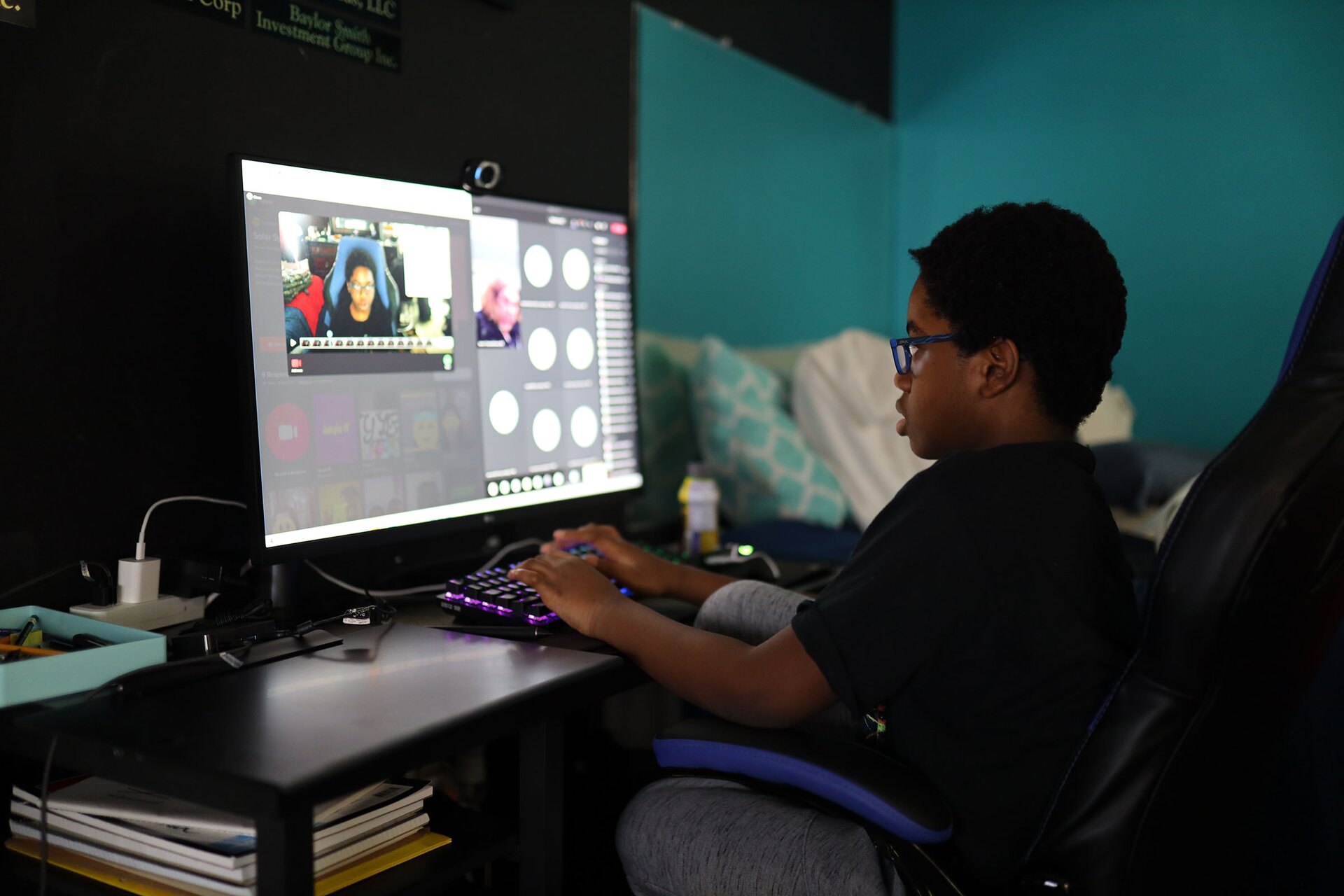
The picture below shows a student attending an online class. This type of learning has recently become more and more popular as well as a necessity. In this section, you are going to read a text about online and interactive classes. Before you read the text, think, is your experience the same or different?
Poniższe zdjęcie przedstawia ucznia biorącego udział w zajęciach online. Ten rodzaj nauki staje się ostatnio coraz bardziej popularny, a także konieczny. W tym rozdziale przeczytasz tekst o zajęciach online i interaktywnych. Zanim to zrobisz, zastanów się, czy masz podobne doświadczenia.
Answer the question:
Study the text and do the exercises below.
Modern school: yay or nay?In the contemporarycontemporary world, schools and the way people learn have changed dramatically. The Covid‑19 pandemic in particular imposedimposed on educators and students the necessitynecessity to alteralter the approachapproach to gaininggaining and passing on knowledge. For the last few years, we have been using modern technology like never before. From a regular classroom, students and teachers alike were put in a situation in which using e‑learning platforms, communication tools, and online applications has moved from the fringe to the normhas moved from the fringe to the norm, making traditional ways of educating young people obsoleteobsolete. When the pandemic is over, all of these methods will be here to stay no matter how hard we try not to let this happen.
Learning through experience and experimentation:
Contrary toContrary to what was en vogueen vogue in the 20th century, a modern approach to learning assumesassumes that pupils acquireacquire knowledge best when they do things on their own or by experimentation rather than by rote learningrote learning and memorising the whole sections from their textbooks. Better late than never. Educators have lately been putting stress onputting stress on critical thinking and problem solving tasks that let students applyapply their knowledge. When the balance is shifted fromis shifted from theory to practice, we notice skillful, curious, and creative human beings. What counts then is not knowing but understanding concepts.
Cutting edgeCutting edge technology in the classroom:
In the past, the concept of a lesson was lecture‑orientedlecture‑oriented. Today the learning process has moved beyondbeyond reading books and lectures. Teachers across the globe use a variety ofvariety of technological devicesdevices to facilitatefacilitate knowledge acquisition. Traditional chalkchalk and boardsboards were replaced withreplaced with whiteboards and markers or interactive boards. Students make use ofmake use of learning platforms and applications to get to know new things and reviserevise the material. The Internet has great educational potential, so why limit yourself to sitting in class and listening to a professor reading from their notes?
GamificationGamification and edutainmentedutainment
Together with lectures, doing exercise after exercise from textbooks and workbooks is becoming outdatedoutdated. Learning applications allow for teachers to introduce some aspects of fun, games, and competition to the classroom. These techniques are strategic attemptsattempts to encourage users to play, get entertained by, and learn things at the same time. Some of them offer a chance to co‑work with a team and some of them are designed for individual players. Regardless ofRegardless of the type, the learning process continues and is furtherfurther enhancedenhanced by accomplishingaccomplishing good results, scoring points, getting badges, and improving one’s avatars.
Archaic grading system on its way out:
Grades have often been perceivedperceived by students as the equivalentequivalent of their level of knowledge. The thing is, hardly any of them learn to know and remember things. The majority is interested in getting a good mark on a test. Grading systems and standardised testing are heavily criticised because they reflectreflect how much a student can remember on the day of the exam, but don't focus on what a student can do with this knowledge, what conclusion they can drawconclusion they can draw, and how well they are able to assessassess processes and phenomena. Perhaps this is the reason why more and more teachers would like to get rid ofget rid of widely used grades and standardised testing and substitute these withsubstitute these with a fairly objective method of evaluationevaluation which doesn’t favour a particular type of students and discourage those who aim highaim high.
Studying is quite a hard and boring process for many but as the times are changing, the ways to achieve academic perfection need to adaptadapt as well. We need to place importance onplace importance on practical knowledge and specialisation and avoidavoid making student‑learning robots at all costs. And perhaps, a bit of individualisation wouldn’t hurt. We can’t assess everyone in the same way for everything, we need to start recognising students’ potential and know how to encourage them to develop their strong points. After all, you wouldn’t fail a fish for not being able to climb a tree and an ant for not being able to swim, right? So take it easy.
Źródło: Marta Hilgier, dostępny w internecie: Why is experimenting learning important?, Educating Adventures, https://www.easchooltours.com/blog/experiential-learning-learn-through-experience [dostęp 11.12.2021], What is gamification?, BiWorldwide, https://www.biworldwide.com/gamification/what-is-gamification/ [dostęp 11.12.2021], What Is Edutainment? Tips for Mixing Education and Entertainment in the Classroom, School of Eductaion, https://soeonline.american.edu/blog/what-is-edutainment/ [dostęp 11.12.2021], licencja: CC BY-SA 3.0.
Study the text above and choose the correct answer. There is only one correct answer in each point.
- In the modern world
a) people have to change the way they teach and learn new things.
b) people won’t use interactive tools after the era of pandemic.
c) people use technology as widely as before.
- New approaches to learning
a) favour learning by heart.
b) favour students’ thinking for themselves.
c) say that theory isn’t very important.
- In the past, teachers
a) used whiteboards and markers.
b) used chalk and boards.
c) didn’t use to take notes.
- Gamification is
a) only about having a good time.
b) designed only for individual students.
c) about making learning more engaging.
- Standardised tests
a) are a fairly objective way to grade students’ general knowledge.
b) rarely offer objective assessment to students.
c) make sure students remember what they have learnt for a long time.
- It is very difficult to Tu uzupełnij students objectively using standardised tests because not everyone is good at the same things.
- Nobody should be punished so hard regardless Tu uzupełnij the situation.
- The use of technology in the classroom has moved from the Tu uzupełnij to the norm.
- Interactive tools are supposed to Tu uzupełnij the learning process but in fact, they make my life more difficult.
- You should place more importance Tu uzupełnij revising before tests.
- I decided not to hurry during the test to Tu uzupełnij making many spelling mistakes. I know that when I do things fast, I make a lot of errors.
- It is very difficult for old people to Tu uzupełnij to modern times. It’s a real problem and the younger generation should help them to get used to using new devices.
- I’m afraid we need to get Tu uzupełnij of these old textbooks and buy updated ones.
- You should avoid skipping lessons Tu uzupełnij all costs.
- Tu uzupełnij learning means that you have to learn things by heart and to be honest, it’s something that I hate.
- I’m not sure I will be able to Tu uzupełnij my knowledge in practice. I know how this device should work, but I can’t construct it myself.
- Contrary Tu uzupełnij what my mom says, I don’t believe that traditional school is more effective than modern school.
- The weather today Tu uzupełnij my mood. It is sunny and I’m joyful and full of energy.
- It is necessary that we Tu uzupełnij stress on practical knowledge and specialisation these days.
Słownik
/ əˈkʌmplɪʃɪŋ / / əˈkʌmplɪʃ /
osiąganie, zdobywanie [osiągać, zdobywać] (achieve)
/ əˈkwaɪə /
zdobywają, przyswajają sobie, zyskują [zdobywać, przyswajać sobie, zyskiwać] (gain)
/ əˈdæpt /
adaptować, dopasować (adjust)
/ eɪm haɪ /
mierzą wysoko [mierzyć wysoko] (have ambitious goals)
/ ˈɔːltə /
zmienić (change)
/ əˈplaɪ /
stosować (use)
/ əˈprəʊtʃ /
podejście (way of dealing with something)
/ əˈses /
ocenić (make a judgement about something or somebody)
/ əˈsjuːmz /
zakłada [zakładać] (claim)
/ əˈtempts / / əˈtempt /
próby [próba] (act of trying to do something)
/ əˈvɔɪd /
unikać (try not to do something)
/ bɪˈjɒnd /
poza (further)
/ bɔːdz /
tablice [tablica] (long and strong piece of hard material to write on at school)
/ tʃɔːk /
kreda (soft white stone to write with)
/ kənˈtemprəri /
współczesny/współczesna (modern)
/ kənˈtreəri tuː /
w przeciwieństwie do (in opposition to)
/ kʌtɪŋ edʒ /
nowoczesny/nowoczesna, nowatorski/nowatorska (the newest and most advanced)
/ dɪˈvaɪsɪz / / dɪˈvaɪs /
narzędzia [narzędzie] (tool)
/ kənˈkluːʒn̩ ˈðeɪ kən drɔː / / drɔː kənˈkluːʒn̩z /
mogą wyciągnąć wniosek [wyciągać wnioski] (come to a reasonable judgement)
/ ˌedʒuˈteɪnmənt /
nauka poprzez zabawę (learning through playing)
/ ɪnˈhɑːnst / / ɪnˈhɑːns /
wzmocniony/wzmocniona, zintensyfikowany/zintensyfikowana [wzmocnić, zintensyfikować] (improve the quality)
/ ɒn vəʊɡ /
w modzie (fashionable)
/ ɪˈkwɪvələnt /
odpowiednik, równowartość (alternative)
/ ɪˌvæljʊˈeɪʃn̩ /
ocenianie (assigning)
/ fəˈsɪlɪteɪt /
ułatwić (make something easier)
/ ˈfɜːðə /
bardziej, dalej (more)
/ ˈɡeɪnɪŋ / / ɡeɪn /
zdobywanie, uzyskiwanie [zdobyć, uzyskać] (get)
/ ˌɡeɪmɪfɪˈkeɪʃn /
grywalizacja (use elements of games in other activities)
/ ˈget rɪd ɒv /
pozbyć się (remove something that we do not need)
/ ˈhæz muːvd frəm ðə frɪndʒ tu ðə nɔːm / / muːv frəm ðə frɪndʒ tu ðə nɔːm /
stał/stała się normą (become a norm)
/ ɪmˈpəʊzd / / ɪmˈpəʊz /
narzucił/narzuciła [narzucać] (introduce)
/ ɪz ˈʃɪftɪd frɒm /
jest przeniesiony/przeniesiona z (be moved from)
/ ˈlektʃər ˈɔːriˌentəd /
skupiający/skupiająca się na wykładzie (concentrated on the lecture)
/ ˈmeɪk ˈjuːs ʌv /
korzystają z, wykorzystują [korzystać] (take advantage of)
/ nəˈsesəti /
konieczność (something that must be done)
/ ˈɑːbsəˌlit /
przestarzałe (old‑fashioned)
/ ˈaʊtˌdetɪd /
przestarzałe (old‑fashioned)
/ pəˈsiːvd / / pəˈsiːv /
postrzegane jako [postrzegać jako] (recognised)
/ pleɪs ˌɪmˈpɔːrtəns ɒn /
kłaść nacisk na (emphasise something)
/ ˈpʊtɪŋ ˈstres ɒn / / ˈpʊt ˈstres ɒn /
kładą nacisk na [kłaść nacisk na] (emphasise something)
/ rəˈflekt /
odzwierciedlają [odzwierciedlać] (show)
/ rəˈɡɑːrdləs əv /
bez względu na (without taking into account)
/ rɪˈpleɪst wɪð / / rɪˈpleɪs wɪð /
zastąpione [zastąpić czymś] (substitute)
/ rɪˈvaɪz /
powtarzają, utrwalają [powtarzać, utrwalać] (prepare for the exam)
/ rəʊt ˈlɝːnɪŋ /
uczenie się na pamięć, nauka pamięciowa (learning by heart)
/ ˈsʌbstəˌtuːt ðiːz wɪtheta /
zastąpić je (replace)
/ vəˈraɪəti ʌv /
wachlarz, różnorodność czegoś (different sorts of the same thing)
Źródło: GroMar Sp. z o.o., licencja : CC BY‑SA 3.0