Przeczytaj
Some people collect stamps or coins, and others look for shells on the beach. Did you amass stones when you were younger? If so, did you wonder if these stones may hide the history of our planet? In fact, you may have come across fossils. Analyse the text and find out what types of fossils have been categorised and what you can learn from them.
Niektórzy zbierają znaczki, inni wolą zbierać monety, a jeszcze inni szukają muszelek na plaży. Czy jako dziecko zbierałeś/zbierałaś kamyki? Jeśli tak, to czy pomyślałeś/pomyślałaś, że te kamienie mogą skrywać historię naszej planety? Być może natknąłeś/natknęłaś się na skamieniałości. Przeanalizuj tekst i dowiedz się, jakie rodzaje skamieniałości zostały skategoryzowane i czego można się z nich dowiedzieć.
Study the three definitions given below and choose the one that explains what a fossil is.
Study the text and do the exercises below.
An Unusual RockHave you ever found a piece of rock that is 10,000 years old or older?
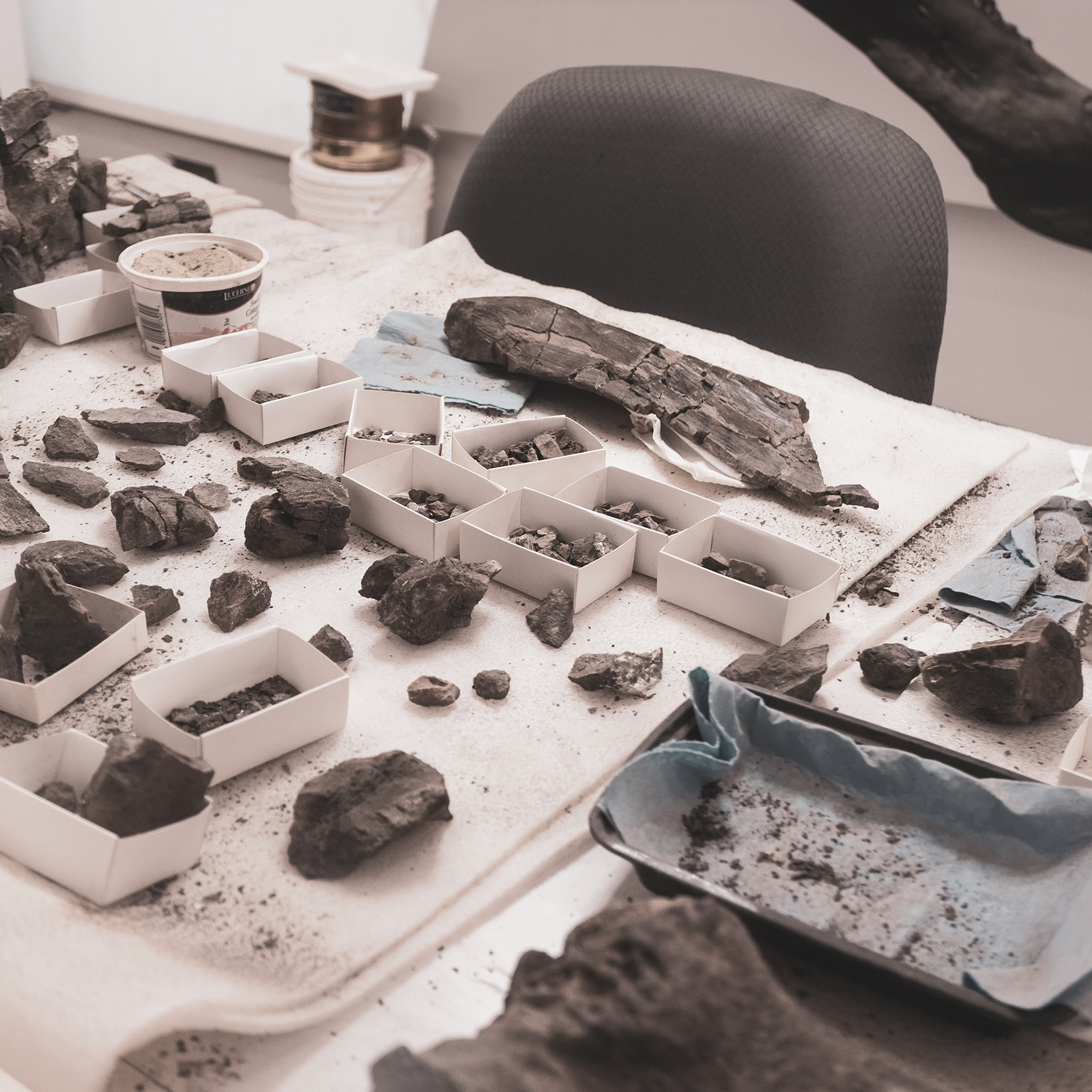
If yes, you might have come across a fossil. Usually, the dead bodies of living creatures undergo the process of decaydecay and decompositiondecomposition. However, sometimes they can be buried in sedimentssediments such as sand or mud, which enhancesenhances their preservationpreservation. They are fossilizedfossilized and then a fossil is created. Fossils are defined as preservedpreserved remains, traces, or imprintsimprints from an organism.
Thanks to modern technology palaeontologistspalaeontologists are able to examine the growth, diet, lifestyle, and movement of a plant or an animal when it was alive. By using special cameras and X‑rays they have an insightinsight into the past without breaking or destroying the fossil. The analysis of remainsremains not only revealed that Earth was inhabited by dinosaurs for at least 230 million years but also provided various explanations of why dinosaurs became extinctextinct. The most recent theories concerning dinosaur extinctionextinction refer to volcanic activity and giant meteor strikesstrikes. Nevertheless, more research has to be carried out to confirm this.
The first identified dinosaur remnantremnant belonged to a Megalosaurus, which contained an arrayarray of bones, including a large lower jawbonejawbone. It was found around 1815, however, the public learned about “a great fossil lizard” after the publication of William Buckland’s article in 1824.
Fossils also serve as an indicatorindicator for palaeontologists to verify the geological agegeological age. Recognising certain plants or creatures from a fossil allows scientists to define the date when a rock was formed.
Another interesting example of a fossil is amberamber – here, the organism is entrappedentrapped in the resinresin and is wholly preserved. Due to its attractiveness, amber has been widely used in the jewellery industry.
Regardless of how much is already known about the past thanks to the analysis of the fossils, the research needs to continue to reveal more secrets.
Źródło: Edyta Gocał, licencja: CC BY-SA 3.0.
TRUE FALSE
2. Palaeontologists examine the growth, diet, lifestyle, and movement of a living plant or an animal.
TRUE FALSE
3. The only reason for dinosaur extinction is giant meteor strikes.
TRUE FALSE
4. The first identified dinosaur remnant belonged to a Megalosaurus.
TRUE FALSE
5. The geological age of a rock can be verified by analysing a plant or a creature from a fossil.
TRUE FALSE
6. Scientists have carried out enough research to explore the past.
TRUE FALSE
a) A piece of rock that is 10,000 years old.
b) A dead body of a living creature that decayed.
c) Remains, traces and imprints of an organism that is at least 10,000 years old.
2. Owing to the research based on fossils, palaeontologists
a) proved what happened to dinosaurs.
b) failed to have more insight into the past.
c) disclosed that Earth was inhabited by dinosaurs.
3. The first identified dinosaur remains were discovered
a) in 1824.
b) in 1815.
c) in 1825.
4. Amber, which is an example of a fossil,
a) is used in defining the age of some dinosaurs.
b) is often a component of jewellery.
c) contains parts of organisms hidden in the rock.
Based on the information from the text, answer the questions. Write 2–3 sentences for each question.
What would you do if you found a rock which might be a fossil?
Would you like to be a palaeontologist? Why? Why not?
Amber is often used in the jewellery industry. Would you buy such jewellery as a gift for your friend? Why? Why not?
Do you think we should continue research on dinosaurs? Why? Why not?
Słownik
/ ˈæmbə /
bursztyn (an attractive “stone” used in jewellery, can be found in the Baltic Sea)
/ əˈreɪ /
zbiór, grupa (a large number of)
/ dɪˈkeɪ /
rozkład, gnicie (a process of decomposing a living organism)
/ ˌdiːkɒmpəˈzɪʃn̩ /
rozkładanie się (the process of decaying)
/ ɪnˈhɑːnsɪz / / ɪnˈhɑːns /
zwiększa, poprawia, wzmacnia [zwiększać, poprawiać, wzmacniać]
/ ɪnˈtræpt /
złapany/złapana w pułapkę
/ ɪkˈstɪŋt /
wymarły/wymarła
/ ɪkˈstɪŋkʃn̩ /
wyginięcie, wymarcie
/ fɒsəlaɪzd /
skamieniały/skamieniała
/ ˌdʒɪəˈlɒdʒɪkl̩ eɪdʒ /
wiek geologiczny (a period of significant changes in the history of the Earth)
/ ɪmˈprɪnts / / ɪmˈprɪnt /
odciski [odcisk] (a mark created after pressing something onto a surface)
/ ˈɪndɪkeɪtə /
wskaźnik
/ ˈɪnsaɪt /
wgląd, obserwacja
/ ˈdʒɔːbəʊn /
żuchwa
/ ˌpæliɒnˈtɒlədʒɪsts / / ˌpæliɒnˈtɒlədʒɪst /
paleontolodzy [paleontolog/paleontolożka] (scientists who deal with fossils)
/ ˈpetrɪfaɪd /
skamieniały/skamieniała
/ ˌprezəˈveɪʃn̩ /
utrwalenie
/ prɪˈzɜːvd /
zachowany/zachowana
/ rɪˈmeɪnz /
szczątki
/ ˈremnənt /
pozostałość, skamielina
/ ˈrezɪn /
żywica
/ ˈsedɪmənts / / ˈsedɪmənt /
twory osadowe [twór osadowy], osady [osad] (gravel or sand that settles down at the bottom of a lake, river or sea)
/ straɪks / / straɪk /
uderzenia [uderzenie]
Źródło: GroMar Sp. z o.o., licencja: CC BY‑SA 3.0