What do you spend your money on? What about your friends? We all buy different things. Some buy books and games, others buy clothes and sweets. Read this text to find out about our spending habits.
Na co wydajesz pieniądze? A Twoi przyjaciele? Wszyscy kupujemy różne rzeczy. Niektórzy kupują książki i gry, a inni ubrania i słodycze. Przeczytaj tekst, aby dowiedzieć się więcej o naszych nawykach związanych z wydawaniem pieniędzy.
R1bwIIWByvxXv
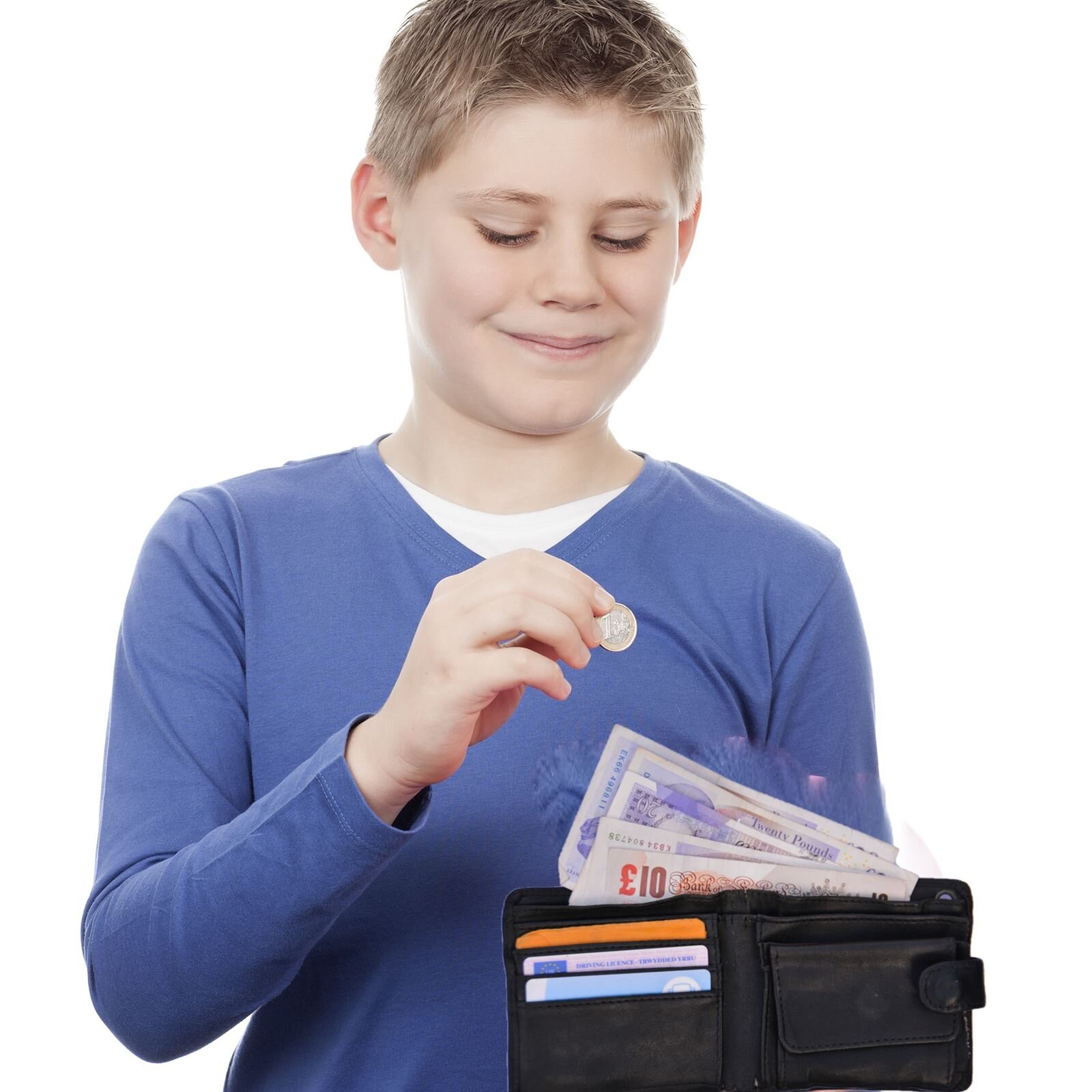
Zdjęcie przedstawia chłopca w wieku około dziesięciu lat, który trzyma w jednej ręce portfel. W portfelu znajdują się karty kredytowe, a z przegródek wysunięte są banknoty. Chłopiec ma zgiętą w łokciu jedną rękę i w palcach trzyma monetę. Chłopiec ma wzrok skierowany w dół w stronę portfela i lekko się uśmiecha.
What do you do with 20 pounds?
Co robisz z 20 funtami?
Źródło: dostępny w internecie: https://pixabay.com/ [dostęp 9.12.2021], domena publiczna.
Exercise1
Order the letters to make verbs connected with money.
Ułóż litery w taki sposób, aby powstały czasowniki związane z pieniędzmi.
RGlX7tSPB91f6
1
1
Źródło: GroMar Sp. z o.o., licencja: CC BY-SA 3.0.
R1JOSa2D5aG3a
Źródło: GroMar Sp. z o.o., licencja: CC BY-SA 3.0.
RlKDpid9ve5ru
Źródło: GroMar Sp. z o.o., licencja: CC BY-SA 3.0.
RAlItRfae4z73
Źródło: GroMar Sp. z o.o., licencja: CC BY-SA 3.0.
Exercise1
Drag and drop the words to match them to the correct picture.
Przeciągnij i upuść odpowiednie słowa, żeby połączyć je z właściwym obrazkiem.
R1JYohkcOtQtF
Źródło: GroMar Sp. z o.o., licencja: CC BY-SA 3.0.
Read the text about our spending habits and do the exercises.
Przeczytaj tekst o naszych nawykach związanych z wydawaniem pieniędzy i wykonaj ćwiczenia.
Our Spending Habits
ZuzannaKościukOur Spending Habits
How much is 20 poundspounds [pound]pounds to you? The answer to this question is different for every person. 20 pounds in the hand of an adultadultadult and in the hand of a teenagerteenagers [teenager]teenager will have a completely different valuevaluevalue. But let’s start even earlier – what can a child do with 20 pounds?
Children don’t have to worry because they don’t pay the billspay the billspay the bills. They can actually spend moneyspend moneyspend money only on things that make them happy. They can buy books, comics, games, and toys. Children’s spending habitsspending habitsspending habits are usually all about fun. 20 pounds is quite a lot for a child. And they can save moneysave moneysave money, too. Many children have their own piggy bankpiggy bankpiggy bank where they put cash.cashcash.
Teenagersteenagers [teenager]Teenagers have a bit different spending habitsspending habitsspending habits. They buy clothes, cosmetics, books, and games. Teenagers also like entertainmententertainmententertainment. They want to go to a cafe or a restaurant with their friends. Many of them buy ticketstickets [ticket]tickets to museums, art galleriesart galleries [art gallery]art galleries, or cinemas. Those aren’t cheapcheapcheap! When you are a teenager, it is easy to spend 20 pounds in one day.
20 pounds usually isn’t much for an adultadultadult. Adults can have very different spending habits. Why? They need to buy food and pay their billsbills [bill]bills. And they have to work to earnearnearn money. Most adults cannot spend everything they have on entertainment. When a child has 20 pounds, they feel like they can buy what they want. When a teenager has 20 pounds, they feel like they can have some fun. When an adult has 20 pounds, it’s just a small amount. Money definitelydefinitelydefinitely means something else to each age groupage groupage group.
1 Źródło: ZuzannaKościuk, licencja: CC BY-SA 3.0.
Exercise2
Read the text again and decide if the following sentences are true or false.
Przeczytaj tekst ponownie, a następnie zdecyduj, czy podane zdania są prawdziwe, czy fałszywe.
REqzF36coskt6
Źródło: GroMar Sp. z o.o., licencja: CC BY-SA 3.0.
Exercise3
Drag the words to correct places.
Przeciągnij podane wyrazy w odpowiednie luki.
RS4iJmrigiI2B
People have different spending 1. bills, 2. pounds, 3. habits, 4. value, 5. tickets, 6. adult.
Children don’t have to pay the 1. bills, 2. pounds, 3. habits, 4. value, 5. tickets, 6. adult.
Teenagers often buy cinema or museum 1. bills, 2. pounds, 3. habits, 4. value, 5. tickets, 6. adult.
20 1. bills, 2. pounds, 3. habits, 4. value, 5. tickets, 6. adult usually isn’t a lot for an 1. bills, 2. pounds, 3. habits, 4. value, 5. tickets, 6. adult.
Money has different 1. bills, 2. pounds, 3. habits, 4. value, 5. tickets, 6. adult for people.
People have different spending 1. bills, 2. pounds, 3. habits, 4. value, 5. tickets, 6. adult.
Children don’t have to pay the 1. bills, 2. pounds, 3. habits, 4. value, 5. tickets, 6. adult.
Teenagers often buy cinema or museum 1. bills, 2. pounds, 3. habits, 4. value, 5. tickets, 6. adult.
20 1. bills, 2. pounds, 3. habits, 4. value, 5. tickets, 6. adult usually isn’t a lot for an 1. bills, 2. pounds, 3. habits, 4. value, 5. tickets, 6. adult.
Money has different 1. bills, 2. pounds, 3. habits, 4. value, 5. tickets, 6. adult for people.
Źródło: GroMar Sp. z o.o., licencja: CC BY-SA 3.0.
Exercise4
Read the text about our spending habits again. Then, write the missing words in Polish to complete the gaps in the text below.
Przeczytaj ponownie tekst o naszych nawykach związanych z wydawaniem pieniędzy, a następnie uzupełnij w języku polskim brakujące wyrazy w poniższych zdaniach.
R1OzRU06uvq5P
Children don’t have to worry about paying 1. Tu uzupełnij (rachunki). Their spending 2. Tu uzupełnij (nawyki) are usually all about their own 3. Tu uzupełnij (rozrywka). 20 4. Tu uzupełnij (funty) is more than enough for a child. And if they’re 5. Tu uzupełnij (oszczędny/a), they can save up, too.
Children don’t have to worry about paying 1. Tu uzupełnij (rachunki). Their spending 2. Tu uzupełnij (nawyki) are usually all about their own 3. Tu uzupełnij (rozrywka). 20 4. Tu uzupełnij (funty) is more than enough for a child. And if they’re 5. Tu uzupełnij (oszczędny/a), they can save up, too.
Źródło: GroMar Sp. z o.o., licencja: CC BY-SA 3.0.