Przeczytaj
Flags, coats of arms, and national anthems are among the most popular national symbols. Have you ever wondered what else can be a national symbol? In this part of the material you will learn more about the types of national symbols in English‑speaking countries.
Flagi, herby i hymny należą do najpopularniejszych symboli narodowych. Czy zastanawiałeś/zastanawiałaś się kiedyś, co jeszcze może być symbolem narodowym? W tej części materiału dowiesz się więcej o typach symboli narodowych w krajach anglojęzycznych.
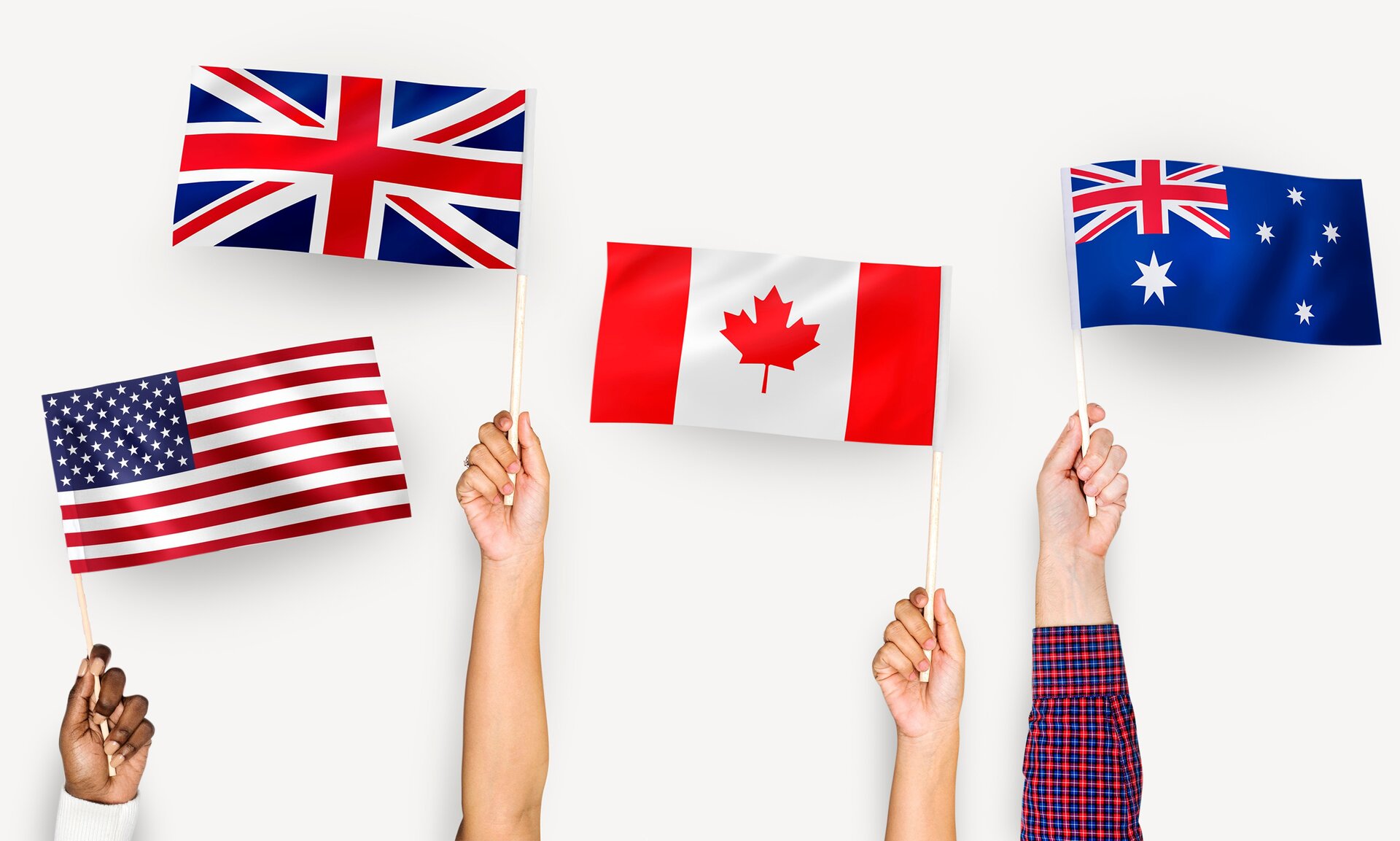
Match the following words with their translations.
Study the text and do the exercises below.
The National Symbols of English‑Speaking CountriesA. ____
A national symbolnational symbol is a patriotic symbol representing a country or a nation. The function of such a symbol is simple. It intends to uniteunite citizens by creating visual or verbal representations of the local people, values, goals, or history. The symbols are often shown during national celebrations. While they may change over time, they help to bind a nation togetherbind a nation together by reminding its people of their history and most important principlesprinciples.
B. ____
The National EmblemNational Emblem of Great Britain is called the Royal Crest. It is a lion bearingbearing the Royal Crown. The lion, called “the king of beasts,” has been used as a symbol of national strengthnational strength of the British monarchy for many centuries. You can see the Royal Crest on King’s personal property and goods bearing the Royal WarrantRoyal Warrant.
The British National anthemNational anthem, just as its emblem, is related to the monarchy. However, it has no official lyricslyrics. Its words are a matter of tradition. On official occasions, it is usual to sing the first verseverse only, the words of which are as follows: “God save our graciousgracious King! Long live our noblenoble King! God save the King! Send him victoriousvictorious, happy and gloriousglorious, long to reign over us: God save the King!”
C. ____
The National emblem of the United States is called The Great SealSeal. The sealseal has two sides. On one side there is a picture of a white‑headed bald eaglebald eagle, the national bird of the U.S.A. It has an olive brancholive branch, a symbol of peace, in one clawclaw and 13 arrows, according to the number of the original 13 states, in the other. Above the eagle’s head there is a motto in Latin “E Pluribus Unum” which means “Many United.” On the other side there is a picture of a Pyramid with an eye above. Both designs are printed on the back of a one‑dollar bill as well as important government documents.
The American National Anthem, a Star‑Spangled Banner, is as grand as its emblem. It is usually sung at the beginning of large public events, especially sports ones. People are expected to stand up and put their right hand over their heartsput their right hand over their hearts while the song is being sung in order to show respect and support for their country.
D. ____
Canada’s most well known symbol is the maple leafmaple leaf, which was first used by French colonists in the 1700s. The maple leaf is prominently depicted ondepicted on the country's current flags, and on the coat of armscoat of arms. It was also seen on the penny before it officially went out of circulation in 2013. Canada's official tartantartan known as the “Maple Leaf tartan” has four colours which reflect the colours of the maple leaf as it changes through the seasons: green in the spring, golden in the early autumn, red at the first frost, and brown after falling.
Interestingly, Canada’s national anthem, “O’ Canada” does not mention the maple leaf. It does, however, speak of patriotismpatriotism and love for the land. Originally, the anthem was in French, and while both the French and the English versions are used today, they are not direct translations of one another.
E. ____
Australia's national floral emblemfloral emblem is the golden wattlegolden wattle and it displays the national colours: green and golden. As one species of a large type of flora growing across Australia, the golden wattle is a symbol of unity. Wattle is ideally suited to withstand Australia's droughtsdroughts, winds, and bushfiresbushfires. Its resilienceresilience represents the spirit of the Australian people.
The country’s national anthem, “Advance Australia Fair”, emphasisesemphasises the same qualities. Not only does it mention unity, but the cultural importance of the land and its flora. However, the anthem’s history is long and troubled. Its second line was changed in 2021 from “we are young and free” to “we are one and free” to acknowledge the Aboriginal AustraliansAboriginal Australians.
Źródło: Iwona Mikucka, licencja: CC BY-SA 3.0.
Answer the questions. Write 2‑3 sentences to each question.
Why do you think each independent state has national symbols?
What feeling do you have when you sing your national anthem?
On what occasions are national flags hung in the streets in your country?
Słownik
/ ˌæbəˈrɪdʒn̩əl ɒˈstreɪliənz /
rdzenni mieszkańcy Australii
/ ˈbɔ:ld ˈiːɡl̩ /
bielik amerykański (gatunek orła)
/ biːk ænd ˈtælənz /
dziób i szpony
/ ˈbeərɪŋ / / beə /
noszący [nosić (np. imię, znamię, tytuł)]
/ baɪnd ə ˈneɪʃn̩ təˈɡeðə /
jednoczyć naród (making people feel as if they are part of the same group)
/ bʊʃˈfaɪəz / / bʊʃˈfaɪə /
pożary lasów [pożar lasu]
/ klɔː /
pazur
/ kəʊt əv ɑːmz /
herb (a special shield that is a sign of a family or city)
/ krɛst /
herb
/ dɪˈpɪktɪd ɒn / / dɪˈpɪkt ɒn /
przedstawiony/przedstawiona na [przedstawiać na]
/ ˈdraʊts / / ˈdraʊt /
susze [susza]
/ ˈemfəsaɪzɪz / / ˈemfəsaɪz /
podkreśla [podkreślać]
/ ˈflɔːrəl ˈembləm /
godło kwiatowe (a plant or flower which is recognised as the symbol of a group)
/ ˈɡlɔːrɪəs /
chlubny/chlubna, pełny/pełna chwały
/ ˈɡəʊldən ˈwɒtl̩ /
akacja australijska
/ ˈɡreɪʃəs /
łaskawy/łaskawa, uprzejmy/uprzejma
/ ˈherɪtɪdʒ /
dziedzictwo
/ ˈlɪrɪks /
tekst piosenki
/ ˈmeɪpl li:f /
liść klonu
/ ˈnæʃnəl ˈænthetaəm /
hymn narodowy
/ ˈnæʃnəl kəˈmjuːnɪti /
społeczność narodowa (a group of people who share the same language, history, or culture)
/ ˈnæʃnəl ˈembləm /
godło narodowe
/ ˈnæʃnəl streŋtheta /
siła narodu
/ ˈnæʃnəl ˈsɪmbl̩ /
symbol narodowy
/ ˈnəʊbl̩ /
szlachetny/szlachetna, wspaniały/wspaniała, majestatyczny/majestatyczna
/ ˈɒlɪv brɑːntʃ /
gałązka oliwna (a symbol of peace)
/ ˈpætrɪətɪzəm /
patriotyzm (devotion to vigorous support for a certain country)
/ ˈprɪnsəpl̩z / / ˈprɪnsəpl̩ /
zasady [zasada], reguły [reguła]
/ ˈpʊt ðeə ˈraɪt hænd ˈəʊvə ðeə hɑːts /
położyć prawą rękę na sercu
/ rɪˈflekt /
odzwierciedlać
/ rɪˈzɪlɪəns /
wytrzymałość, odporność
/ rɪˈzɪliənt /
wytrzymały, odporny
/ ˈrɔɪəl ˈwɒrənt /
dokument zaświadczający, że otrzymujące je przedsiębiorstwo regularnie dostarcza dobra bądź świadczy usługi brytyjskiej rodzinie królewskiej, a także pozwalający na umieszczenie na swoich produktach herbu królewskiego
/ siːl /
pieczęć
/ ˈtɑːtn̩ /
wzór w szkocką kratę (a woolen checked cloth which is associated with a particular Scottish clan)
/ juˈnaɪt /
zjednoczyć
/ vɜːs /
zwrotka, fragment wiersza lub piosenki
/ vɪkˈtɔːrɪəs /
zwycięski/zwycięska
/ wɪðˈstænd /
wytrzymywać
Źródło: GroMar Sp. z o.o., licencja: CC BY‑SA 3.0