Przeczytaj
What do you pay attention to when planning holiday? Is it the location, weather, or available activities? Some of us have to focus on accessibility for people with disabilities as well. That's why more and more attention is being paid to making all tourist destinations inclusive. In this section, you are going to read a text about places that are accessible to all tourists, no matter their indispositions.
Na co zwracasz uwagę, planując wakacje? Na lokalizację, pogodę czy dostępne atrakcje? Niektórzy z nas muszą również skupić się na przystępności tych miejsc dla osób z niepełnosprawnościami. Dlatego właśnie coraz więcej uwagi poświęca się inkluzywności wszystkich miejsc turystycznych. W tym materiale dowiesz się więcej o miejscach, które są przystępne dla każdego.
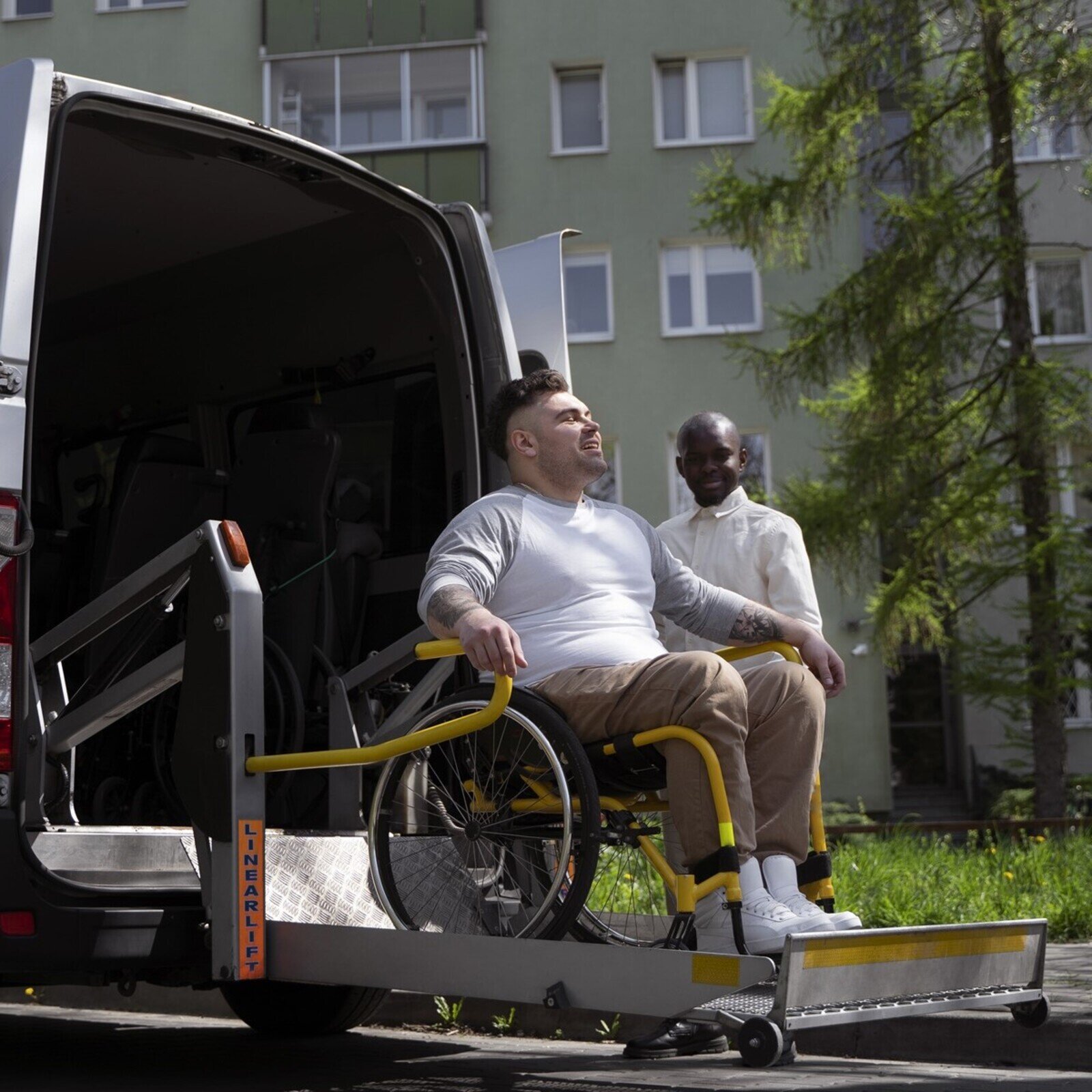
Read the text about accessible tourism and then do the exercises below.
To the Moon and Back… Even in a Wheelchair!According to the World Health Organisation, there are about 1 billion people with different disabilitiesdisabilities, which makes about 15 percent of the world population. Disabilities might include dementiadementia, Alzhaimer’s senilitysenility, using a wheelchairwheelchair, hearing or vision difficultyvision difficulty, problems with walking or climbing the stairs, as well as the need of assistancethe need of assistance of others with everyday tasks. Tourism still presents many barrierspresents many barriers to them.
In 2020 alone, there were 862 million trips. Each one covers the whole chain of tourism services, such as transport, accommodation, the reservation systemreservation system and reaching and entering places so if one chain is broken, the holiday might be spoiled. People with specific access requirementsaccess requirements experience obstaclesexperience obstacles when travelling because there is a lack of accessible tourism offers on the market. An analysis carried outcarried out for the EU Commission found that only about 9.2% of the overall supply of tourism services in Europe provide and advertise accessible services. Accessible tourism deals with people with disabilities and those of all populations, such as the elderly, those with children, or pregnant women.
Tourists with specific access requirements represent a big and growing potential market. Since there are more and more followers of the idea of the integration of people with disordersdisorders and disabilities among society members, Accessible tourism, also known as Tourism For All or Inclusive Tourism, is to encompassencompass all, no matter what their physical or intellectual limitations, age, condition, disabilities, or the number of children they have. Simply speaking, it is the way of making tourist attractions and spots reachable to everyone.
According to the European Network for Accessible Tourism (ENAT), accessible tourism includes
barrier‑free destinations, which involve infrastructure and facilities;
transport facilities (land, sea, air);
exhibits and attractions that allow the disabled to take part in them;
high‑quality services conveyed by professionals;
websites and services and marketing and booking systems.
While discussing accessibility, it is crucial to mention that disability is not only about a medical condition but also about social environments that imposeimpose barriers on people with impairmentsimpairments and where huge attention is put on removing them from public spaces. This endeavourendeavour has led to the adventadvent of the concept of Universal Design, which aims to make products and places easily reached by everybody. There is a list of principles of universal design: fair use, flexibility in use, intuitive use, perceptible information, error tolerance, low physical effort, as well as size and space for approach and use. Adopting them means ensuring that all persons are able to use and enjoy the available amenities in an equitable and sustainable manner.
Accessibility is a central element of any responsible and sustainable development policy. It is both a human right and business opportunity. In this context, we need to keep in mind that Inclusive Tourism brings benefits to persons with disabilities, but also to the entire society.
Źródło: Anna Faszcza, [na podstawie:] https://www.youtube.com/watch?v=l__oFyTcNJg [dostęp 8.03.2022], https://en.wikipedia.org/wiki/Accessible_tourism [dostęp 8.03.2022], licencja: CC BY-SA 3.0.
A. states that over 1 billion people need to be taken care of by other people.
B. asserts that a sizable part of the population lives with some kind of impairment.
C. claims that tourism seems to be causing problems to physically disabled people.
2. Travelling plans
A. might be easily disturbed by the lack of one factor.
B. must always be thought about thoroughly in advance.
C. depend only on accommodation and transport facilities.
3. The European Commission
A. calculates that tourism is wholly inaccessible to most.
B. claims that Europe does not advertise accessible holidays.
C. states that European countries offer few inclusive services.
4. Accessible Tourism
A. is dedicated to people with a wide range of indispositions.
B. is dedicated only to people with physical disabilities.
C. is dedicated solely to people with large families.
5. Universal Design
A. aims at getting rid of things in public spaces that may cause problems.
B. implies that certain groups should be removed from public spaces.
C. has been conceived due to tourism-related issues people had to deal with.
Answer the questions in 5–6 sentences each.
What did you find surprising about pregnant women in the text about accessible tourism?
Have you ever come across any facilities in public spaces for people with different difficulties? What were they?
Słownik
/ ˈækses rɪˈkwaɪəmənts / / ˈækses rɪˈkwaɪəmənt /
wymagania dotyczące dostępu [wymaganie dotyczące dostępu] (conditions to meet to have access)
/ əkˌsesəˈbɪləti /
dostępność (the quality or characteristic of something that makes it possible to approach, enter, or use it)
/ ˈædvent /
nadejście, nastanie (the fact of an event happening, an invention being made, or a person arriving)
/ əˈmiːnətiz / / əˈmiːnəti /
udogodnienia [udogodnienie] (something intended to make life more pleasant or comfortable for people)
/ ˈbæriəz / / ˈbæriə /
przeszkody [przeszkoda] (something that prevents something else from happening or makes it more difficult)
/ ˈkærɪd ˈaʊt / / ˈkæri ˈaʊt /
przeprowadzony/przeprowadzona [przeprowadzić], wykonany/wykonana [wykonać]
(to do or complete something, especially that you have said you would do or that you have been told to do)
/ dɪˈmenʃə /
demencja starcza (a medical condition that affects especially old people, causing the memory and other mental abilities to gradually become worse, and leading to confused behaviour)
/ ˌdɪsəˈbɪlɪtɪz / / ˌdɪsəˈbɪlɪti /
zaburzenia, niepełnosprawności, inwalidztwo [zaburzenie, niepełnosprawność] (an illness, injury, or condition that makes it difficult for someone to do some things that other people do, and that is usually permanent or lasts for a long time)
/ dɪsˈɔːdəz / / dɪsˈɔːdə /
zaburzenia [zaburzenie] (an illness of the mind or body)
/ ɪnˈkʌmpəs /
obejmować, ogarniać (to include different types of things)
/ ɪnˈdevə /
wysiłek, próba, staranie (an attempt to do something)
/ ˈekwɪtəbl̩ /
sprawiedliwy/sprawiedliwa, słuszny/słuszna (treating everyone fairly and in the same way)
/ ɪkˈspɪərɪəns ˈɒbstəkl̩z / / ɪkˈspɪərɪəns ən ˈɒbstəkl̩ /
borykać się z przeszkodami, napotykać trudności [borykać się z przeszkodą, napotkać trudność] (being prevented from doing something)
/ ɪmˈpeəmənts / / ɪmˈpeəmənt /
upośledzenia [upośledzenie] (deterioration in the functioning of a body part, organ, or system that can be temporary or permanent and can result from injury or disease)
/ ɪmˈpəʊz /
wymusić, nałożyć
(to force someone to accept something, especially a belief or way of living)
/ ˈɒbstəkl̩z / / ˈɒbstəkl̩ /
trudności [trudność], przeszkody [przeszkoda] (something that blocks your way so that movement or progress is prevented or made more difficult)
/ prɪˈzents ˌmeni ˈbæriəz / / ˌpreznt ə ˈbæriə /
stawia wiele przeszkód [stawiać przeszkodę] (includes a variety of obstacles)
/ rɪˈkwaɪəmənts / / rɪˈkwaɪəmənt /
wymagania [wymaganie] (something that you must do, or something you need)
/ ˌrezəˈveɪʃn̩ ˈsɪstəm /
system rezerwacji (a system of bookings)
/ sɪˈnɪlɪti /
starość, zniedołężenie (the condition of showing poor mental ability because of old age)
/ səˈsteɪnəbl̩ /
zrównoważony/zrównoważona
(able to continue over a period of time)
/ niːd əv əˈsɪstəns /
potrzeba asysty (a need to be helped by someone)
/ ˈvɪʒn̩ ˈdɪfɪkəlti /
zaburzenie wzroku (having problems with seeing)
/ ˈwiːl̩tʃeə /
wózek inwalidzki (a chair on wheels that people who are unable to walk use for moving around)
Źródło: GroMar Sp. z o.o., licencja: CC BY‑SA 3.0