bg‑azure

Oceans take up most of Earth’s surface. No wonder they’re rich in life. What can we find in the oceans? Read the text in this section to find out.

Oceany zajmują większość powierzchni Ziemi. Nie dziwi więc, że są pełne życia. Co można w nich znaleźć? Przeczytaj tekst w tej sekcji, aby się dowiedzieć.
RoYrstBKBrK2I
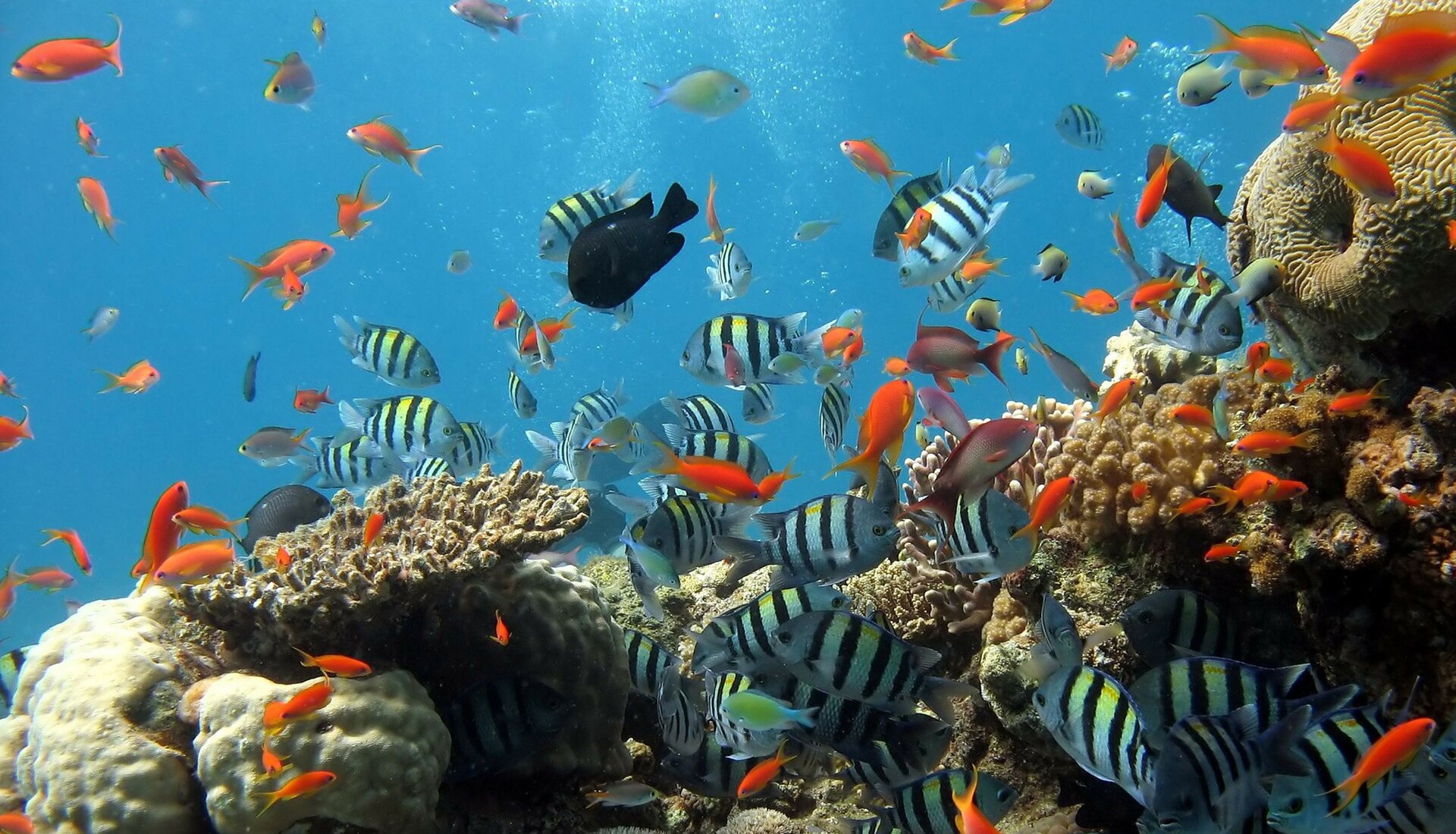
There are many plants and animals in the ocean
W oceanie znajduje się wiele roślin i zwierząt
Źródło: dostępny w internecie: https://pixabay.com/ [dostęp 14.02.2022], domena publiczna.
Exercise 1

Match the words with their translations.

Połącz wyrazy z ich tłumaczeniami.

R3WkIxqUOViaz
Źródło: GroMar Sp. z o.o., licencja: CC BY-SA 3.0.
Exercise 1

Drag the words to match them with pictures.

Połącz poniższe wyrazy z odpowiednimi ilustracjami.

RFo1fRoypm4Zi
Źródło: dostępny w internecie: https://unsplash.com/ [dostęp 7.11.2022], domena publiczna.

Read the text about ocean life. Then, do the tasks below. 

Przeczytaj tekst o życiu w oceanie, a następnie wykonaj poniższe zadania.

Secrets of the Ocean Life
Zuzanna Kościuk Secrets of the Ocean Life

Did you know that oceansoceans [ocean]oceans covercover (verb)cover more than 70% of the Earth? They are (from the biggest to the smallest): the PacificPacific Oceanthe Pacific, the AtlanticAtlantic Oceanthe Atlantic, the IndianIndian Oceanthe Indian, the SouthernSouthern Oceanthe Southern, and the ArcticArctic Oceanthe Arctic Oceansoceans [ocean]Oceans.

What’s so special about them? Oceans are rich in life. About 1 million speciesspeciesspecies live there! Some of the species are very small. You can’t see them without a microscopemicroscopemicroscope! Others are very big. You can’t miss them. For example, the largest animal on Earth is an ocean mammalocean mammalocean mammal, the whalewhalewhale.

Of course, there are plenty of other animals, too. Fish, sharkssharks [shark]sharks, turtlesturtles [turtle]turtles, and dolphinsdolphins [dolphin]dolphins (by the way, they are mammals, not fish) all live in oceans. There is also a huge number of animals without bones. In fact, 95% of all ocean species don’t have bones! Just think of all the jellyfishjellyfishjellyfish and shrimpshrimpshrimp.

Oceans are also full of plantsplants [plant]plants such as algaealgaealgae. Algae are very important because they produce about half of the oxygenoxygenoxygen all animals and humans breathe. There are also plants like seaweedseaweedseaweed. Ocean animals eat them!

It’s important to remember that oceans are very big and different oceanicoceanicoceanic animals live in different regionsregions [region]regions. For example, the coral reefcoral reefcoral reef region is an ecosystemecosystemecosystem full of animals that like warmwarmwarm and shallowshallowshallow water. Most coral reefs in the world are in the Pacific. Would you like to see it?

1 Źródło: Zuzanna Kościuk, licencja: CC BY-SA 3.0.
Exercise 2

Based on the text, choose the correct answer.

Na podstawie tekstu wybierz prawidłową odpowiedź. 

R1KaFTkspeuOU
1. Plant life
algaeseaweedshrimp

2. Mammals
turtleswhalesdolphins

3. Animals without bones
shrimpjellyfishfish
Źródło: GroMar Sp. z o.o., licencja: CC BY-SA 3.0.
Exercise 3

Search the text and type in the names of the oceans to complete the sentence.

Odszukaj informacje w tekście, a następnie uzupełnij zdania, wpisując brakujące nazwy oceanów.

R13E62aBLIoCi
The ocean is a big body of saltwater. It’s divided into smaller parts: the     1. PTu uzupełnij    , the     2. ATu uzupełnij    , the     3. ITu uzupełnij    , the     4. STu uzupełnij    , and the     5. ATu uzupełnij     Ocean.
Źródło: GroMar Sp. z o.o., licencja: CC BY-SA 3.0.
Exercise 4

Write one‑sentence answers to the questions.

Napisz jednozdaniowe odpowiedzi na każde pytanie.

  1. Which fact about the ocean surprised you the most?

RcgX9speUtXXe
(Uzupełnij).
Źródło: GroMar Sp. z o.o., licencja: CC BY-SA 3.0.
Show hintazurewhite
Show answerazurewhite
  1. Which of the ocean species would like to see? Why?

R5V7VE5kcfhoA
(Uzupełnij).
Źródło: GroMar Sp. z o.o., licencja: CC BY-SA 3.0.
Show hintazurewhite
Show answerazurewhite

Słownik

algae
algae

/ˈælɡiː/

R12FTdeUQE16J1
Nagranie dźwiękowe

algi, glony [alga, glon]

R1JRHVGFSiy4R1
Nagranie dźwiękowe
Arctic Ocean
Arctic Ocean

/ ˌɑ:ktɪk ˈəʊʃn̩ /

R1BE3Of45WNQU1
Nagranie dźwiękowe

Ocean Arktyczny

R1ZPsHyMenv1B1
Nagranie dźwiękowe
Atlantic Ocean
Atlantic Ocean

/ ətˌlæntɪk ˈəʊʃn̩ /

R1dUsMDIF6B5y1
Nagranie dźwiękowe

Ocean Atlantycki

R12XOylKuBmpH1
Nagranie dźwiękowe
coral reef
coral reef

/ ˈkɒrəl ˈri:f /

R1bdWCrhIk5xA1
Nagranie dźwiękowe

rafa koralowa (podwodne formacje stworzone przez koralowce)

RLj3KBpjTFzgZ1
Nagranie dźwiękowe
cover (verb)
cover (verb)

/ ˈkʌvə /

RZbXrLKPDNHzc1
Nagranie dźwiękowe

pokrywać

RSWx6QcjOqLpN1
Nagranie dźwiękowe
dolphins [dolphin]
dolphins [dolphin]

/ ˈdɒlfɪnz / / ˈdɒlfɪn /

R1N5cfqkdVZWA1
Nagranie dźwiękowe

delfiny [delfin]

R1GAcDXpmgbwW1
Nagranie dźwiękowe
ecosystem
ecosystem

/ ˈiːkəʊsɪstəm /

RhqwKhqa5NgPn1
Nagranie dźwiękowe

ekosystem (fragment przyrody, który stanowi funkcjonalną całość, tzn. zachodzi w nim nieustanna wymiana między częścią ożywioną a nieożywioną)

Rg5WNebVewhOQ1
Nagranie dźwiękowe
Indian Ocean
Indian Ocean

/ ˈɪndɪən ˈəʊʃn̩ /

R1BEZFsi5wFRs1
Nagranie dźwiękowe

Ocean Indyjski

Rc5JMXauzGQLK1
Nagranie dźwiękowe
jellyfish
jellyfish

/ ˈdʒelɪfɪʃ /

RXcZgCtSA7gwi1
Nagranie dźwiękowe

meduzy [meduza]

R1Gc8sVZzwy9J1
Nagranie dźwiękowe
microscope
microscope

/ ˈmaɪkrəskəʊp /

RlP9WXWm92yIZ1
Nagranie dźwiękowe

mikroskop

R1XsvpxqlZcx51
Nagranie dźwiękowe
ocean mammal
ocean mammal

/ ˈəʊʃn̩ ˈmæml̩ /

R1GTPq8zSBjqC1
Nagranie dźwiękowe

ssak oceaniczny

R90ZcNRVe5VHl1
Nagranie dźwiękowe
oceanic
oceanic

/ ˌəʊʃɪˈænɪk /

R1D565RT5IlO01
Nagranie dźwiękowe

oceaniczny/oceaniczna

R11SxR3wZmlym1
Nagranie dźwiękowe
oceans [ocean]
oceans [ocean]

/ ˈəʊʃn̩z / / ˈəʊʃn̩ /

RLvpm8r7sH6u21
Nagranie dźwiękowe

oceany [ocean]

R1HMo7I4tWm0h1
Nagranie dźwiękowe
oxygen
oxygen

/ ˈɒksɪdʒən /

RrANQCqeABhH11
Nagranie dźwiękowe

tlen

RzXmewECm6qzk1
Nagranie dźwiękowe
Pacific Ocean
Pacific Ocean

/ pəˈsɪfɪk ˈəʊʃn̩ /

R1XmAXgiyoAJg1
Nagranie dźwiękowe

Ocean Spokojny

RXrpbpGE1BYSr1
Nagranie dźwiękowe
plants [plant]
plants [plant]

/ plɑːnts / / plɑːnt /

RIcV447A94Z3i1
Nagranie dźwiękowe

rośliny [roślina]

R1MKcdqkhRfqC1
Nagranie dźwiękowe
regions [region]
regions [region]

/ ˈriːdʒənz / / ˈriːdʒən /

R1TiWFjwnHrEP1
Nagranie dźwiękowe

obszary [obszar]

R80vxqfP9ln5Y1
Nagranie dźwiękowe
seaweed
seaweed

/ ˈsiːwiːd /

RV6KrAG1oNu9l1
Nagranie dźwiękowe

wodorosty (potoczna nazwa roślin wodnych o miękkich ciałach)

R1axg4xjMEe0y1
Nagranie dźwiękowe
shallow
shallow

/ ˈʃæləʊ /

RoXsxu7Aybteg1
Nagranie dźwiękowe

płytki/płytka

R7OaSmVEyZ4791
Nagranie dźwiękowe
sharks [shark]
sharks [shark]

/ ʃɑːks / / ʃɑːk /

R1NfaXeIcflQB1
Nagranie dźwiękowe

rekiny [rekin]

RJIo6wlH08GRu1
Nagranie dźwiękowe
shrimp
shrimp

/ ʃrɪmp /

RSYrmu7wLtRpy1
Nagranie dźwiękowe

krewetki [krewetka]

RV1WD5FItQ6rQ1
Nagranie dźwiękowe
Southern Ocean
Southern Ocean

/ ˈsʌðən ˈəʊʃn̩ /

Rxa2FZ9AJTX1f1
Nagranie dźwiękowe

Ocean Południowy

RGugA0WDmIBuW1
Nagranie dźwiękowe
species
species

/ ˈspiːʃiːz /

Rx3tssXp0ESZa1
Nagranie dźwiękowe

gatunki [gatunek]

Re7PvvC92eC2j1
Nagranie dźwiękowe
turtles [turtle]
turtles [turtle]

/ ˈtɜːtl̩z / / ˈtɜːtl̩ /

RIJ2u8o1r0uAT1
Nagranie dźwiękowe

żółwie [żółw]

RS1nHqFSP3gx11
Nagranie dźwiękowe
warm
warm

/ wɔːm /

RknGNYOZTnulC1
Nagranie dźwiękowe

ciepły/ciepła

R1QHpINkYyUt21
Nagranie dźwiękowe
whale
whale

/ weɪl /

R1bICT05kFgNG1
Nagranie dźwiękowe

wieloryb

R8uSJQIPonrRw1
Nagranie dźwiękowe

 Źródło: GroMar Sp. z o.o., licencja: CC BY‑SA 3.0

R13uFTBH6s65B
(Uzupełnij).
Źródło: GroMar Sp. z o.o., licencja: CC BY-SA 3.0.