Przeczytaj
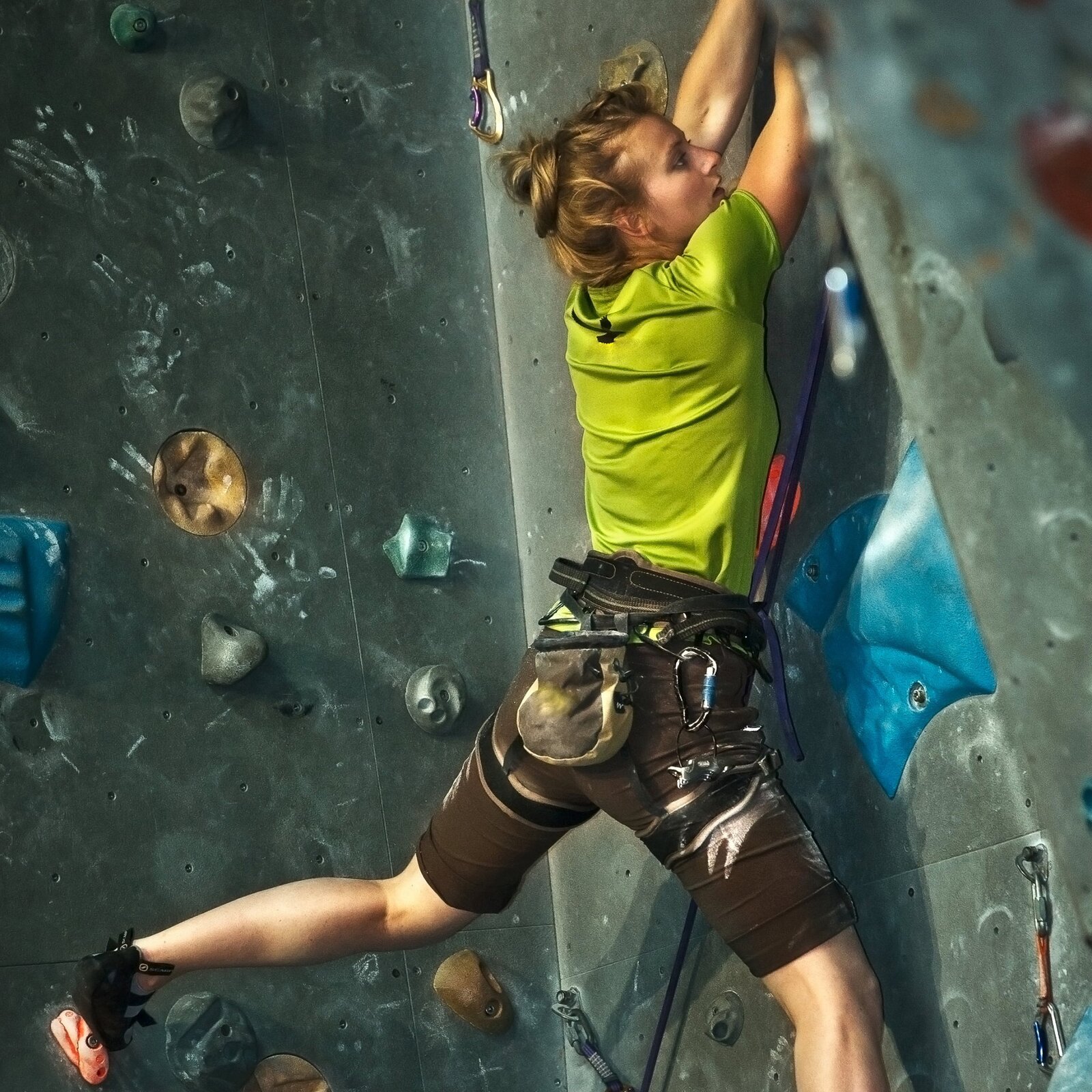
The picture below shows an athlete climbing a high wall. Sport climbing, among other disciplines, is a new sport at the Summer Olympic Games. In this section you will read the text and find out what other sports were new at the Tokyo Summer Olympics in 2020/2021.
Poniższe zdjęcie przedstawia sportowca wspinającego się na wysoką ścianę. Wspinaczka sportowa, wśród innych dyscyplin, jest nowym sportem na Letnich Igrzyskach Olimpijskich w Tokio. W tej części e‑materiału przeczytasz tekst i dowiesz się, jakie inne sporty zostały wprowadzone na Olimpiadzie w Tokio w latach 2020/2021.
Match the words and phrases with their translations
Połącz wyrazy i wyrażenia z ich definicjami.
Match the sport with the correct equipment.
Połącz dyscyplinę sportową z odpowiednim sprzętem.
Read the text about the Olympic Games to find out how they have changed over the years, and do the exercises below.
Przeczytaj teksty o tym, jak zmieniały się igrzyska olimpijskie na przestrzeni lat, i wykonaj poniższe ćwiczenia.
New Summer Olympic SportsIn 2016, the International Olympic Committeethe International Olympic Committee decided to add new disciplines to the Tokyo Olympic Games in 2020. They wanted to add news sports to get the attention of young people and combine old disciplines with new ones. Young people love some new sports like skateboarding, sport climbing, or surfing. The good news for athletes is also that most new sports do not requirerequire a lot of expensive geargear. Let’s have a look at the most interesting ones.
Skateboarding
Skateboarding made its debutmade its debut in two competitions: park and street. The park event took place in an area which allowed skateboarders to do a number of tricks like twiststwists and spinsspins. Athletes could jump as high as possible in the air, performperform tricks, and land without falling there. In the street event, on the other handon the other hand, there were such obstaclesobstacles like curbscurbs, rampsramps, stairs, and railsrails. Both competitions were scored on a 0‑100 point scale based onbased on difficulty and originality of the trick.
Sport climbing
You have probably heard about climbing in the mountains. But you’re probably thinking “what is sport climbing”? At the Tokyo Olympics there were three kinds of competitions: lead climbinglead climbing, speed climbing, and boulderingbouldering. In lead climbing, athletes go up a 15- meter wall in a limitedlimited amount of time. They wear protectiveprotective equipment such as a harnessharness and they attach a roperope on the way up to protect themselves. In speed climbing, climbers try to climb a wall as quickly as possible without falling. Bouldering is a type of climbing without the use of ropes or harnesses. A climber has to overcomeovercome as many obstacles as they can. If they slip offslip off, they fall on a soft mattressmattress.
Surfing
Surfing is one of the most unpredictableunpredictable new disciplines at the Olympics because it depends on weather conditions such as wind or waveswaves. Scoring in surfing also can be subjectivesubjective. Surfers get points for the difficulty and the varietyvariety of manoeuvres they perform as well as for the speed. A surfer can ride different waves for up to 30 minutes.
Karate
There were two types of karate in Tokyo - Kumite and Kata. Kata is a competition where an athlete demonstratesdemonstrates different offensiveoffensive and defensivedefensive moves against a virtual opponentvirtual opponent. Judges give scores based on power, speed, balance, and rhythm. In Kumite, two competitors show their skills in a 3‑minute fight. Each athlete can score from 1 to 3 points depending on the kind of kickkick, strikestrike, or a punchpunch. Strikes below the beltbelow the belt are not allowedallowed.
Źródło: Dorota Giżyńska , licencja: CC BY-SA 3.0.
Read the text and choose two alternative titles for each paragraph.
Przeczytaj tekst i wybierz po dwa alternatywne tytuły do każdego akapitu.
Read the text and choose the correct answer.
Przeczytaj tekst i wybierz prawidłowe odpowiedzi.
What do these numbers refer to? Find the numbers in the text and match them with the phrases below to make correct phrases.
Do czego odnoszą się liczby z tekstu? Znajdź je w tekście i połącz z wyrażeniami, tak aby utworzyć prawidłowe zdania.
Read the texts again and drag the words to fill in the gaps.
Przeczytaj tekst kolejny raz i uzupełnij poniższe zdania właściwymi wyrazami.
2. Most modern Olympic sports do not require expensive 1. obstacles, 2. gear, 3. mattress, 4. harness, 5. attempt, 6. opponent.
3. You can now compete with a virtual 1. obstacles, 2. gear, 3. mattress, 4. harness, 5. attempt, 6. opponent in karate.
4. In skateboarding, there are different 1. obstacles, 2. gear, 3. mattress, 4. harness, 5. attempt, 6. opponent to overcome.
5. Climbers 1. obstacles, 2. gear, 3. mattress, 4. harness, 5. attempt, 6. opponent to go up a wall as fast as possible.
6. If you fall from a 4-5 meter wall, you land safely on a(n) 1. obstacles, 2. gear, 3. mattress, 4. harness, 5. attempt, 6. opponent.
Answer the questions.
Udziel jednozdaniowych odpowiedzi na poniższe pytania.
Which sport do you find the most interesting and why?
Which sport would you like to watch on TV and why?
Which sport is the most dangerous and why?
Słownik
/ əˈlaʊd /
dozwolony/dozwolona
/ ˈɑːtʃəri /
łucznictwo
/ beɪst ɒn /
na podstawie
/ bɪˈləʊ ðə belt /
poniżej pasa
/ˈbəʊldərɪŋ/
wspinaczka po blokach skalnych bez asekuracji
/ 'bɒʊ /
łuk
/ kæp /
czepek pływacki
/ kɜːbz / / kɜːb /
krawężniki [krawężnik]
/ dɪˈfensɪv /
defensywny/defensywna, obronny/obronna
/ ˈdemənstreɪts / / ˈdemənstreɪt /
przedstawia [przedstawiać]
/ ɡɪə /
sprzęt, wyposażenie
/ ˈɡɒɡl̩z /
gogle
/ ˈhɑːnəs /
uprząż (do wspinaczki), pas bezpieczeństwa
/ hed ɡɑːd /
ochraniacz głowy
/ ˈkɪk /
kopnięcie
/ liːd ˈklaɪmɪŋ /
prowadzenie (wspinaczka sportowa)
/ ˈlɪmɪtɪd /
ograniczony/ograniczona
/ ˈmeɪd ɪts ˈdeɪbjuː / / ˈmeɪk ə ˈdeɪbjuː /
zadebiutował/zadebiutowała [zadebiutować]
/ ˈmætrɪs /
materac
/ ˈɒbstəkl̩z / / ˈɒbstəkl̩ /
przeszkody [przeszkoda]
/ əˈfensɪv /
ofensywny/ofensywna, atakujący/atakująca
/ ˈɒn ði ˈʌðə hænd /
z drugiej strony
/ ˌəʊvəˈkʌm /
pokonać
/ pəˈfɔːm /
wykonywać
/ prəˈtektɪv /
ochronny/ochronna
/ pʌntʃ /
cios
/ reɪlz / / reɪl /
poręcze [poręcz]
/ ræmps / / ræmp /
rampy [rampa]
/ rent /
wypożyczyć
/ rɪˈkwaɪə /
wymagać
/ rəʊp /
lina
/ ˈslɪp ɒf /
wyślizgnąć się
/ spɪnz / / spɪn /
obroty [obrót]
/ straɪk /
uderzenie
/ səbˈdʒektɪv /
subiektywny/subiektywna
/ ði ˌɪntəˈnæʃn̩əl əˈlɪmpɪk kəˈmɪti /
Międzynarodowy Komitet Olimpijski
/ twɪsts / / twɪst /
skręty [skręt]
/ ˌʌnprɪˈdɪktəbl̩ /
nieprzewidywalny/nieprzewidywalna
/ vəˈraɪəti /
różnorodność
/ weɪvz / / weɪv /
fale [fala]
/ ˈvɜːtʃʊəl əˈpəʊnənt /
wirtualny przeciwnik
Źródło: GroMar Sp. z o.o., licencja: CC BY‑SA 3.0