Przeczytaj
How much do you know about different animals? Work with the text in this section to learn something new!
Ile wiesz o różnych zwierzętach? Pracuj z tekstem w tej sekcji, aby dowiedzieć się czegoś nowego!
Match the words with their translations.
Połącz wyrazy z ich tłumaczeniami.
Find the words listed below. Search up, down, forward, backward, and on the diagonal to find the hidden words.
Znajdź wyrazy podane poniżej. Możesz ich szukać pionowo, poziomo, od góry do dołu, od dołu do góry oraz na ukos.
Study the text about interesting animal facts and then do the exercises below.
Przeczytaj tekst dotyczący interesujących faktów o zwierzętach, a następnie wykonaj poniższe ćwiczenia.
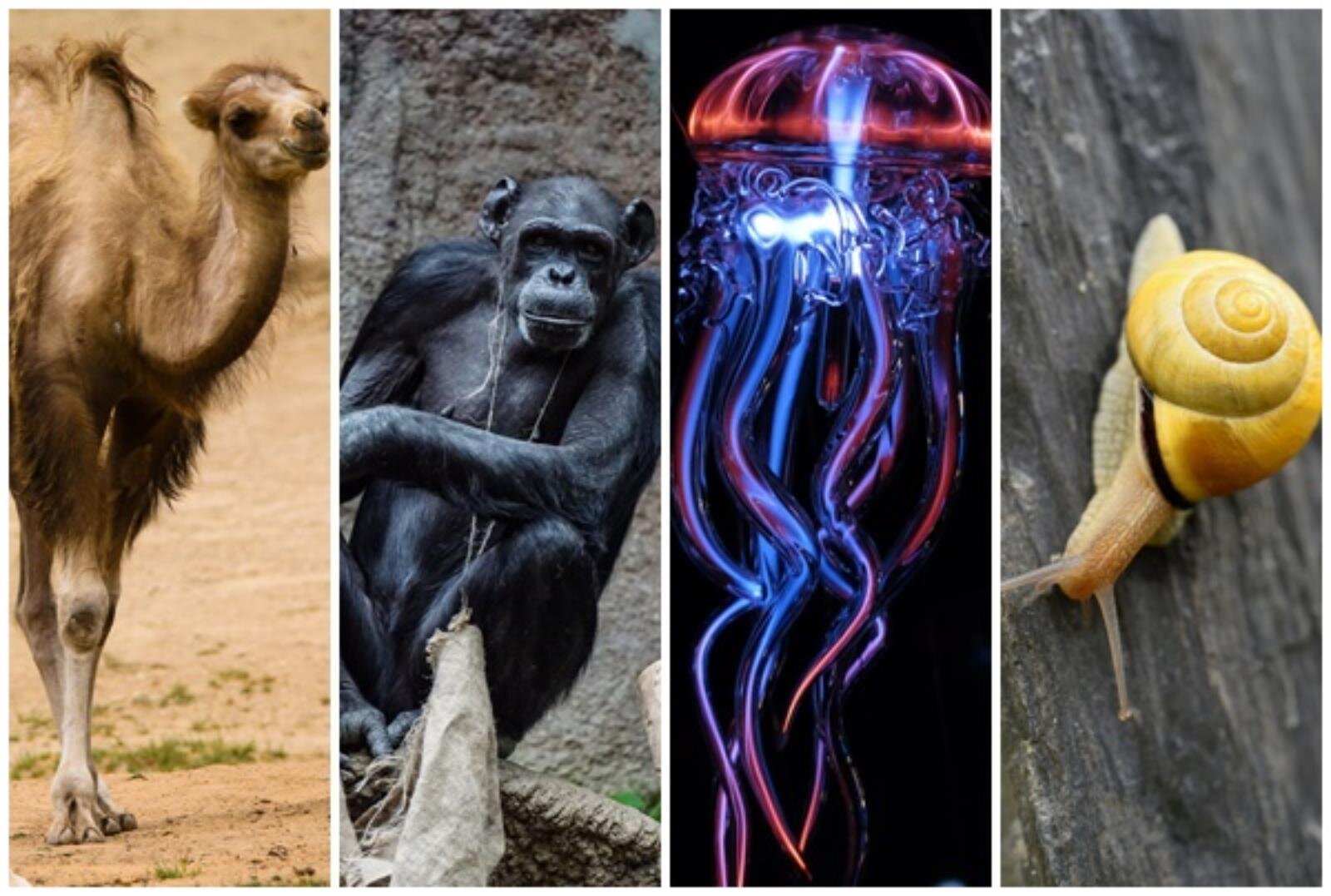
Animals and Their SecretsSome animals can do things we can’t even imagineimagine!
For example, camelscamels can live a long time without drinking water. It’s not because they keep water in their humpskeep water in their humps. That’s a mythmyth! Their humps are full of fat but camels can drink up to 100 litres of water at onceat once. They also don’t sweatsweat too much. They can live months without drinking.
What about other animals? ChimpanzeesChimpanzees can learn sign languagesign language. They can’t speak, but they communicatecommunicate with their hands. And some jellyfishjellyfish never grow old or die! Why? It's because they can become children again.
Finally, let’s talk about snailssnails. They can sleep for 3 years! It’s because they need a lot of water to livelive. When there’s no rain for a long time, they simply go to sleep. This long sleep is hibernationhibernation. Normally, snails sleep for 13–15 hours and then are awakeawake for 30 hours. It’s crazy!
Źródło: Renata Nowakowska, licencja: CC BY-SA 3.0.
Study the text and choose the correct answer.
Przeczytaj tekst, a następnie wybierz prawidłową odpowiedź.
a) they store it in their humps.
b) they don’t sweat too much.
c) they store fat in their humps.
2. Chimpanzees can communicate, but they can’t
c) speak.
b) talk.
a) sign.
3. Jellyfish are immortal because they can
a) drink a lot of water.
b) sleep for years.
c) turn into children.
4. Snails sometimes sleep for a long time because
c) there’s no rain.
b) there’s no sun.
c) the weather is too cold.
5. Normally, snails stay awake for
a) 13 hours.
b) 15 hours.
c) 30 hours.
Match the words from the text with their definitions.
Połącz wyrazy z tekstu z ich definicjami.
Drag and drop the words to fill in the gaps.
Przeciągnij i upuść wyrazy w odpowiednie luki.
2. Some 1. sweat, 2. hump, 3. jellyfish, 4. hibernation, 5. sign language never die.
3. Snails go into 1. sweat, 2. hump, 3. jellyfish, 4. hibernation, 5. sign language when there’s no rain.
4. Chimpanzees can’t speak but they can use 1. sweat, 2. hump, 3. jellyfish, 4. hibernation, 5. sign language.
5. Camels don’t 1. sweat, 2. hump, 3. jellyfish, 4. hibernation, 5. sign language a lot.
Słownik
/ ət wʌns /
tu: naraz
/ əˈweɪk /
obudzony/obudzona
/ ˈkæməlz / / ˈkæməl /
wielbłądy [wielbłąd]
/ ˌtʃɪmpænˈziːz / / ˌtʃɪmpænˈziː /
szympansy [szympans]
/ kəˈmjuːnɪkeɪt /
porozumiewać się
/ ˌhaɪbəˈneɪʃn̩ /
hibernacja
/ ɪˈmædʒɪn /
wyobrażać sobie
/ ˈdʒelɪfɪʃ /
meduza
/ kiːp ˈwɔ:tə ɪn ðeə hʌmps /
trzymają wodę w swoich garbach
/ lɪv /
żyć
/ mɪtheta /
mit
/ ˈsaɪn ˈlæŋɡwɪdʒ /
język migowy
/ sneɪlz / / sneɪl /
ślimaki [ślimak]
/ swet /
pocić się
Źródło: GroMar Sp. z o.o., licencja: CC BY‑SA 3.0