Przeczytaj
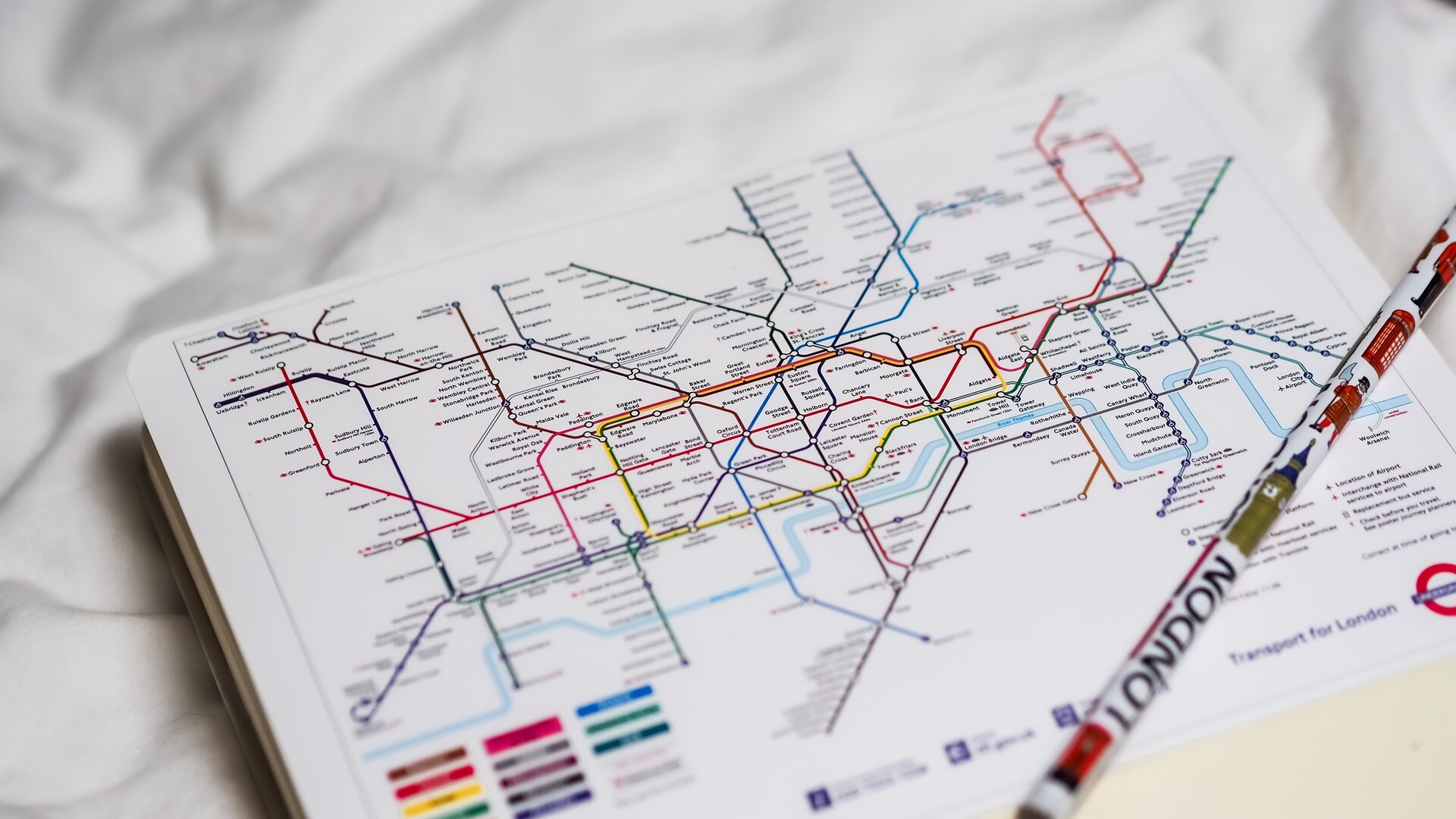
How much do you know about the London Underground? In this section, you're going to learn about it.
Ile wiesz o londyńskim metrze? W tej sekcji poznasz ciekawe fakty na jego temat.
Rearrange the letters in each line to form the words associated with the underground.
Uporządkuj litery, żeby powstały wyrazy kojarzące się z metrem.
Read the text and then, do the exercises.
Przeczytaj tekst, a następnie wykonaj ćwiczenia.
The London TubeThe London Underground is a system of electric trainselectric trains. People use them to travel around the city. It is the oldest undergroundunderground in the world. Despite the name of this transport system, about half of it is aboveabove the groundground.
The TubeThe Tube, a slang nameslang name for the Underground, opened in 1863. It tooktook 40,000 passengerspassengers per day. Later it was made longer and longerwas made longer and longer. Today the Underground has got 11 lines, 274 stationsstations and over 408 km of tracktrack.
Each line has a different colour. The colours are: brown (Bakerloo), red (Central), yellow (Circle), green (District), pink (Hammersmith & City), silver (Jubilee), magentamagenta (Metropolitan), black (Northern), dark blue (Piccadilly), light blue (Victoria) and turquoiseturquoise (Waterloo & City). An interesting fact is that half a million micemice live in the tunnels. Some people also say that ghosts live there, too.
To use the Underground you need a ticketticket or the Oyster cardthe Oyster card. The Oyster card is a plastic card. You use it to travel by all means of transportmeans of transport in London.
Źródło: Marta Hilgier, Renata Nowakowska , licencja: CC BY-SA 3.0.
Search for the information in the text and choose the correct answer.
Znajdź w tekście potrzebne informacje i wybierz prawidłową odpowiedź.
Based on the information from the text, decide if the following sentences are true or false.
Korzystając z informacji zawartych w tekście, zdecyduj, czy podane zdania są prawdziwe, czy fałszywe.
- The London Underground is a system of electric trains.
TRUEFALSE
- The Underground goes only under the ground.
TRUEFALSE
- You can use the Oyster Card to travel by all means of transport in London.
TRUEFALSE
- The Underground has got 274 km of track.
TRUEFALSE
- There is a yellow station.
TRUEFALSE
- There is a magenta line.
TRUEFALSE
Drag the words that you can find in the text in the correct gaps.
Przeciągnij poniższe wyrazy we właściwe miejsca w zdaniach.
- People use the underground to travel 1. plastic, 2. between, 3. around, 4. passengers, 5. above the city.
- In 1863 the Tube went 1. plastic, 2. between, 3. around, 4. passengers, 5. above Paddington and Farringdon.
- The Underground took 40,000 1. plastic, 2. between, 3. around, 4. passengers, 5. above per day.
- Part of the Underground is actually 1. plastic, 2. between, 3. around, 4. passengers, 5. above the ground.
- The Oyster card is a 1. plastic, 2. between, 3. around, 4. passengers, 5. above card.
GRAMATYKA
Present Simple i Past Simple z czasownikiem to be:
PRESENT SIMPLE | PAST SIMPLE |
|---|---|
I am | I was |
you are | you were |
he, she, it is | he, she, it was |
we , you, they are | we, you, they were |
W przeczeniach do czasownika dodajemy not. | W przeczeniach do czasownika dodajemy not. |
I am not/I'm not | I was not/I wasn’t |
you are not/you aren't | you were not/you weren’t |
he, she, it is not/he, she, it isn't | he, she, it was not/ he, she, it wasn’t |
We, you, they are not/we, you, they aren’t | we, you, the were not/ we, you, they weren’t |
W pytaniach stosujemy inwersję. | W pytaniach stosujemy inwersję. |
(czasownik be przed podmiotem) | (czasownik be przed podmiotem) |
am I? | was I? |
are you? | were you? |
is he, she, it? | was he, she, it? |
are we, you, they? | were we, you, they? |
Przykłady:
PRESENT SIMPLE | PAST SIMPLE |
|---|---|
I am tired. | I was hungry yesterday. |
I’m not on the bus. | I wasn’t at home last weekend. |
Are you American? | Were you at your grandparents'? |
He isn’t here yet. | He wasn’t nice to me. |
Is she tall? | Was she interested in the film? |
They aren’t at school. | They weren’t at the seaside on holiday. |
Przykłady z innymi czasownikami:
PRESENT SIMPLE | PAST SIMPLE |
|---|---|
always, often, usually, sometimes, never | yesterday, two days ago, in 1996 |
I go to school. – Chodzę do szkoły. She does homework every day. – Ona codziennie odrabia lekcje. | I went to school. – Poszedłem/Poszłam do szkoły. She did homework yesterday. – Ona wczoraj odrobiła pracę domową. |
He doesn’t play football. – On nie gra w piłkę. We don’t know her. – Nie znamy jej. | He didn’t play football. – On nie grał w piłkę. We didn’t know her. – Nie znaliśmy jej. |
Do you read newspapers? – Czy czytujesz gazety? Does she watch TV? – Czy ona ogląda telewizję? | Did you read the newspaper? – Przeczytałeś/Przeczytałaś gazetę? Did she watch TV? – Czy ona oglądała telewizję? |
Czas Present Simple – czas teraźniejszy prosty używany jest w następujących sytuacjach:
1. Gdy mówimy o czynnościach wykonywanych rutynowo lub powtarzających się.
Przykłady:
I ride a scooter to school when it is sunny. – Kiedy jest słonecznie, jeżdżę do szkoły na hulajnodze.
My father gives my mother a lift to work every day. – Mój tata codziennie podwozi mamę do pracy.
2. Gdy mówimy o stałych czynnościach lub stanach.
Przykłady:
All my classmates live in Warsaw. – Wszyscy moi koledzy z klasy mieszkają w Warszawie.
Metro in my city doesn’t run at night. – Metro w moim mieście nie kursuje w nocy.
3. Gdy chcemy opowiedzieć o faktach.
Przykłady:
Travelling by taxi costs more than going by coach. – Podróżowanie taksówką kosztuje więcej niż jazda autokarem.
Many passengers travel from London Paddington. – Wielu pasażerów podróżuje ze stacji London Paddington.
Budowa:
Zdania twierdzące:
podmiot – osoba I, you, we, you, they + czasownik w bezokoliczniku (forma podstawowa)
I always buy a ticket when I travel by bus.
podmiot – osoba, zjawisko, rzecz he, she, it + czasownik w bezokoliczniku z -s lub -es
Mary catches the earliest bus when she leaves home in the morning.
Przeczenia:
podmiot – osoba I, you, we, you, they + don’t + czasownik w bezokoliczniku (forma podstawowa)
I don’t go to work by car. – Nie jeżdżę do pracy samochodem.
podmiot – osoba, zjawisko, rzecz he, she, it + doesn’t + czasownik w bezokoliczniku (forma podstawowa)
John doesn’t use public transport. – John nie korzysta z transportu publicznego.
Pytania:
(Słowo lub fraza pytająca) Do + podmiot + czasownik w bezokoliczniku (forma podstawowa)
Do you go on holiday by plane? – Czy latasz na wakacje samolotem?
How often do they take a taxi? – Jak często korzystają z taksówki?
(Słowo lub fraza pytająca) Does + podmiot – osoba he, she, it + czasownik w bezokoliczniku (forma podstawowa)
Does Maggie have a car? – Czy Maggie ma samochód?
When does he leave for work? – O której on wychodzi do pracy?
Czas Past Simple – czas przeszły prosty używany jest w następujących sytuacjach:
1. Gdy chcemy opowiedzieć o wydarzeniach z przeszłości, które nie wiążą się z czasem teraźniejszym lub gdy podajemy konkretny czas lub miejsce.
Przykłady:
Yesterday I went to school by bus. – Wczoraj do szkoły pojechałem autobusem.
She didn’t catch a train to London and was late for work. – Ona nie zdążyła na pociąg do Londynu i spóźniła się do pracy.
2. Gdy opisujemy przeszłe nawyki lub przyzwyczajenia, które dzisiaj nie są aktualne.
As a student I rode a bike a lot. – Będąc studentem, często jeździłem rowerem. (Dziś już nie podróżuję tym środkiem transportu tak często lub w ogóle).
When my sister needed a monthly pass, she asked our mom for money. – Kiedy moja siostra potrzebowała biletu miesięcznego, prosiła mamę o pieniądze. (Dziś moja siostra nie potrzebuje biletu miesięcznego).
Budowa:
Zdania twierdzące:
podmiot – osoba + czasownik w drugiej formie
I bought a single ticket at the station yesterday. – Wczoraj kupiłam na dworcu bilet w jedną stronę.
Bus number 14 left the Piccadilly Circus in the morning. – Autobus nr 14 odjechał rano z Piccadilly Circus.
Mary caught the earliest bus because she wanted to get to work early. – Mary złapała najwcześniejszy autobus, ponieważ chciała dotrzeć do pracy przed czasem.
Przeczenia:
podmiot – osoba I, you, he, she, it, we, you, they + didn’t + czasownik w bezokoliczniku (forma podstawowa)
I didn’t go to work by car yesterday. – Wczoraj nie pojechałam do pracy samochodem.
John didn’t use public transport when he was on holiday. – John, gdy był na wakacjach, nie korzystał z transportu publicznego.
We didn’t take any money with us so we didn’t see a film. – Nie wzięliśmy ze sobą żadnych pieniędzy, więc nie obejrzeliśmy filmu.
Pytania:
(Słowo lub fraza pytająca) Did + podmiot – osoba I, you, he, she, it, we, you, they + czasownik w bezokoliczniku (forma podstawowa)
Did you get here by plane or by train? – Przybyłeś tu samolotem czy pociągiem?
How often did they visit their parents last month? – Jak często zeszłego miesiąca odwiedzali swoich rodziców?
Did Maggie have a car when she worked in the city centre? – Czy Maggie miała samochód, kiedy pracowała w centrum miasta?
What time did he leave for work in the morning? – O której dziś rano wyszedł do pracy?
Druga forma czasownika to najczęściej czasownik w formie podstawowej z końcówką -ed (czasowniki regularne, np, work - worked, play - played, start - started itd.)
Wyróżniamy też czasowniki nieregularne, których drugiej formy musimy nauczyć się na pamięć (np. take - took, build - built, run - ran, go - went, get - got, eat - ate, speak - spoke, come - came, feel - felt, itd.)
Słownik
/ əˈbʌv /
powyżej
/ ɪˈlektrɪk treɪnz / / ɪˈlektrɪk treɪn /
pociągi elektryczne [pociąg elektryczny]
/ ɡraʊnd /
ziemia
/ məˈdʒentə /
kolor: magenta
/ miːnz əv ˈtrænspɔːt /
środki transportu
/ maɪs / / maʊs /
myszy [mysz]
/ ˈmʌnthetali pɑːs /
bilet miesięczny
/ ˈpæsɪndʒəz / / ˈpæsɪndʒə /
pasażerowie/pasażerki [pasażer/pasażerka]
/ ˈplætfɔːm /
peron
/ slæŋ ˈneɪm /
nazwa potoczna
/ ˈsteɪʃn̩z / / ˈsteɪʃn̩ /
stacje [stacja]
/ ði oɪstə kɑːd /
karta miejska, bilet miesięczny na transport w Londynie
/ ðə tjuːb /
tuba (potoczna nazwa londyńskiego metra)
/ ˈtɪkɪt /
bilet
/ ˈtʊk / / ˈteɪk /
zabierało [wziąć, zabierać]
/ træk /
szyny, tory
/ ˈtrævləz / / ˈtrævlə /
podróżnicy [podróżnik/podróżniczka]
/ ˈtɜːkwɔɪz /
turkusowy
/ ˈʌndəɡraʊnd /
metro
/ wəz ˈmeɪd ˈlɒŋɡər ənd ˈlɒŋɡə / / tu bi ˈmeɪd ˈlɒŋɡər ənd ˈlɒŋɡə /
było sukcesywnie wydłużane [być sukcesywnie wydłużanym]
/ ˈwent bɪˈtwiːn / / ˈɡəʊ bɪtwi:n /
kursowało między [kursować między]
Źródło: GroMar Sp. z o.o., licencja: CC BY‑SA 3.0